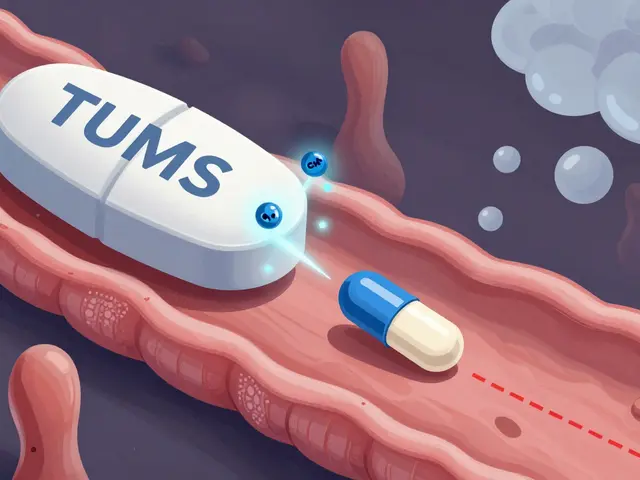
The days when a generic drug was just a cheaper copy of a brand-name pill are fading fast. Today, the real action in the pharmaceutical world isn't about simple replication; it's about innovation within the generic space. We are witnessing the rise of generic combinations, also known as "super generics" or enhanced generics, which are rewriting the rules of affordability and efficacy. These aren't your standard off-the-shelf medications. They are sophisticated products that combine active ingredients, advanced delivery systems, or even devices to solve complex patient needs while keeping costs down. For patients, this means better compliance and fewer side effects. For manufacturers, it’s a lifeline against brutal price erosion.
If you’ve ever struggled to remember multiple pills for one condition, or found an inhaler difficult to use, you already understand the value these products bring. But behind the scenes, a massive shift is happening in regulatory bodies like the FDA and EMA, and in boardrooms from Bristol to Mumbai. The question is no longer whether generic combinations will succeed, but how quickly they will dominate the market.
What Exactly Are Generic Combinations?
To understand the future, we first need to define what we’re talking about. A traditional generic mimics a branded drug once its patent expires, proving it works the same way through bioequivalence studies. It’s a straightforward swap. Generic combinations, however, add layers of complexity and value.
They generally fall into three main categories:
- Fixed-Dose Combinations (FDCs): Two or more active pharmaceutical ingredients merged into a single tablet or capsule. Think of combining two blood pressure meds into one pill to simplify a patient’s routine.
- Drug-Device Combinations: Medications paired with specific delivery hardware, such as auto-injectors for epinephrine or smart inhalers for asthma. The device is integral to how the drug works.
- Modified-Release Formulations: Drugs engineered to release their active ingredient slowly over time (extended-release) or at a specific target site in the body, improving safety and convenience.
The key difference? Traditional generics compete on price alone. Generic combinations compete on therapeutic advantage. They offer something better-whether that’s improved adherence, reduced dosing frequency, or enhanced safety profiles-while still costing significantly less than the original branded product.
The Economic Engine: Why Companies Are Betting Big
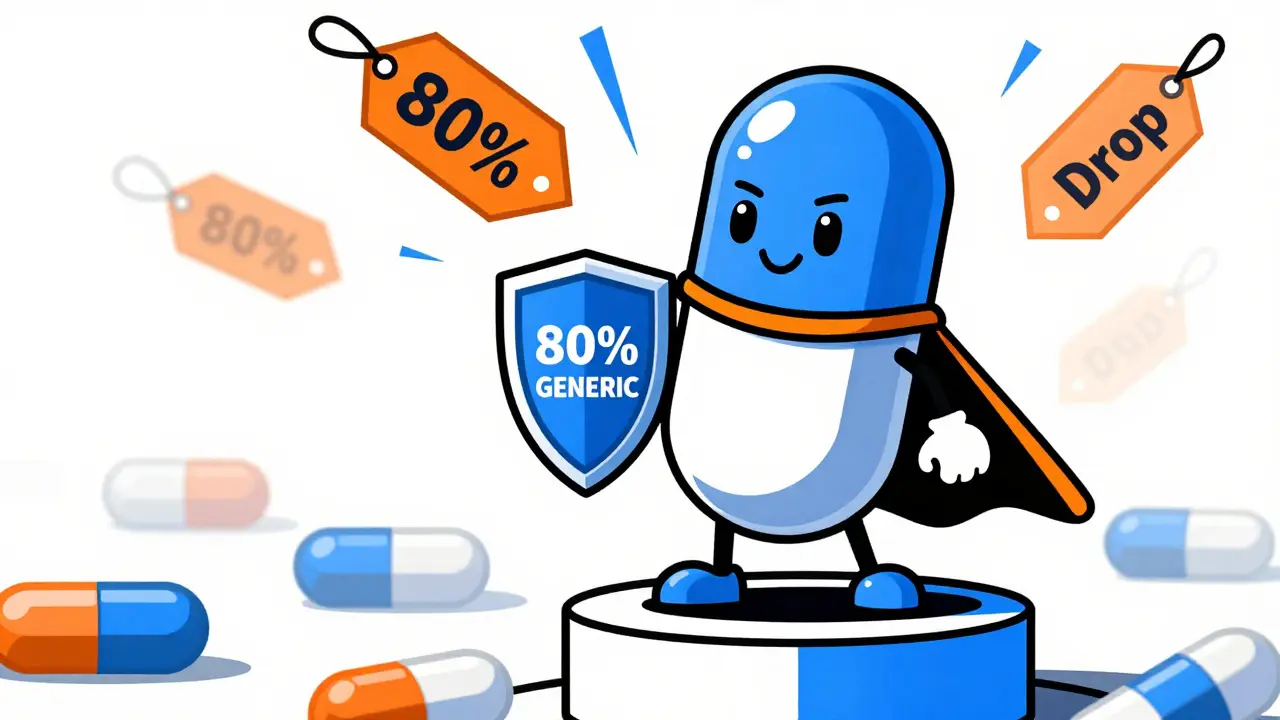
Money talks, and in the generics industry, the conversation has changed dramatically. Traditional generics face a harsh reality: once launched, prices can drop by 80% to 90% within two years due to intense competition. Margins often shrink to less than 5%. It’s a volume game that leaves little room for error.
Generic combinations tell a different story. According to IQVIA’s 2025 analysis, these complex products maintain 40% to 60% of their pricing power over five years. While development costs are higher-ranging from $15 million to $50 million per product compared to $1-5 million for simple generics-the return on investment is substantially better. Margins in specialized areas like central nervous system (CNS) disorders or complex cardiovascular conditions sit comfortably between 20% and 35%.
| Feature | Traditional Generics | Generic Combinations (Super Generics) |
|---|---|---|
| Development Cost | $1 - $5 million | $15 - $50 million |
| Time to Market | 2 - 3 years | 4 - 7 years |
| Price Erosion | 80 - 90% in 2 years | 40 - 60% retained over 5 years |
| Market Share Potential | High volume, low margin (<5%) | Specialized niche, high margin (20-35%) |
| Regulatory Complexity | Standard ANDA pathway | Complex pathways, additional clinical data required |
This economic incentive is driving consolidation and strategic focus. When Viatris merged with Credence in 2025 for $2.3 billion, the goal was clear: bolster capabilities in complex generics. Similarly, Sandoz separated from Novartis to become a pure-play generics company focused heavily on these higher-value products. The message from the market is loud: simple generics are a commodity; complex combinations are a strategy.
Regulatory Hurdles and the Path Forward
Innovation comes with scrutiny. Regulating generic combinations is far more complex than approving a simple tablet. The U.S. Food and Drug Administration (FDA) requires rigorous proof that these new formulations are therapeutically equivalent to their reference products, but the standards are evolving.
For Fixed-Dose Combinations, the FDA demands evidence of a therapeutic advantage over taking the components separately. This often means submitting an Abbreviated New Drug Application (ANDA) alongside significant clinical data. For drug-device combinations, the process is even stricter. Under 21 CFR Part 4 subpart D, the FDA’s Office of Combination Products must determine the primary mode of action to decide which center leads the review. This dual-regulation environment creates bottlenecks but ensures patient safety.
A major pain point for manufacturers has been approval timelines. On average, complex generics take 18 to 24 months longer to approve than traditional ones. However, things are shifting. In October 2025, the FDA launched a pilot program prioritizing the review of generic drugs manufactured entirely in the United States. Early projections suggest this could cut approval times by 3 to 6 months for qualifying products. Dr. Janet Woodcock, former director of the FDA’s Center for Drug Evaluation and Research, noted in a 2025 interview that the agency is actively modernizing pathways to accommodate complexity without sacrificing scientific rigor.
Yet, challenges remain. Dr. Aaron Kesselheim of Harvard Medical School warned in the New England Journal of Medicine (NEJM) in 2025 that the definition of “therapeutic equivalence” for complex generics remains inadequately defined. This ambiguity creates potential safety gaps as companies push the boundaries of what constitutes a “super generic.” Furthermore, regional disparities persist. The European Medicines Agency (EMA) has taken a more conservative stance, approving only 12 complex generic combinations in the EU through Q1 2025, compared to 37 in the US. This divergence forces global pharma companies to navigate two very different regulatory landscapes.

Market Drivers: Patent Cliffs and Therapeutic Targets
Why now? The timing couldn’t be better for generic combination developers. Between 2025 and 2030, branded drugs generating between $217 billion and $236 billion in annual sales will lose patent exclusivity. This “patent cliff” creates a vacuum that sophisticated generics are perfectly positioned to fill.
Several therapeutic areas are leading this charge:
- Oncology: Growing at an impressive 11.3% CAGR, driven by kinase inhibitor combinations that improve cancer treatment outcomes.
- Respiratory: With a 9.89% CAGR, this sector is booming. High-value targets like Trelegy Ellipta (fluticasone/umeclidinium/vilanterol), which saw $2.8 billion in US sales in 2024, are prime candidates for generic combination versions.
- Central Nervous System (CNS): Growing at 8.7% CAGR, CNS disorders require precise delivery mechanisms. Teva’s Budeprion XL (extended-release bupropion) is a classic example, achieving $187 million in annual sales before facing full generic competition, far outstripping the $42 million combined sales of traditional bupropion generics.
Another emerging frontier is the GLP-1 market. With semaglutide dominating obesity and diabetes treatments, companies like Aspen Pharmacare are already developing fixed-dose generic semaglutide combinations targeting the $100+ billion market. These combinations aim to pair semaglutide with other diabetes medications to enhance efficacy and reduce injection frequency.
Technological Advancements Enabling Complexity
You can’t make complex drugs with old-school manufacturing. The rise of generic combinations is fueled by significant technological leaps in formulation and production.
Manufacturers are now utilizing hot-melt extrusion and lipid-based delivery systems to create stable, effective modified-release profiles. Precision manufacturing equipment is critical, maintaining tolerances within ±2% for combination ratios to ensure each dose delivers the correct amount of every active ingredient. Testing protocols have also evolved, requiring in vitro dissolution profiles that match reference products within a 10% f2 similarity factor.
These technologies allow for “super-complex” combinations, such as nanoparticle-based systems or multi-component injectables. While these currently represent only 10% of the market volume, they are growing at a staggering 12.7% CAGR, according to Precedence Research. This segment represents the cutting edge of generic innovation, where science meets scalability.
Global Landscape: Who Is Leading the Charge?
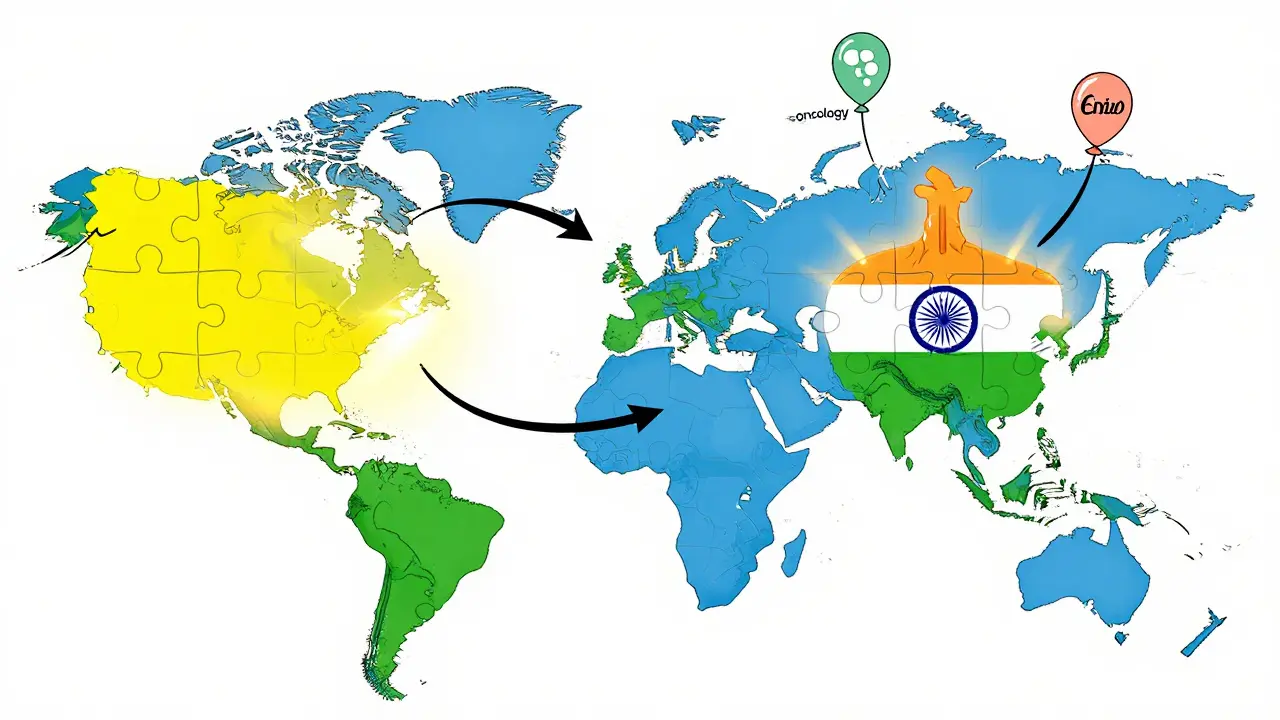
The geography of generic combinations is distinct from traditional generics. The United States remains the dominant market, holding 42% of the share due to favorable reimbursement policies and a sophisticated healthcare infrastructure that values complex therapies. However, India is rapidly emerging as the global manufacturing hub.
According to For Insights Consultancy (2025), India accounts for 35% of global production capacity for complex generics. Indian manufacturers have invested heavily in the necessary technology and regulatory expertise to meet FDA and EMA standards. Meanwhile, Europe lags in approvals but remains a crucial market for high-margin launches once regulatory hurdles are cleared.
This regional split creates opportunities for strategic partnerships. We’re seeing more collaborations between device manufacturers and generic pharmaceutical companies. For instance, Catalent partnered with Hikma on auto-injector projects, combining engineering prowess with pharmaceutical formulation expertise. These alliances are essential for navigating the complexities of drug-device combinations.
Future Outlook: Risks and Rewards
Looking ahead to 2035, Future Market Insights projects the super generics market will grow from $235.6 billion in 2025 to $474.6 billion, a compound annual growth rate (CAGR) of 7.2%. Technavio offers a similar forecast, predicting a 7.6% CAGR from 2025 to 2029. By 2030, super generics are expected to capture 35% to 40% of the total generics market value.
However, it’s not all smooth sailing. Morningstar warns of intensifying pricing pressure that could erode margins for all generics by 30% over the next decade if companies fail to transition to higher-value combinations. Additionally, regulatory harmonization is still incomplete. While ICH Q14 guidelines finalized in June 2025 provide standardized approaches to analytical procedure development, differences between the FDA’s flexible approach and the EMA’s conservatism will continue to complicate global launch strategies.
The consensus among industry analysts is clear: generic combinations are not just an evolutionary step; they are a strategic necessity. For patients, they mean better health outcomes and simpler routines. For manufacturers, they represent the only viable path to sustained profitability in an increasingly competitive landscape. The future of generics isn’t just about being cheap-it’s about being smarter.
How do generic combinations differ from traditional generics?
Traditional generics simply replicate a branded drug after patent expiration, competing primarily on price. Generic combinations, or super generics, incorporate innovative features such as fixed-dose combinations, drug-device integration, or modified-release mechanisms. They offer therapeutic advantages like improved efficacy, safety, or patient compliance, allowing them to maintain higher prices and margins compared to traditional generics.
What are the main regulatory challenges for generic combinations?
Regulatory approval for generic combinations is more complex and time-consuming than for traditional generics. The FDA requires additional clinical data to demonstrate therapeutic equivalence, especially for fixed-dose combinations and drug-device products. Approval timelines are typically 18-24 months longer. Furthermore, there is regional divergence, with the EMA adopting a more conservative approach than the FDA, creating different hurdles for global launches.
Which therapeutic areas are driving the growth of generic combinations?
Oncology, respiratory, and central nervous system (CNS) disorders are the leading drivers. Oncology is growing fastest at 11.3% CAGR due to kinase inhibitor combinations. Respiratory drugs, particularly complex inhalers, are growing at 9.89% CAGR. CNS disorders, benefiting from extended-release formulations, are growing at 8.7% CAGR. The GLP-1 market for diabetes and obesity is also an emerging high-value target.
Why are pharmaceutical companies investing more in super generics?
Investment is driven by economics. Traditional generics suffer from rapid price erosion (80-90% within two years) and low margins (<5%). Generic combinations retain 40-60% of their pricing power over five years and offer margins of 20-35%. As major branded patents expire between 2025 and 2030, super generics provide a strategic way to capture high-value market share with better profitability.
What is the projected market size for super generics by 2035?
According to Future Market Insights, the super generics market is projected to grow from USD 235.6 billion in 2025 to USD 474.6 billion by 2035, representing a compound annual growth rate (CAGR) of 7.2%. By 2030, super generics are expected to account for 35-40% of the total generics market value.