
Medication Side Effect Assessment Tool
Assess Your Medication Side Effects
This tool helps you determine if your symptoms require immediate medical attention or a second opinion. Based on the FDA's Naranjo Scale and key clinical guidelines from the article.
It’s not uncommon to feel off after starting a new medication. Maybe you’re more tired than usual, your stomach feels strange, or you’re having trouble thinking clearly. For many, these symptoms fade. But for others, they don’t. And that’s when you need to ask: should I get a second opinion?
Signs You Need a Second Opinion
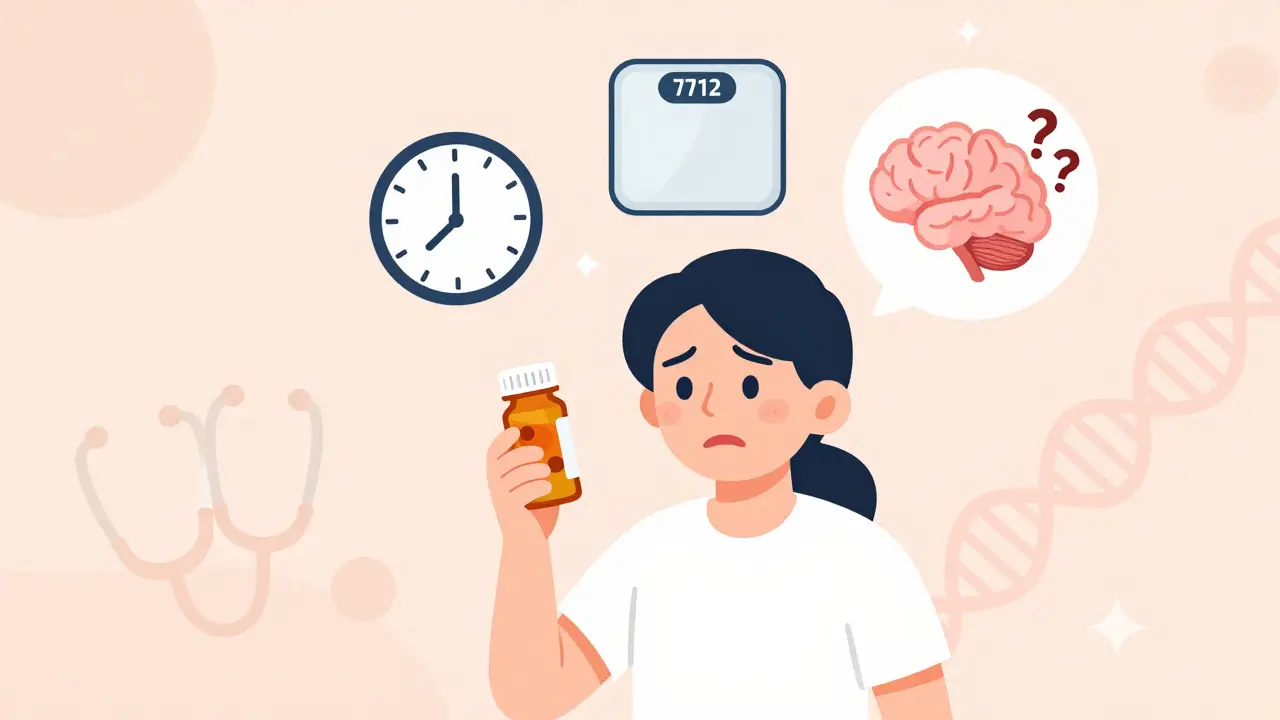
If you’re experiencing side effects that last longer than a few days - and especially if they’re getting worse - it’s time to take action. Don’t wait for your next scheduled appointment. Some red flags are clear: unexplained weight loss or gain of more than 5% in two weeks, nausea that keeps you from eating for over 72 hours, or new tremors, dizziness, or memory lapses that weren’t there before you started the drug.
These aren’t just "annoyances." They’re signals your body is reacting badly. A 2023 study by Solace Health found that 42% of people who got a second opinion discovered mistakes in their original treatment plan. In nearly a third of those cases, the error was serious enough to require immediate changes to avoid hospitalization.
Some medications carry higher risks. Antidepressants, blood thinners, and diabetes drugs are the top three categories where second opinions lead to major changes. For example, people on SSRIs who reported ongoing nausea, insomnia, or sexual side effects saw their symptoms improve in 68% of cases after a second opinion - but only if they acted within 30 days of the side effects starting.
When the Medication Isn’t Working
Side effects aren’t the only reason to seek another opinion. Sometimes, the drug just isn’t doing what it’s supposed to. If you’ve been on an antidepressant for six weeks with no improvement in mood, or you’re still seeing high blood sugar despite taking metformin for three months, it’s not just bad luck. It could mean your body metabolizes the drug differently than expected.
Doctors often give medications a standard trial period: 4-6 weeks for antidepressants, 2-3 months for cholesterol drugs, and up to six months for osteoporosis treatments. If you’re past that window and still struggling, it’s not stubbornness to ask for help. It’s smart.
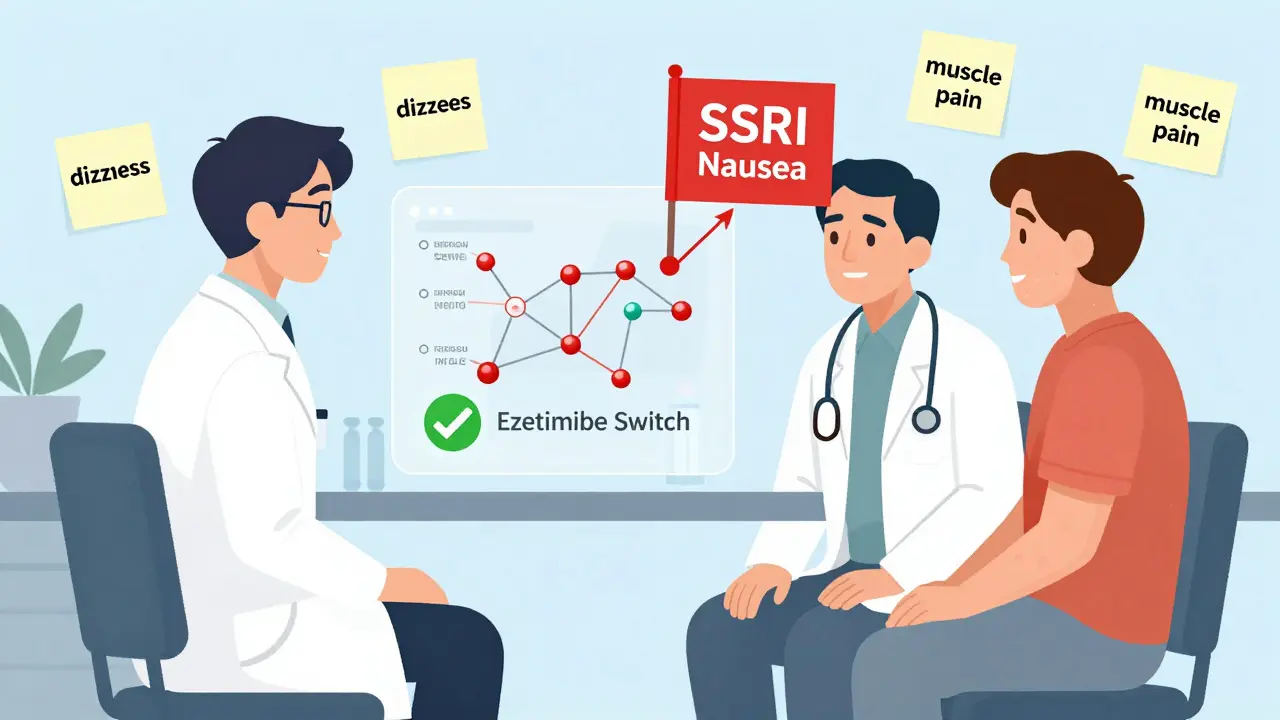
One patient in Bristol, who’d been on statins for six months with persistent muscle pain, found out through a second opinion that she had a genetic variation affecting how her body processed the drug. She switched to ezetimibe - and within six weeks, the pain vanished. That kind of outcome isn’t rare. In fact, 73% of Reddit users who reported statin side effects got a better alternative after seeking a second opinion.
What to Bring to Your Second Opinion
A second opinion isn’t just another chat with a doctor. It’s a diagnostic checkpoint. And like any good checkup, it needs the right tools.
Start with your medication list - every pill, every supplement, every over-the-counter product. Don’t say "I take fish oil." Say "I take 1,000 mg of omega-3 from Nordic Naturals, twice daily, with dinner." Why? Because 31% of side effects traced back to interactions between prescriptions and supplements, according to the NIH’s 2024 database.
Next, bring your symptom log. Write down: when the symptom started, how bad it is (on a scale of 1-10), how long it lasts, and what makes it better or worse. Did the dizziness happen only after you took the pill at 8 a.m.? Did the nausea disappear when you ate toast first? These details matter.
Use the SOMA framework to organize your thoughts:
- Situation: "I feel dizzy every morning, 30 minutes after taking my blood pressure pill."
- Objective: "My blood pressure readings have dropped from 130/85 to 98/62 over the past two weeks."
- Modifications: "I tried taking it with food, and it didn’t help."
- Activities affected: "I can’t walk to work without feeling like I’m going to pass out."
A 2023 study in JAMA Network Open showed that patients who used this method were 63% more likely to get a meaningful change in their treatment.
How Long Will It Take?
Getting a second opinion doesn’t happen overnight. In most cases, you’ll wait 2-3 weeks for an appointment. Psychiatric consultations average 18.7 days; primary care visits are faster, around 11.3 days.
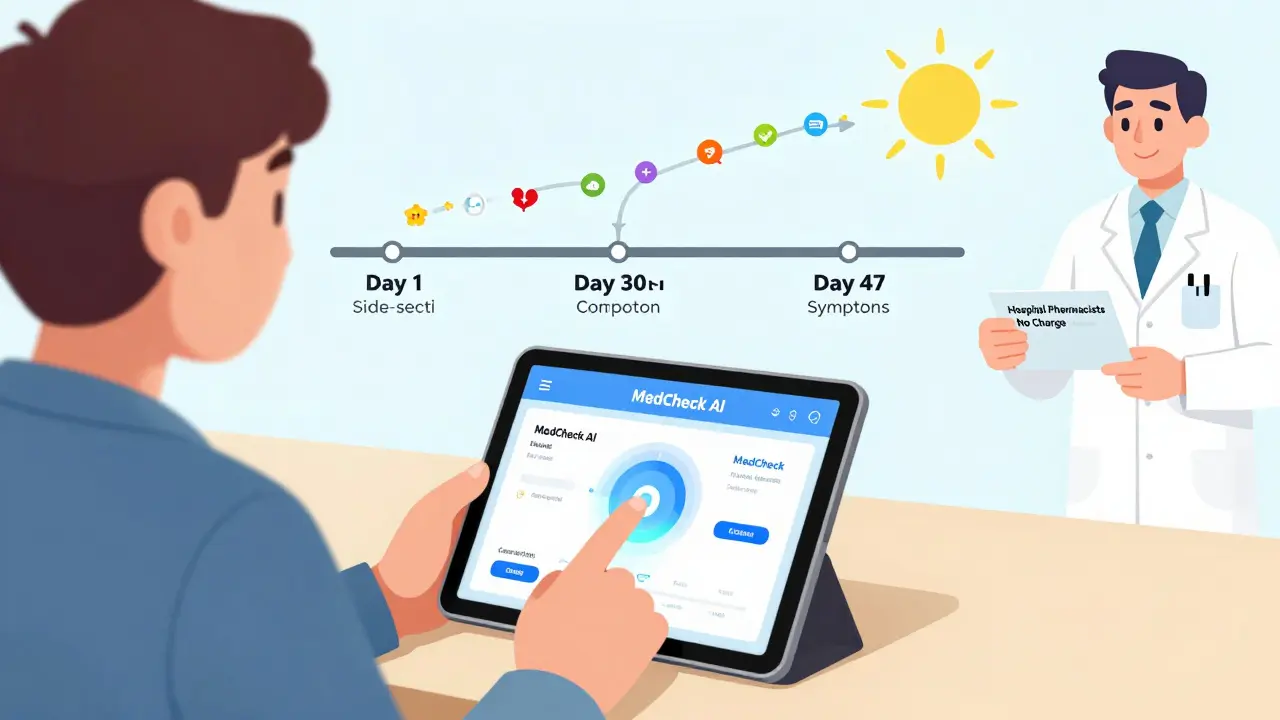
But there’s a faster way. Telehealth platforms like Solace Health cut that time in half. One 2024 study found patients using telehealth resolved side effect concerns 28% faster than those going through traditional referrals. And with the FDA’s new AI tool, MedCheck AI, you can now upload your meds and symptoms for a preliminary scan before even booking an appointment. It’s not a diagnosis - but it can tell you if your symptoms match known side effect patterns with 89% accuracy.
What Happens After the Second Opinion?
Not every second opinion leads to a complete drug switch. Sometimes it’s just a dosage tweak. Other times, it’s adding a new medication to counteract side effects - like prescribing a stomach protector for metformin, or switching from a daily to a weekly antidepressant.
But the biggest win? Being heard. A 2023 survey by HealthPartners found that 89% of patients felt their concerns were taken more seriously during a second opinion visit. Doctors using the "teach-back" method - asking you to explain your side effects in your own words - improved communication by 76%.
And it’s not just about feeling better emotionally. Real outcomes matter. In pilot programs across 12 U.S. states, certified medication safety navigators helped patients prepare for second opinions. The result? A 29% drop in hospitalizations due to medication errors.
Who Shouldn’t Seek a Second Opinion?
Not every situation calls for one. If you’re on a cancer treatment with a narrow therapeutic window - like certain chemotherapy drugs - changing course too early can be dangerous. A 2023 study from the American Society of Clinical Oncology found only 9.3% of oncology patients had their treatment changed after a second opinion. That’s because cancer meds are often finely tuned, and alternatives are limited.
But even then, a second opinion can help clarify: Is this side effect normal for this drug? Is this dose the lowest possible? Are there supportive treatments to ease the pain? You don’t need to change the plan to benefit from the insight.
Insurance and Costs
Medicare now covers second opinions for 28 specific medication categories under its 2024 Physician Fee Schedule. The initial 30-minute consultation is reimbursed at $187.42. Many private insurers follow suit.
If you’re unsure, call your insurer. Ask: "Does my plan cover a second opinion for side effects from [name of medication]?" You’d be surprised how often the answer is yes.
And if cost is still a barrier, look into hospital-based clinical pharmacists. Since 2019, 76% of major U.S. hospitals have added dedicated pharmacists to review medication side effects - and they often work with patients at no extra charge.
Why This Matters More Than Ever
Medication errors send 1.3 million people to U.S. emergency rooms every year. That’s not a small number. It’s a public health issue. And most of those errors are preventable.
The FDA now requires manufacturers of 47 high-risk drugs to provide standardized side effect assessment tools to doctors. The Clinical Pharmacogenetics Implementation Consortium expanded its guidelines in 2025 to cover 42 gene-drug pairs - meaning we now know how your genes affect how you process at least 42 different medications. That’s a game-changer.
For example, if you’re prescribed a common antidepressant like citalopram, a simple genetic test can tell you if you’re a slow metabolizer - which means even a standard dose could cause dangerous side effects. That test is now part of standard second opinion protocols at places like the Mayo Clinic, where early data shows a 37% drop in serious reactions when scheduled checkpoints are used at 30, 90, and 180 days.
Medication side effects aren’t something you just have to live with. They’re a signal. And you have the right - and the power - to act on them.
How do I know if my side effects are serious enough for a second opinion?
If your side effects last more than 72 hours, interfere with daily life (like eating, sleeping, or working), or get worse over time, it’s time to seek help. Unexplained weight changes, new tremors, confusion, or severe nausea are red flags. A score of 5 or higher on the Naranjo Scale - which doctors use to measure if a side effect is likely caused by a drug - means it’s probable, not just possible.
Can I get a second opinion without my current doctor’s permission?
Yes. You don’t need permission to get a second opinion. The American Medical Association has supported patient autonomy in seeking additional medical perspectives since 1997. Your current doctor should not discourage you - in fact, ethical guidelines now say they should encourage it when side effects affect your quality of life.
What if the second doctor says I should keep taking the same medication?
That’s okay. A second opinion isn’t about finding someone who agrees with you - it’s about getting clarity. If both doctors say the side effects are normal and manageable, you can feel more confident sticking with the plan. But if they suggest adjustments - even small ones like changing the time you take the pill - it’s worth trying. Many patients find relief with simple tweaks, not full switches.
Do I need to bring all my medical records?
You don’t need everything, but bring the most relevant: your full medication list (including doses and timing), recent lab results (within 30 days), and a symptom diary covering at least the past month. If you have prior test results showing liver or kidney function, include those too - many side effects are tied to how your body processes drugs.
Are there free or low-cost options for second opinions?
Yes. Many hospitals now have clinical pharmacists who specialize in reviewing medication side effects - and their services are often free to patients. Nonprofits like the Society of Patient Advisors also offer free medication safety navigation. Telehealth platforms like Solace Health sometimes offer free initial assessments. Check with your insurance, hospital, or local health department.
How soon should I get a second opinion after noticing side effects?
The sooner, the better. Patients who sought a second opinion within 30 days of side effects starting saw their symptoms resolve in an average of 47 days - compared to 112 days for those who waited longer. Delaying doesn’t make side effects go away. It just gives them more time to affect your health.
Can I use an AI tool like MedCheck AI instead of seeing a doctor?
No. AI tools like MedCheck AI are designed to help you prepare - not replace a doctor. They can flag potential side effect patterns with 89% accuracy, but they can’t diagnose, adjust doses, or consider your full medical history. Use them to gather information before your appointment, not instead of it.
11 Comments

BETH VON KAUFFMANN
December 16 2025
Let’s be clear: the Naranjo Scale is not a diagnostic tool-it’s a probabilistic heuristic with a 0.78 sensitivity and 0.82 specificity in retrospective cohorts. If you’re relying on a self-assessed score of 5+ without pharmacokinetic data or CYP450 genotyping, you’re engaging in therapeutic nihilism disguised as self-advocacy. The real issue is systemic underutilization of clinical pharmacogenomics in primary care.
Per the CPIC guidelines (2025 update), CYP2D6 poor metabolizers on citalopram have a 4.3x increased risk of QT prolongation. That’s not "feeling off." That’s a Class IIa indication for genetic testing. If your PCP doesn’t offer this, they’re practicing outdated medicine.

Raven C
December 16 2025
Oh, how delightful. Another piece of medical journalism masquerading as patient empowerment. Truly, nothing says "progress" like reducing complex pharmacology to a bullet-pointed checklist. I suppose next we’ll be handing out AI-generated drug recommendations via TikTok duets.
The FDA’s "MedCheck AI" is not a diagnostic tool-it’s a liability shield for pharmaceutical conglomerates. And let’s not forget the 73% statin statistic-conveniently sourced from Reddit, where the average user’s medical knowledge is derived from YouTube videos and a single Google search.
My physician, a Harvard-trained clinical pharmacologist, would have a coronary if he saw this post. The idea that patients can self-diagnose side effects via a "SOMA framework" is not empowerment-it’s medicalized arrogance.

Steven Lavoie
December 17 2025
I’ve been on metformin for 8 years and had zero side effects until I started taking turmeric supplements. My doctor didn’t even know about the interaction until I brought up the NIH database. That’s why I always list every pill, every herb, every tea. People forget that "natural" doesn’t mean safe.
Also, the telehealth point? Huge. I got my second opinion in 5 days through Solace-saved me a 3-hour drive and $200 in gas. And the AI scan flagged my nausea as likely drug-related before I even booked the call. It’s not replacing doctors-it’s giving us better ammo for the conversation.

Sachin Bhorde
December 19 2025
bro u need to check ur cyp2c9 and cyp2d6 genes before even starting any med. i got my dna test from 23andme and it saved me from a bad reaction to statin. now i know i’m a slow metabolizer for like 12 drugs. just google "pharmacogenomics reddit" and u’ll find the thread. its life changing.
also dont trust ur doc if they dont know what cyp means. get a clinical pharmacist. they’re the real MVPs. my hospital has one for free. just ask.

Joe Bartlett
December 20 2025
UK here. NHS gives you a second opinion for free if you ask. No drama. Just say "I’d like a review of my meds due to persistent side effects." Done. No need for AI, no need for jargon. Just ask. Simple.

Marie Mee
December 20 2025
they’re all lying about the meds. the pharma companies put something in the pills to make you dependent. i’ve been on 7 different ones and they all made me feel worse. now i only take vitamins and apple cider vinegar. the doctors hate that i figured it out. they’re scared. medcheck ai? it’s a tracking tool. they’re watching you.

Naomi Lopez
December 22 2025
Using the SOMA framework is the bare minimum. I’ve seen patients bring spreadsheets with hourly symptom logs, heart rate trends, and food diaries. If you’re not documenting with precision, you’re not advocating-you’re complaining.
And yes, the 89% patient satisfaction stat? That’s because doctors finally stop talking over you. But if you show up with vague statements like "I feel weird," you’ll get a pat on the head and a refill. Precision is power.

Salome Perez
December 23 2025
As a clinical pharmacist in a safety-net hospital, I see this every day. Patients arrive with a single pill bottle, no history, and no questions. I ask them to describe their symptoms in their own words-often, they say, "I just don’t feel like me." That’s the signal. Not the numbers. Not the scales. The human experience.
One woman came in on a blood thinner, terrified because her hands shook. She hadn’t told her doctor because she thought it was "just aging." We found her dose was triple what her kidney function could handle. We adjusted it. Two weeks later, she cried because she could hold her grandchild’s hand again.
Second opinions aren’t about being difficult. They’re about being seen. And if your provider makes you feel guilty for asking, they’re not your provider anymore.

Josh Potter
December 24 2025
Y’all are overthinking this. I had insomnia from an SSRI. Took it at night instead of morning. Boom. Fixed. No second opinion. No AI. No gene test. Just tried a different time. Sometimes the answer is that simple.
Stop scrolling. Start experimenting. Your body’s not broken. Your timing might be.

Victoria Rogers
December 26 2025
42% of second opinions find mistakes? LOL. That’s because most doctors are overworked and underpaid. The real problem is the system. Not the patients. Not the meds. The system that gives docs 7 minutes per patient. If you want to fix side effects, fix the healthcare model. Not the patient’s ability to "advocate." Also, why is this post sponsored by Solace Health? Where’s the disclosure?
Write a comment
Popular Posts

Martin Spedding
December 15 2025
bro just stop taking it if u feel weird. why are we overcomplicating this? my cousin took that ssri and turned into a zombie for 3 weeks. switched meds, back to normal. done.