
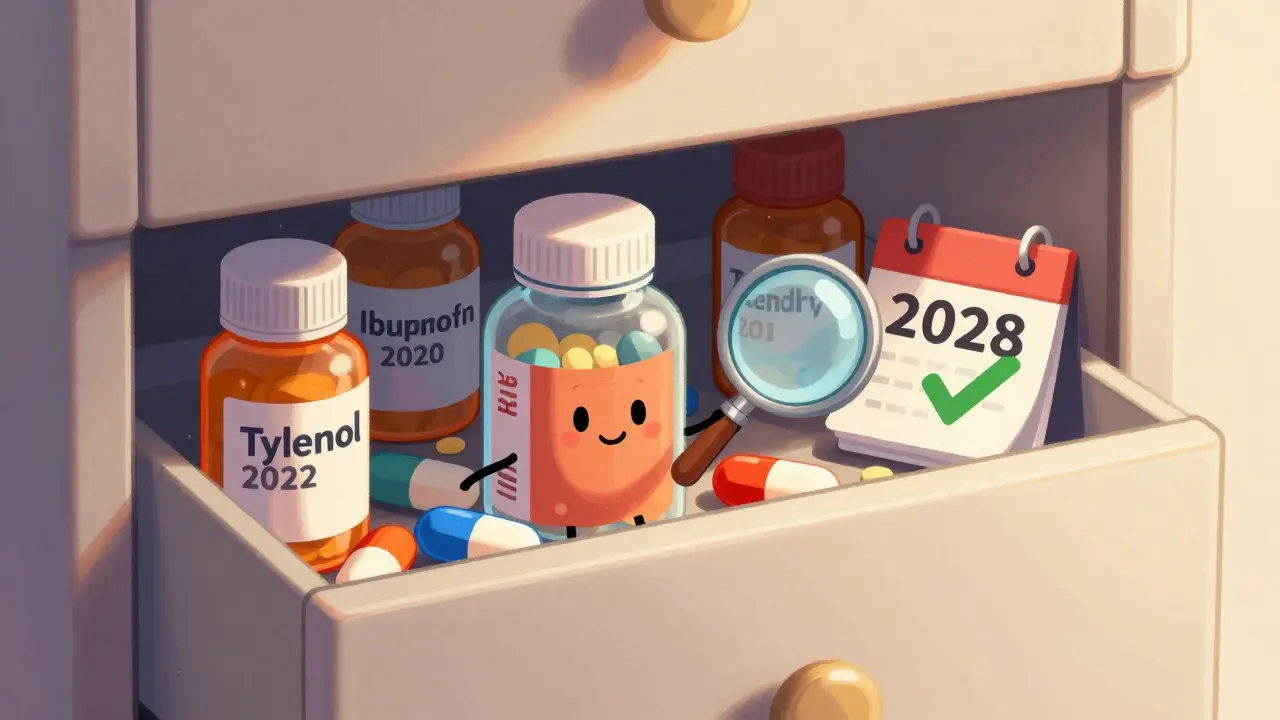
Most people look at the expiration date on their painkillers, allergy pills, or cold medicine and think: expired means dangerous. But what if that’s not always true? You’ve probably got a drawer full of old bottles-some from last winter’s flu, others from a trip you took years ago. You toss them out on the dot, right? Maybe you shouldn’t. The truth is, most over-the-counter (OTC) medications don’t suddenly turn toxic or useless the day after their expiration date. What actually matters? And what’s just noise?
What Does an Expiration Date Really Mean?
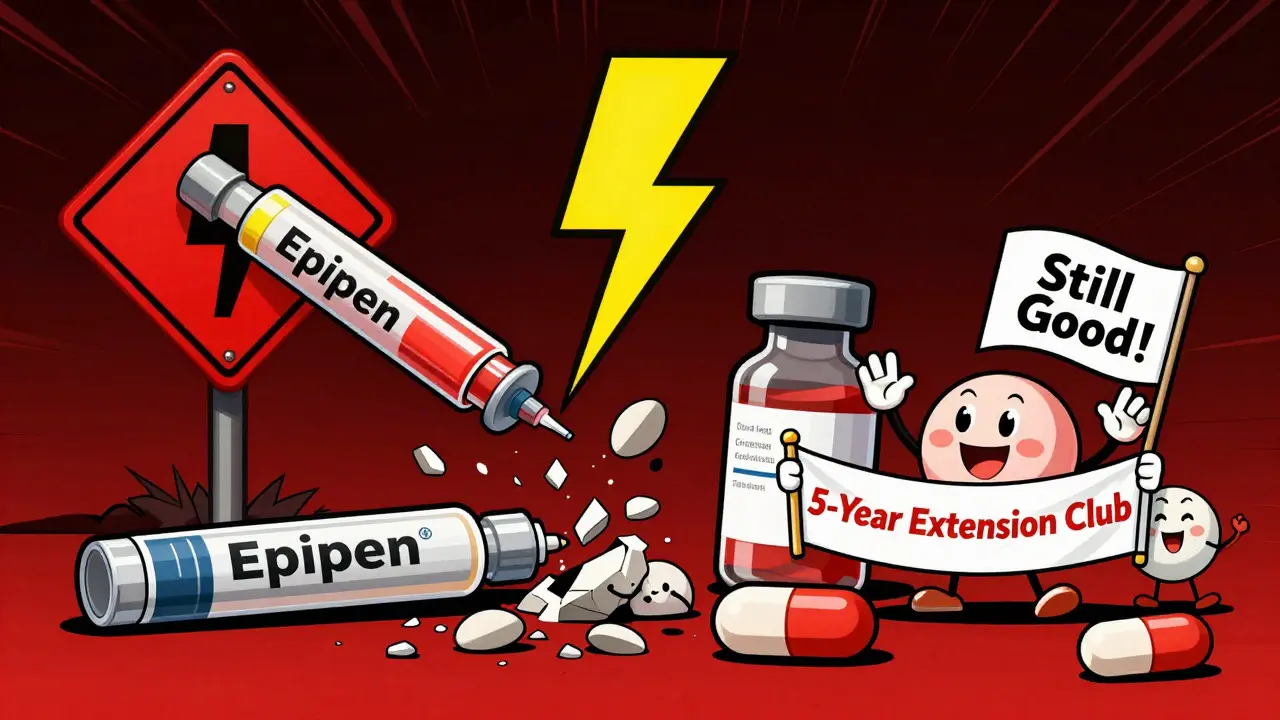
The expiration date on your medicine isn’t a "use-by" label like milk. It’s the last day the manufacturer guarantees the drug will work at full strength and stay safe under proper storage conditions. This isn’t arbitrary. The U.S. Food and Drug Administration (FDA) requires companies to test their products for stability over time. That means they track how the chemical makeup holds up under heat, humidity, and light. Once they see potency drops below 90%, they set the expiration date. But here’s the catch: that 90% mark is a safety buffer. Most pills don’t lose their power right at that point. In fact, the FDA’s own Shelf Life Extension Program found that 90% of drugs-including OTC ones like acetaminophen and antihistamines-still worked perfectly well 5 to 15 years after expiration. Some were tested up to 20 years later and still held their potency. So why do manufacturers put such short dates on bottles? Cost and liability. Testing beyond 3-5 years is expensive. And if someone takes an old pill and it doesn’t work, the company could get sued. So they play it safe. That doesn’t mean the medicine is bad. It just means they’re not legally responsible after that date.Which Medications Are Safe Past Their Date?
Not all pills are created equal. The form matters more than the name. Solid tablets and capsules-like ibuprofen, aspirin, or diphenhydramine (Benadryl)-are the most stable. They’re dry, sealed, and less likely to break down. Studies show these can retain 70-90% of their strength for 5-10 years past expiration if stored right. Take acetaminophen (Tylenol). One 2023 study in the Journal of Pharmaceutical Sciences found that tablets with desiccant packs (those little silica gel packets you throw away) stayed effective 47% longer than those without. In real terms: a bottle labeled 2022 could still work fine in 2028-if kept dry and cool. Antihistamines like loratadine (Claritin) and cetirizine (Zyrtec) follow the same pattern. The FDA’s military stockpile tests showed these maintained 85%+ potency even after 8-10 years. People who’ve used expired versions in emergencies-from camping trips to power outages-report no issues. Reddit users on r/Pharmacy shared over 1,200 stories of using old OTC meds with zero side effects.Which Ones Should You Never Use After the Date?
Now, here’s where things get serious. Some medicines don’t just lose strength-they become risky. These are the ones you should never gamble with:- Nitroglycerin (for chest pain): Loses up to 50% potency within 6 months after expiration. In a heart attack, that drop could be deadly.
- Insulin: Degrades monthly after opening. Expired insulin doesn’t just fail-it can cause dangerous spikes in blood sugar, leading to diabetic ketoacidosis. Emergency rooms see this often.
- EpiPens: Epinephrine breaks down quickly. Studies show 25-50% less effectiveness 1-90 months past expiration. In a severe allergic reaction, that could mean the difference between life and death.
- Liquid antibiotics and eye drops: These are breeding grounds for bacteria once the seal breaks. The CDC says liquid antibiotics can become contaminated within 30 days of expiration. Eye drops? One study found 67% were contaminated 60 days past their date.
- Birth control pills: Even a 5-10% drop in hormone levels can raise pregnancy risk. One 2020 study showed a 12.7% failure rate with expired pills-compared to 0.3% for fresh ones.
Storage Is the Real Game-Changer
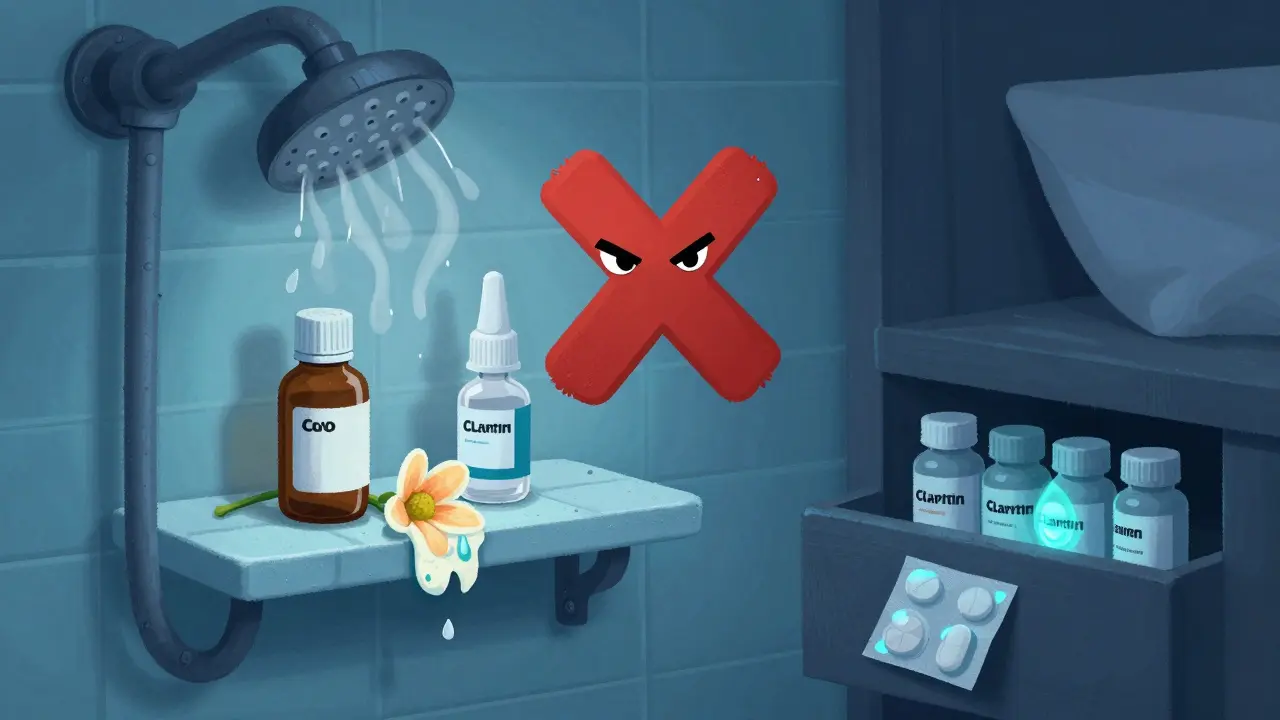
Your medicine’s lifespan isn’t just about the date on the bottle-it’s about where you keep it. The bathroom? Bad idea. Heat and steam from showers destroy pills faster than time. A 2021 CDC survey found 68% of households store meds in the bathroom. That’s like leaving chocolate in a car on a summer day. The sweet spot? Cool, dry, and dark. A bedroom drawer, kitchen cabinet away from the stove, or a closet shelf are ideal. Temperature should stay between 59°F and 77°F (15°C-25°C). Humidity below 60%. Keep pills in their original bottles-their packaging is designed to block light and moisture. Pro tip: If your bottle came with a silica gel packet, leave it in. That tiny thing helps absorb moisture and keeps your pills stable longer. Don’t throw it out.How to Tell If a Pill Is Still Good
Expiration date aside, your eyes and nose can tell you a lot. Look for:- Discoloration: White pills turning yellow or brown? Toss them.
- Cracking or crumbling: If tablets fall apart when you touch them, the chemicals have broken down.
- Odd smell: Medicine shouldn’t smell sour, musty, or chemical-burnt. That’s degradation.
- Change in texture: Liquids that cloud up, separate, or develop particles? Never use.
What Should You Do With Old Medications?
Don’t flush them. Don’t throw them in the trash. Don’t leave them where kids or pets can get to them. The safest way? Use a drug take-back program. Walgreens, CVS, and many police stations have kiosks where you can drop off expired or unused meds for proper disposal. As of 2023, over 9,000 Walgreens locations in the U.S. offer this free service. No take-back nearby? Mix pills with coffee grounds or cat litter, seal them in a bag, and toss them in the trash. This makes them unappealing and harder to misuse.Why the Confusion Exists
There’s a big gap between what the FDA says and what science shows. The FDA’s official line: “Don’t use expired medicine.” It’s simple. Safe. Easy to communicate. But behind the scenes, their own scientists have been saying something else for years. The Shelf Life Extension Program-started in 1985 to save money on military stockpiles-found that most drugs last far longer than labeled. Even the FDA’s own chemists admitted in 2015 that “the vast majority of solid-dose medications remain chemically stable for years beyond expiration.” So why the contradiction? Liability. Policy. Public safety messaging. It’s easier to tell everyone to throw it out than to teach people how to judge risk. But that’s changing. In 2023, the FDA proposed new guidance to classify OTC drugs by stability type-not one-size-fits-all dates. Some states and countries are already moving toward this.What Should You Do Right Now?
Here’s a quick, no-fluff checklist:- Check your medicine drawer. Pull out anything expired.
- Separate pills into two piles: solid (tablets/capsules) and liquid/gels/injectables.
- For solid OTC meds (painkillers, antihistamines, vitamins): If they look and smell normal, store them properly, and you’re not in a high-risk group (pregnant, diabetic, heart condition), they’re likely fine for another year or two.
- For liquids, eye drops, insulin, EpiPens, nitroglycerin: If it’s expired, throw it out. No second chances.
- Use take-back bins or mix bad meds with coffee grounds before tossing.
- Store new meds in a cool, dry place-not the bathroom.
Can I take expired ibuprofen or Tylenol?
Yes, if they’re solid tablets and stored properly. Studies show ibuprofen and acetaminophen often retain 70-90% of their potency 5-10 years past expiration. Look for signs of damage-discoloration, crumbling, or odd smell-and discard if present. Avoid using them for critical pain or if you have a serious medical condition.
Is it dangerous to take expired allergy pills?
Generally, no. Antihistamines like diphenhydramine and loratadine are very stable. FDA testing shows they often keep 85%+ potency for over 8 years. If the pills look normal and you’re using them for mild symptoms like a runny nose, they’re likely fine. But if you’re having a severe reaction, use a fresh one.
Why do pharmacies throw away expired meds if they’re still good?
Because they’re legally required to follow the manufacturer’s expiration date and avoid liability. Pharmacies can’t guarantee safety past that date, even if science says it’s fine. Also, insurance and regulatory systems are built around strict expiration rules. It’s a system designed for safety, not efficiency.
What if I accidentally took an expired EpiPen?
If you used an expired EpiPen during a severe allergic reaction and symptoms didn’t improve, call 911 immediately. Even a partially working EpiPen might help slightly, but you still need emergency care. Never rely on an expired auto-injector. Always carry a fresh one if you’re at risk.
How should I store OTC medications to make them last longer?
Keep them in a cool, dry place between 59°F and 77°F (15°C-25°C). A bedroom drawer or kitchen cabinet away from heat and moisture is ideal. Avoid bathrooms and cars. Leave the desiccant packet in the bottle. Always keep medicines in their original containers to protect them from light and air.
12 Comments

claire davies
December 26 2025
Oh my god, I love this post so much. I used to toss everything the second it expired - until I ran out of allergy meds during a road trip in Wales and took my 2019 Zyrtec. Felt like a superhero. No drowsiness, no sneezing, just pure, unapologetic chill. Turns out, my bathroom cabinet is basically a science lab of doom. Now I keep everything in a Tupperware under my bed with a silica packet like it’s a sacred relic. Also, the part about nitroglycerin? Terrifying. I’ve got a bottle from 2018 I’m now eyeing like a ticking bomb. Thanks for the wake-up call, honestly.

EMMANUEL EMEKAOGBOR
December 26 2025
This is a very thoughtful and well-researched exposition on the matter of pharmaceutical shelf life. I commend the author for presenting data from credible institutions such as the FDA and CDC. In Nigeria, where access to consistent healthcare is often limited, many of us rely on medications past their labeled expiration dates out of necessity rather than choice. The distinction between solid tablets and liquid formulations is particularly crucial. I have personally used expired ibuprofen during a prolonged power outage with no adverse effects, provided the tablets remained intact and odorless. However, I would never risk using expired insulin or antibiotics, as the consequences could be fatal. Thank you for promoting informed decision-making over blind compliance.

Aurora Daisy
December 27 2025
Of course the FDA says don’t use expired meds - they’re just protecting Big Pharma’s bottom line. You think they want you to know your $50 bottle of Tylenol could last 15 years? No way. They’d rather you buy a new one every six months like a good little consumer. Wake up, sheeple. The system is rigged.

Katie Taylor
December 28 2025
YES! This is the kind of info we need more of! Stop throwing away perfectly good medicine and start trusting your senses! I’ve been using expired Benadryl for years - if it looks like a pill and smells like a pill, it’s probably still a pill. And if it doesn’t work? Well, then you know it’s time to replace it. No guilt, no panic. Just common sense.

Payson Mattes
December 29 2025
Wait - did you know the FDA’s Shelf Life Extension Program was originally funded by the military to save money on stockpiling? And guess who owns the patents on most OTC meds? Big Pharma. They lobbied to keep the expiration dates short so you’d keep buying. I’ve got a 2007 bottle of Advil that still works better than my new one. They don’t want you to know this. I’ve got screenshots of FDA internal memos. Want me to send them?

Harsh Khandelwal
December 31 2025
Bro. I took a 10-year-old melatonin last night. Slept like a baby. Then I thought - what if it’s not the medicine that’s expired? What if it’s US? Like, what if the whole system is just programmed to make us feel like we need to buy more stuff? I mean, why do we even have expiration dates? Who decided? Was it a guy in a suit who hates fun? I’m starting to think the pills are fine and we’re the ones that are broken.

siddharth tiwari
January 1 2026
why do people trust the fda so much like theyre some kind of god. they also said cigarettes were safe in the 50s. and now they say expired meds are dangerous. but the science says otherwise. you people are sheep. i took expired epi pen once. i lived. youll all die of anxiety before you die of bad medicine.

suhani mathur
January 2 2026
Oh honey, you’re telling me you didn’t already know all this? I’m a pharmacist in Mumbai and I’ve been telling my patients for years: if it’s a dry tablet, not moldy, not crumbly, and you’re not pregnant or diabetic - go ahead. But if you’re gonna use expired eye drops? Please. Just don’t. I’ve seen the results. You don’t want to be the person who lost an eye because you thought ‘it’s probably fine.’

Gray Dedoiko
January 2 2026
My mom used to keep all her meds in the bathroom. I used to joke she was trying to turn them into soup. Now I get it - she was just trying to use them before they turned into science experiments. I’m going through her drawer this weekend. If the pills look like they’ve been through a war, I’m tossing them. If they look like they’re just taking a nap? I’m keeping them.

Isaac Bonillo Alcaina
January 4 2026
There is a fundamental flaw in your argument: you conflate chemical stability with biological efficacy. Even if a compound remains chemically intact, its bioavailability may be compromised due to polymorphic changes, excipient degradation, or microstructural alterations invisible to the naked eye. Your anecdotal evidence is statistically insignificant and dangerously misleading. Furthermore, your recommendation to use expired birth control is ethically indefensible and medically reckless. You are not a pharmacist. You are not a toxicologist. You are not qualified to make these determinations. Please stop.

Bartholomew Henry Allen
January 5 2026
Expiration dates exist for a reason. Liability. Safety. Regulation. Do not risk lives because you read a blog post. If you want to save money, buy in bulk and use before expiration. Do not gamble with your health. The FDA is not your enemy. You are.
Write a comment
Popular Posts


Chris Buchanan
December 24 2025
So let me get this straight - we’re supposed to trust a pill from 2012 because some lab in a military bunker found it still worked? Meanwhile, my grandma’s aspirin from ‘08 turned into a chalky dust cloud when I touched it. I’ll stick with the date, thanks.