
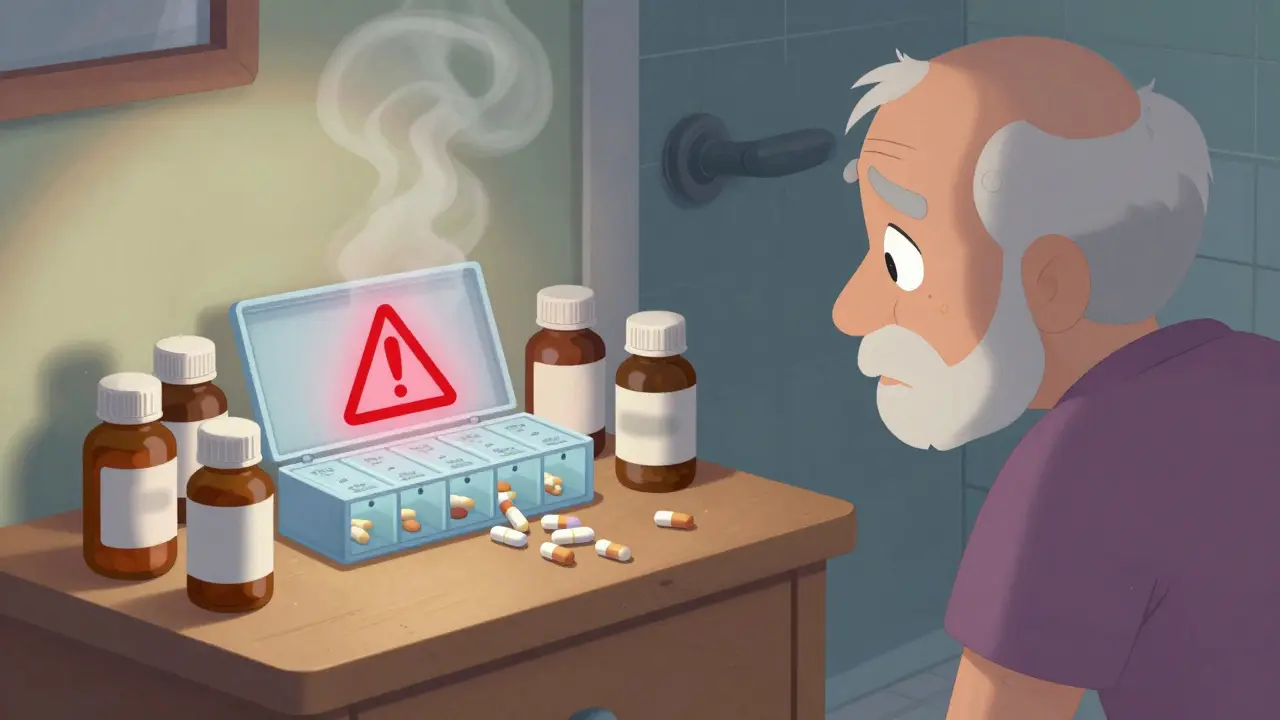
Using a pill organizer seems simple-just dump your pills into little compartments and you’re done. But if you’re not careful, it can turn into a dangerous mistake. Every year, thousands of people accidentally overdose because they misused their pill organizer. It’s not the device’s fault. It’s how it’s used. A 2022 study in the Journal of the American Geriatrics Society found that improper use of pill organizers actually increases overdose risk by 23% in older adults. That’s not a typo. The tool meant to protect you can hurt you if you skip the basics.
Know What You Can and Can’t Put in a Pill Organizer
Not all medications belong in a pill box. Some pills are too sensitive to air, moisture, or heat. Liquid medications, insulin, eye drops, and suppositories should never go in. Neither should anything that needs refrigeration-like certain antibiotics or biologics. If your pill says “store in the fridge,” leave it in the fridge. Putting it in a plastic organizer on your nightstand can make it useless-or even harmful. Chewable pills, dissolvable tablets, and soft gel capsules are also risky. They can stick together, melt, or break down inside the compartments. A 2023 report from Memorial Sloan Kettering Cancer Center found that 19% of medication errors involving pill organizers were caused by degraded pills that lost their strength or clumped together. Always check the label. If it says “keep in original container,” don’t transfer it. And here’s the biggest mistake people make: putting “as needed” (PRN) meds in the organizer. Painkillers like ibuprofen or oxycodone, anti-anxiety meds like lorazepam, or sleep aids like zolpidem should stay in their original bottles. Why? Because if they’re in your daily compartment, you might take them thinking it’s your scheduled dose-when you’re not supposed to. A WebMD survey found that 38% of accidental overdoses from pill organizers happen because PRN meds got mixed in with daily ones.Fill One Medication at a Time
The most effective way to avoid double-dosing is to fill your organizer one medication at a time. Don’t grab all your bottles and dump pills in a rush. That’s how you mix up similar-looking pills-like metoprolol and propranolol-or accidentally put two different doses of the same drug in the same slot. Start with your updated medication list. This isn’t your old list from last year. It’s the one your doctor gave you last month. Compare every pill in your hand to that list. Then check the bottle label. Then look at the organizer compartment. That’s the triple-check system recommended by Memorial Sloan Kettering. It cuts double-dosing errors by 63%. Wash your hands before you start. Moisture from your skin can damage pills. Use soap and water for at least 20 seconds-same as washing for hand sanitizer. Then dry your hands completely. Place your medication bottles in a row, labeled by time of day: morning, noon, evening, bedtime. Fill one type of pill at a time, across all days, before moving to the next. If you have five different pills, spend at least 15 minutes filling. Add five more minutes for each extra pill.Never Skip the Original Bottles
Your pill organizer is a helper-not a replacement. Always keep your original bottles within sight while filling. They have the name, dose, expiration date, and prescribing doctor’s info. If you’re unsure whether you’re putting in the right pill, look at the bottle. Don’t guess. Don’t rely on color or shape alone. Many pills look alike. A 2023 survey from Hero Health found that 68% of medication errors happened because people didn’t check the original bottles. Even if you’ve used the same pills for years, prescriptions change. Maybe your dose went from 10mg to 5mg. Maybe you stopped one drug and started another. If you refill your organizer using an old bottle label instead of your current list, you’re setting yourself up for an error. WebMD reports that 28% of medication mistakes come from this exact issue.
Store It Right-No Bathrooms, No Sunlight
Where you keep your pill organizer matters as much as how you fill it. Never store it in the bathroom. Steam from showers can seep into compartments and ruin pills. High humidity speeds up degradation. A 2022 study by Hero Health showed that pills stored in bathrooms degraded 47% faster than those kept in dry places. Keep your organizer in a cool, dry spot-like a bedroom drawer or kitchen cabinet away from the stove. The ideal temperature is below 86°F (30°C) and humidity under 60%. Avoid windows. Sunlight can break down certain medications. And if you have kids or pets, make sure your organizer has child-resistant features. Look for the ASTM F3130-15 standard on the packaging. If it doesn’t say that, it’s not safe around children.Track What You Take-and What You Miss
Even the best system fails if you don’t verify what’s inside. Before you take any pill, open the compartment and look. Don’t assume. Don’t shake it. Don’t just grab the first pill you feel. A 2023 study from Memorial Sloan Kettering found that 31% of accidental overdoses happened because people didn’t visually confirm the contents. Use a simple log. Write down the date and time you filled your organizer. Note if you missed a dose. Did you take your evening pill at 10 p.m. instead of 8 p.m.? Did you skip Tuesday’s dose? Keep a notebook or use a free app like Medisafe or MyTherapy. These tools let you set alarms and track adherence. WebMD says setting phone alarms 15 minutes before your dose reduces verification errors by 44%.When to Use a Smart Organizer
If you take four or more medications daily, or if you’ve had a near-miss overdose before, consider a smart pill organizer. These aren’t just boxes with alarms. They track when you open a compartment. If you open the morning dose twice in one day, they send an alert to your phone-or even to a family member’s phone. Some models use weight sensors to detect if you took the right amount. In January 2023, Medicare started covering smart organizers for beneficiaries with four or more chronic conditions. Over 2 million were distributed in the first quarter. These devices aren’t magic, but they add a layer of safety. Brands like Hero Health and MedMinder have shown in clinical trials that they reduce missed doses by 40% and accidental overdoses by 31%. But don’t assume smart means foolproof. You still have to refill them correctly. You still have to keep PRN meds out. You still have to check the labels. The tech helps-but it doesn’t replace common sense.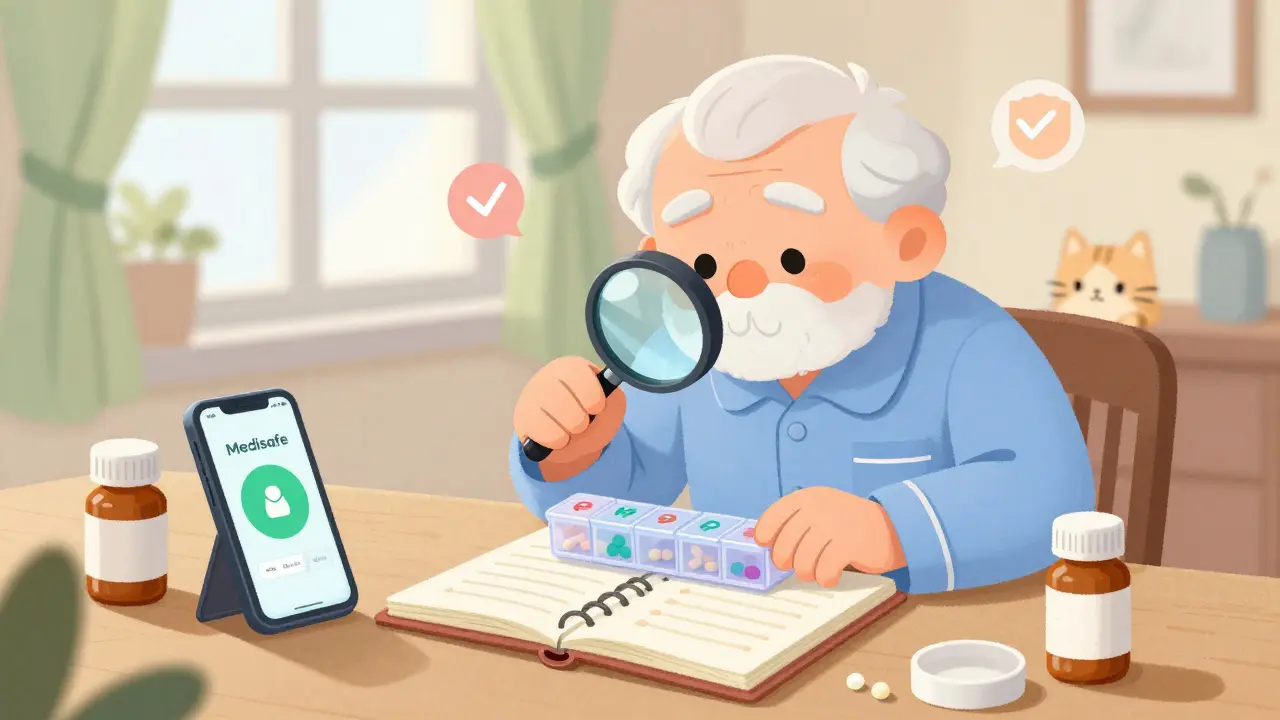
Get Help from Your Pharmacist
You don’t have to do this alone. Nearly 68% of U.S. pharmacies now offer free pill organizer filling services. A pharmacist will sit with you, verify your list, check for interactions, and fill the organizer for you. They’ll also tell you which meds can’t go in. It takes 15-20 minutes. Most insurance covers it. If you’re unsure whether a pill belongs in the organizer, ask. Pharmacists see these mistakes every day. They’ve seen people take double doses of blood pressure meds, mix up thyroid pills with antidepressants, or take expired antibiotics. They can prevent it. Don’t be embarrassed. It’s not your fault. The system is confusing. Getting help isn’t weakness-it’s smart.What to Do If You Think You Overdosed
If you took too much of a medication-whether it was a painkiller, blood thinner, or heart pill-don’t wait. Call Poison Control at 1-800-222-1222. Or go to the nearest ER. Symptoms of overdose vary, but common signs include dizziness, confusion, nausea, irregular heartbeat, or extreme drowsiness. Don’t try to figure it out yourself. Even if you feel fine, some overdoses don’t show symptoms right away. Keep your pill organizer and all medication bottles with you when you go to the hospital. That way, doctors know exactly what you took-and what you might have missed.Final Rule: Update It Weekly
Fill your organizer on the same day every week-Sunday morning works for most people. Don’t wait until you’re almost out. Don’t refill it on a Tuesday because you ran out. Stick to a routine. Studies show that people who refill on a fixed day have an 87% adherence rate. That means they rarely miss a dose or take an extra one. And every time you refill, recheck your list. Did your doctor change anything? Did you stop a drug? Did you start a new one? Even if you think nothing changed, check anyway. Medication lists get outdated fast. And an old list is the number one reason people overdose with pill organizers.Using a pill organizer safely isn’t about being perfect. It’s about being consistent. It’s about checking twice. It’s about asking for help when you’re unsure. The goal isn’t to remember everything. The goal is to make sure you never take more than you’re supposed to.
8 Comments

lorraine england
January 25 2026
okay but let’s be real-most people don’t even read the label. i’ve seen my aunt put insulin in her pill box ‘cause it looked like a little white pill. she’s lucky she didn’t end up in the ER. if you’re gonna use one, do it right. or don’t use it at all.

Darren Links
January 25 2026
my grandpa started using a smart organizer last year after he mixed up his blood pressure meds. it’s got alarms, a camera that snaps a pic when he opens it, and it texts my mom if he misses a dose. it’s not cheap but it’s worth every penny. also-pharmacist filling is free at cvs. just ask. they’ll do it while you wait.

Kevin Waters
January 27 2026
biggest thing i learned: never fill your organizer when you’re tired or rushed. i used to do it at 11pm after work-bad idea. i once put two different 10mg doses of metoprolol in the same slot. didn’t realize until i felt like i was gonna pass out. now i do it sunday morning with coffee and music. triple-check every pill. even the ones you’ve taken for 15 years. prescriptions change. your brain doesn’t remember that.

Kat Peterson
January 28 2026
sooo… are you telling me the government doesn’t WANT us to use pill organizers?? 😱 i mean… why would they let these things exist if they’re just gonna kill us?? also, is this why my cousin’s dog died?? 🐶💔 i think the pharma companies are hiding something…

Helen Leite
January 28 2026
my pharmacist told me the same thing but i didn’t believe her. until i saw the video from the FDA about how humidity turns pills into goo. now i keep mine in a locked drawer with silica packets. i even bought a hygrometer. if you’re not monitoring humidity, you’re playing russian roulette with your meds. 🤖💧

Izzy Hadala
January 28 2026
the statistical correlations presented in this article are compelling, particularly the 23% increase in overdose risk attributable to improper utilization of pill organizers as documented by the Journal of the American Geriatrics Society (2022). however, one must consider potential confounding variables, such as cognitive decline, polypharmacy burden, and socioeconomic access to pharmaceutical counseling. the efficacy of the triple-check system appears robust, yet longitudinal data on adherence to such protocols remains limited. further research is warranted to assess behavioral compliance in non-clinical populations.

Marlon Mentolaroc
January 29 2026
you know what’s really dangerous? trusting a pill organizer at all. the whole system is designed to make you feel safe while the system quietly fails you. i’ve seen people die because they thought the box was foolproof. the real solution? take your meds from the original bottles. every single time. no exceptions. no shortcuts. if you need help remembering, use a calendar. not a plastic box that’s gonna melt your pills or confuse your brain.





Sharon Biggins
January 24 2026
just filled my organizer this morning and i swear i almost put my lorazepam in with the daily stuff 😅 thank you for this post-i’m gonna move it back to the bottle right now. you’re a lifesaver.