

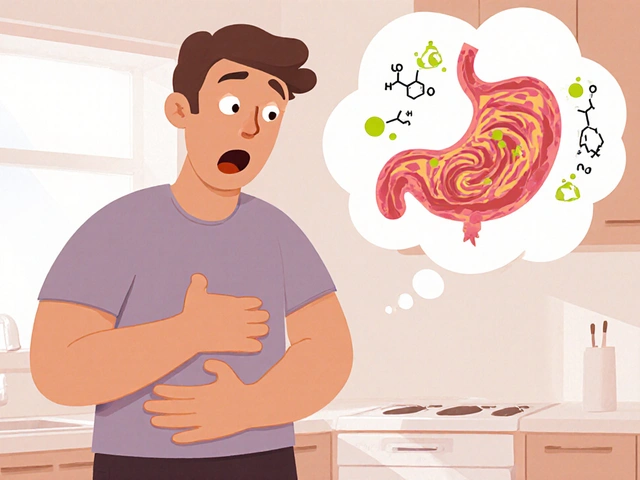
Every year, thousands of people in the U.S. end up in the hospital - or worse - because they took the wrong pill. Not because they forgot, but because they didn’t stop to read the label. It’s not laziness. It’s habit. And habits can be rewired.
You’ve been there. Morning rush. Coffee in one hand, pill bottle in the other. You shake out a tablet, swallow it, and move on. But what if that pill wasn’t for your blood pressure? What if it was your neighbor’s insulin? Or last week’s leftover antibiotics? One glance. One second. That’s all it takes to avoid a life-changing mistake.
The FDA says medication errors cause 7,000 to 9,000 deaths each year. Most of those aren’t from bad drugs. They’re from bad habits. And the fix isn’t complicated: check the label before every dose. Not sometimes. Not when you’re feeling careful. Every single time.
Why Your Memory Isn’t Enough
You think you know what’s in that bottle. You’ve taken it for months. But here’s the truth: your brain is terrible at remembering details when you’re tired, stressed, or distracted. A study from SmithRx found that 83% of people who relied on memory alone stopped checking labels within two weeks. And when they did, they got it wrong - 4 out of 10 times.
It’s not just about forgetting the name. It’s about mixing up similar-looking bottles. Insulin and saline. Metoprolol and metformin. One letter. One number. One wrong dose. That’s all it takes. In 2023, a 78-year-old man in Ohio confused his insulin with saline solution because he didn’t check the label. He ended up in a coma. He survived. But he lost months of his life.
Label checking isn’t about distrust. It’s about defense. The FDA calls it “the patient’s primary defense against medication errors.” And it works. People who check every time reduce their risk of a medication mistake by 76%. That’s more than double the protection you get from pill organizers or apps that just remind you to take your meds.
What to Look For: The 10 Critical Elements
You don’t need to be a pharmacist. But you do need to know what to scan for. Every label has ten key pieces of information - and you need to verify them all, every time.
- Your full name - Does it match your ID? Even a middle initial matters.
- Drug name - Both brand and generic. If it says “Lisinopril,” don’t assume it’s the same as “Zestril.”
- Dosage - 5 mg? 10 mg? 20 mg? Don’t guess. Read it.
- Frequency - “Take once daily” doesn’t mean “take when you remember.”
- Prescriber’s name - Is it your doctor? Or someone else’s?
- Quantity and refills - Did they give you 30 pills or 60? Are you supposed to get more?
- Expiration date - Expired meds don’t just lose strength. They can become toxic.
- Warnings - “Avoid alcohol.” “Take with food.” “May cause dizziness.” These aren’t suggestions.
- Pharmacy name and number - If something looks off, call them. They’re there to help.
- Date filled - Was this filled last week? Or six months ago? Old meds can degrade.
That’s it. Ten things. Takes 3 to 5 seconds. You can do it while your coffee brews. You can do it while waiting for the microwave.
The Three-Touch Method: How to Make It Stick
Reading the label isn’t enough. You need to engage with it. That’s where the Three-Touch Method comes in. It’s simple. And it works.
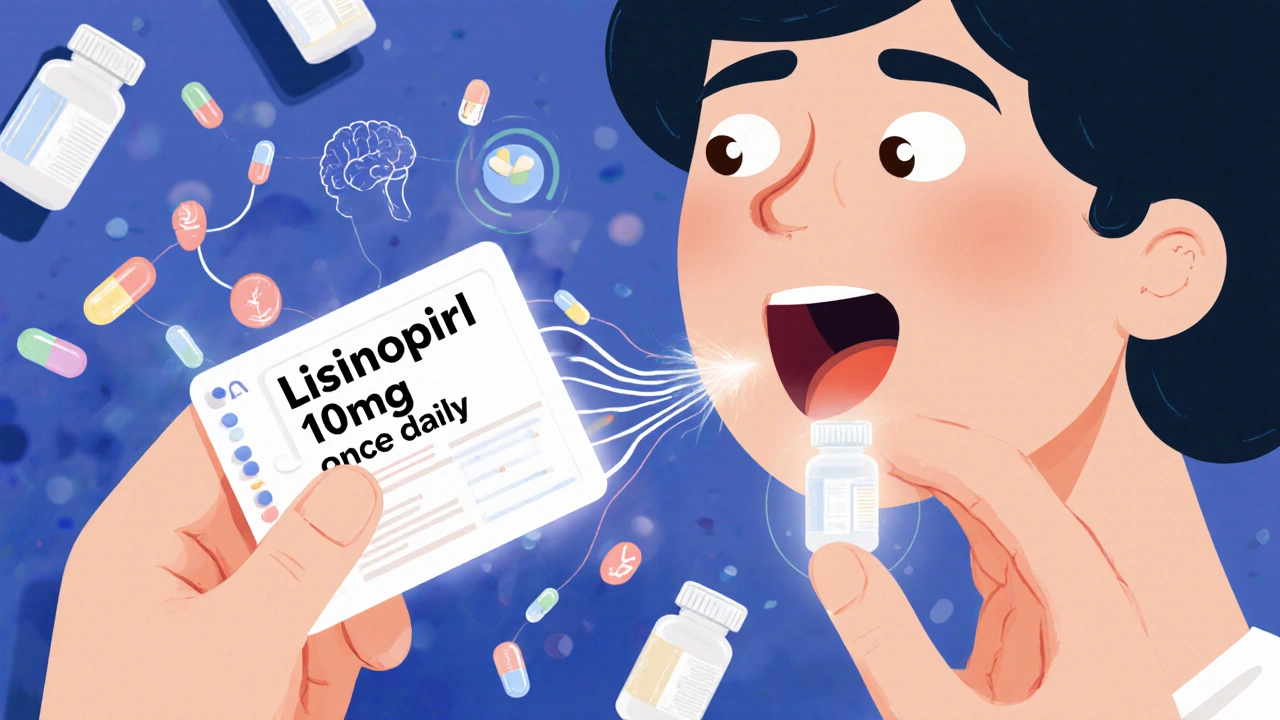
- Touch the label with your finger. Don’t just look - feel the words.
- Say it out loud - “This is [Your Name], for high blood pressure, 10 milligrams, once a day.”
- Touch the pill - Then take it.
Why does this work? Because you’re using multiple senses. Your eyes see it. Your mouth says it. Your fingers touch it. That triple input rewires your brain. In a clinical trial by SmithRx, people who used this method hit 92% adherence after 30 days. Those who just read silently? Only 64%.
It feels silly at first. You’ll feel like you’re talking to yourself. Good. That’s the point. You’re training your brain to pause. To question. To verify.
Fix the Environment - Not Just the Behavior
Trying to change a habit without changing your environment is like trying to diet in a bakery. It’s possible. But it’s hard.
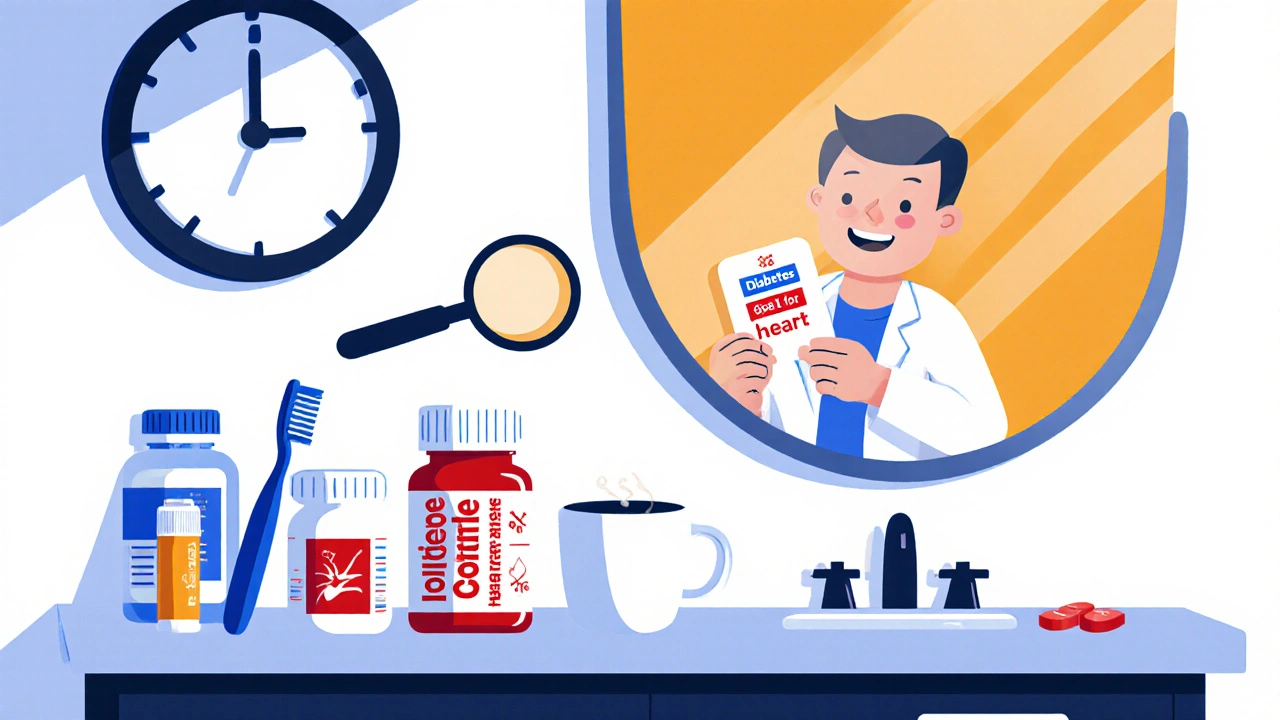
Place your meds where you’ll see them - and where you can’t skip the check. Put your pill bottle next to your coffee maker. On your toothbrush holder. On your car keys. Wherever you go every morning without thinking.
Why? Because routines are automatic. If your meds are in the path of your morning ritual, checking the label becomes part of the flow. A study from MedPak found that this simple trick reduced missed checks by 53%.
Also, use lighting. If you’re squinting, you’re not reading. Turn on the light. Put on your glasses. If the font’s too small, ask your pharmacist for a magnified label. Many now offer large-print or color-coded labels for free.
Tools That Help - And the Ones That Don’t
There are apps, pill boxes, smart bottles. But not all of them help.
Basic reminder apps? They’re useless if they don’t force you to verify the label. One study found that apps requiring users to photograph the label before logging a dose had 63% higher retention at 90 days than those that just buzzed you.
Color-coding works. Pharmacists recommend it. Red for heart meds. Blue for diabetes. Green for anxiety. Use sticky notes. Use tape. Use different colored bottles. It cuts confusion in half.
Smart bottles that scan your label before opening? They’re coming. CVS and Walgreens are testing them. They track whether you checked. They send alerts if you skip. But they’re not necessary. The Three-Touch Method costs nothing. And it’s just as effective.
What If You Can’t Read the Label?
One in five adults over 65 has trouble seeing small print. That’s not rare. It’s common. And it’s dangerous.
Don’t guess. Don’t rely on family. Ask your pharmacist for help. Most will:
- Print a large-print label for free
- Give you a magnifying label reader
- Record an audio version of the instructions
- Use color-coded stickers to highlight key info
And if you’re caring for someone else? Use the teach-back method. Ask them to explain the label back to you. “What’s this pill for? How much do you take? When?” If they can’t say it clearly, you haven’t understood it yet.
Studies show this boosts retention by 57%. It turns passive listening into active learning.
When Label Checking Fails - And What to Do
It’s not perfect. Sometimes, even with all the tricks, people still skip checks.
That’s usually because:
- They’re overwhelmed - managing 5+ meds is exhausting.
- They’re in pain or too tired to focus.
- They’ve been doing it wrong for years and don’t realize it’s risky.
Here’s how to fix it:
- Use a med list - write down every pill, dose, and time. Keep it in your wallet.
- Ask your doctor to simplify the regimen - can any meds be dropped?
- Get a caregiver involved - even once a week, have someone double-check your bottle.
- Use the “21-day rule” - commit to checking every dose for 21 days. That’s how long it takes to form a habit.
And if you’re still struggling? Talk to your pharmacist. Not your doctor. Your pharmacist sees your whole med list. They know what’s dangerous. They’ve seen the mistakes. They want to help.
The Bigger Picture: Why This Matters
Medication errors cost the U.S. healthcare system $42 billion a year. That’s not just money. It’s hospital beds. Lost time. Lost lives.
But here’s the good news: you don’t need a new app. You don’t need a fancy device. You don’t need to change your whole life.
You just need to pause. For three seconds. Before you swallow.
That’s it. That’s the entire system. Your eyes. Your fingers. Your voice. One bottle. One pill. One check.
It’s not glamorous. It’s not viral. But it’s the most powerful safety tool you’ve got.
And if you start today - right now - you’re already ahead of 72% of people who still take meds without reading the label.
Why do I need to check the label every time if I’ve taken this pill for years?
Even if you’ve taken the same medication for years, your prescription can change. The dosage might be adjusted. The brand might switch to generic. The bottle might be swapped accidentally. Your body changes too - your kidneys, liver, or other medications can affect how you process it. Checking every time catches those hidden changes before they cause harm.
What if the label is too small to read?
Ask your pharmacist for a large-print label. Most pharmacies offer this for free. You can also request a magnifying label reader, audio instructions, or color-coded stickers. The 2025 FDA labeling standards require minimum 6-point font and high contrast, but older bottles may still be hard to read. Don’t guess - ask for help.
Can I use a pill organizer instead of checking the label?
Pill organizers help with timing, but they don’t prevent the wrong pill from going in. If you fill a box with pills from different bottles without checking each label, you risk mixing up medications. Always verify the label before transferring pills into your organizer. The best approach is to check the label first - then fill the organizer.
How long does it take to make checking labels a habit?
Most people need 18 to 22 repetitions to make checking labels automatic. That’s about three weeks. Use the Three-Touch Method every time - touch, say it aloud, take the pill. After 21 days, you’ll find yourself doing it without thinking. That’s when safety becomes second nature.
Are there any apps that actually help with label checking?
Yes - but only if they require you to photograph the label before logging your dose. Apps that just remind you to take your pill don’t help. The ones that force you to scan or snap a picture of the label before allowing you to log it have 63% higher user retention because they build verification into the routine. Look for apps that mention FDA-compliant label verification.
15 Comments

Scott Collard
December 1 2025
Label checking is a Band-Aid on a hemorrhage. The real problem is polypharmacy and pharmaceutical marketing. You’re blaming the patient for a system designed to confuse them.

stephen idiado
December 2 2025
Western individualism at its finest. You think the pill bottle is your responsibility? In Nigeria, we trust the pharmacist. Period.

Subhash Singh
December 3 2025
While the methodology presented is commendable, one must consider the epistemological foundations of medication adherence. Cognitive load theory suggests that repeated verification may induce decision fatigue, particularly in geriatric populations with comorbidities.

Latika Gupta
December 4 2025
I’m scared to even open my pill box now. What if I mix them up even after checking? What if I’m still wrong?

Sullivan Lauer
December 6 2025
Y’all need to hear this: I’m 68, on seven meds, and I used to just wing it. Then my wife started doing the three-touch thing with me. I thought it was dumb. Now I do it without her saying a word. I say it out loud like I’m announcing my damn name at a wedding. ‘This is Gerardo, for the heart, ten milligrams, once a day.’ And I swear, it’s like my brain finally woke up. I haven’t missed a dose in 112 days. Not because I’m smart. Because I finally stopped being lazy. You can do this. You really can.

Sara Shumaker
December 8 2025
It’s not about trust. It’s about humility. We’ve been taught that medicine is this sacred, infallible thing. But pills are just chemicals. Bottles are just plastic. And our brains? They’re tired. We’re not failing because we’re careless-we’re failing because we’re human. The label isn’t there to punish us. It’s there to remind us we’re still alive, and we get to choose whether we stay that way.

Steven Howell
December 8 2025
According to the FDA’s 2023 Medication Error Reporting Database, 68% of label-related errors occurred within the first 14 days of a new prescription. The Three-Touch Method’s 92% adherence rate aligns with cognitive behavioral reinforcement models. Recommend implementing this as a standard of care in outpatient pharmacy counseling protocols.

Robert Bashaw
December 10 2025
Let me tell you about the time I almost swallowed my neighbor’s diabetes meds because I thought the bottle was mine. I looked at it. It was the same size. Same color. Same damn font. I was halfway to swallowing it before my hand froze. I screamed. My dog ran out the room. My wife came running. I was holding a vial of insulin like it was a cursed relic. I didn’t take another pill for three days. I started the three-touch method that night. I talk to my pills now. They’re my little life guards. And I don’t care how weird it sounds. I’m alive. That’s the only trophy I need.

jamie sigler
December 11 2025
Why are we putting this burden on patients? The pharmacy should have to prove the pill is right before I touch it. This feels like gaslighting with a pill bottle.

Geoff Heredia
December 12 2025
Did you know the FDA allows pharmacies to use the same bottle for different drugs if the label is changed? That’s right. One bottle, ten different pills. They just slap a new sticker on. And you think you’re safe because you check? Nah. They could swap your whole bottle while you’re at work. They’re all in on it. Big Pharma. The government. The pharmacists. They want you confused. So you keep buying.

linda wood
December 12 2025
My mom forgot her blood pressure med for three days last year. She panicked so bad she took three at once. Then she cried for an hour. I started doing the three-touch thing with her every morning. We sit at the kitchen table. I say it out loud. She says it back. We both touch the pill. It’s not about the medicine. It’s about us. And now? She doesn’t forget. She just… remembers. With me.

LINDA PUSPITASARI
December 13 2025
OMG this is so true 😭 I started using color stickers and now I put my insulin on a red tape and my heart med on blue and I say it out loud while I’m brushing my teeth 🤪 I used to be so scared to take anything but now I feel like a superhero 🦸♀️ also my pharmacist gave me a free magnifier and now I can read the tiny print without crying 🥹

gerardo beaudoin
December 13 2025
Check the label. Three seconds. Do it. That’s it.

Joy Aniekwe
December 14 2025
Wow. So you’re telling me the solution to a broken healthcare system is… talking to your pills? Cute. Meanwhile, my insurance denied my new prescription and I had to pay $300 out of pocket. But hey, at least I said it out loud.
Write a comment
Popular Posts

Matthew Higgins
November 30 2025
Man, I used to be the guy who just shook it out and swallowed. Then my grandma almost took my dad’s blood thinner. Now I do the three-touch thing like it’s my job. Feels weird at first, but now I don’t even think about it. My brain just stops. And that’s the whole point.