
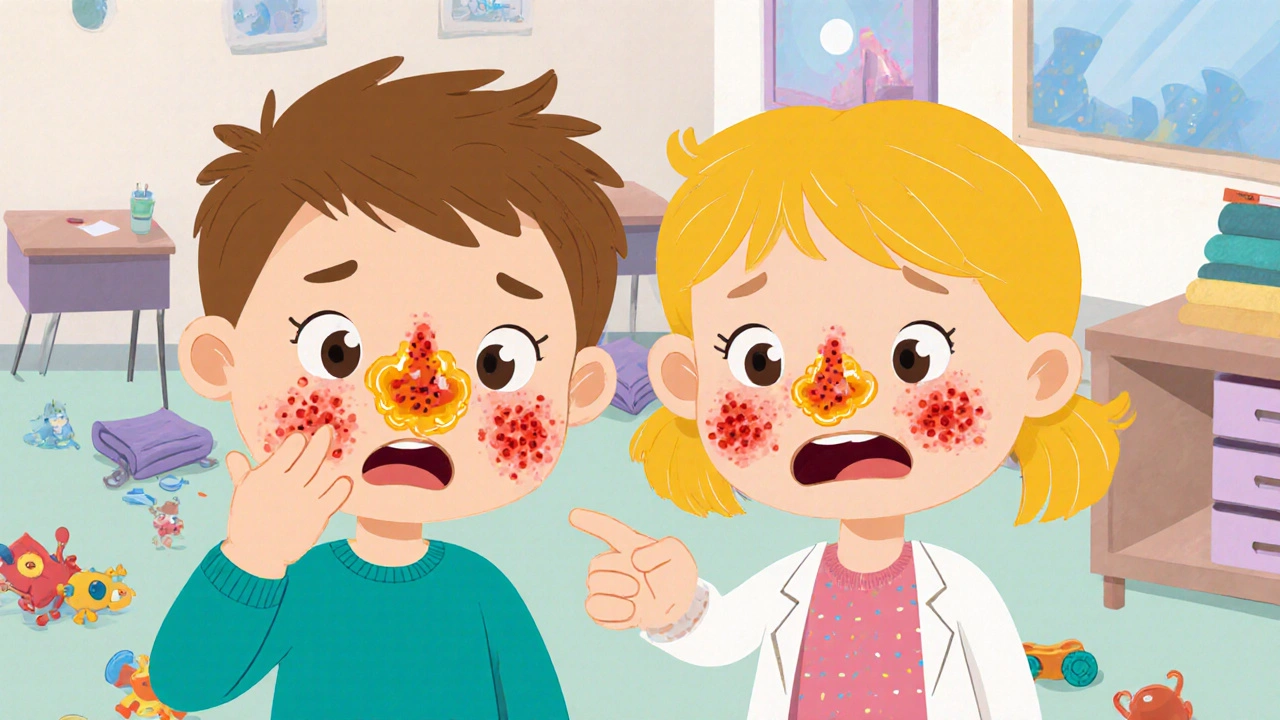
Two kids come home from school with red, crusty sores on their faces. A neighbor wakes up with a swollen, hot patch on their leg that’s spreading fast. Both look like simple rashes-but they’re not. One is impetigo, the other is cellulitis. They’re both bacterial skin infections, but they behave totally differently. And the wrong antibiotic can make things worse.
What Impetigo Really Looks Like
Impetigo is the classic "school sores" infection. It’s everywhere in nurseries and primary schools, especially in the UK during colder months when kids are indoors and skin is dry. It starts as a tiny red bump or blister, often near the nose or mouth, or around a cut or eczema patch. Within hours, it bursts, oozes, and forms that unmistakable honey-colored crust. It’s itchy but usually not painful. You’ll see it on cheeks, arms, legs-anywhere the skin got broken. There are two types. Nonbullous impetigo (70% of cases) is the crusty kind. Bullous impetigo is rarer, with bigger, fluid-filled blisters that pop and leave a ring-like border. It’s caused mostly by Staphylococcus aureus, sometimes by Streptococcus pyogenes. And yes-it spreads like wildfire. A child can infect their sibling, their toys, their towels-all in a day.What Cellulitis Actually Is
Cellulitis doesn’t crust. It swells. It burns. It feels hot to the touch. You don’t see blisters or crusts-you see a red, swollen patch on the skin that’s growing. The edges are blurry, not sharp. It’s deep-right under the skin, in the fat and connective tissue. It often shows up on the lower legs, but can hit anywhere: arms, face, even the belly. It’s not just a rash. It’s an invasion. Most cases are caused by Streptococcus bacteria, though Staphylococcus can be involved too. Unlike impetigo, cellulitis doesn’t usually start from a minor scratch. It follows deeper trauma: a spider bite, a diabetic foot ulcer, a surgical wound, or even a bug bite that got scratched raw. People with diabetes, poor circulation, or weakened immune systems are at higher risk. And if you ignore it? It can turn into sepsis.Why You Can’t Treat Them the Same Way
You might think, "It’s a skin infection-give antibiotics and call it done." But that’s where things go wrong. Impetigo is shallow. Cellulitis is deep. The treatment isn’t interchangeable. For mild impetigo, a topical antibiotic like mupirocin (sold as Bactroban) works in over 90% of cases. You just dab it on twice a day for 7-10 days. No pills needed. But if the sores are widespread, or if the child has a fever, you need oral antibiotics. In the UK, flucloxacillin is the go-to. It kills the staph bugs that cause most cases. Cellulitis? You need oral antibiotics that reach deep into tissue. Flucloxacillin is still first-line here too-especially in the UK. But if the infection is severe, or if the patient is very young, elderly, or diabetic, they might need hospital care and IV antibiotics. And if it’s not getting better after 48 hours? That’s a red flag.Antibiotic Choices by Region-Why It Matters
Not every country treats these the same. In France, doctors often start with amoxicillin for cellulitis. In Belgium, there’s no official guideline. But in the UK, flucloxacillin is the standard for both infections. Why? Because it’s effective against the bugs we see most here. But here’s the catch: antibiotic resistance is rising. MRSA-methicillin-resistant Staphylococcus aureus-is no longer rare. If someone’s infection doesn’t improve on flucloxacillin, or if they’ve been in hospital recently, MRSA could be the culprit. That’s when you need alternatives like clindamycin or doxycycline. In serious cases, vancomycin might be needed-given in hospital. The key? Don’t guess. If the infection isn’t clearing up, get a swab. Culture and sensitivity tests tell you exactly which bug you’re fighting and which drug will kill it. That’s not just best practice-it’s becoming essential.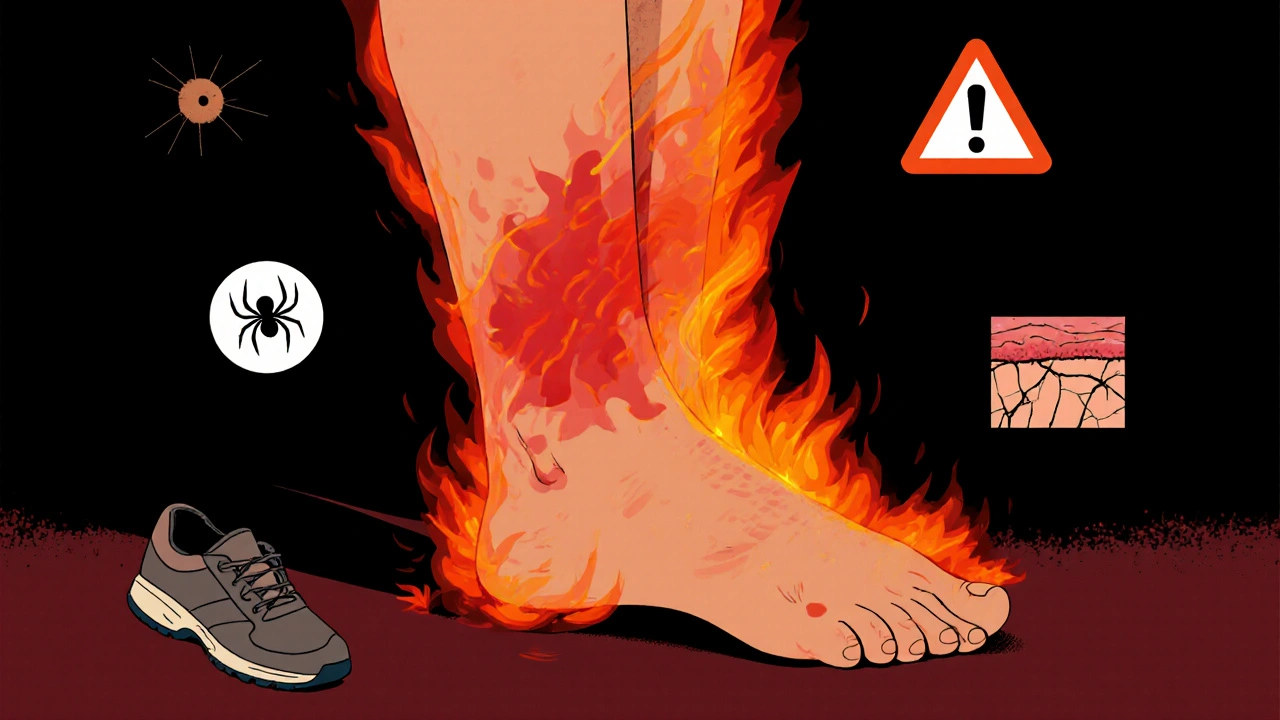
When to Worry: Signs It’s Getting Worse
With impetigo, you usually know it’s healing when the crusts dry up and fall off. New skin forms underneath. But if the sores get bigger, start oozing pus, or the child develops a fever, it’s time to call your GP. Same with cellulitis: if the red area spreads fast, the skin starts to blister, or the person feels dizzy, nauseous, or cold-get to a hospital immediately. Cellulitis can turn into abscesses, blood infections, or even tissue death (necrotizing fasciitis, though rare). Impetigo can lead to kidney problems if caused by certain strep strains. That’s why timing matters. Most experts say: start treatment within 48-72 hours of noticing symptoms. Delayed treatment means more antibiotics, longer recovery, higher risk.Prevention: Simple Rules That Actually Work
You can’t always stop infections-but you can cut the risk big time.- Wash cuts and scrapes with soap and water right away.
- Keep fingernails short, especially in kids. Scratching spreads bacteria.
- Don’t share towels, clothing, or bedding if someone has impetigo.
- Keep eczema under control. Dry, cracked skin is a gateway for bacteria.
- If you have diabetes, check your feet daily. Even a tiny blister can become cellulitis.
- Teach kids not to touch sores-and to wash hands after.
What Happens If You Skip Antibiotics?
Some people think, "It’s just a rash. It’ll clear on its own." Maybe. But impetigo can linger for weeks without treatment-and spread to others. Cellulitis? That’s not a gamble you should take. A 2023 study from Dermatology Seattle showed that 1 in 5 untreated cellulitis cases led to hospitalization. One in 10 developed complications like abscesses or blood infections. And recovery time? Without antibiotics, it can stretch from 7 days to over 3 weeks. Antibiotics aren’t magic. But they’re the best tool we have to stop these infections before they stop you.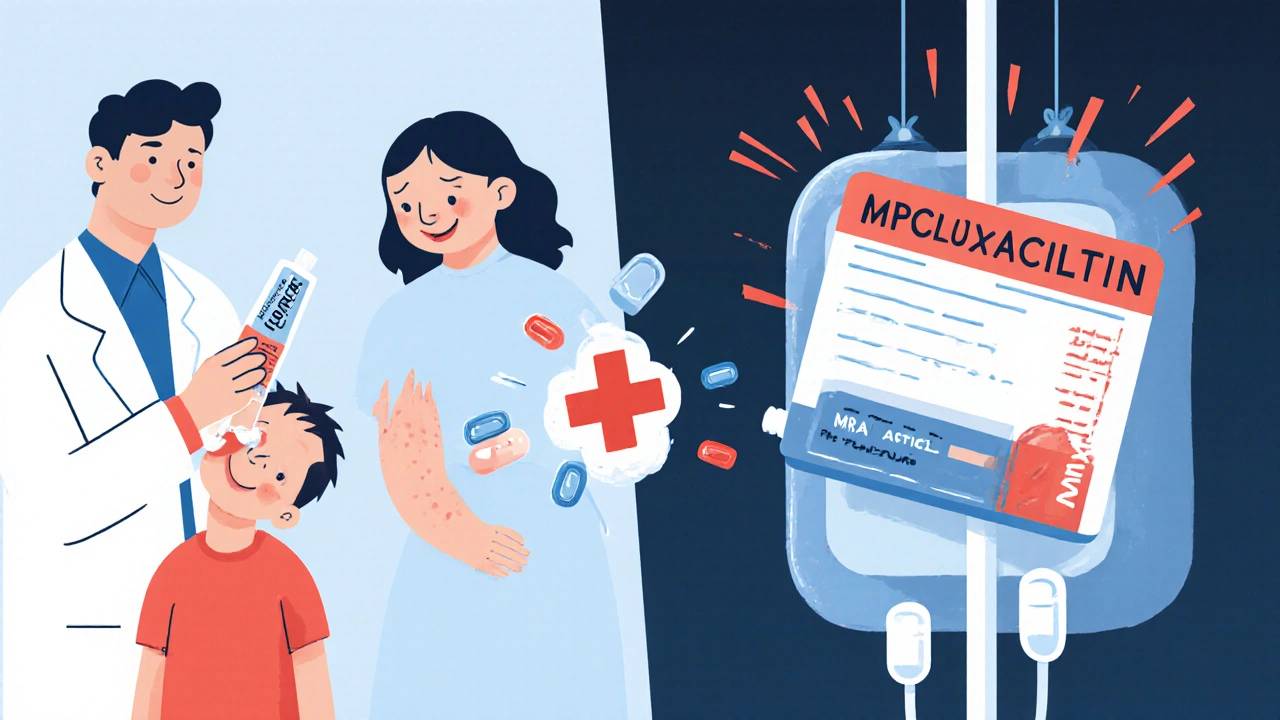
What About Natural Remedies?
You’ll hear about tea tree oil, honey, or garlic pastes. Some studies show honey (medical-grade Manuka) has antibacterial properties. But here’s the truth: no natural remedy has been proven to reliably treat impetigo or cellulitis in clinical trials. And if you wait for "natural healing," you risk letting the infection spread deeper. Topical mupirocin is a prescription antibiotic. It’s not "chemical"-it’s a natural compound made by bacteria, refined for safety. It works. Skip the Pinterest remedies. Stick to what’s tested, approved, and backed by decades of evidence.When to See a Doctor
See your GP if:- Red, crusty sores appear on a child’s face or body
- A red, swollen, warm patch on the skin is growing
- There’s fever, chills, or pain beyond the skin
- The infection doesn’t improve after 2-3 days of treatment
- You have diabetes, poor circulation, or a weakened immune system
Is impetigo the same as cellulitis?
No. Impetigo is a surface infection that forms crusty sores, usually on the face or limbs. It’s common in children and highly contagious. Cellulitis is a deeper infection that causes red, swollen, warm skin with blurry edges. It’s not contagious but can become life-threatening if untreated.
Can you treat impetigo without antibiotics?
Mild cases with just a few sores can be treated with topical mupirocin cream, which is an antibiotic but applied directly to the skin. If the infection is widespread, or if the person has a fever, oral antibiotics are necessary. Left untreated, impetigo can spread, last longer, and sometimes lead to kidney problems.
What’s the best antibiotic for cellulitis in the UK?
Flucloxacillin is the first-line antibiotic for cellulitis in the UK. It targets the most common bacteria, including staph and strep. If someone is allergic to penicillin, alternatives like clindamycin or doxycycline are used. For severe cases, hospital admission and IV antibiotics may be needed.
How long does it take for cellulitis to clear up?
With proper antibiotics, most people start feeling better in 2-3 days. The redness and swelling usually fade over 7-10 days. But you must finish the full course-even if you feel fine. Stopping early can cause the infection to come back stronger. If there’s no improvement after 48 hours, contact your doctor.
Can you get cellulitis from a cut or scrape?
Yes. Any break in the skin-cuts, insect bites, burns, or even cracked skin from eczema-can let bacteria in and cause cellulitis. That’s why it’s so important to clean wounds immediately and keep them covered. People with diabetes or poor circulation are at higher risk because their skin heals slower and immune response is weaker.
Is MRSA a concern with these infections?
Absolutely. MRSA (methicillin-resistant Staphylococcus aureus) doesn’t respond to flucloxacillin or other common penicillin-based antibiotics. If an infection isn’t improving, or if the person has been in hospital recently, MRSA could be the cause. In those cases, doctors will order a swab test and switch to stronger antibiotics like clindamycin or vancomycin.
Should children with impetigo stay home from school?
Yes. Most schools and nurseries require children to stay home until they’ve been on antibiotics for at least 24 hours. This is because impetigo is extremely contagious through touch or shared items like towels and toys. After 24 hours of treatment, the risk of spreading drops dramatically.
Final Thought: Don’t Wait, Don’t Guess
Skin infections like impetigo and cellulitis are common-but they’re not harmless. They’re not "just a rash." They’re bacterial invasions that need the right weapon at the right time. The wrong antibiotic? It won’t work. Delayed treatment? It could cost you days, weeks, or worse. Know the signs. Act fast. Use the right drug. And never ignore a spreading red patch. Your skin is your body’s first line of defense. Treat it like it matters-because it does.10 Comments

Melissa Michaels
December 1 2025
Cellulitis is not something to mess with. I saw a patient in ER last year who ignored a spider bite for four days. By the time she came in, her leg was black in patches. They had to admit her immediately. Antibiotics aren't optional here. Get it checked.

Nathan Brown
December 1 2025
It's wild how we treat skin like it's just a surface layer. But it's not. It's our first immune barrier. Impetigo and cellulitis aren't just "rashes" - they're signals. The body's screaming that something's breached. And we just slap on cream and call it a day. We forget that bacteria don't care about our schedules or our "it'll heal on its own" mindset. The real question isn't which antibiotic - it's why we wait until it's almost too late.
Also, honey? Manuka’s cool. But it’s not a replacement for science. Just because something’s "natural" doesn’t mean it’s safe or effective. We’ve been down this road with quack cures for centuries.

Matthew Stanford
December 2 2025
Good breakdown. Just want to add - if you have diabetes, check your feet daily. Seriously. Even a tiny blister can turn into a nightmare. My uncle lost his toe because he didn’t notice a cut. Don’t be like him.

Olivia Currie
December 4 2025
OMG I JUST HAD IMPETIGO AS A KID AND IT WAS THE WORST. I WAS SO ITCHY AND EVERYONE WAS LIKE "DON’T SCRATCH" BUT I COULDN’T HELP IT. MY MOM PUT ON MUPIROCIN AND IT WAS LIKE MAGIC. I STILL REMEMBER THE SMELL.

Curtis Ryan
December 5 2025
flucloxacillin? i think they spell it flucloxacillin in the uk but in the us we just use cephalexin and it works just as good lol

Rajiv Vyas
December 6 2025
they’re lying about antibiotics. it’s all about profit. the pharma companies made up impetigo and cellulitis so you’d buy drugs. natural healing works better. i’ve had red patches for months and i just rubbed coconut oil on it. no doctor needed.

farhiya jama
December 7 2025
why do i even read this? i just google "red skin bad" and take ibuprofen. it’s always fine.

Astro Service
December 9 2025
uk uses flucloxacillin? we dont need their fancy drugs. in america we just use penicillin and it works fine. stop copying europe.

DENIS GOLD
December 10 2025
Oh wow. So the UK has a whole system for this? And we’re just winging it in the US? No wonder our hospitals are full. At least they know what they’re doing over there. Meanwhile, I’m Googling "is this poison ivy?" at 2am.
Write a comment
Popular Posts




Nifedipine and Insomnia: Tips for Better Sleep
27 Mar 2025
Chris Taylor
November 30 2025
I had no idea impetigo was so contagious. My niece got it last winter and it spread to her whole class in like 3 days. We thought it was just eczema flaring up until the crusty stuff showed up. So glad we caught it early.