
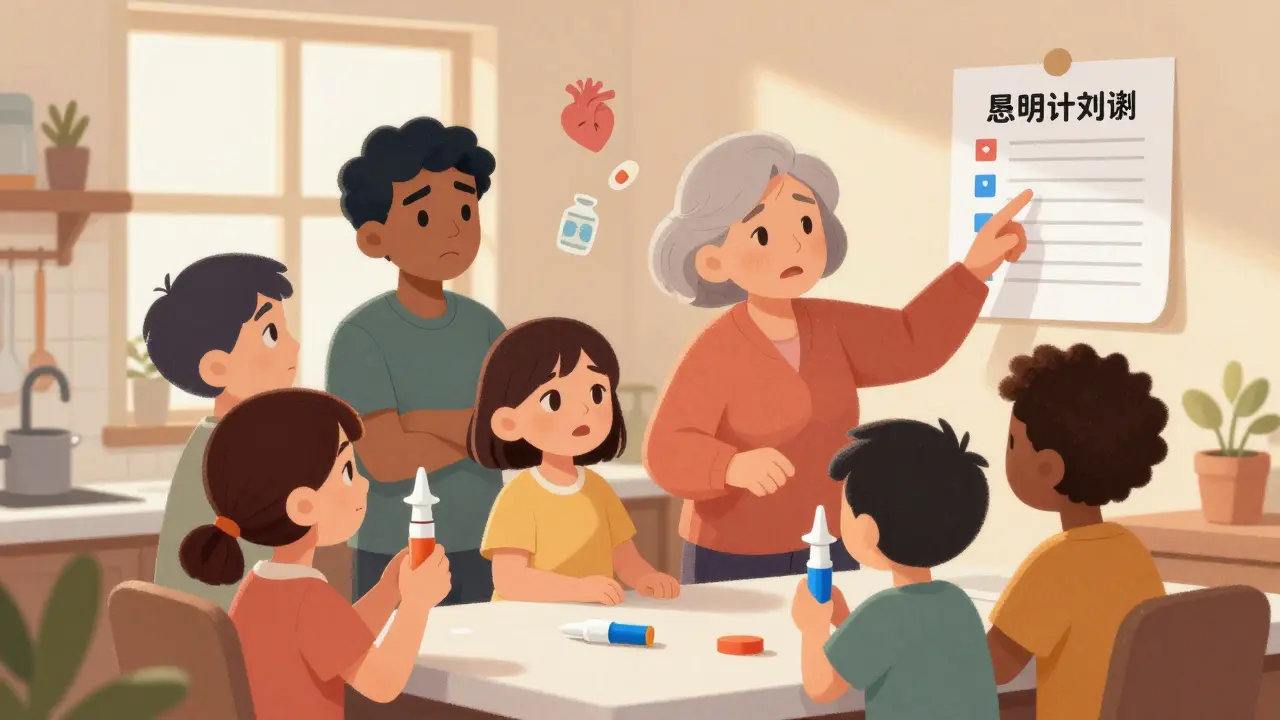
Naloxone Readiness Calculator
Opioid Readiness Assessment
This tool helps you determine if you or someone you care about should have a naloxone readiness plan based on medical factors.
Why This Matters
Every year, tens of thousands of people die from opioid overdoses. Many of these deaths happen because no one nearby has naloxone — or knows how to use it.
Every year, tens of thousands of people die from opioid overdoses. Many of these deaths happen because no one nearby has naloxone - or knows how to use it. If someone you care about is taking opioids - whether for chronic pain, cancer, or recovery - having a naloxone readiness plan isn’t just a good idea. It’s life insurance.
What Naloxone Does (And What It Doesn’t)
Naloxone is a medication that reverses opioid overdoses. It works by kicking opioids off the brain’s receptors, letting the person breathe again. In most cases, breathing returns within 2 to 5 minutes after administration. It’s fast. It’s simple. And it doesn’t work on anything else. If someone overdosed on alcohol, benzodiazepines, or cocaine, naloxone won’t help. But if it’s opioids - heroin, fentanyl, oxycodone, hydrocodone - naloxone can bring them back.
And here’s the thing: naloxone is safe. Giving it to someone who isn’t overdosing won’t hurt them. No high. No side effects. Just nothing. That’s why experts say: if you’re unsure, give it. Better safe than dead.
Who Needs a Naloxone Readiness Plan?
You don’t have to be using opioids illegally to need this plan. In fact, nearly 9 out of 10 opioid overdose deaths happen in people who were prescribed the drugs. That’s right - someone on a doctor’s prescription for back pain, after surgery, or for arthritis can still overdose.
The CDC recommends naloxone be available for anyone prescribed opioids at a daily dose of 50 morphine milligram equivalents (MME) or more. That’s about 10 tablets of 5mg oxycodone per day. But even below that threshold, if the person has a history of substance use, mental health conditions, or uses alcohol or benzodiazepines, the risk goes up.
And don’t forget: people who stop using opioids for a while - say, after detox or jail - are at highest risk. Their tolerance drops. A dose they used to handle can kill them now.
What Goes Into a Naloxone Readiness Plan?
A readiness plan isn’t just about having the drug. It’s about having a plan. Here’s what you need:
- At least two doses of naloxone - always. One dose might not be enough. Fentanyl and its analogs are so strong that they often require two or three doses to reverse. Keep one at home, one in your car, one with a trusted friend.
- Know the signs - unresponsive person, slow or stopped breathing, blue lips or fingernails, pinpoint pupils. If you see these, act immediately.
- Call 911 first - even if you give naloxone, they still need emergency care. Naloxone wears off in 30 to 90 minutes. Opioids can stay in the body much longer. The person can stop breathing again.
- Administer naloxone correctly - for nasal spray: tilt head back, insert nozzle fully into one nostril, press plunger firmly. For injection: inject into the outer thigh, through clothing if needed. No need to find a vein.
- Start rescue breathing - if they’re not breathing, give one breath every 5 seconds. This keeps oxygen flowing until naloxone kicks in. Don’t wait. Brain damage starts within minutes.
- Stay with them - monitor for at least 2 hours. Renarcotization (the opioids coming back) is real. If they wake up but then slip again, give another dose.
Which Naloxone Form Should You Choose?
There are three main types:
- Nasal spray (NARCAN®) - easiest for non-medical people. One spray per nostril. Costs $130-$150 without insurance. Now available over-the-counter at pharmacies like CVS, Walgreens, and Walmart.
- Intramuscular injection (0.4mg vials) - cheaper ($25-$40 per dose), but requires a syringe and needle. Best for people comfortable with injections or in clinical settings.
- Auto-injector (Evzio®) - voice-guided device. Rarely used now because nasal spray is simpler and just as effective.
For most families and caregivers, the nasal spray is the best choice. No training needed. No needles. Just push and spray.
Where to Get Naloxone
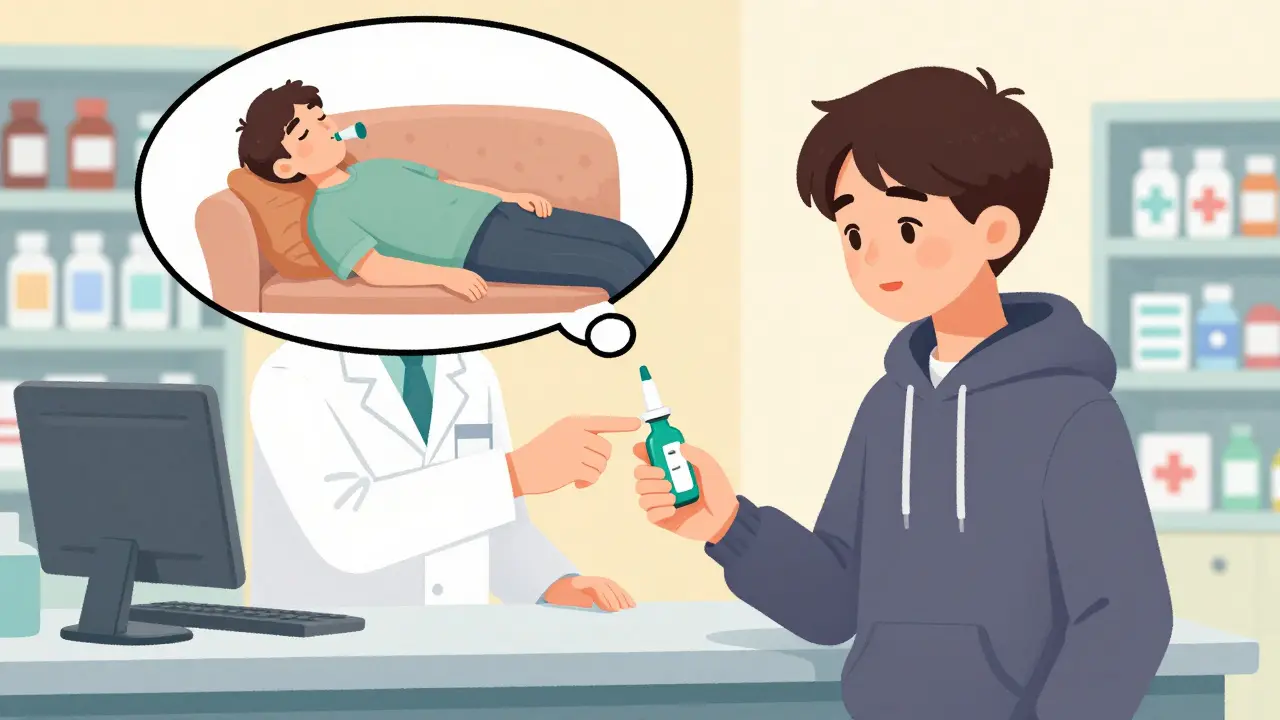
You don’t need a prescription anymore. In all 50 states, you can walk into a pharmacy and buy naloxone. Many pharmacies offer it behind the counter - just ask the pharmacist. Some states even have standing orders, meaning pharmacists are legally allowed to hand it out without an individual prescription.
Free kits are available too. Community health centers, harm reduction programs, and local health departments often give them out at no cost. Search for “free naloxone near me” or contact your state health department. In 2023, over 47 states had laws making naloxone easier to get - but awareness is still low. Only 53% of Americans know where to find it.
What About Cost?
Cost is still a barrier. About 42% of uninsured people say they can’t afford naloxone. But there are options:
- Many insurance plans cover naloxone with low copays.
- Pharmacies like CVS and Walgreens offer discount programs.
- Nonprofits and state programs give away free kits - no questions asked.
- Some local governments ship free naloxone by mail. Check your city or county website.
Don’t let price stop you. One kit costs less than a month’s supply of pain pills. And it can save a life.
Workplaces and Schools Need Plans Too
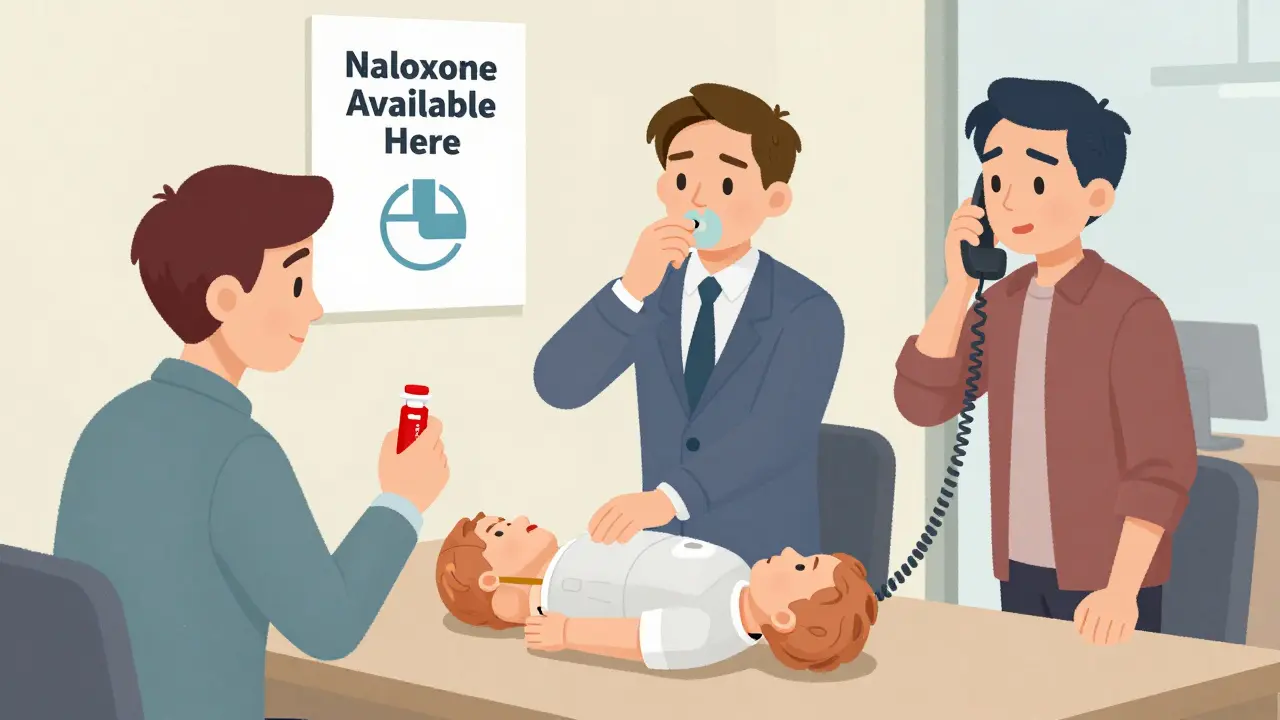
Overdose deaths in the workplace have increased by over 600% since 2011. OSHA now recommends naloxone be available in any workplace with more than 15 employees. Schools, shelters, libraries, and community centers are also starting to keep kits on hand.
Training takes just 20 minutes. After that, 92% of people can administer naloxone correctly. Annual refreshers keep skills sharp. If your workplace doesn’t have a plan, ask why. It’s not just responsible - it’s expected.
Why So Many People Still Don’t Have It
The biggest problem isn’t access. It’s stigma. Many doctors still don’t talk about naloxone with their patients. A 2022 survey found only 32% of primary care providers routinely offer it to people on opioids. Patients feel ashamed. They think, “If I need naloxone, I must be an addict.” But that’s not true.
Naloxone isn’t for addicts. It’s for people who take medicine. It’s for grandparents on pain pills. It’s for veterans with PTSD. It’s for teens who accidentally took a pill they thought was Tylenol. It’s for everyone.
What Happens After You Give Naloxone?
People often wake up angry. Scared. In pain. That’s normal. Opioid withdrawal starts fast. They may feel like they’re dying - but they’re not. They’re just coming back.
Don’t leave them alone. Don’t let them walk away. Stay with them. Reassure them. Call their doctor. Help them get into treatment if they’re ready. Naloxone doesn’t fix addiction. But it gives them a second chance.
Real Stories, Real Impact
In Washington State, over 28,000 overdoses were reversed with naloxone in 2022. In Georgia, a mother saved her son after he passed out from a painkiller mix. In Pennsylvania, a pharmacist gave a teenager a free kit - he used it to save his roommate two weeks later.
Reddit users in r/OpiatesRecovery shared 87 stories of home reversals. In 62% of them, naloxone worked. In 78%, rescue breathing made the difference. In 29%, people struggled to get the spray into the nose because the person was limp. That’s why practice matters.
Your Next Steps
Here’s what to do today:
- Ask your doctor: “Should I have naloxone?” If they say no, ask why.
- Go to your pharmacy and buy one nasal spray kit. Keep it in your bag, your car, your nightstand.
- Watch a 5-minute YouTube video on how to use it. Practice on a dummy if you can.
- Tell two people you care about: “I have naloxone. If something happens, I’ll use it.”
- Check if your local health department gives out free kits. Sign up.
This isn’t about fear. It’s about control. You can’t stop every overdose. But you can make sure that if one happens, you’re ready. And that changes everything.
Can naloxone be used on children or elderly people?
Yes. Naloxone is safe for all ages. It works the same way in kids, adults, and seniors. The dose doesn’t change based on age - it’s based on the type of opioid and how much was taken. If someone of any age shows signs of opioid overdose, give naloxone immediately.
How long does naloxone last, and can it wear off too soon?
Naloxone lasts 30 to 90 minutes. Many opioids - especially fentanyl - last much longer. That’s why people can stop breathing again after waking up. Always call 911 and stay with the person for at least 2 hours. If they relapse into unconsciousness, give another dose.
Do I need training to use naloxone?
No formal training is required. Nasal spray is designed to be used by anyone. But 20 minutes of hands-on practice - like practicing on a training device or watching a video - increases your confidence and success rate by over 90%. Many free online tutorials are available from the CDC and local health departments.
Is naloxone effective against fentanyl overdoses?
Yes, but it often takes more than one dose. Fentanyl is 50 to 100 times stronger than morphine. In many cases, two or even three doses of naloxone are needed. Always have at least two kits available. If the person doesn’t respond after the first dose, give a second one after 2-3 minutes.
Can I carry naloxone on an airplane?
Yes. The TSA allows naloxone in carry-on and checked bags. Keep it in its original packaging with the label visible. You don’t need a prescription to travel with it. If asked, explain it’s a life-saving medication for opioid overdose. Many airlines now carry naloxone on board for emergencies.
What if I’m not sure whether someone is overdosing?
If you’re unsure, give naloxone anyway. It won’t harm someone who isn’t overdosing. Look for unresponsiveness, slow or shallow breathing, blue lips, or pinpoint pupils. If in doubt, call 911 and administer naloxone. The risk of doing nothing is death. The risk of giving naloxone is nothing.
14 Comments

Kristin Dailey
January 19 2026
This is why America needs to stop coddling addicts. Naloxone just enables them.

Danny Gray
January 20 2026
You know what's really dangerous? The fact that this is even a conversation we're having. We've built a society where life-saving drugs are sold like cough syrup because we refuse to fix the root cause. The real tragedy isn't the overdose-it's that we've normalized it.

Zoe Brooks
January 20 2026
I just bought my first kit today. 🙌 My dad’s on oxycodone for his spine. I’m not waiting until it’s too late. If you’re reading this and haven’t gotten one yet-do it. Now. Life’s too short to be scared of being prepared.

Ryan Otto
January 21 2026
The institutionalization of naloxone distribution is a textbook example of symptom management masquerading as policy. The pharmaceutical-industrial complex has successfully reframed a systemic collapse of public health infrastructure into a logistical problem solvable by retail pharmacy counters. This is not prevention. This is triage capitalism.

Max Sinclair
January 22 2026
I appreciate how clear this is. My sister’s a nurse and she told me the same thing-naloxone is safe, easy, and doesn’t judge. I got two kits last week. One for home, one for my car. I told my mom to keep one in her purse too. Simple. Smart. Necessary.

Pat Dean
January 24 2026
They say it's for everyone. But let's be real. It's mostly for the people who won't stop using. And now we're rewarding that behavior with free kits. What's next? Free opioids with every purchase?

Robert Cassidy
January 24 2026
They say 'if you're unsure, give it'-but what if they're just sleeping? What if it's a kid? What if it's a white guy with a beard and a hoodie? We're turning emergency medicine into a guessing game. And now the government's handing out narcan like candy. Who's next? Free rehab? Free therapy? Free guilt?

rachel bellet
January 25 2026
The pharmacokinetic profile of naloxone is fundamentally incompatible with the half-life of synthetic opioids like fentanyl. Administering a single 4mg dose without concurrent respiratory support is clinically negligent. The CDC's public messaging is dangerously oversimplified and fails to account for the polypharmacological realities of modern overdose.

Praseetha Pn
January 26 2026
You think this is about saving lives? Nah. This is a cover for the Deep State to track who's using opioids. Every kit has a microchip. The pharmacy scans it. Your name goes in a database. Then the IRS comes. Then the cops. Then the social workers. They don't want to save you. They want to control you. And they're using naloxone to do it.

Andrew Qu
January 27 2026
If you're reading this and you're scared to get naloxone because you think it means you're enabling someone-that’s the stigma talking. The truth is, you're not enabling. You're preparing. Like having a fire extinguisher in the kitchen. You don't hope the stove catches fire-you just make sure you're ready if it does. That's not enabling. That's love.

Stacey Marsengill
January 27 2026
I used to think naloxone was a miracle. Then I watched my brother wake up screaming, shaking, crying-begging to be left alone. He said, 'Why did you do this?' And I realized-this isn't saving people. It's just delaying the inevitable. We're not healing. We're just keeping them alive long enough to hurt more.

Aysha Siera
January 28 2026
They say it's free at pharmacies. But they're lying. The real cost is your privacy. Every time you buy it, they log your name. Your address. Your credit card. They're building a opioid user registry. And soon, you won't be able to fly. Or get a job. Or rent an apartment. They're coming for you. Mark my words.

Jay Clarke
January 28 2026
I used to think this was just about drugs. Now I see it’s about power. Who gets to decide who lives and who dies? The doctor? The pharmacist? The state? We’re handing out life-saving tools like they’re coupons. But the real question is-why did we get to this point where we need a spray to fix what society broke?
Write a comment
Popular Posts
kenneth pillet
January 17 2026
I keep a nasal spray in my glovebox. Just in case. No big deal. My cousin OD'd last year. Naloxone saved him. He's clean now. That's all you need to know.