
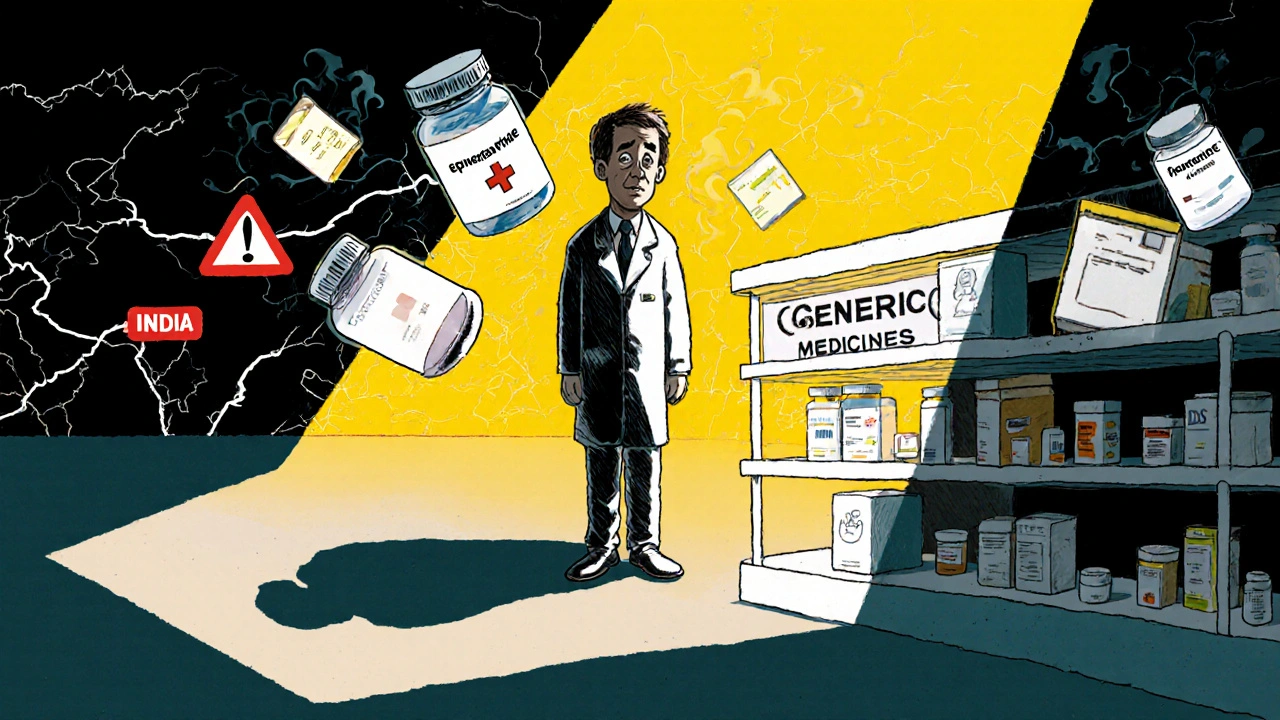
It’s 2025, and if you’ve been filling prescriptions lately, you’ve probably noticed something off. The price went up. The pharmacy called to say it’s out of stock. Or worse - your doctor switched you to a different pill, and you’re not sure why. This isn’t random. It’s the result of a deepening crisis: pricing pressure and shortages are squeezing drug manufacturers to the breaking point.
Why Are Drugs Getting Harder to Find?
Back in 2020, everyone talked about toilet paper shortages. Now, the real scarcity is in medicine. Generic injectables like epinephrine, antibiotics like amoxicillin, and even basic pain relievers like acetaminophen are disappearing from shelves. The reason? Manufacturers aren’t making enough - and they’re not making it because they can’t afford to. Raw materials for drugs - things like active pharmaceutical ingredients (APIs), solvents, and packaging components - have seen price spikes of 15-25% since early 2024. Much of this comes from geopolitical shifts. China controls over 80% of the global supply for many APIs. When trade tensions flared again after the 2024 U.S. elections, export restrictions kicked in. Suddenly, a drug maker in Ohio couldn’t get the key chemical for their blood pressure medication. They tried sourcing from India, but Indian suppliers were already overwhelmed. By summer 2025, over 120 generic drugs were on the FDA’s shortage list - the highest number since records began. It’s not just about raw materials. Tariffs on imported chemicals jumped from 2.4% to over 11% in 2025. That’s not a small bump. For a company making a $0.10 pill, a 10% cost increase on the active ingredient means they’re now spending $0.11 just to make the core of the drug. Multiply that by millions of pills, and you’re talking about millions in extra costs - with no way to raise prices enough to cover it.The Financial Tightrope: Can’t Raise Prices, Can’t Cut Costs
Here’s the brutal part: drug manufacturers can’t just raise prices to cover these costs. Unlike car parts or electronics, patients and insurers are extremely sensitive to drug prices. If a generic blood thinner goes from $5 to $20 a month, people skip doses. Hospitals push back. Medicare and Medicaid won’t approve the new price. So manufacturers are stuck. A Duke University survey of 347 pharmaceutical CFOs in September 2025 found that 72% said they’ve absorbed cost increases for over a year without passing them on. That means their profit margins are shrinking - some by more than 15%. One mid-sized generic drug maker in New Jersey told me they’ve cut their R&D budget by 40% and laid off 22% of their quality control staff just to stay afloat. They’re not alone. The same survey showed 63% of manufacturers have delayed or canceled capital investments - like upgrading sterile filling lines or building new warehouses. Why? Because they’re using every dollar just to keep the lights on. And when you stop investing, you get slower production, more errors, and eventually, more shortages. It’s a vicious cycle. No investment → lower output → shortages → fewer customers → less revenue → even less investment.Who’s Really Paying the Price?
You might think, “Well, if manufacturers are losing money, why don’t they just stop making those drugs?” That’s exactly what’s happening - but not all drugs. Manufacturers are focusing on the high-margin ones: brand-name drugs, cancer treatments, rare disease therapies. The low-margin, high-volume generics? They’re being abandoned. Take insulin. It’s a decades-old drug. The patent expired years ago. It’s made by dozens of companies. But because the price is locked in at $25-$30 per vial - thanks to Medicare caps and public pressure - no one wants to make it anymore. The profit margin is under 5%. So manufacturers shift production to newer, more profitable drugs. The result? Insulin shortages are rising again in 2025, even though demand hasn’t dropped. Even worse, when one manufacturer stops making a drug, it doesn’t just disappear. The next company that could make it needs FDA approval. That takes 12-18 months. By then, the shortage is already causing harm. Hospitals are rationing. Patients are switching to less effective alternatives. Emergency rooms are seeing more complications from untreated conditions.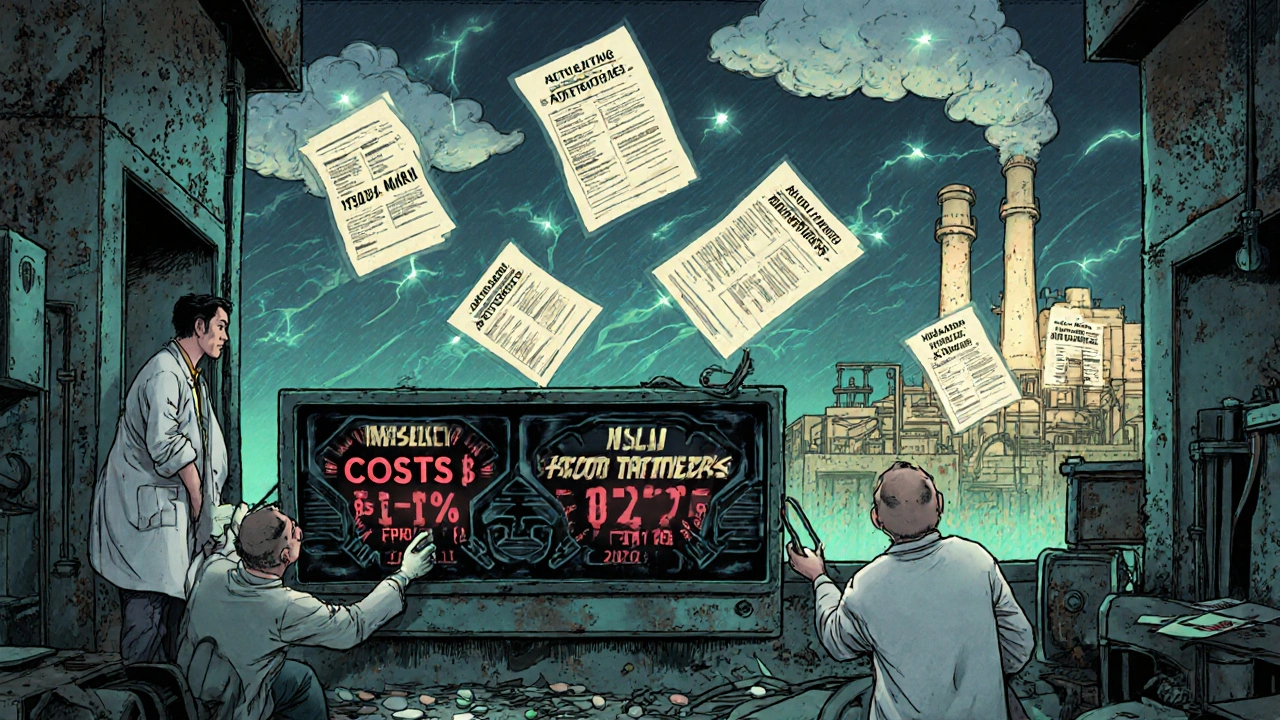
Why Isn’t This Being Fixed?
There are plenty of ideas on the table. Some suggest building domestic API production. Others want the government to pay manufacturers subsidies to keep making low-margin drugs. But here’s the problem: these solutions are expensive and slow. The U.S. government has spent $1.2 billion since 2022 to incentivize domestic manufacturing of critical drugs. But setting up a single API plant costs $200-$500 million and takes 3-5 years. Even if every dollar went perfectly, it wouldn’t fix the current crisis. Meanwhile, regulatory delays are making things worse. The FDA has a backlog of over 2,000 drug applications. Many are for generic drugs that could help fill shortages. But inspectors are understaffed. One plant in Puerto Rico waited 14 months for a routine inspection - during which time they couldn’t ship any product. And then there’s the lack of coordination. One manufacturer might have the capacity to make a drug - but doesn’t know another is shutting down. No central system tracks real-time inventory across the entire U.S. supply chain. So when a shortage hits, it’s chaos.What’s Working? Real Fixes from the Front Lines
Not all hope is lost. Some companies are finding ways to survive - and even thrive - in this environment. One small manufacturer in North Carolina started using AI to predict ingredient shortages six months in advance. By analyzing global shipping data, weather patterns, and customs delays, they now reorder materials before prices spike. They’ve cut inventory costs by 28% and avoided three potential shortages in 2025. Another company partnered with five other generic drug makers to share warehouse space and logistics. Instead of each running their own delivery fleet, they pooled resources. That saved them $1.7 million last year. A few are even experimenting with “reverse pricing.” Instead of raising prices when costs go up, they lower them slightly to lock in long-term contracts with hospitals. It sounds backwards, but it works. One company increased their contract renewals by 40% using this model - and kept their margins stable. The most successful manufacturers are no longer just drug makers. They’re supply chain engineers. They’re data analysts. They’re negotiators. They’re building networks, not just pills.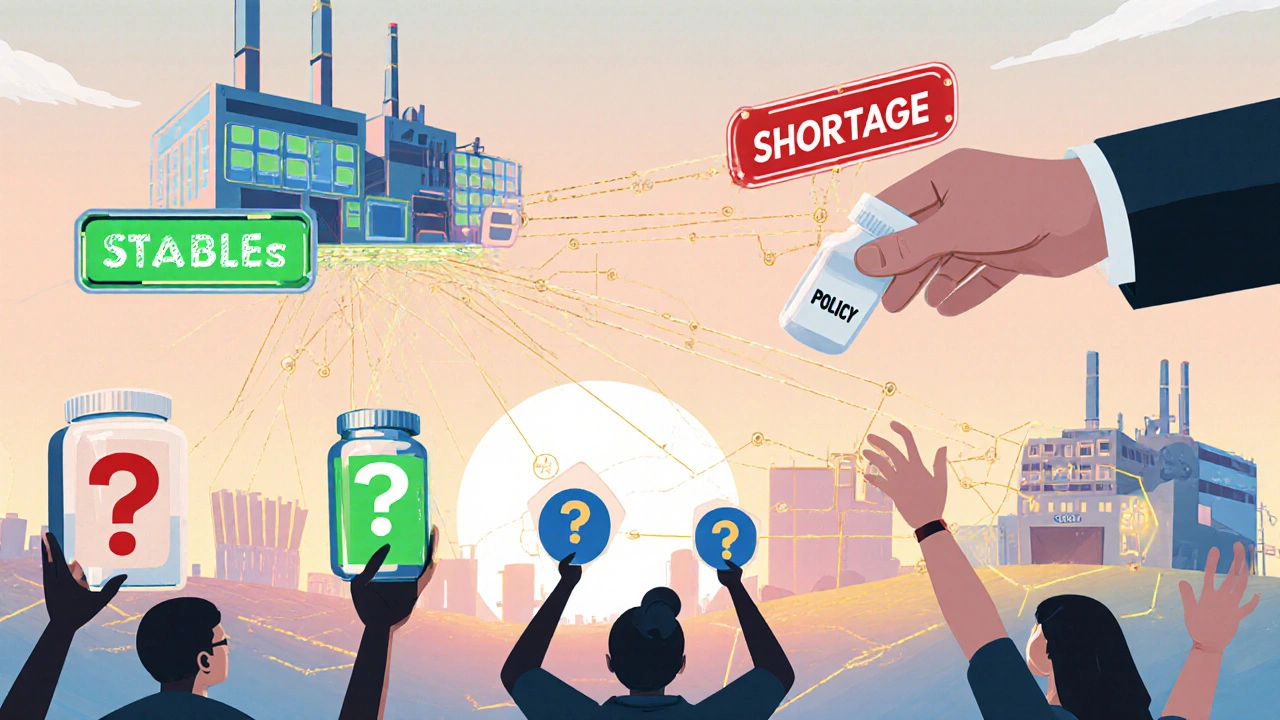
What Comes Next?
The experts agree: this isn’t a temporary glitch. It’s a structural shift. The era of cheap, globalized drug manufacturing is over. The next five years will be about resilience - not just efficiency. By 2027, the FDA expects at least 40% of generic drugs to be sourced from two or more countries, not just one. That’s a big change. It means more redundancy, more cost, and more complexity - but also more safety. Meanwhile, insurers and government payers are starting to pay differently. Instead of just paying the lowest price, some are now paying a premium for reliable supply. That’s a win for manufacturers who can prove they won’t run out. The real turning point will come when policymakers stop treating drug shortages like a public relations problem and start treating them like a national security issue. Because when a hospital can’t get antibiotics, it’s not just inconvenient - it’s deadly.What You Can Do
If you’re a patient, here’s what you can do right now:- Ask your pharmacist: “Is there another version of this drug available?” Sometimes a different brand or manufacturer works just as well.
- Don’t wait until your last pill to refill. Stock up when you can - especially for chronic condition meds.
- Report shortages to the FDA’s website. Your report helps them track patterns and respond faster.
- Ask your doctor if a non-generic alternative is an option - even if it’s pricier. Sometimes the cost of a shortage is higher than the cost of a brand-name drug.
Final Thought
Drug shortages aren’t caused by greed. They’re caused by broken economics. Manufacturers aren’t villains - they’re caught in a system where the math doesn’t add up. Fixing this won’t come from blaming anyone. It’ll come from rebuilding the system - with smarter rules, better data, and real investment. The pills you need are still being made. But not as many. And not as reliably. That’s the new reality. The question is: are we ready to pay for it - in money, in policy, or in patience?Why are generic drugs in short supply in 2025?
Generic drugs are in short supply because manufacturers can’t make them profitably. Raw material costs have jumped 15-25%, tariffs have increased to over 11%, and many companies can’t raise prices without losing customers. As a result, they’re cutting production or switching to more profitable drugs, leaving low-margin generics underproduced.
How do tariffs affect drug prices?
Tariffs on imported pharmaceutical ingredients - like active ingredients from China or India - have risen from 2.4% to over 11% in 2025. These costs get added to the price of making each pill. Since manufacturers can’t always pass these costs to consumers, their profit margins shrink, leading to reduced production or full shutdowns of certain drugs.
Can the U.S. make its own drugs to avoid shortages?
Yes, but it’s slow and expensive. Building a single API manufacturing plant costs $200-$500 million and takes 3-5 years. While the government has spent $1.2 billion since 2022 to encourage domestic production, the scale of global demand means it will take years before this reduces shortages. In the meantime, most drugs still rely on international supply chains.
Why don’t manufacturers just raise prices to cover costs?
Because patients, insurers, and government programs like Medicare won’t allow it. Generic drugs are priced competitively, and even small price hikes trigger backlash. If a $5 pill jumps to $15, people skip doses or go without. Hospitals refuse to stock it. So manufacturers absorb the losses - which leads to reduced output and more shortages.
What’s being done to fix drug shortages?
Some manufacturers are using AI to predict ingredient shortages, sharing logistics with competitors, and locking in long-term contracts with hospitals. The FDA is working to clear its backlog of drug applications, and a few states are starting to pay premiums for reliable suppliers. But there’s no national system yet - and progress is uneven.
15 Comments

Emma Dovener
November 27 2025
I work in hospital pharmacy and this is real. We’ve had to switch patients off amoxicillin three times this year. No one talks about how many people skip doses or go to the ER because they can’t get their meds. It’s not a policy issue-it’s a human one.

Gayle Jenkins
November 28 2025
Stop pretending this is about ‘fair pricing.’ The real issue is that generic drug makers have been lazy for 20 years. They didn’t invest. They didn’t diversify. They just sat back and counted profits while China built its monopoly. Now they’re crying? No. Time to pay the piper.
And if you think Medicare’s price caps are the villain-you’re wrong. The villain is the industry that let itself become a commodity instead of a lifeline.

Kaleigh Scroger
November 29 2025
the fact that we rely on china for 80 of our active ingredients is insane and nobody in washington wants to admit it
we spent trillions on wars but cant spend 5 billion to make our own pills
and dont even get me started on the fda backlog its like theyre running a 1990s fax machine in 2025
we are one pandemic away from mass deaths because we outsourced our survival

Elizabeth Choi
December 1 2025
Oh please. Drug companies are just whining because they can’t make 40% margins on $0.10 pills anymore. They had decades to prepare. Now they want taxpayer money to bail them out? No thanks. Let the market sort it out. If people can’t afford insulin, they shouldn’t take it.

Allison Turner
December 3 2025
generic drug makers are the reason we have shortages. they cut corners for profit. they dont care if you die. they just want to move units. and now they want a handout? pathetic.

Darrel Smith
December 3 2025
THIS IS THE NEW COMMUNISM. THEY WANT TO CONTROL OUR MEDS. THEY WANT TO TELL US WHAT WE CAN TAKE AND HOW MUCH WE CAN PAY. THE GOVERNMENT IS LETTING CHINA OWN OUR HEALTH. THIS ISN’T A SHORTAGE-IT’S A TAKEOVER.
THEY’RE COMING FOR YOUR PAIN PILLS NEXT. YOU THINK THIS IS ABOUT INSULIN? NO. IT’S ABOUT POWER.
WE NEED A REVOLUTION. OR AT LEAST A GUN.

Aishwarya Sivaraj
December 5 2025
in india we make a lot of the raw stuff but we dont have the tech to make sterile injectables properly so we send it to usa and they say its not good enough then they blame us
its like if you make bread but your oven is old and they say your bread is bad then they charge you extra to fix your oven
no one helps us just judge us
we want to help but we need fair rules not punishment

Iives Perl
December 5 2025
bill gates is behind this. he wants to control the drug supply so he can track who takes what. the fda is his puppet. the shortages? planned. the price hikes? surveillance. you think this is coincidence? lol. 🤡

steve stofelano, jr.
December 6 2025
It is with profound respect for the complexity of global pharmaceutical supply chains that I submit the following observation: the current crisis reflects a systemic failure of intergovernmental coordination, capital allocation, and regulatory harmonization. The absence of a unified, data-driven, real-time inventory tracking mechanism across North American and South Asian manufacturing nodes has rendered the system inherently fragile. A multilateral initiative, backed by public-private capital and standardized regulatory protocols, is not merely advisable-it is imperative.

Savakrit Singh
December 8 2025
India produces 60% of global generics but has zero say in pricing. USA and EU dictate terms. Then blame us when shortages happen. 😒 This is economic colonialism. 🇮🇳💊

Cecily Bogsprocket
December 10 2025
I’ve been a nurse for 22 years. I’ve watched people cry because they can’t get their heart meds. I’ve held hands while they waited for a shipment that never came. This isn’t about politics or profits. It’s about dignity. The people who make these drugs are working 12-hour shifts in 100-degree warehouses just to keep us alive. Let’s not forget that.
And the ones fixing it? The AI guys, the warehouse sharers, the ones lowering prices to lock in contracts? They’re the real heroes. We need to lift them up, not tear them down.

Jebari Lewis
December 10 2025
There’s a reason the FDA backlog is 2000+ applications. The system is broken, but the solution isn’t just money. It’s culture. We need inspectors who understand manufacturing, not bureaucrats who check boxes. We need manufacturers who prioritize reliability over speed. We need patients who understand that $5 insulin isn’t free-it’s subsidized by someone’s sacrifice. Let’s stop treating healthcare like a Walmart aisle.

Emma louise
December 11 2025
Oh wow, the poor little drug companies can’t make enough profit on pills? Cry me a river. I’m paying $400 for my blood pressure med and you want me to pay more because your ‘supply chain’ is ‘fragile’? Maybe if you didn’t outsource everything to China you wouldn’t be in this mess. Also, who let you write a novel? 🙄

sharicka holloway
December 13 2025
My mom’s on insulin. She’s 72. She’s had to switch brands twice this year. Each time, she gets dizzy, confused, scared. She doesn’t care about tariffs or geopolitics. She just wants to live. So please, stop talking about ‘systems’ and ‘models.’ Tell me what we’re doing to make sure she gets her pill tomorrow. That’s all that matters.

archana das
November 27 2025
you know in india we grow most of the raw herbs for medicine but we dont make the pills ourselves. why? because the rich countries take the knowledge and leave us with the dirt. its not about money, its about respect.
we could make these drugs, but no one asks us to. they just buy cheap and blame us when it breaks.
we are not the problem. the system is.