
It is a stressful moment when your child is sick and you are staring at a bottle of liquid medicine, wondering if it actually belongs in the fridge or on the counter. You might see a pharmacy label that says one thing, while a quick online search suggests another. This isn't just about being organized; improper storage can lead to treatment failure. In fact, a 2022 CDC study found that poor storage contributes to about 15% of treatment failures in pediatric antibiotic therapy. When the medicine breaks down, it doesn't fight the infection as well, which can prolong your child's illness and potentially lead to bacterial resistance.
The goal is simple: keep the medication potent until the very last dose. Since most antibiotic suspensions for children are mixed with water (reconstituted) just before you get them, they start a "countdown clock" of stability. Once that powder becomes a liquid, the chemical structure begins to change. To ensure your child gets the full benefit of the drug, you need to follow a specific set of rules based on the exact type of antibiotic prescribed.
Quick Guide to Storage Requirements
Not all liquid antibiotics are created equal. Some need the cold to stay stable, while others actually suffer if they get too chilly. To keep things clear, here is a breakdown of the most common medications you will encounter.
| Medication Name | Preferred Storage | Stability Period | Key Note |
|---|---|---|---|
| Amoxicillin | Refrigerator or Room Temp | 14 Days | Flexible temperature options. |
| Amoxicillin/Clavulanate (Augmentin) | Strictly Refrigerated (2-8°C) | 10 Days | Clavulanate degrades quickly at room temp. |
| Azithromycin (Zithromax) | Room Temperature | 10 Days | Do NOT refrigerate; it becomes too thick. |
The Cold Truth: When to Refrigerate
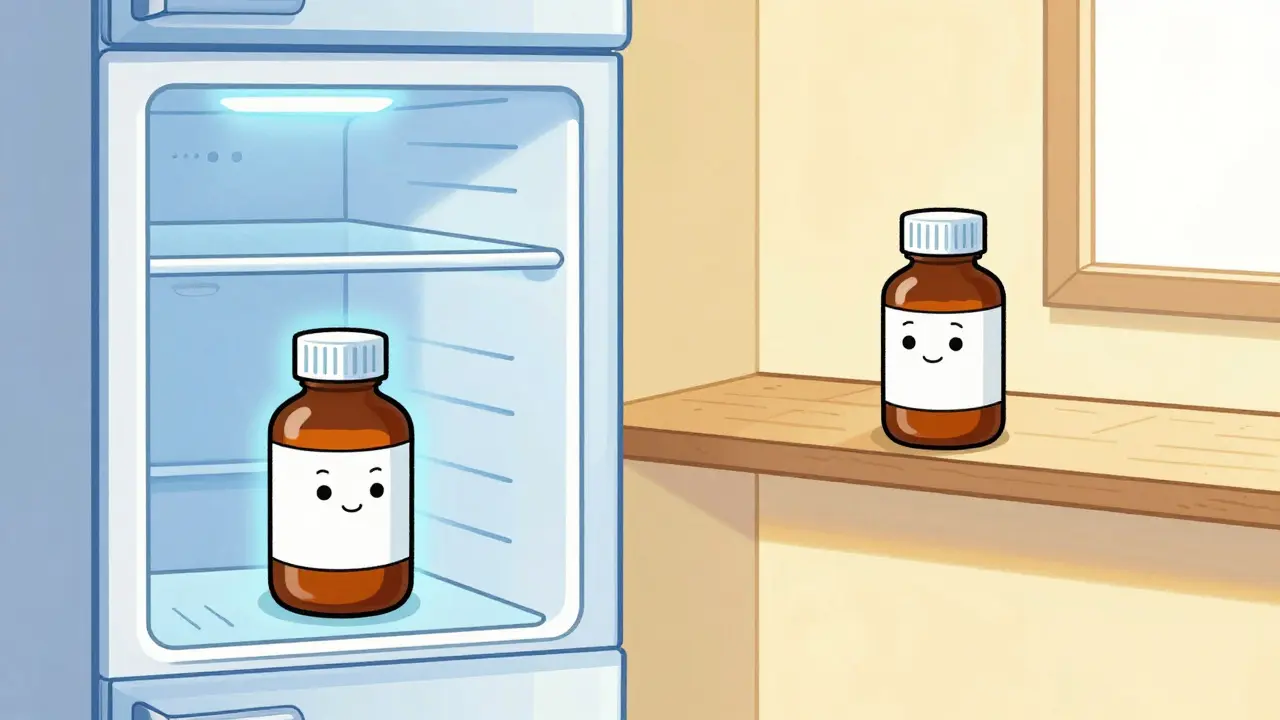
Many parents assume that if a medicine is a liquid, it belongs in the fridge. While that's often true, the reasons vary. For Amoxicillin/Clavulanate, refrigeration is non-negotiable. This drug contains a beta-lactamase inhibitor called clavulanate, which is incredibly sensitive to heat. If left at room temperature, the clavulanate component can lose nearly 10% of its potency in just five days, making the medicine less effective against stubborn bacteria.
On the other hand, standard Amoxicillin is more forgiving. You can keep it in the fridge (which some pharmacists suggest because it tastes better when cold), but it remains stable at room temperature (20-25°C) for its full 14-day window. The main takeaway here is that if your bottle has a "Refrigerate" sticker, stick to it. If you're unsure, the pharmacy label is your gold standard.
The No-Fridge Zone: Medications to Keep Out of the Cold
Believe it or not, putting some antibiotics in the fridge can actually ruin them. Azithromycin is the prime example. When this medication gets cold, it thickens significantly. This doesn't just make it a nightmare to pour; it makes the taste much worse, which usually leads to a battle with a toddler who refuses to swallow it. Research shows a 37% drop in palatability when refrigerated.
Other medications that should generally avoid the refrigerator include clarithromycin and cefdinir. When you store these at room temperature, you maintain the correct viscosity, ensuring the dose is accurate and the child can actually take it. Always double-check for a "Do Not Refrigerate" warning on the packaging.
Managing the Discard Date
One of the biggest mistakes parents make is keeping the medicine "just in case" for a future infection. This is dangerous. Once a pharmacy mixes a powder into a suspension, it is no longer a stable long-term product. Dr. Jessica Smith from the Children's Hospital of Philadelphia notes that continuing to use antibiotics past the discard date is a primary cause of treatment failure.
Most pediatric liquids must be tossed after 10 to 14 days. Even if the bottle isn't empty, the active chemicals break down. For instance, Amoxicillin/Clavulanate loses significant activity by day 11, meaning the dose your child takes on day 12 might not be strong enough to kill the remaining bacteria. This is how antibiotic resistance starts-by exposing bacteria to "weakened" medicine that doesn't finish the job.
To stop the guesswork, try these practical tips:
- Use Discard Stickers: Write the exact date the medicine expires in big, red letters on the cap.
- Set a Phone Reminder: Put a calendar alert for the 10th or 14th day to throw the bottle away.
- Use Apps: Tools like the CDC's MedSafe app can help you track medication timelines.
Common Storage Pitfalls to Avoid
Where you store the medicine is just as important as the temperature. Many people instinctively put meds in the bathroom cabinet, but the bathroom is actually one of the worst places. The humidity from the shower and the temperature swings from the sink create an unstable environment that can accelerate drug degradation.
Similarly, avoid storing meds on top of the refrigerator (where heat vents) or on a sunny windowsill. If you are using the fridge, avoid the door shelves; the temperature fluctuates every time you open the door. Instead, place the medication in the main body of the fridge where the temperature is most consistent (ideally between 2-8°C).
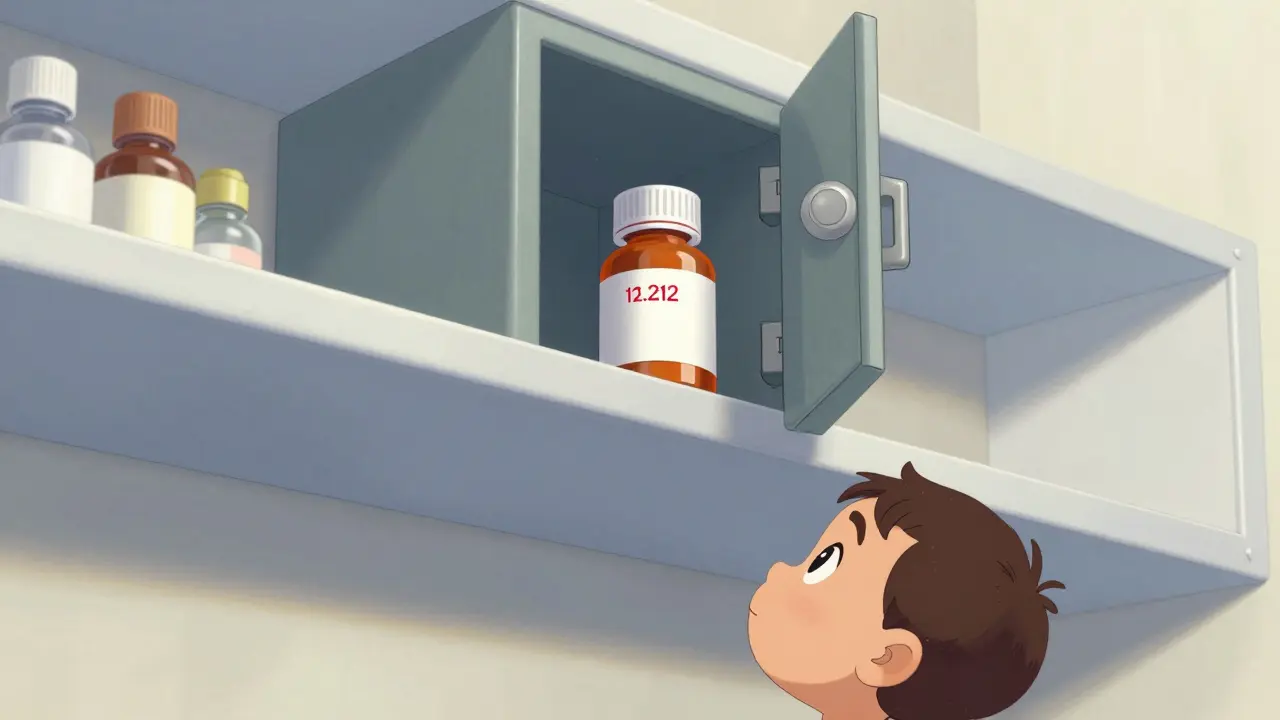
Safety is the final, most critical piece of the puzzle. With 60,000 children treated annually for accidental poisoning, the "Up and Away" rule is vital. Store all medications in a locked cabinet or a high shelf-far beyond the reach of curious toddlers. A child might be attracted to the bright colors or the sweet taste of a suspension, leading to a dangerous overdose.
How to Spot Spoiled Medication
Even with perfect storage, it pays to be vigilant. Before every dose, do a quick visual and scent check. While most medications look the same for a while, there are red flags that suggest the drug has gone bad:
- Color Changes: If a milky white liquid starts looking yellow or grey, toss it.
- Strange Smells: A sharp, sour, or unusual odor is a sign of chemical breakdown.
- Clumping: While some sedimentation is normal (which is why you shake the bottle), thick chunks or a "curdled" appearance indicate spoilage.
What happens if I accidentally left my refrigerated antibiotic on the counter overnight?
It depends on the drug. For Amoxicillin, it is likely still fine. However, for Amoxicillin/Clavulanate (Augmentin), the stability drops quickly at room temperature. If the medication was left out for more than a few hours in a warm room, call your pharmacist to ask if you need a replacement bottle to ensure the treatment is effective.
Why does my pharmacist say to shake the bottle before every dose?
Antibiotic suspensions are not "solutions" (where everything is fully dissolved); they are "suspensions," meaning the medicine is made of tiny particles floating in a liquid. These particles naturally settle at the bottom over time. Shaking ensures the medicine is evenly distributed so your child gets the exact dose prescribed in every milliliter.
Can I freeze liquid antibiotics to keep them longer?
No, never freeze liquid antibiotics. Freezing can destroy the molecular structure of the drug and cause the suspension to separate permanently, making it useless and potentially dangerous.
Is it okay to save leftover antibiotics for the next time my child gets sick?
Absolutely not. First, the medication expires shortly after mixing. Second, using a partial course of a previous antibiotic can mask symptoms or contribute to antibiotic resistance. Always finish the prescribed course and discard the rest.
My child hates the taste of the cold medicine; can I warm it up?
You should not heat the medication in a microwave or on a stove, as heat destroys the active ingredients. Instead, let the required dose sit at room temperature for a few minutes before administering, or ask your pharmacist if the specific drug can be mixed with a small amount of applesauce or yogurt.
Next Steps for Parents
The next time you pick up a prescription, don't just grab the bag and go. Ask the pharmacist three specific questions: "Does this need refrigeration?", "What is the exact discard date?", and "Should I shake this before every dose?"
If you live in a home with unreliable electricity, inform your provider. They may be able to suggest an alternative formulation or a different antibiotic that is more stable at room temperature. Finally, set up a dedicated "medication station"-a high, cool, dry spot-to ensure that your child's recovery is supported by medicine that is stored safely and correctly.