
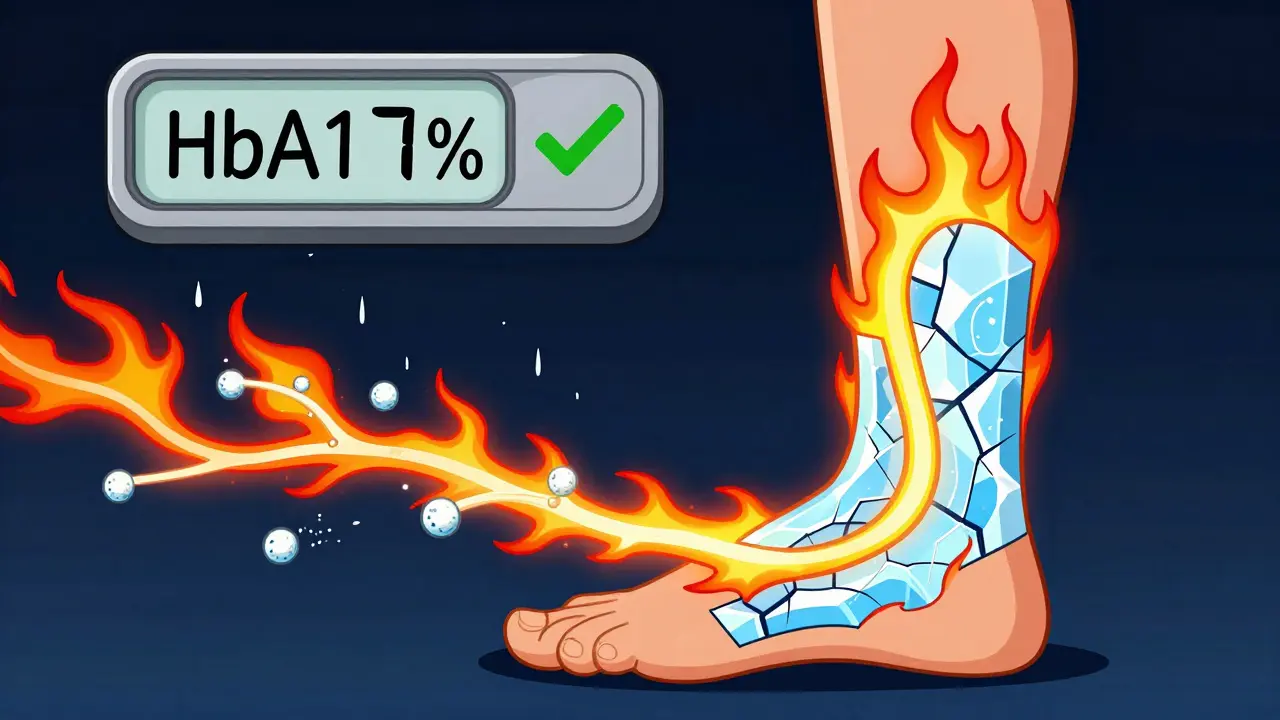
When your feet feel like they’re on fire, or your hands go numb for no reason, it’s not just aging - it could be peripheral neuropathy. This isn’t a single disease, but a group of conditions caused by damage to the nerves outside your brain and spinal cord. These nerves connect your limbs to your central nervous system, sending signals for movement, touch, and pain. When they get damaged, you don’t just lose feeling - you might feel pain where there shouldn’t be any.
What Causes Peripheral Neuropathy?
- Diabetes - This is the number one cause. About half of all people with diabetes develop some level of nerve damage over time. High blood sugar slowly poisons nerve fibers, especially in the feet and legs. Keeping your HbA1c below 7% can cut your risk of developing neuropathy by 60%, according to the Diabetes Control and Complications Trial.
- Vitamin B12 deficiency - Often overlooked, this can cause tingling, balance problems, and a feeling of walking on cotton. It’s more common in older adults, vegans, or people who’ve had stomach surgery. A simple blood test can spot it, and injections of 1,000 mcg of B12 can start improving symptoms in just 4 to 8 weeks.
- Chemotherapy - Up to 40% of cancer patients on drugs like vincristine or paclitaxel develop nerve damage. This type often starts in the fingers and toes and can linger long after treatment ends.
- Alcohol misuse - Chronic heavy drinking damages nerves directly and often goes hand-in-hand with poor nutrition, especially low B vitamins.
- Infections - Shingles, Lyme disease, HIV, and even hepatitis C can trigger nerve inflammation. Post-shingles nerve pain (postherpetic neuralgia) affects about 10-18% of people over 60 who get the virus.
- Autoimmune diseases - Conditions like rheumatoid arthritis or Guillain-Barré syndrome can cause the immune system to attack nerves by mistake.
- Idiopathic cases - About 20% of people with neuropathy never find a clear cause, even after full testing. This is frustrating, but not hopeless - symptoms can still be managed.
Most people notice symptoms starting in their feet - a burning, stabbing, or pins-and-needles feeling. Over time, it can spread up the legs. Some lose sensation completely, which means they don’t feel cuts or blisters. That’s dangerous. Without proper foot care, small injuries can turn into serious infections or even amputations.
How Is It Diagnosed?
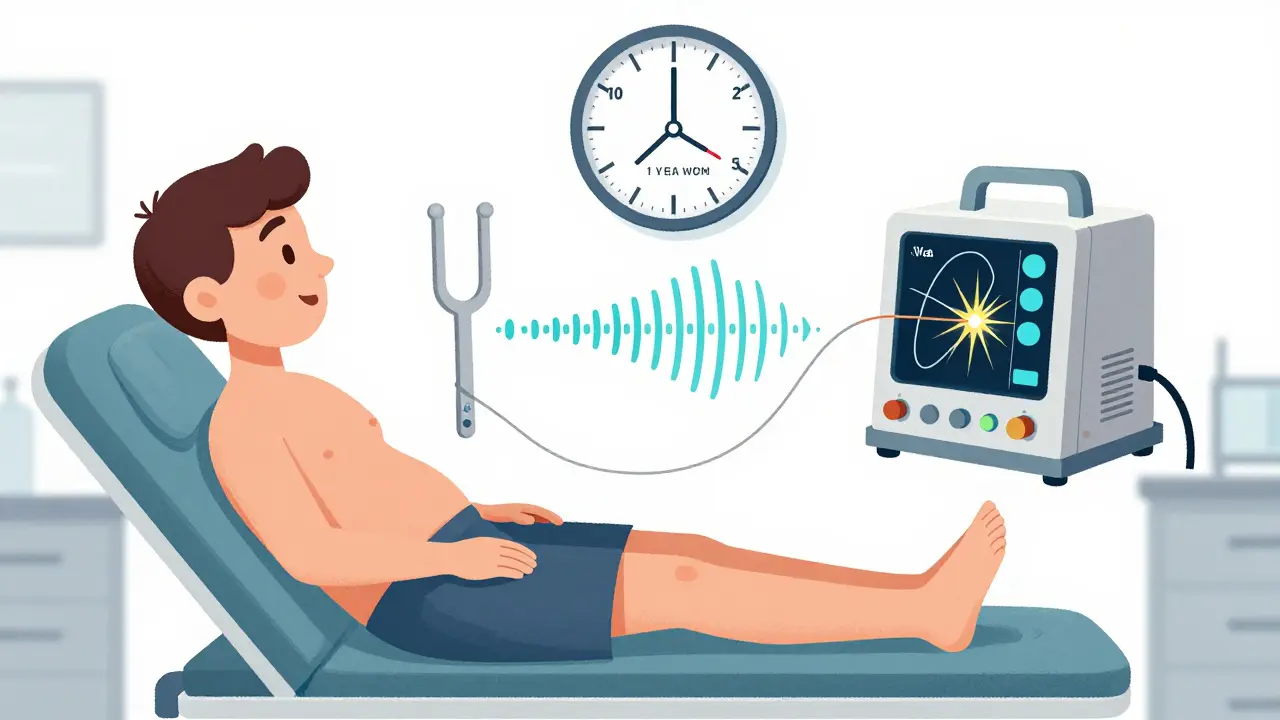
- Nerve conduction studies - Electrodes on your skin send small pulses to measure how fast signals travel through your nerves. Slower than 40 m/s? That’s a red flag.
- Quantitative sensory testing - This checks how well you feel touch, heat, cold, and vibration. A 128-Hz tuning fork on your big toe is a simple test doctors use in clinics.
- Monofilament testing - A thin nylon thread is pressed against your foot. If you can’t feel it, you’re at higher risk for foot ulcers.
- Blood tests - For diabetes, B12, thyroid function, kidney and liver health, and signs of autoimmune disease.
It usually takes 2 to 4 weeks from your first doctor visit to a confirmed diagnosis. Many people wait over a year because symptoms are vague - they think it’s just "old age" or "arthritis." But early diagnosis matters. Starting treatment within the first 6 months improves outcomes by 40%.
Pain Management: What Actually Works?
Not all painkillers work for nerve pain. Regular ibuprofen or acetaminophen? They help maybe 10-15% of the time. Neuropathic pain needs targeted treatments.
Prescription Medications
- Pregabalin (Lyrica) - Reduces pain in about 37% of users. Common side effects: dizziness (40%), weight gain, and brain fog. Many stop taking it because of the dizziness - especially if they drive.
- Duloxetine (Cymbalta) - Works for 35% of people. Originally an antidepressant, it helps both pain and mood. But 30% report nausea, especially at first.
- Amitriptyline - An old tricyclic antidepressant. It’s cheap and works for 41% of users. But it causes dry mouth (75%), drowsiness (60%), and can be risky for older adults with heart issues.
According to the American Academy of Neurology, pregabalin and duloxetine are first-line choices (Level A evidence). Amitriptyline is second-line (Level B). Opioids? They’re not recommended. Studies show only 30% pain relief, with addiction risk over 15% with long-term use.
Non-Medication Options
- Scrambler therapy - A device that sends mixed signals to your brain to "overwrite" pain. After 10 sessions (about 2 weeks), 85% of patients report at least 50% pain reduction. It’s not covered by all insurance, costing $1,200-$1,500 for a full course.
- Spinal cord stimulation - A tiny device implanted near your spine delivers mild electrical pulses. It works for 65% of people who haven’t responded to meds. Used for severe, chronic cases.
- Qutenza patch - A high-dose capsaicin patch applied once every 3 months. It works by temporarily "burning out" pain nerves. Clinical trials show 31% pain reduction at 12 weeks. Requires a doctor’s office visit.
- Physical therapy - Focused exercises improve balance, strength, and walking speed. After 12 weeks, patients see a 25% improvement in their "timed up and go" test - meaning fewer falls. It’s rated 4.2/5 stars by users.
Foot Care and Daily Habits
If you have diabetic neuropathy, your feet need daily attention:
- Check your feet twice a day - look for cuts, blisters, redness, or swelling. Use a mirror if needed.
- Wear custom orthotics or therapeutic shoes. 82% of users report high satisfaction.
- Never go barefoot - even indoors. A simple step on a Lego can cause a serious injury you won’t feel.
- Keep blood sugar steady. One study showed 75% of diabetic patients stabilized their symptoms after 6 months of consistent glucose control.
What Doesn’t Work - And Why
Many people try supplements like alpha-lipoic acid or evening primrose oil. Some studies show minor benefit, but nothing as strong as the medications listed above. Acupuncture? Some report relief, but large reviews show no consistent advantage over placebo.
Over-the-counter creams with lidocaine or menthol? They give temporary surface relief but don’t touch the nerve damage underneath. They’re fine for short-term comfort, but not a long-term solution.
Real Stories - What Patients Say
On Reddit’s r/neuropathy, one user wrote: "Lyrica cut my foot pain from 8/10 to 3/10 in 3 weeks - but I couldn’t drive because I was dizzy." Another said: "Cymbalta helped my pain, but I threw up every morning. My doctor didn’t warn me. I quit after 2 weeks."
Physical therapy got high marks: "After 10 weeks of balance exercises, I stopped falling. I can walk to the mailbox without holding the railing." Custom shoes? "I thought they’d be ugly. Turns out, they’re comfy. I wear them everywhere now."
For many, the biggest frustration isn’t the pain - it’s the delay in diagnosis. On average, people wait 18 months before getting a proper answer. By then, nerves are already damaged. Early action saves function.
What’s Coming Next?
The future is looking more hopeful. In 2023, the Foundation for Peripheral Neuropathy launched the "Neuropathy Genomics Project" to map genetic causes of over 50 types of nerve damage. By 2026, we may have genetic tests that predict who’s at risk.
New wearable devices are being tested - small patches that deliver gentle nerve stimulation all day. Early trials show 40% pain reduction. If approved in 2024, they could change daily life for thousands.
AI tools are also being trained to spot early nerve damage from simple foot scans. Right now, diagnosis takes months. By 2025, a smartphone app could flag risk before symptoms even start.
Final Thoughts
Peripheral neuropathy isn’t a death sentence. It’s a signal - your body telling you something’s wrong. Whether it’s high blood sugar, low B12, or an unknown trigger, the key is acting fast. Treat the cause if you can. Manage the pain with proven methods. Protect your feet. Stay active. And don’t accept numbness as "just part of getting older."
The tools exist. The science is clear. You don’t have to live with burning feet or constant tingling. There’s help - if you know where to look.
Can peripheral neuropathy be reversed?
In some cases, yes - if the cause is treatable. For example, if it’s caused by vitamin B12 deficiency, correcting the deficiency can lead to full nerve recovery. If it’s from diabetes, strict blood sugar control can stop further damage and sometimes improve symptoms over time. But once nerve fibers are destroyed, they don’t regrow easily. The goal is to prevent worsening and manage pain, not always to reverse it completely.
Is peripheral neuropathy the same as carpal tunnel?
Carpal tunnel is a type of mononeuropathy - meaning it affects just one nerve (the median nerve in the wrist). Peripheral neuropathy usually refers to polyneuropathy, which affects many nerves, often symmetrically in both hands and feet. So carpal tunnel is one specific kind of nerve damage, while peripheral neuropathy is a broader category.
Why do my symptoms get worse at night?
There are a few reasons. At night, your body isn’t distracted by daily activities, so pain becomes more noticeable. Also, your core temperature drops slightly while sleeping, which can make nerve signals more erratic. Plus, lying still for long periods can increase pressure on nerves. Many people find that keeping their feet elevated or using a cooling pad helps.
Can I still drive if I have peripheral neuropathy?
It depends. If you have severe numbness in your feet, you may not feel the gas or brake pedal properly - that’s dangerous. If you’re on medications that cause dizziness or drowsiness (like pregabalin or amitriptyline), driving can be risky. Talk to your doctor. Some people adapt by using hand controls, wearing supportive shoes, or avoiding night driving. Always prioritize safety over convenience.
How long does it take for treatments to work?
It varies. For B12 deficiency, you might feel better in 4 to 8 weeks. For diabetic nerve damage, it takes 3 to 6 months of steady blood sugar control to see improvement. Medications like pregabalin or duloxetine usually show results in 2 to 4 weeks. Scrambler therapy needs 10 sessions over 2 weeks. Physical therapy shows progress after 8 to 12 weeks. Patience is key - nerve healing is slow.
10 Comments

Seth Eugenne
March 24 2026
This is one of the most helpful posts I've read in ages. Seriously. I’ve had this for 5 years and nobody ever explained it like this. The part about foot checks? Game-changer. I started doing it daily. No more infections. 🙏

Caroline Dennis
March 25 2026
The neurophysiological cascade of axonal degeneration in distal symmetric polyneuropathy is profoundly underappreciated. The epigenetic modulation of Schwann cell myelination is a critical, overlooked therapeutic target. We must shift from symptomatic palliation to regenerative neuroprotection.

Grace Kusta Nasralla
March 25 2026
I used to feel like my body was betraying me. Like the nerves were screaming and no one could hear them. Now I just... sit. And breathe. And accept that pain is part of me. Not a flaw. Not a failure. Just... presence.

Stephen Alabi
March 27 2026
I must respectfully challenge the assertion that pregabalin is a first-line agent. The NICE guidelines from 2021 clearly classify it as second-tier due to its unfavorable risk-benefit profile. Furthermore, the cited 37% efficacy rate is derived from a non-representative cohort with significant selection bias.

Agbogla Bischof
March 27 2026
I've been managing this for 12 years. B12 injections? Yes. Custom shoes? Absolutely. But the real win? Walking barefoot on grass every morning. Grounding. It reduces inflammation. I don't have science, but I have 12 years of data. And my feet don't burn anymore.

Pat Fur
March 28 2026
I love how this post doesn’t just throw meds at you. Real talk: the shoes changed my life. I used to hate them. Now I wear them to weddings. Who knew comfort could be this stylish? 😊

Anil Arekar
March 30 2026
The efficacy of scrambler therapy is statistically significant, yet its accessibility remains inequitable. In developing nations, such interventions are often inaccessible due to infrastructural and economic constraints. A global health framework must prioritize equitable distribution of neurostimulative technologies.

Elaine Parra
March 31 2026
You people are being manipulated. This entire post is Big Pharma propaganda. Lyrica was designed to keep you dependent. The real cure? Fasting. Cold exposure. No sugar. No meds. Just discipline. You're being sold a lie to keep you buying.

Natasha Rodríguez Lara
April 2 2026
I’m from a rural town where no one knew what neuropathy was. I brought this post to my local clinic. The nurse cried. We got a B12 screening program started last month. Small steps. Big change.



Sean Bechtelheimer
March 24 2026
lol so now they're saying your feet are on fire because of B12? 🤡 I bet it's all 5G and fluoridated water. My cousin's dog got neuropathy after a WiFi router was installed in the backyard. 🚨