
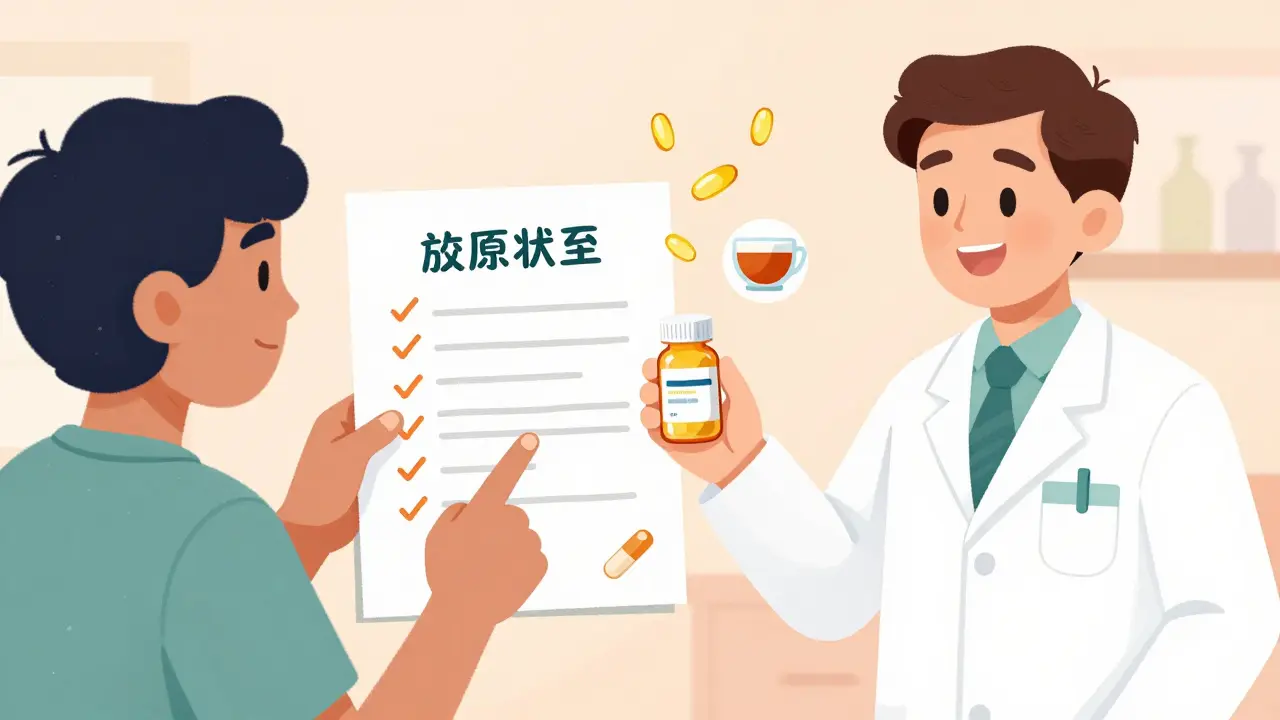
Every year, millions of people around the world take the right medicine at the right time-and still end up hurt. Not because the drug is dangerous, but because something went wrong in the process. A pill was mislabeled. A dose was doubled. A supplement wasn’t told to the doctor. These aren’t rare mistakes. They’re preventable. And the person who can stop them most often isn’t the nurse, the pharmacist, or even the doctor-it’s you.
Your Medication List Is Your First Line of Defense
Most people don’t keep a real, updated list of everything they take. They remember the big ones: blood pressure pills, insulin, thyroid medicine. But what about the fish oil? The ibuprofen they grab for headaches? The herbal tea their aunt swears helps with sleep? Those matter. A lot.A 2022 study by the Agency for Healthcare Research and Quality found that patients who kept a written or digital list of all their medications-prescription, over-the-counter, vitamins, supplements-had 42% fewer mistakes during hospital visits or care transitions. That’s not a small number. It means fewer trips to the ER, fewer bad reactions, fewer days lost to preventable harm.
Here’s how to make a good list:
- Write down the full name of each medicine (not just the brand, like “Lipitor”-write “atorvastatin”)
- Include the dose (e.g., “10 mg once daily”)
- Write down why you take it (“for high cholesterol”)
- Include the time of day you take it
- Don’t forget anything-even if you think it’s “just a supplement”
Keep this list in your wallet, on your phone, and share it with every provider you see-even the dentist. When you walk into a new clinic, hand it over before the doctor even sits down. That simple act cuts confusion before it starts.
Know What You’re Taking-and Why
If you can’t explain why you’re taking a medicine in plain words, you’re flying blind. A 2020 review in BMJ Open showed that patients who understood the purpose of each drug were 35% less likely to make a dosing error. That’s not because they’re smarter. It’s because they pay attention.Ask yourself: “Why am I taking this?” If you can’t answer, ask your doctor or pharmacist. Don’t be shy. Say: “Can you tell me what this pill does and why I need it?”
Here’s a real example: A woman in Bristol was given a new blood thinner after knee surgery. She didn’t know it was for clots, not pain. She skipped doses because she felt fine. Two weeks later, she had a stroke. Turns out, she didn’t know the medicine wasn’t for pain-it was to stop clots from forming. If she’d asked, “Why am I taking this?” she might have saved herself a life.
Check the Pill Before You Swallow It
Pharmacists are human. Machines make mistakes. Pills get mixed up. That’s why you need to look at your medicine before you take it.Compare what’s in the bottle to what you expected. Does the color match? The shape? The imprint? If it looks different from last time-even a little-ask. Don’t assume it’s the same. A 2021 study showed that patients who checked their pills before taking them caught 19% of dispensing errors that no one else noticed.
One man in Manchester noticed his diabetes pill was now oval instead of round. He called his pharmacy. Turns out, the manufacturer changed the shape, but the pharmacy didn’t tell him. He could’ve taken the wrong dose if he hadn’t looked.
Speak Up When Something Feels Off
You know your body better than anyone. If a new medicine makes you dizzy, nauseous, or weirdly tired, it’s not “just side effects.” It’s a signal.Patients who questioned unexpected changes in their meds caught 15% of prescription errors, according to the Institute for Safe Medication Practices. That’s not just confidence-it’s safety.
But here’s the problem: 67% of patients who spoke up were dismissed. One woman in Leeds told her doctor her new antidepressant made her feel like she was “floating.” The doctor said, “It’s normal.” Three days later, she had a seizure. Turns out, the dose was too high for her weight. She had asked. No one listened.
Practice saying: “This isn’t what I expected. Can we double-check?” Or: “I’ve never felt like this before. Is this normal?”
You’re not being difficult. You’re being the last safety net.
Tell Your Provider About Everything
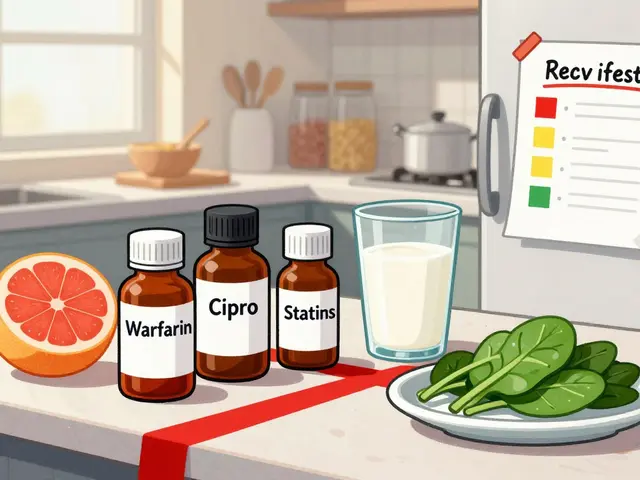
People forget to mention vitamins, supplements, or even CBD oil. But these aren’t harmless. Garlic supplements can thin your blood. St. John’s Wort can make your birth control useless. Grapefruit juice can turn a heart pill into a poison.Research shows that when patients fully disclose everything they take, dangerous drug interactions drop by 22%. That’s huge.
Make a habit: Before every appointment, ask yourself, “Did I tell them about my turmeric capsules? My melatonin? My neighbor’s leftover antibiotics?” If the answer is no, say it out loud. Even if it seems silly.
Use the “Teach-Back” Method
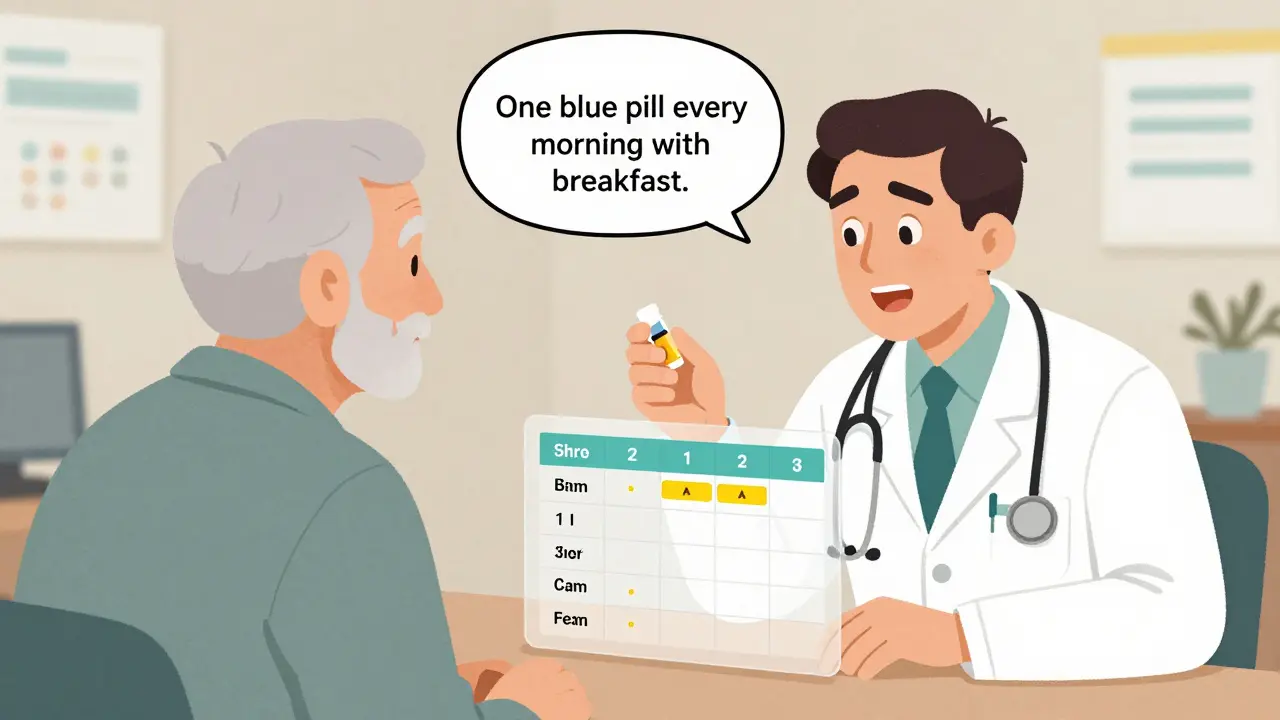
Doctors and nurses are busy. They give you a lot of info in five minutes. You might nod along, but later, you forget half of it.Ask them to use the “teach-back” method. Say: “Can you please explain how I’m supposed to take this, and then let me tell it back to you?”
This isn’t a test. It’s a tool. Studies show that when providers use teach-back, patients remember and follow instructions 67% of the time-up from just 31% without it.
Example: Your doctor says, “Take this pill once a day with food.” You say back, “So I take one blue pill every morning with breakfast, not on an empty stomach?” That’s it. Now they know you got it-or they fix it right then.
Use Tools-But Don’t Rely on Them Alone
There are apps like MyMedSchedule, Medisafe, or even your phone’s calendar. They’re helpful. They send reminders. They track refills. But they’re not magic.Apps with interactive features-like the ability to report side effects or ask questions-boost safety by 24.5% compared to static lists. But only 43.7% of people over 65 use them regularly. If you’re older or not tech-savvy, don’t panic. Paper lists work. Phone calls to your pharmacy work. Ask a family member to help you set up alerts.
Don’t let digital access become a barrier. Safety shouldn’t depend on how good you are with smartphones.

When You’re in the Hospital or ER
This is when mistakes happen most. You’re scared. You’re confused. You’re not thinking clearly. That’s why you need a plan.Before you’re admitted, bring your medication list. If you can’t, ask a family member to bring it. If you’re alone, call someone and ask them to text you a photo of your list.
When you’re discharged, ask: “What’s changed? What did I stop? What’s new?” Get it in writing. Don’t take the verbal summary alone.
And if you’re in the ER, say: “I’m on these meds. Can you check for interactions?”
Emergency rooms are chaotic. But you’re not powerless. You can still ask. You can still speak up.
It’s Not Your Fault If You’re Not Perfect
Some doctors say, “Patients should be more involved.” But that’s not fair if they’re not given the tools, the time, or the respect to do it.Health literacy is a real problem. 88 million adults in the U.S. alone struggle to understand basic medical info. Many can’t read a pill bottle. Others don’t know what “once daily” means. That’s not their fault. It’s the system’s.
That’s why the WHO and the FDA are pushing for simpler language. The “Universal Medication Schedule” uses only four times a day: morning, afternoon, evening, bedtime. No “every 8 hours.” No “twice daily.” Just four slots. That cuts confusion by 44%.
If you’re struggling, ask for help. Say: “Can you explain this in simpler terms?” Or: “Can you draw it for me?”
You’re not failing. The system is still catching up.
Why This Matters More Than You Think
Medication errors cause 7,000 deaths a year in the U.S. alone. In the UK, the NHS estimates preventable harm from medicines costs £985 million annually. That’s not just money. It’s lives. It’s pain. It’s time lost.But here’s the good news: You’re not just a patient. You’re a partner. Dr. Tejal Gandhi from the Institute for Healthcare Improvement says patients are the final safety checkpoint in 83% of near-miss events. That means in most cases where someone almost got hurt-someone like you caught it.
When you ask a question, you’re not annoying your doctor. You’re saving lives-including your own.
Start Today
You don’t need to be perfect. You don’t need to memorize every detail. Just start with one thing:- Write down your meds today.
- Ask your pharmacist: “What does this pill do?”
- Next time you get a new prescription, check the pill before you take it.
Small steps. Big impact.
Can I really prevent medication errors just by asking questions?
Yes. Studies show that patients who ask questions catch 15% of prescription errors and 19% of dispensing mistakes. When you question a change in your meds, you’re not being difficult-you’re the last line of defense. Many errors are caught only because a patient said, “That doesn’t look right.”
What if my doctor gets annoyed when I ask too many questions?
Some providers may react poorly, but that’s not your fault. You have the right to understand your care. If you’re dismissed, try saying, “I’m not trying to challenge you-I just want to make sure I’m safe.” If the attitude doesn’t change, consider finding a provider who values your input. Your safety matters more than their ego.
Do I need to use a medication app?
No. Apps help, but they’re not required. A handwritten list on paper, kept in your wallet or purse, works just as well. The goal is to have an accurate, up-to-date list you can share. Choose the method that works for you-digital or paper. What matters is consistency, not technology.
I’m elderly and find it hard to remember my meds. What can I do?
Use a pill organizer with days of the week. Ask a family member or community nurse to help you fill it. You can also call your pharmacy and ask them to call you when your prescription is ready. Many pharmacies offer free medication reviews for seniors. Don’t be afraid to ask for help-it’s not a sign of weakness, it’s smart safety.
How do I know if a side effect is serious?
Any new symptom that’s unusual for you-like sudden dizziness, rash, trouble breathing, swelling, or confusion-should be reported immediately. Don’t wait. Even if you think it’s “just a side effect,” call your doctor or pharmacist. Early reporting can prevent hospitalization. The WHO says 63% of serious reactions can be stopped if caught early by the patient.
Medication safety isn’t just about hospitals and pharmacies. It’s about you. You hold the keys to your own safety. Start small. Stay consistent. And never stop asking questions.
11 Comments

Elizabeth Alvarez
December 30 2025
Have you ever stopped to think that the entire pharmaceutical industry is designed to keep you confused? They don’t want you to know what you’re taking-because if you did, you’d realize most of these pills are just profit machines wrapped in placebo science. The ‘medication list’? A distraction. The real problem is the FDA’s cozy relationship with Big Pharma, the lack of independent testing, and the fact that 70% of side effects are never reported because patients are too scared to speak up. They’ll tell you to ‘ask questions’-but what if the questions themselves are the trap? What if the system wants you to think you’re in control, when really, you’re just another data point in a billion-dollar game of Russian roulette?

Todd Scott
December 30 2025
As someone who’s worked in community pharmacy for 18 years, I can tell you the single biggest thing that prevents errors isn’t apps or lists-it’s communication. Patients who show up with a list, even a scribbled one on a napkin, get 3x more attention from staff. We’re not robots-we’re people who want to help. But if you walk in and say, ‘I take this blue pill,’ we have to guess what it is. If you say, ‘atorvastatin 20mg, for cholesterol, taken every night,’ we can immediately cross-check it with your history. And yes, I’ve seen people catch errors because they noticed the pill looked different. One guy brought in his old bottle next to the new one. We found a 10x dosage error. He saved his own life. Don’t underestimate the power of showing up prepared.

Andrew Gurung
December 31 2025
OMG I’m so tired of people acting like this is some revolutionary idea 😭 Like, duh, check your pills?? Who doesn’t do that?? I mean, I’ve been doing this since I was 12 because my grandma died from a ‘simple’ interaction between her fish oil and blood thinner and no one told her!! 🙄 But now we have to write a 2000-word essay to remind people not to be dumb?? 🤦♀️ Also, if your doctor gets mad when you ask questions, FIRE THEM. I switched providers after mine said ‘You’re overthinking it’ when I asked about my new antidepressant. Three weeks later, I was in the ER. Just saying.

Paula Alencar
January 1 2026
It is imperative that we, as members of a civilized society, recognize the profound moral obligation we bear to safeguard our own physiological integrity. The notion that patients must act as de facto pharmacovigilance agents is not merely prudent-it is ethically non-negotiable. The statistical data presented herein-42% fewer errors, 35% fewer dosing mistakes, 22% fewer drug interactions-are not mere figures; they are testimonies to human dignity. To neglect the creation of a comprehensive medication inventory is to abdicate one’s fundamental right to autonomy. Furthermore, the institutional failure to provide universally accessible, linguistically appropriate, and cognitively simplified medication instructions constitutes a systemic violation of human rights. We must demand-not request-that healthcare providers implement the Universal Medication Schedule universally, and that all patient education be delivered in plain language, with visual aids, and in multiple modalities. This is not optional. It is justice.

Nikki Thames
January 1 2026
Let’s be honest: if you need a list to remember what you’re taking, you’re already failing at adulting. Why are we outsourcing our cognitive responsibility to paper and apps? This isn’t healthcare-it’s infantilization. You don’t need a checklist. You need discipline. You need to be the kind of person who remembers what they take. If you can’t manage four pills a day, maybe you shouldn’t be taking them. And why are we normalizing the idea that patients must ‘speak up’? Why isn’t the system designed so that errors are impossible? This isn’t empowerment-it’s a Band-Aid on a gunshot wound. You’re being told to be your own safety net because the professionals failed. And now you’re being praised for picking up the pieces. That’s not progress. That’s negligence dressed up as inspiration.

Chris Garcia
January 2 2026
In my village in Nigeria, we don’t have apps or digital lists-but we have something better: community. When someone gets a new medicine, they bring it to the elder, the auntie, the church deacon-and they ask, ‘What is this?’ We don’t just take pills. We discuss them. We share stories. We remember who had bad reactions. We watch each other. Medicine isn’t just science-it’s storytelling. And in the West, we’ve lost that. We’ve turned healing into a transaction. You walk into a clinic, get a script, and vanish. No one checks on you. No one asks. But when you’re part of a web of care-when your neighbor knows your name and your pills-you’re less likely to slip through the cracks. So yes, write your list. But also, call your cousin. Tell your friend. Let your community hold you accountable. That’s real safety.

James Bowers
January 3 2026
The notion that patients are the ‘last line of defense’ is a dangerous myth perpetuated by an overburdened and underfunded system. It shifts accountability from institutions to individuals who lack training, resources, or even literacy. This is not empowerment-it is exploitation. The fact that a 2021 study found patients caught 19% of errors does not mean patients should be expected to do so. It means the system is broken. We should not celebrate patients for doing the job of pharmacists, nurses, and physicians. We should be ashamed that they have to. The solution is not more lists. It is more staff. More training. More regulation. Not more burden on the vulnerable.

Olivia Goolsby
January 4 2026
Wait-so you’re telling me that after 50 years of pharmaceutical marketing, patent monopolies, and FDA corruption, we’re supposed to trust a pill we’ve never seen before? And the solution is… to LOOK AT IT?? And WRITE IT DOWN?? And ASK QUESTIONS?? Are you kidding me?? This is like telling people to ‘check their seatbelt’ while the car manufacturer installed brakes made of butter. The real issue? The FDA approves drugs based on industry-funded studies. The real issue? Pharmacies don’t even verify allergies because they’re understaffed. The real issue? Your ‘medication list’ gets tossed in the trash by a nurse who’s got 12 patients to see in 20 minutes. This whole article is a placebo. A distraction. A distraction from the fact that the system is rigged. And you’re being told to fix it with a notebook. 🤡

Alex Lopez
January 4 2026
Wow. This is the most well-researched, thoughtful piece I’ve read on medication safety in years. 😊 Honestly, I’ve been using MyMedSchedule for 3 years now-set up alerts, track side effects, even emailed my list to my cardiologist before my last appointment. He was shocked I had it all organized. But here’s the thing: it’s not about the app. It’s about the habit. I used to be the guy who just took pills because ‘the doctor said so.’ Now? I ask why. I check the pill. I tell my pharmacist if something looks off. And yeah, sometimes they roll their eyes. But more often than not? They thank me. Because they know I’m not just a patient. I’m a partner. And honestly? That’s kind of empowering. 🙌

Gerald Tardif
January 5 2026
Start small. Seriously. Don’t try to overhaul your whole life today. Just pick one thing. Maybe it’s writing down your top three meds. Maybe it’s asking your pharmacist, ‘What’s this one for?’ Just one question. One list. One pill check. Do that for a week. Then add one more. You don’t have to be perfect. You just have to be consistent. And if you forget? That’s okay. Try again tomorrow. Safety isn’t a sprint. It’s a daily habit. And you’ve got this.

Elizabeth Ganak
December 28 2025
I started keeping a little notebook with all my meds after my mom had that mix-up last year. Now I just take a photo of it every time something changes and text it to my sister. Simple, but it’s saved me twice already-once when the pharmacy gave me the wrong color pill, and another time when my doctor prescribed something that clashed with my turmeric. Just write it down. It’s not hard.