
🩺 Drug Causality Assessment Tool
Answer the following clinical questions to estimate the probability that a drug is responsible for a reported side effect. This tool uses a simplified scoring system based on standard pharmacovigilance guidelines.
Awaiting Input
Please complete formScore Breakdown
Imagine you start a new medication for your blood pressure. Two days later, you develop a rash. You stop the pill, and the rash fades. Is it definitely the drug? Or was it just a coincidence? This is where two critical clinical concepts come into play: dechallenge and rechallenge. These aren't just medical jargon; they are the primary tools doctors and researchers use to figure out if a specific medicine is actually causing a specific problem.
Understanding these terms helps you make sense of what your doctor might say during a consultation. It also explains why some medications get pulled from the market while others stay on the shelves despite reported issues. Let's break down exactly how these tests work, when they are used, and what they mean for your health.
What Is Dechallenge?
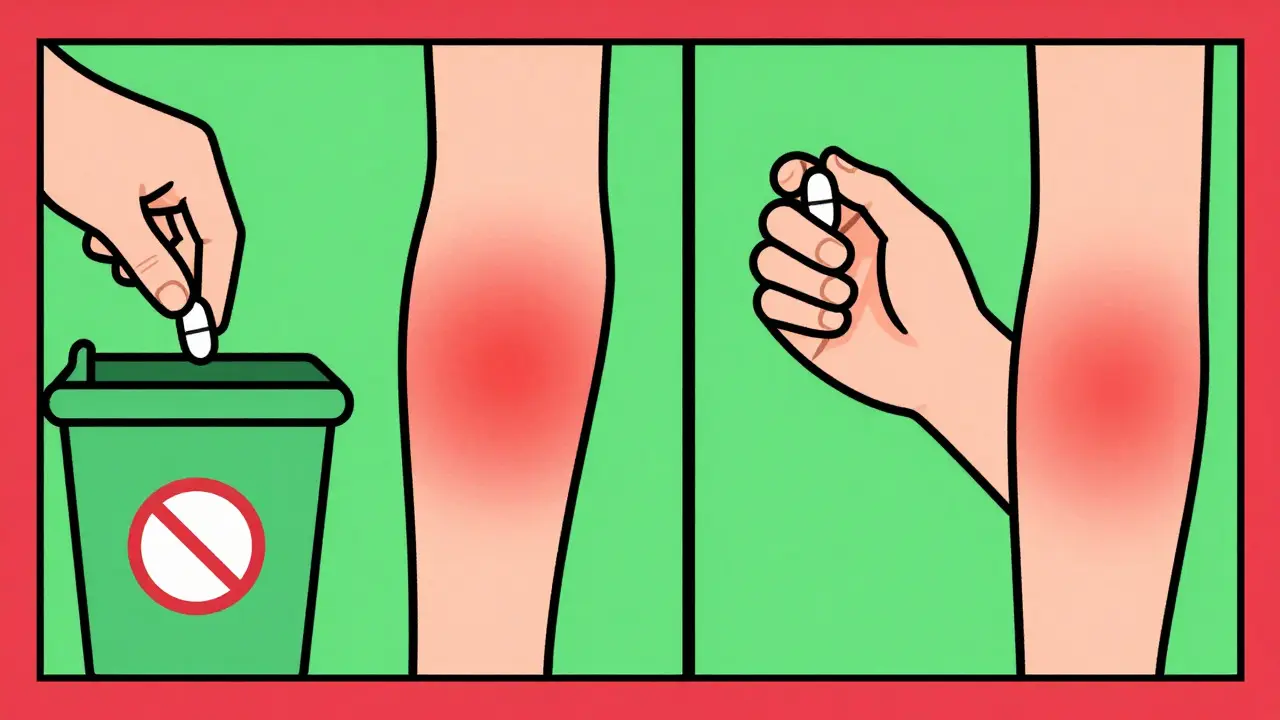
Dechallenge is the process of stopping a suspected medication to see if an adverse reaction goes away. It is the first step in investigating whether a drug is causing a side effect. If you take a new antibiotic and get a stomach ache, your doctor might ask you to stop taking it for a few days. If the pain disappears, that is a "positive dechallenge." It suggests the drug is likely the culprit.
If you stop the drug and the symptom stays, that is a "negative dechallenge." This doesn't prove the drug is innocent, but it makes it less likely to be the cause. The key here is timing. For a dechallenge to be valid, the symptoms usually need to resolve within a timeframe that matches how long the drug stays in your body. For example, if a drug leaves your system in 12 hours, waiting three weeks for a rash to fade isn't as strong evidence as seeing it clear up in 48 hours.
- Positive Dechallenge: Symptoms improve or disappear after stopping the drug.
- Negative Dechallenge: Symptoms persist even after the drug is stopped.
- Timeframe: Resolution should align with the drug's half-life (how quickly it leaves the body).
What Is Rechallenge?
Rechallenge is the deliberate reintroduction of a medication after a suspected side effect has resolved. This is the gold standard for proving causality, but it is rarely done because it carries risk. Imagine the rash from the antibiotic cleared up after you stopped taking it. A rechallenge would involve starting the antibiotic again to see if the rash comes back. If it does, the link between the drug and the rash is nearly certain.
However, doctors only do this when the potential benefit outweighs the danger. You wouldn't rechallenge a patient who had a life-threatening allergic reaction like Stevens-Johnson Syndrome. But for mild rashes or gastrointestinal issues, it might be worth trying to confirm the diagnosis so you can avoid that specific drug in the future. According to recent data, successful rechallenge elevates the certainty of causality to "definite" in most validated cases.
The Four Pillars of Causality Assessment
Dechallenge and rechallenge don't work in isolation. They are part of a broader framework used by pharmacovigilance experts to determine if a drug caused a reaction. There are four main principles:
- Temporal Relationship: Did the side effect happen shortly after starting the drug? If you took the pill yesterday and got sick today, the timing fits. If you've been on the drug for ten years and suddenly get a rash, the timing is weak.
- Biological Plausibility: Does the side effect make sense given how the drug works? For instance, a drug that affects the liver causing liver enzyme changes is biologically plausible. A heart medication causing hair loss is less obvious unless known mechanisms exist.
- Dechallenge: Did the symptom go away when the drug was stopped?
- Rechallenge: Did the symptom return when the drug was restarted?
Using all four together gives a much clearer picture than relying on just one. For example, if the timing is good, the biology makes sense, and the dechallenge is positive, the probability of the drug being the cause is high, even without a rechallenge.
Why Isn't Rechallenge Done More Often?
You might wonder: if rechallenge is so definitive, why don't doctors do it every time? The main reason is ethics and safety. Deliberately exposing a patient to a potentially harmful substance is risky. In severe cases, the second exposure could trigger a worse reaction than the first. Studies show that deliberate rechallenge is approved in only about 0.3% of serious adverse event investigations due to these risks.
Additionally, practical hurdles exist. Patients often stop their medication on their own without telling their doctor, which messes up the dechallenge data. If someone reports a side effect six months later, rechallenge is impossible because too much time has passed. Polypharmacy-taking multiple drugs at once-also complicates things. If you stop five different pills to see if a headache goes away, you don't know which one was the cause.
| Feature | Dechallenge | Rechallenge |
|---|---|---|
| Evidence Level | Moderate (Probable) | High (Definite) |
| Risk to Patient | Low (Stopping drug) | Variable (Restarting drug) |
| Frequency of Use | Common (Standard practice) | Rare (Ethical constraints) |
| Key Requirement | Timely resolution of symptoms | Recurrence of identical symptoms |
Real-World Examples
Let's look at a classic case involving metronidazole, an antibiotic. A patient developed a fixed-drug eruption-a specific type of skin reaction-in the same spot each time they took the medication. When they stopped the drug, the reaction faded (positive dechallenge). Three months later, they needed antibiotics again and were prescribed metronidazole. Within two days, the exact same skin reaction appeared in the exact same location (positive rechallenge). This provided near-conclusive proof that metronidazole was the cause. Such cases help build the safety profiles of drugs used globally.
Another common scenario involves statins. Many patients report muscle pain after starting a statin. Doctors often perform a dechallenge by pausing the medication. If the pain resolves, it supports the idea that the statin is the cause. However, since not everyone tolerates statins the same way, genetic testing is sometimes used alongside dechallenge results to guide future treatment choices.
How Technology Is Changing the Game
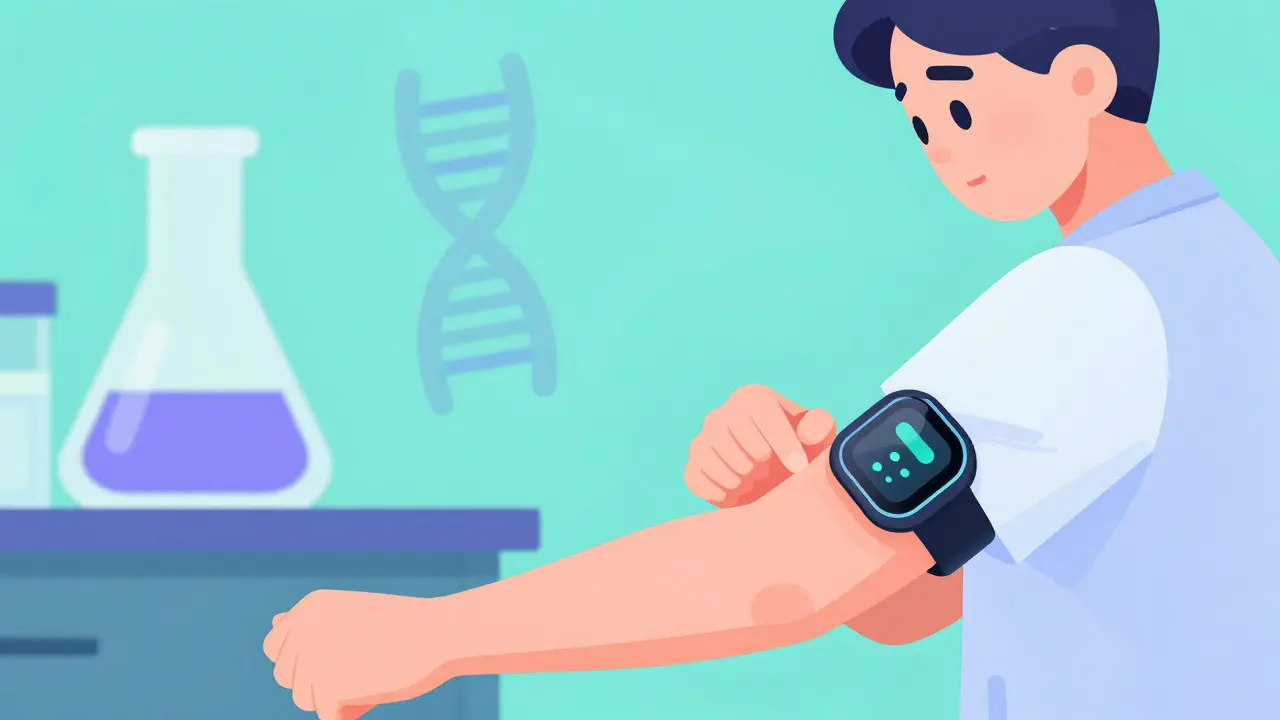
While clinical observation remains the cornerstone, technology is playing a bigger role. Wearable biosensors can now track physiological parameters during a dechallenge period. Instead of relying on a patient saying "my headache went away," sensors can provide objective data on inflammation markers or heart rate changes. Recent studies suggest these digital monitoring tools provide more accurate resolution data than traditional symptom reporting alone.
Researchers are also developing lab-based alternatives to rechallenge. In vitro lymphocyte toxicity assays can predict individual susceptibility to specific drug reactions with high accuracy. This means we might soon be able to tell if a patient will react to a drug without ever having them take it twice. While these technologies are promising, experts agree they won't replace the clinical reality of observing a patient's response. They serve as valuable supporting evidence rather than a complete substitute.
What This Means for You
If you experience a side effect, don't just assume it's the drug. Talk to your healthcare provider. They will consider the timing, your medical history, and whether stopping the medication helps. Keeping a detailed log of when you started the drug, when symptoms began, and how they changed after stopping it can be incredibly helpful. This information allows your doctor to perform a proper dechallenge assessment and decide if further investigation, like a rechallenge, is safe and necessary. Understanding these processes empowers you to participate actively in your own care and ensures that drug safety data improves for everyone else in the future.
Is a dechallenge always required to diagnose a drug side effect?
No, it is not always required. While it provides strong evidence, doctors can diagnose side effects based on temporal relationship and biological plausibility alone, especially if the side effect is well-documented for that specific medication. Dechallenge is preferred when possible because it offers direct clinical evidence, but it is not the only factor considered.
Can I rechallenge myself by restarting my medication at home?
Generally, no. Rechallenge should be done under medical supervision, especially if the previous reaction was significant. Restarting a medication on your own can lead to unmonitored complications. Always consult your doctor before restarting any medication that previously caused a side effect.
How long does it take for a dechallenge to show results?
It depends on the drug's half-life and the type of reaction. For many common medications, you might see improvement within 24 to 72 hours. However, some reactions, like liver enzyme changes, may take several days or even weeks to normalize after stopping the drug. Your doctor will monitor you based on the specific characteristics of the medication.
What happens if the dechallenge is negative?
A negative dechallenge means the symptoms persisted after stopping the drug. This suggests the drug might not be the cause, or the reaction is irreversible. Doctors will then look for other causes, such as underlying disease progression or interactions with other medications. It doesn't rule out the drug entirely, but it lowers the probability.
Are there alternatives to rechallenge for confirming causality?
Yes. Genetic testing, such as HLA typing, can identify predispositions to certain drug reactions. Lab-based assays like lymphocyte toxicity tests can also predict susceptibility. Additionally, detailed review of temporal relationships and biological plausibility can provide strong evidence without needing to re-expose the patient to the drug.
Popular Posts