
You take your morning coffee with a splash of milk, pop your antibiotic pill, and head out the door. It seems like a harmless routine, but you might just be flushing that medication down the toilet before it ever reaches your bloodstream. This isn't about dietary restrictions or allergies; it is basic chemistry working against your health. When certain antibiotics meet the calcium in dairy products, they bind together to form an insoluble lump that your body simply cannot absorb.
This interaction is one of the most common reasons antibiotic treatments fail. You might feel better for a day, only for the infection to bounce back stronger because your blood never reached the therapeutic levels needed to kill the bacteria. Understanding how antibiotic absorption works-and specifically how dairy interferes with it-can save you from weeks of frustration, unnecessary doctor visits, and the development of drug-resistant infections.
The Chemistry Behind the Interaction
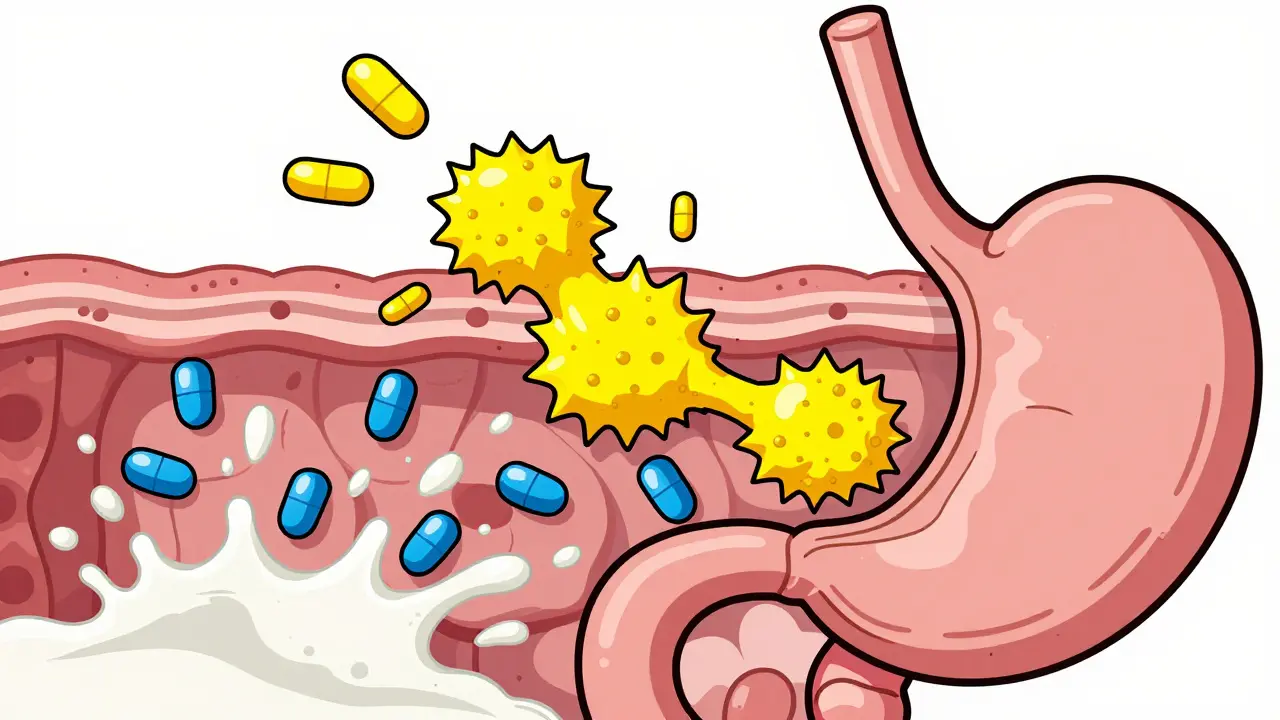
To understand why timing matters, we have to look at what happens inside your stomach. The primary culprit here is calcium, along with other minerals like magnesium, aluminum, and iron. These are known as polyvalent cations. When you consume dairy productssuch as milk, cheese, yogurt, and ice cream, which are rich in calcium, these calcium ions flood your gastrointestinal tract.
Certain classes of antibiotics have a chemical structure that acts like a magnet for these metal ions. Instead of passing through your intestinal wall into your bloodstream, the antibiotic molecule grabs onto the calcium ion. They lock together in a process called chelation. The resulting complex is too large and too heavy to cross the lining of your gut. Essentially, the drug gets trapped in your digestive system and is excreted unchanged in your waste.
This phenomenon was first clearly documented in the 1960s and solidified by research such as Neuvonen’s 1976 study on tetracyclines. The science hasn't changed since then. If the drug doesn't enter your blood, it can't reach the site of infection. Studies show this binding can reduce the amount of antibiotic absorbed by anywhere from 20% to over 90%, depending on the specific drug and the amount of dairy consumed.
Which Antibiotics Are Most Affected?
Not every antibiotic reacts to dairy. If you are prescribed penicillin or amoxicillin, having a glass of milk with your dose is generally fine. However, two major families of antibiotics are highly sensitive to calcium and other minerals:
- Tetracyclines: This class includes tetracycline, doxycycline, and minocycline. These are commonly used for acne, Lyme disease, and respiratory infections. Older tetracyclines are extremely sensitive, while newer derivatives like doxycycline are slightly more resistant but still require caution.
- Fluoroquinolones: This group includes ciprofloxacin, levofloxacin, and moxifloxacin. These are often prescribed for urinary tract infections (UTIs), kidney stones, and severe bacterial infections.
It is crucial to note that this interaction extends beyond traditional dairy. Any source of high calcium or polyvalent cations will trigger this reaction. This means calcium-fortified orange juice, almond milk, soy milk, and even antacids containing calcium, magnesium, or aluminum can neutralize your medication just as effectively as cow's milk.
| Antibiotic Class | Common Examples | Sensitivity Level | Recommended Separation Time |
|---|---|---|---|
| Tetracyclines | Doxycycline, Minocycline | High | 1 hour before or 2 hours after dairy |
| Fluoroquinolones | Ciprofloxacin, Levofloxacin | Very High | 2 hours before or 4-6 hours after dairy |
| Penicillins | Amoxicillin, Ampicillin | Low/None | No separation required |
| Macrolides | Azithromycin, Clarithromycin | Low/None | No separation required |
Why Yogurt Might Be Worse Than Milk
You might think that swapping whole milk for low-fat yogurt makes the interaction less severe, but the data suggests otherwise. Research published in the Journal of Rawal Academy of Sciences (2022) highlighted a surprising finding regarding ciprofloxacin. While milk reduced the peak plasma concentration of the drug by 70%, yogurt reduced it by a staggering 92%.
Why does yogurt pack such a punch? It often comes down to density and pH. Yogurt is thicker and stays in the stomach longer than liquid milk, prolonging the contact time between the calcium and the antibiotic. Additionally, the fermentation process can alter the availability of calcium ions, making them more ready to bind with the drug. If you are taking a fluoroquinolone, a small bowl of yogurt at breakfast could render your evening dose nearly useless if the timing isn't strictly managed.
Practical Timing Strategies
The solution is not to give up dairy entirely, but to master the clock. The goal is to ensure that the antibiotic has passed through your stomach and been absorbed before the calcium arrives, or vice versa. Here is how to structure your day:
- For Tetracyclines (e.g., Doxycycline): Take the antibiotic at least 1 hour before eating dairy, or wait at least 2 hours after your last dairy product. A good strategy is to take the pill mid-morning with water, have your yogurt breakfast earlier, or save your cheese snack for late afternoon.
- For Fluoroquinolones (e.g., Ciprofloxacin): These require a wider window. Take the antibiotic 2 hours before dairy or wait 4 to 6 hours after consuming dairy. If you take your cipro at 8 AM, do not drink milk until noon. If you eat cheese at dinner, wait until midnight to take your night dose.
- Watch for Hidden Calcium: Check labels on plant-based milks and juices. Many are fortified with calcium carbonate or tricalcium phosphate. Treat these exactly like cow's milk.
- Antacids and Supplements: If you take calcium supplements for bone health or antacids for heartburn, apply the same timing rules. Taking a calcium tablet with your antibiotic is just as ineffective as drinking a glass of milk.
Dr. Sarah Thompson, an infectious disease specialist, notes that she frequently sees patients whose UTIs fail to resolve because they unknowingly took their ciprofloxacin with a calcium-fortified smoothie. The infection persists because the drug levels were too low to eradicate the bacteria, potentially leading to resistance.
The Risks of Ignoring the Interaction
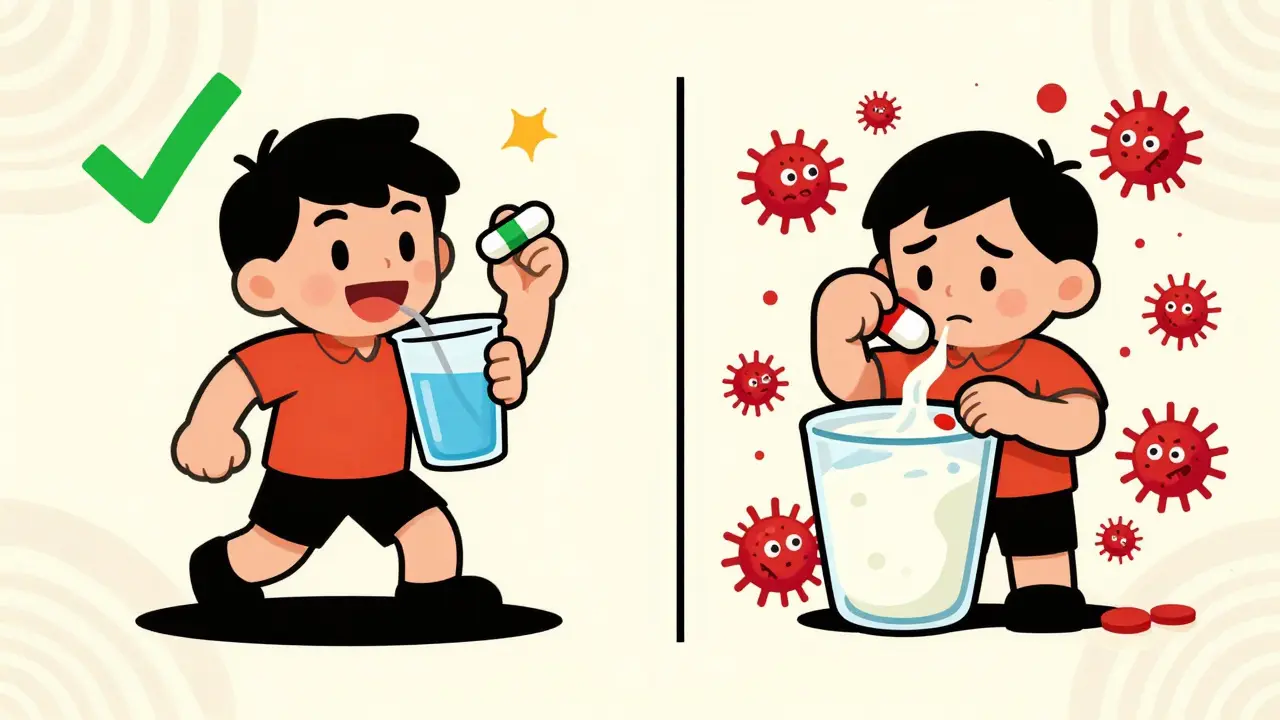
What happens if you ignore these guidelines? The immediate result is sub-therapeutic drug levels. You might feel slightly better as the infection naturally fluctuates, but the bacteria are not fully killed. Surviving bacteria can multiply again, leading to a relapse that is harder to treat.
More concerning is the contribution to antimicrobial resistance. When bacteria are exposed to low doses of antibiotics, they adapt. They develop mechanisms to survive the drug. The WHO identifies improper administration, including food interactions, as a key driver of global antimicrobial resistance. By accidentally neutralizing your dose with dairy, you are inadvertently helping bacteria evolve defenses against life-saving medications.
Furthermore, treatment failure often leads to additional healthcare costs. You may need a second course of antibiotics, possibly a stronger and more expensive one, or even hospitalization if the infection spreads. A simple timing adjustment prevents these cascading problems.
Frequently Asked Questions
Can I take my antibiotic with almond milk?
If the almond milk is fortified with calcium, yes, it will interfere with your antibiotic absorption just like cow's milk. Check the nutrition label for added calcium. If it is unfortified plain almond milk, the risk is minimal, but it is safer to stick to water when taking sensitive antibiotics like tetracyclines or fluoroquinolones.
Does cheese affect antibiotic absorption?
Yes, cheese is high in calcium and fat. The calcium binds to the antibiotic, reducing absorption. The fat content can also slow down gastric emptying, keeping the drug in the stomach longer where the interaction can occur. You should separate cheese consumption from your dose by the recommended time intervals (2-6 hours depending on the drug).
How long does it take for an antibiotic to leave the stomach?
On an empty stomach, most oral medications pass through the stomach into the small intestine within 30 to 60 minutes, where absorption primarily occurs. This is why the "1 hour before" rule is effective. If you have eaten a heavy meal, gastric emptying can take several hours, which is why fasting or light snacking is often recommended around the time of dosing for sensitive drugs.
Are all tetracyclines affected by dairy?
Most tetracyclines are significantly affected. Older versions like tetracycline hydrochloride are very sensitive. Newer derivatives like doxycycline and minocycline are somewhat more stable, but clinical guidelines still recommend separating them from dairy by at least 1-2 hours to ensure maximum efficacy. It is best to assume all tetracyclines interact with calcium.
Can I take probiotics with my antibiotics?
Probiotics themselves do not typically contain enough calcium to cause chelation, so they are generally safe to take with antibiotics. In fact, they can help restore gut health disrupted by the medication. However, always space them out by at least 2-3 hours to prevent the antibiotic from killing the beneficial bacteria in the probiotic supplement immediately upon ingestion.