
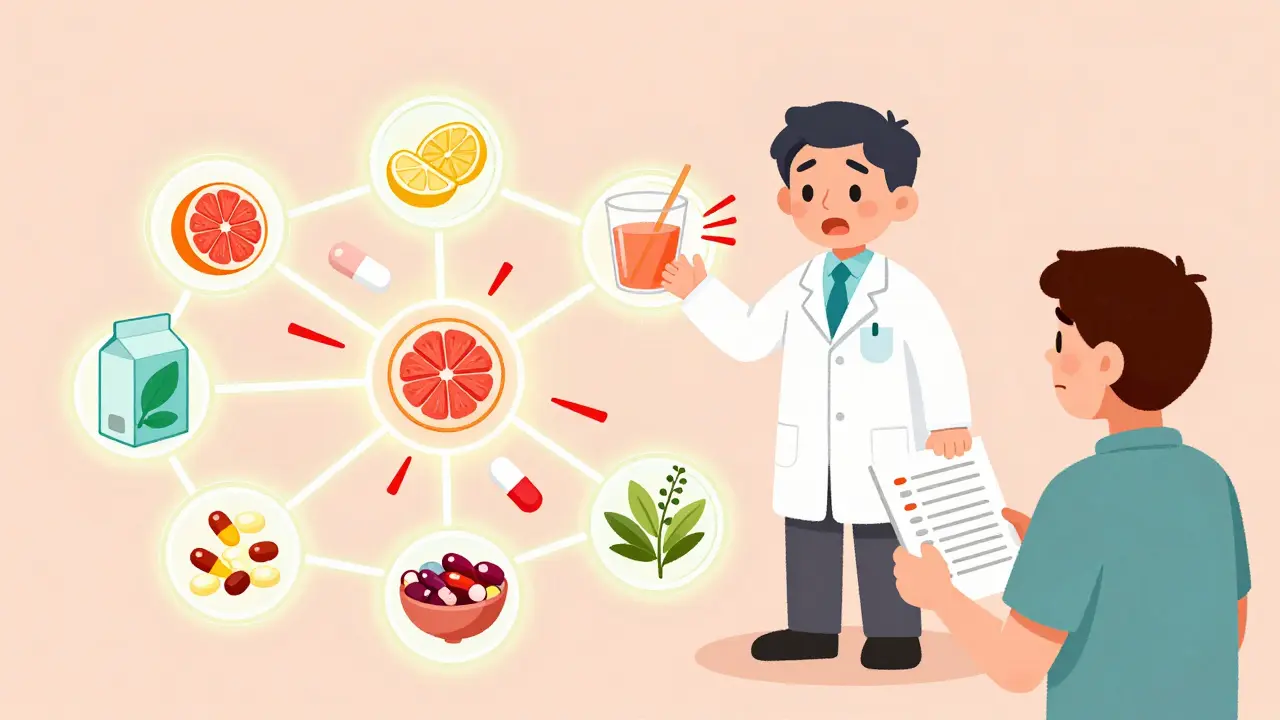
When you’re taking more than one medication, it’s not just about remembering when to take them. It’s about making sure they don’t fight each other inside your body. Drug interactions happen when one substance changes how another works - and they can turn a safe treatment into a serious risk. You might be surprised to learn that even something as simple as grapefruit juice or a common herbal supplement can mess with your prescription. The good news? Your pharmacist is trained to catch these problems before they catch you.
What exactly is a drug interaction?
A drug interaction isn’t just one drug reacting with another. It’s any time something you take - whether it’s a pill, a juice, a supplement, or even a food - changes how your medication behaves in your body. There are three main types:- Drug-drug interactions: When two or more medications affect each other. For example, taking aspirin with blood thinners like warfarin can increase bleeding risk.
- Drug-food/beverage interactions: Certain foods or drinks can block absorption or boost side effects. Grapefruit juice is a big one - it can make statins and some blood pressure meds too strong, leading to muscle damage or dangerous drops in blood pressure.
- Drug-condition interactions: Your existing health problems can make a drug unsafe. Decongestants like pseudoephedrine might seem harmless, but they can spike blood pressure in people with hypertension.
The Centers for Disease Control and Prevention says drug interactions send about 1.3 million people to the emergency room every year in the U.S. Most of these are preventable. And the person who can help you avoid them? Your pharmacist.
What should you ask your pharmacist?
Don’t wait until something goes wrong. Bring a list of everything you’re taking - and ask these questions every time you pick up a new prescription or start a new supplement.- Can I take this with my other medications? This seems obvious, but many people forget to mention over-the-counter drugs. Pain relievers like ibuprofen, antacids, or sleep aids can interact with heart meds, diabetes drugs, or antidepressants.
- Should I avoid certain foods or drinks? Grapefruit juice isn’t the only culprit. Alcohol can make sedatives or painkillers dangerously strong. High-tyramine foods like aged cheese, cured meats, or soy sauce can cause dangerous blood pressure spikes if you’re on an MAO inhibitor like phenelzine. Even milk can interfere with some antibiotics.
- What about vitamins and supplements? Nearly eight in ten American adults take at least one supplement. But vitamin K can reduce the effect of warfarin. St. John’s wort can make birth control, antidepressants, or transplant meds stop working. Calcium and iron supplements can block absorption of thyroid meds if taken too close together.
- Will this affect my existing health conditions? If you have kidney disease, liver problems, or heart failure, your body may process drugs differently. A medication that’s fine for most people could build up to toxic levels in yours. Always ask: "Is this safe with my [condition]?"
- When should I take it - with food or on an empty stomach? Timing matters. Some drugs need food to be absorbed properly. Others can cause stomach upset if taken with meals. Taking a drug at the wrong time can reduce its effect or increase side effects.
- What signs should I watch for? Ask your pharmacist: "What’s the first thing I should notice if something’s off?" Common warning signs include unusual dizziness, rash, nausea, muscle pain, or changes in heartbeat. Catching these early can stop a bad interaction before it becomes an emergency.
- Is there a safer alternative? Sometimes, there’s another drug that works just as well but doesn’t interact with your current meds. Pharmacists often know about alternatives that aren’t on your doctor’s usual list.
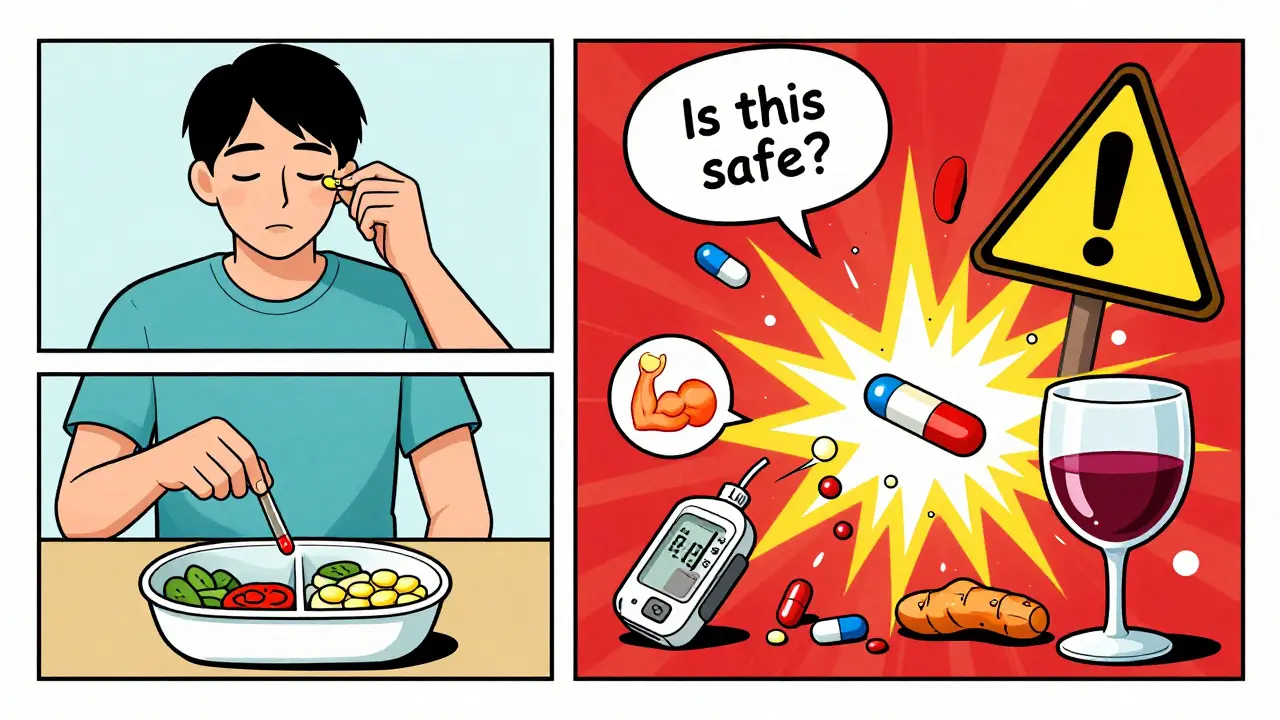
How to prepare before your visit
Your pharmacist can’t help if they don’t have the full picture. Don’t rely on memory. Bring this with you:- A written list of all medications: prescription, over-the-counter, eye drops, creams, inhalers.
- The dosage and frequency for each (e.g., "5 mg once daily").
- A list of supplements - even ones you’ve only taken once.
- Any herbal teas or juices you drink daily.
- Your alcohol intake (how often and how much).
- A note about any allergies or past reactions to drugs.
Many people don’t realize that even a single new drug can trigger a chain reaction. The most recent medication added is often the cause of a new problem. That’s why pharmacists recommend reviewing your full list every three months - or anytime you start something new.
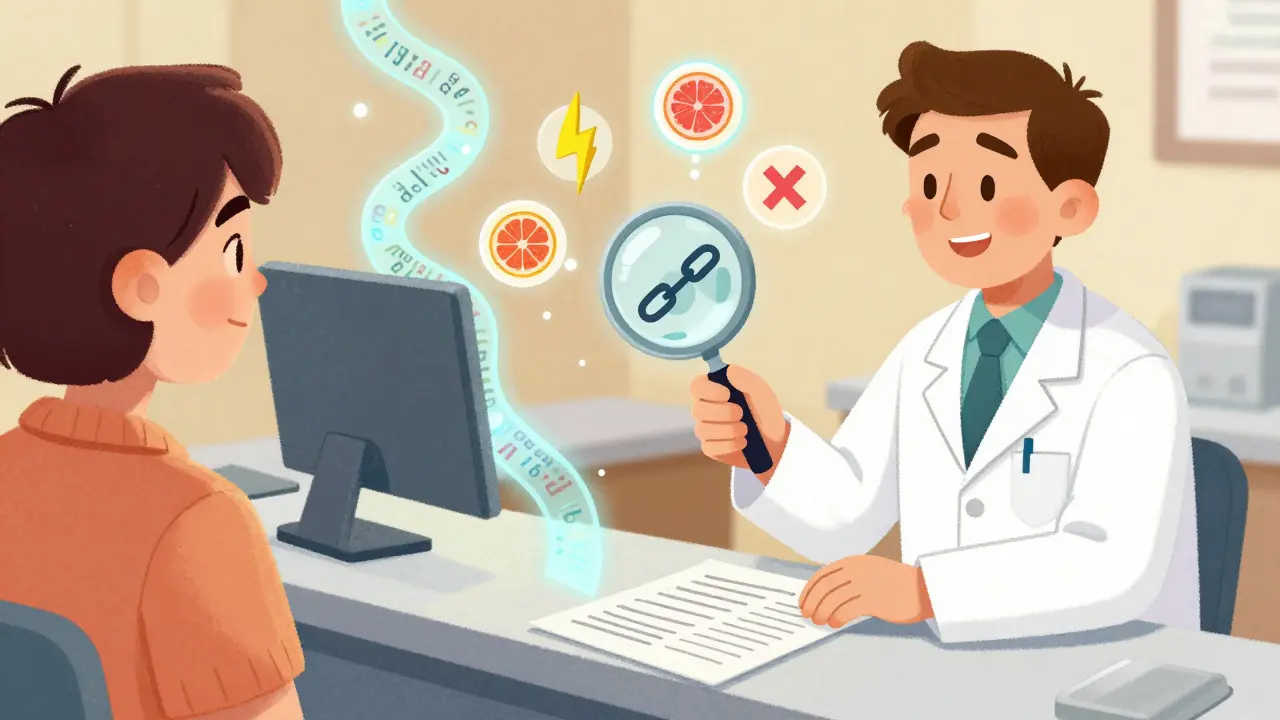
Why your pharmacist matters more than you think
Pharmacists don’t just fill prescriptions. They’re trained to see the big picture. A 2023 study in the Journal of the American Pharmacists Association found that when pharmacists did full medication reviews with Medicare patients, drug interaction incidents dropped by nearly 24%. That’s not just a number - it’s fewer hospital trips, fewer ER visits, and fewer scary side effects.Pharmacies now use electronic systems that flag potential interactions, but those systems aren’t perfect. A 2022 study in JAMA Internal Medicine found they still miss about 18% of dangerous interactions - mostly because patients don’t tell them about everything they’re taking. If you skip mentioning your turmeric capsules or your nightly glass of wine, the system won’t catch it.
And it’s not just about pills. The FDA now requires all prescription labels to include interaction warnings. But those warnings are written for doctors - not patients. Your pharmacist translates them into real-life advice: "Don’t eat grapefruit for two days before and after taking this pill," or "Take this at bedtime, not with your morning coffee."
What’s changing in drug safety
The way we handle drug interactions is getting smarter. In 2021, the FDA approved the first pharmacogenetic test for warfarin - meaning some patients can now get genetic testing to find out how their body breaks down blood thinners. That’s the future: personalized dosing based on your genes.But until that’s routine for everyone, the best tool you have is still you - and your pharmacist. With more than half of adults over 65 taking five or more medications daily, and younger adults increasingly mixing prescriptions with supplements, the need for clear, honest conversations has never been greater.
Drug interactions don’t always cause immediate harm. Sometimes, they quietly reduce your medication’s effectiveness - so you think it’s not working, when really, it’s being blocked by your morning orange juice. That’s why asking questions isn’t just smart - it’s essential.
Can I just check for drug interactions online instead of asking my pharmacist?
Online tools can help, but they’re not reliable enough to replace a pharmacist. Many websites don’t include supplements, herbal products, or over-the-counter drugs. They also don’t know your full medical history, kidney or liver function, or whether you’re taking a drug exactly as prescribed. Pharmacists use clinical judgment - not just databases - to assess risk. A tool might say "moderate interaction," but your pharmacist knows that for someone with heart failure, even a moderate interaction could be dangerous.
Do I need to tell my pharmacist about vitamins and herbal supplements?
Yes - always. Supplements aren’t regulated like medications, so their ingredients and potency can vary. St. John’s wort can make birth control, antidepressants, or transplant drugs stop working. Vitamin K can reduce the effect of warfarin. Even common ones like calcium, magnesium, or iron can block absorption of thyroid meds or antibiotics if taken at the same time. Your pharmacist needs to know everything.
I take my medications at the same time every day. Is that okay?
Not necessarily. Some drugs need to be taken on an empty stomach, others with food, and some must be spaced hours apart. For example, levothyroxine (thyroid medicine) should be taken alone, 30-60 minutes before breakfast. If you take it with calcium or iron, it won’t work properly. Your pharmacist can help you create a safe schedule that fits your routine.
What if I can’t remember all my medications?
Bring the actual bottles. Or take a photo of the labels on your phone. Even if the labels are faded, the name and dosage are usually still readable. If you’re unsure about a product, show the pharmacist the bottle. They can identify it and check for interactions. Don’t guess - it’s better to bring too much information than too little.
Can my pharmacist change my medication if there’s an interaction?
No - only your doctor can change your prescription. But your pharmacist can recommend alternatives and explain why a different drug might be safer. They’ll often call your doctor with a suggestion. In many cases, doctors welcome this input. Pharmacists are trained to spot these issues and are often the first to notice a problem.
11 Comments

THANGAVEL PARASAKTHI
February 11 2026
In India we use a lot of herbal remedies like ashwagandha and turmeric. People think it's 'natural' so it's safe. But my uncle had a bad interaction with his blood thinner. Now I carry a list of everything I take. Even the tea I drink. Your pharmacist is your real MVP.

Chelsea Deflyss
February 12 2026
You people are so naive. You think a pharmacist is going to catch everything? They're overworked, underpaid, and probably on their 5th coffee of the day. I've seen them miss things. Like when I told them I was taking 'vitamin D' and they didn't ask if it was 5000 IU or 50,000 IU. I had to spell it out. And they still got it wrong. Don't trust the system.

Tricia O'Sullivan
February 12 2026
I appreciate the thoroughness of this post. It is, without question, one of the most comprehensive summaries of pharmacological interaction risks I have encountered in a public forum. The emphasis on documentation and proactive inquiry is both clinically sound and ethically imperative. I shall share this with my elderly parents, who are currently managing seven distinct medications.

Scott Conner
February 12 2026
I asked my pharmacist about my fish oil and statin combo and she said 'it's fine' but then I read online it might raise my LDL. So now I'm confused. Are online sources just as bad as people say? Or should I trust the pharmacist and ignore the internet? I just want to not die.

Tatiana Barbosa
February 13 2026
I used to think my pharmacist was just the person who handed me pills. Then I started asking questions. Now I bring a binder. I have tabs for meds, supplements, allergies, and even my sleep schedule. I got my doctor to sign off on it. It’s a game-changer. Stop guessing. Start organizing. Your body will thank you. And so will your pharmacist. Seriously. Do it.

Susan Kwan
February 14 2026
I don’t need a pharmacist to tell me grapefruit juice is bad with my meds. I read the label. I’m not stupid. Why do we treat adults like children? 'Don’t eat grapefruit!' Like I’m 5. I’ve been on 8 different meds for 12 years. I know my body. Stop talking down to us.

Brett Pouser
February 14 2026
I’m from the South and we don’t ask questions. We just take what the doc says. But my grandma told me to always ask the pharmacist. She said, 'They don’t get paid to sell you pills. They get paid to keep you alive.' That stuck with me. Now I ask about everything. Even my kombucha. I’m not weird. I’m just smart.

Andrew Jackson
February 15 2026
This post is a textbook example of how American healthcare has devolved into a nanny state. You don’t need a pharmacist to hold your hand. You need personal responsibility. If you can’t read a label, don’t take the pill. If you can’t manage your own health, maybe you shouldn’t be allowed to. This isn’t daycare. It’s medicine.

John Sonnenberg
February 16 2026
I took my thyroid med with coffee for 3 years. I thought it was fine. Then I got a new script. The pharmacist looked at me like I’d just confessed to a crime. Turns out coffee blocks absorption. I’ve been hypothyroid for YEARS because I didn’t know. Now I take it with water. 10 minutes before breakfast. And I cry every time I think about how much energy I lost. This isn’t just advice. It’s a lifeline.

Patrick Jarillon
February 18 2026
Pharmacists? Please. They’re just paid shills for Big Pharma. The real danger is the FDA’s hidden agenda. They don’t want you to know that 90% of drug interactions are caused by glyphosate in your food. The supplement industry is being crushed because they’re trying to hide the truth. Your pharmacist? They’re trained to lie. Ask about the FDA’s 2018 memo on 'medication suppression'. No one talks about it. But I do.

Jonah Mann
February 9 2026
I took my blood pressure med with grapefruit juice for months before I realized it was making my dizziness worse. My pharmacist almost cried when I told her. Don't be me. Just ask. Seriously. Just ask. It's not embarrassing. It's smart. I'm still mad at myself for waiting so long.