
Antihistamine Recommendation Tool
Which Antihistamine Is Best For You?
This tool helps you choose the most appropriate second-generation antihistamine based on your allergy symptoms and needs.
Your Recommendation
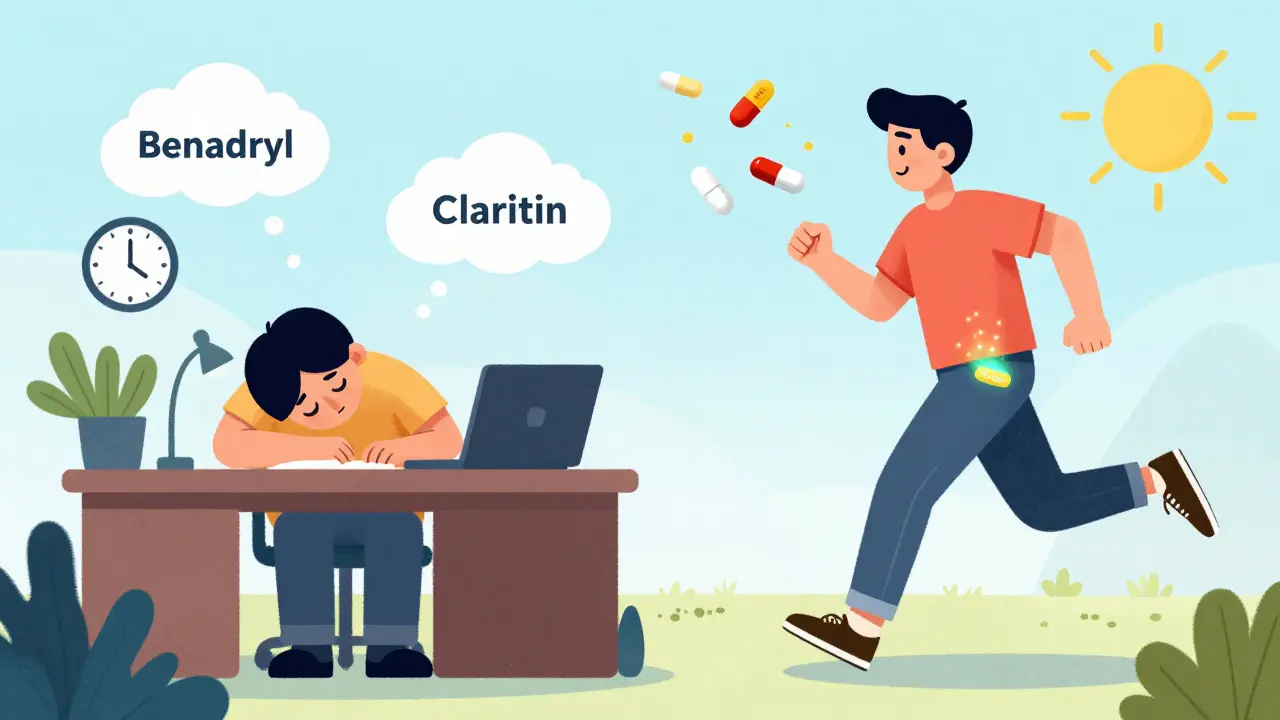
Most people who take antihistamines for allergies have felt it-the heavy head, the sluggishness, the urge to nap after lunch. That’s the old kind: first-generation antihistamines like diphenhydramine (Benadryl) or chlorpheniramine. They work, but they make you feel like you’ve had too much wine at dinner. For decades, that was just part of the deal. But since the 1990s, a new wave of allergy meds has changed everything. These are the second-generation antihistamines-medications designed to block allergies without knocking you out.
How Second-Generation Antihistamines Are Different
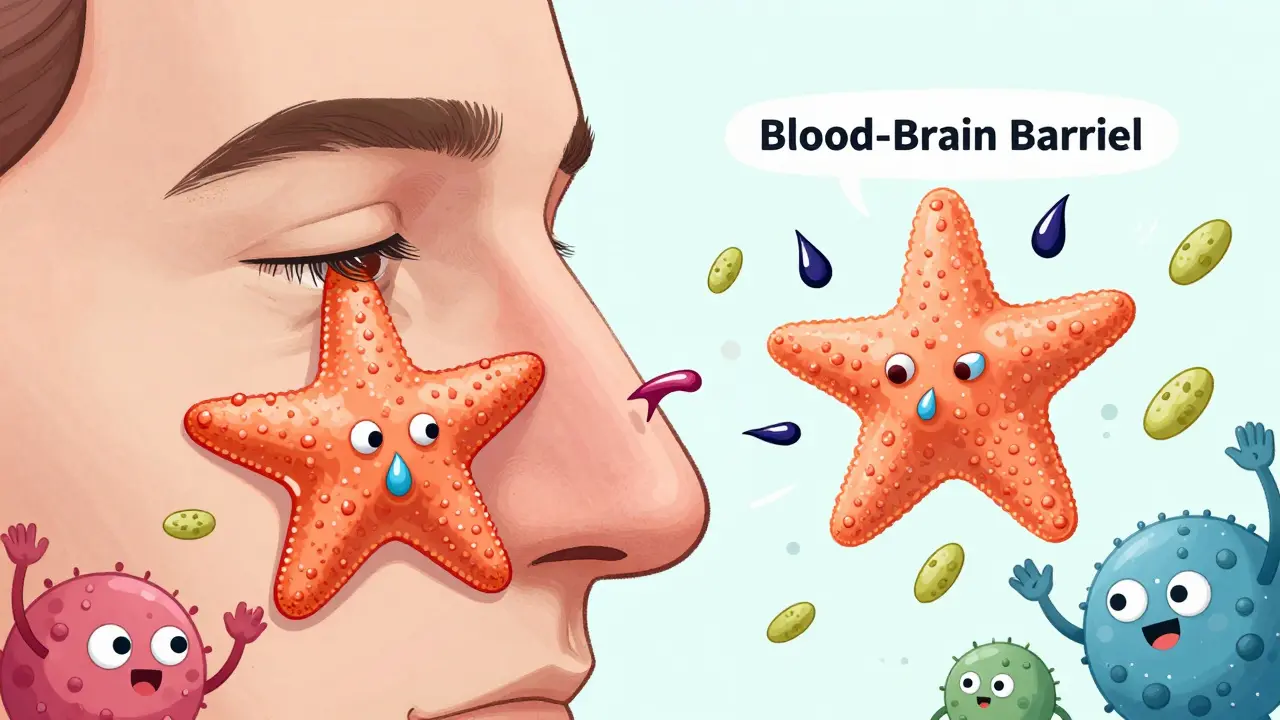
Second-generation antihistamines like loratadine (Claritin), cetirizine (Zyrtec), and fexofenadine (Allegra) were created to fix the biggest flaw in the old ones: drowsiness. First-gen drugs easily cross the blood-brain barrier, where they interfere with histamine receptors in the brain that help keep you alert. That’s why you feel tired. Second-gen drugs are built differently. They’re larger, more polar molecules-think of them as too bulky and too water-friendly to slip easily into your brain. Studies using cryo-electron microscopy show they bind tightly to histamine receptors in your nose, skin, and throat, but barely touch the ones in your central nervous system.
This isn’t just theory. Clinical trials consistently show that while 50-60% of people taking first-gen antihistamines report drowsiness, only 6-14% do with second-gen options. That’s a drop of more than 70%. For someone working, driving, or caring for kids, that difference isn’t just convenient-it’s life-changing.
What They Actually Treat-and What They Don’t
Second-generation antihistamines are excellent for itching, sneezing, runny nose, and watery eyes caused by pollen, pet dander, or dust mites. They’re also the go-to for hives and chronic itching. But here’s something many people don’t realize: they don’t do much for nasal congestion.
Why? Because congestion comes from swollen blood vessels, not histamine. First-gen antihistamines have an extra trick: they block acetylcholine, which helps dry up mucus and slightly shrink nasal passages. Second-gen drugs don’t do that. So if you’re stuffed up, taking loratadine alone won’t fix it. That’s why many people pair it with a decongestant like pseudoephedrine-or use a nasal spray like fluticasone (Flonase). Reddit users often say it plainly: “Fexofenadine works great for my allergies, but I still need Flonase for congestion.”
And here’s another surprise: second-gen antihistamines don’t help much with cold symptoms. A 2001 Johns Hopkins study showed they don’t reduce sneezing from a rhinovirus (the common cold). First-gen drugs do, because of that acetylcholine-blocking effect. But since colds aren’t allergic reactions, it’s not surprising the newer meds fall short. Don’t confuse a cold with allergies-your treatment should match the cause.
How Long Do They Last? And How Do You Take Them?
One of the biggest wins with second-generation antihistamines is convenience. Most last 12 to 24 hours. That means one pill a day-no need to remember midday doses like with Benadryl.
- Loratadine (Claritin): Half-life around 8-18 hours, usually taken once daily at 10 mg
- Cetirizine (Zyrtec): Half-life about 8.3 hours, taken at 10 mg once daily
- Fexofenadine (Allegra): Half-life 11-15 hours, taken at 60 mg twice daily or 180 mg once daily
Peak effects come within 1-3 hours after taking them. But here’s a pro tip: if you know you’re heading into high-pollen season or a pet-filled house, take your pill 1-2 hours before exposure. A 2019 study in the Journal of Allergy and Clinical Immunology found this preemptive dosing cuts symptoms by 40-50% more than taking it only after symptoms start.
Side Effects: Not Perfect, But Much Better
No medication is side-effect-free. Even second-gen antihistamines have some.
Most common: mild headache, dry mouth, or upset stomach. About 23% of Zyrtec users on WebMD reported occasional drowsiness-even though clinical trials say it should be under 14%. Why the gap? Maybe genetics, maybe other meds, maybe just individual sensitivity. Some people metabolize cetirizine slower, leading to higher blood levels and more tiredness.
Less common but reported: taste changes (metallic or bitter), rare cases of severe headaches (one user on Drugs.com said loratadine gave them 3 days of pounding headaches), and very rarely, heart rhythm issues. But here’s the key: the bad actors from the 90s-terfenadine and astemizole-were pulled off the market for causing dangerous heart rhythms when mixed with certain antibiotics or grapefruit juice. Today’s versions? Fexofenadine barely gets metabolized by the liver. Loratadine and cetirizine do, but only in small amounts, and serious cardiac events are now extremely rare. The FDA’s post-marketing data through 2023 shows no major safety red flags for current second-gen antihistamines.
Which One Should You Choose?
There’s no single “best” second-generation antihistamine. People respond differently.
Based on market data and user reviews:
- Cetirizine (Zyrtec): Most effective for itching and sneezing, but highest chance of drowsiness among the three. Popular with severe allergy sufferers.
- Loratadine (Claritin): Least likely to cause drowsiness, but some users report headaches or reduced effectiveness over time.
- Fexofenadine (Allegra): Lowest risk of side effects overall, minimal liver interaction, and works well for most. Often the top pick for people on other medications.
A 2023 Mayo Clinic survey found 35% of users tried two or three different second-gen antihistamines before settling on one that worked for them. Don’t give up after one try. Give each one at least 3-5 days to see how your body responds.
What About Cost and Availability?
All three are available over the counter in the U.S. and U.K. Generic versions cost as little as $5-$10 for a month’s supply. Brand names like Claritin or Zyrtec cost more-sometimes double-but there’s no clinical difference. Fexofenadine is often pricier because it’s less commonly genericized, but it’s worth the extra cost if you’re sensitive to side effects.
Combination products like Allegra-D (fexofenadine + pseudoephedrine) are popular for people who need congestion relief too. They made up 22% of the nasal congestion market in 2023. But be careful: pseudoephedrine can raise blood pressure and cause jitteriness. It’s kept behind the pharmacy counter in the U.S. for that reason.
What’s Next? The Future of Allergy Meds
Science isn’t standing still. A landmark 2024 study in Nature Communications used cryo-EM imaging to map exactly how these drugs bind to the H1 receptor. Researchers found a secondary binding site that wasn’t known before. That’s huge. It means drugmakers can now design third-generation antihistamines that are even more precise-targeting only the allergy receptors, not any others, even slightly.
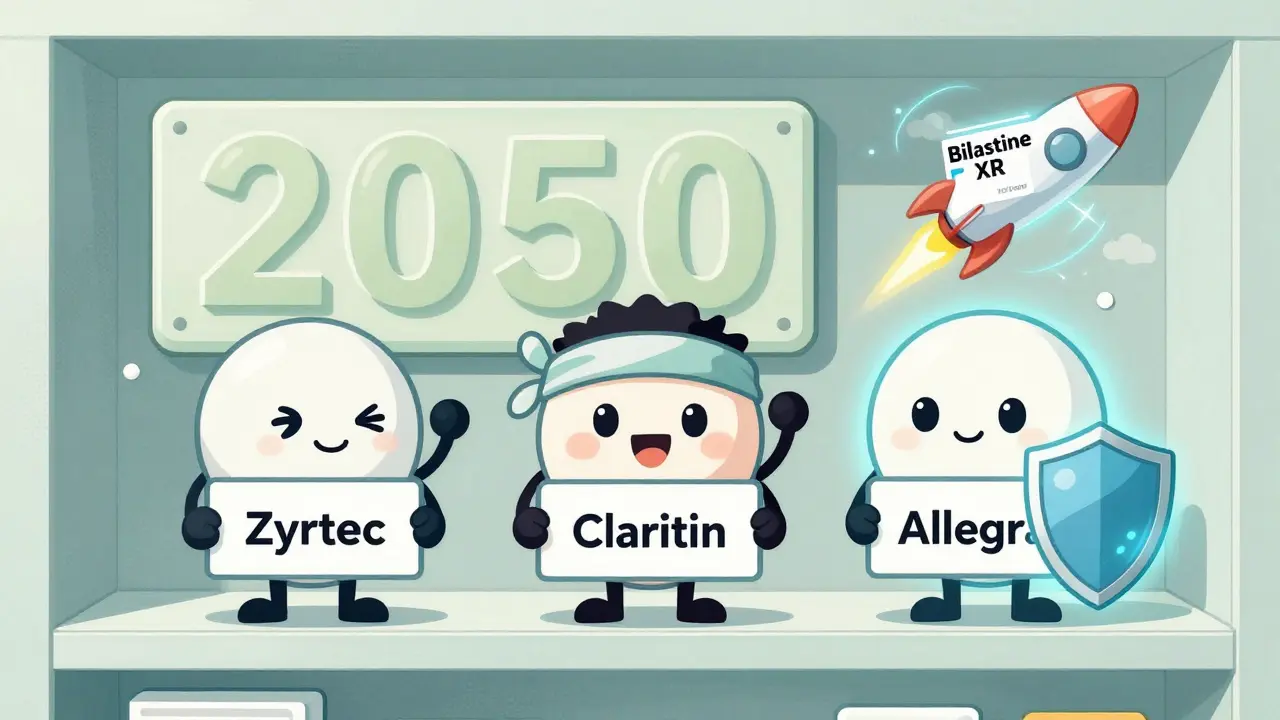
One upcoming drug, bilastine XR, is a once-weekly pill expected to launch soon. It’s already been given breakthrough status by the FDA. If it works as hoped, it could fix the biggest complaint after drowsiness: forgetting to take your pill. Right now, 37% of users admit they skip doses because they’re busy or forget.
Climate change is also pushing the needle. Pollen counts are rising. The National Institute of Environmental Health Sciences predicts a 25-30% increase by 2050. That might mean higher doses or more frequent use for some people. But for now, second-gen antihistamines remain the gold standard. As Dr. Robert Naclerio from the University of Chicago said in early 2024: “They’re still the cornerstone of allergy care because they work, they’re safe, and they let people live normally.”
Real Talk: What Users Actually Say
Look at the reviews. On WebMD, Zyrtec has 4.2 out of 5 stars from over 12,000 reviews. People praise its effectiveness but warn about drowsiness. On Reddit’s r/Allergies, the top comment says: “Fexofenadine works great without making me sleepy like Benadryl did.”
Consumer Reports’ 2023 survey of 1,245 allergy sufferers found 68% preferred second-gen over first-gen meds. But 41% said they still needed extra help-usually a nasal spray or decongestant.
The pattern is clear: people love that they can function normally. They hate that congestion isn’t fully solved. And they’re willing to experiment to find their perfect match.
12 Comments

Ian Detrick
January 3 2026
It’s funny how we accept drugged-up normalcy until something better comes along. These second-gen meds aren’t just pharmacology-they’re a quiet revolution in autonomy. We weren’t supposed to feel like zombies just to breathe.

Hank Pannell
January 5 2026
The structural pharmacokinetics here are elegant-polar molecules, steric hindrance, blood-brain barrier exclusion. But let’s not romanticize it: cetirizine still knocks out 14% of users. Pharmacogenomics isn’t a myth-CYP2D6 polymorphisms explain why some folks get sleepy on Zyrtec while others feel nothing. We’re not all the same bioengineered chassis.

veronica guillen giles
January 6 2026
Oh wow, so we’re supposed to be grateful now that Big Pharma stopped making us fall asleep? Congrats, you’ve upgraded from a nap to a mild headache. Still, at least now I can pretend I’m functional while my sinuses scream.

Angela Goree
January 6 2026
This is why America leads! We don’t just treat symptoms-we engineer freedom! Europe still uses first-gen junk. We got science that lets you drive, work, and parent without a sedative hangover. Don’t let the woke medics tell you otherwise-this is American innovation at its finest!!!

Shanahan Crowell
January 7 2026
I tried all three-Zyrtec made me groggy, Claritin gave me a headache that felt like a jackhammer, and Allegra? Perfect. I don’t care what the studies say-I found my match. Don’t give up if one doesn’t click. Your body’s not broken, it’s just picky.

Tiffany Channell
January 9 2026
Let’s be real-these drugs are just Band-Aids. The real problem? Pollen counts are rising because corporations destroyed the planet. You think a pill fixes climate change? No. You think it fixes your immune system being a mess from processed food and indoor living? Nope. You’re just delaying the inevitable. Enjoy your non-sedating poison while you can.

Haley Parizo
January 10 2026
I’ve lived in three countries and seen how allergy care varies. In India, they use local herbs and steam inhalation. In Germany, they do immunotherapy early. Here? We pop pills and call it progress. Second-gen antihistamines are great-but they’re not healing. They’re managing a broken system. We need root solutions, not better sedation.

Angela Fisher
January 10 2026
Did you know the FDA approved these drugs while hiding the heart risks? The original ones got pulled, but the new ones? Same toxic backbone. They just rebranded it. And the ‘clinical trials’? Sponsored by the same pharma giants selling them. I’ve had three heart palpitations on Allegra. I’m not crazy. Check the FDA MAUDE database. It’s not a coincidence.

Neela Sharma
January 11 2026
In India we call this 'allergy season' the time when the air turns into pollen soup. My grandma used neem leaves and turmeric milk. Now I take Zyrtec-because I have deadlines. But I still sip ginger tea. Science and tradition don’t have to fight. They can hold hands. One pill, one breath, one life.

Brittany Wallace
January 13 2026
I love how we’ve moved from ‘just deal with it’ to ‘here’s a better way.’ But the real win isn’t the drug-it’s the conversation. People are talking about allergies like they’re a real medical issue now, not just a nuisance. That shift matters more than any pill. We’re learning to listen to our bodies.

Liam Tanner
January 13 2026
I took Claritin for two weeks. Felt great. Then one day, my eyes felt like sandpaper and my throat closed up. Turned out I was allergic to the dye in the generic. Switched to Allegra-no issues. Always check inactive ingredients. The pill isn’t the enemy. The filler might be.


Michael Burgess
January 3 2026
I used to take Benadryl like candy during pollen season-until I crashed hard at my kid’s soccer game. Zyrtec changed my life. No more naps in the car. Just pure, un-foggy freedom. 🙌