
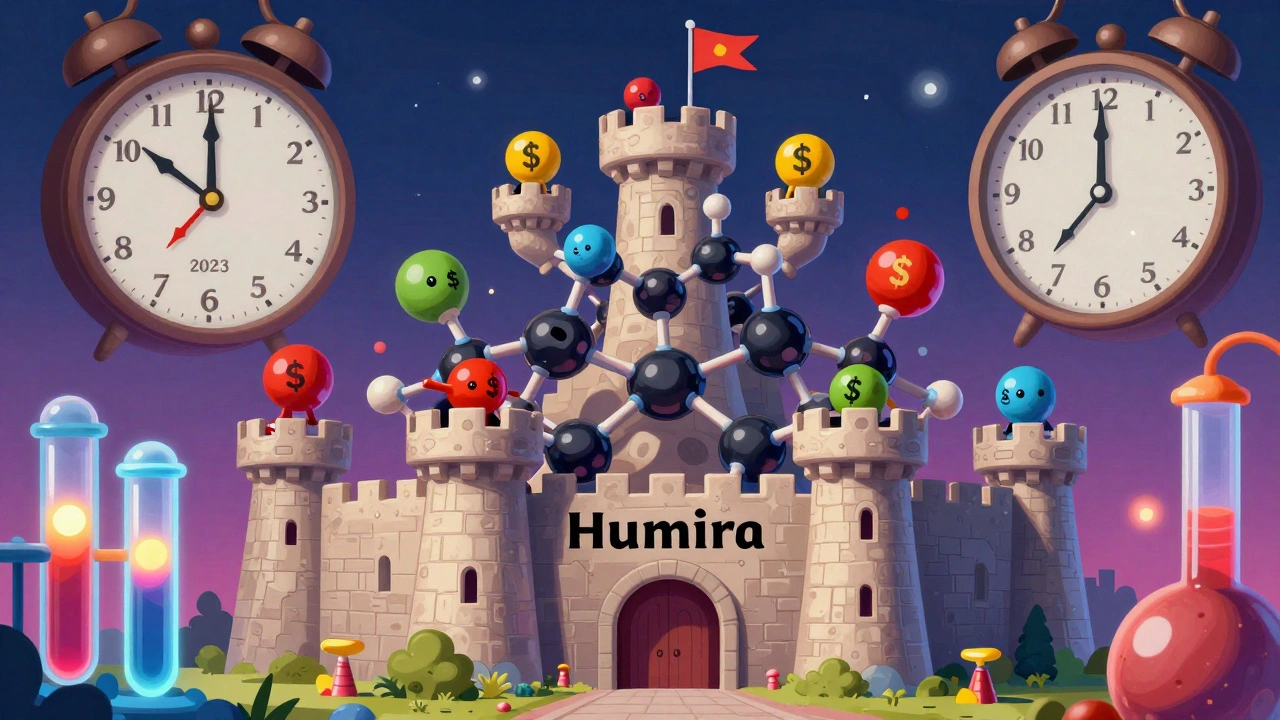
The next five years will reshape how we treat cancer, autoimmune diseases, and chronic conditions-not with new drugs, but with cheaper versions of existing ones. Biosimilars are coming fast, and their arrival is tied directly to the expiration of patents on blockbuster biologics worth hundreds of billions of dollars. Unlike generic pills, these aren’t simple copies. They’re complex, living medicines made from living cells, and getting them to market is a high-stakes game of science, law, and money.
What Makes a Biosimilar Different from a Generic?
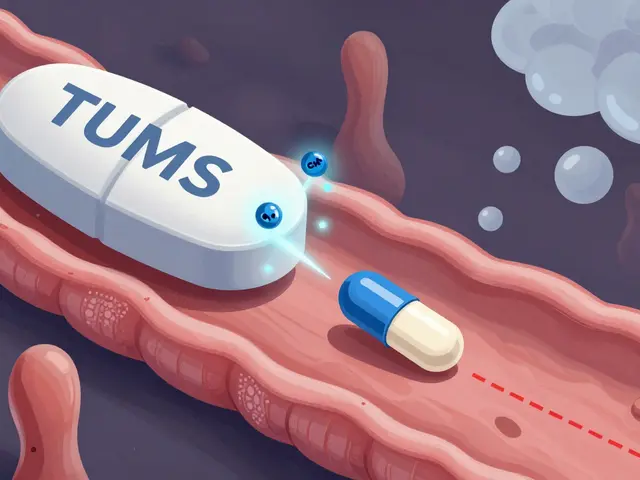
When you think of a generic drug, you picture a small white pill that costs a fraction of the brand-name version. That’s because small-molecule drugs have a simple chemical structure. You can recreate them exactly in a lab. Biosimilars? They’re different. They’re made from living organisms-cells grown in bioreactors, modified with proteins, sugars, and other molecules. Even tiny changes in how they’re made can affect how they work in the body. Take Humira (adalimumab), for example. It’s a monoclonal antibody used for rheumatoid arthritis and Crohn’s disease. After its patent expired in 2023, 12 biosimilars flooded the U.S. market. Within 18 months, 80% of new prescriptions went to biosimilars. Why? Because they’re proven to be as safe and effective as the original, with no clinically meaningful differences. But they cost 15% to 35% less. Compare that to a generic version of a blood pressure pill. The difference isn’t just price-it’s complexity. Biosimilars require massive investments in manufacturing, testing, and clinical trials. One company, Samsung Bioepis, spent $450 million building a single facility in South Korea just to produce biosimilars. That’s not a lab experiment. That’s industrial-scale biology.The Patent Cliff: $200 Billion in Biologics Losing Protection
Between 2025 and 2030, over $200 billion in annual global sales from biologic drugs will lose patent protection. This isn’t a slow fade-it’s a cliff. And the biggest names on the list are the ones doctors prescribe every day.- Eylea (aflibercept): $5.9 billion in U.S. sales in 2023. Patents expire in 2025. Three biosimilars-Yesafili, Opuviz, and Enzeevu-were approved in 2024. By Q1 2025, they already held 12% of the market.
- Keytruda (pembrolizumab): $25.5 billion in 2024 sales. This is the most valuable oncology drug on the planet. Its patent expires in 2028, but 14 companies are already in Phase 3 trials. If approved, biosimilars could cut its price by 30% or more.
- Cosentyx (secukinumab): Used for psoriasis and ankylosing spondylitis. Patent expires in 2029 in the U.S., but a biosimilar from Samsung Bioepis got positive review from the European Medicines Agency in October 2025, with a 2026 EU launch.
- Eliquis (apixaban): Though technically a small molecule, it’s often grouped with biologics in policy discussions. Patent protection was extended to 2029 through pediatric exclusivity deals.
Why Is Entry So Slow in the U.S.?
Europe adopted biosimilars faster. In some countries, over 70% of prescriptions for certain biologics are filled with biosimilars. The U.S. lags behind at 30-40%. Why? One big reason: the rebate system. Medicare Part B pays providers based on the Average Sales Price (ASP) of a drug-plus a 6% markup. If a doctor gives a $10,000 injection of Keytruda, they get $600. If they give a $7,000 biosimilar, they get $420. That creates a financial incentive to stick with the expensive version, even if the biosimilar is just as safe. Then there’s patent litigation. Originator companies like Merck and Bristol Myers Squibb file dozens of patents-not just on the drug itself, but on delivery methods, manufacturing steps, and even packaging. Merck’s Keytruda has 237 patents, some stretching to 2035. These aren’t all valid. Many are strategic, designed to delay competition. The FDA’s 2025 final rule on “Purple Book Modernization” aims to fix this. It now requires real-time updates to patent listings, making it harder to hide behind old or irrelevant patents. That’s a big win for biosimilar developers.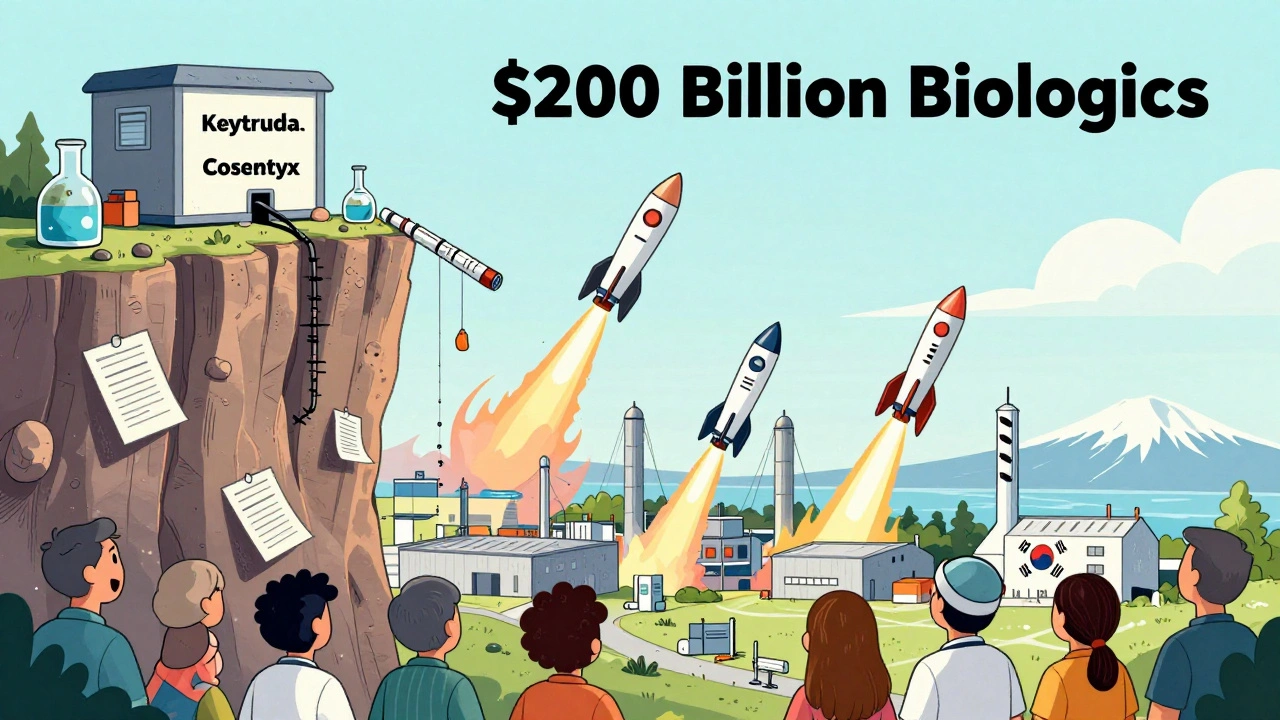
Who’s Winning the Biosimilar Race?
The market is consolidating. The biggest players aren’t the original drugmakers-they’re specialized biosimilar companies.- Sandoz (Novartis spinoff): The market leader with 28% share after buying Biocon’s biosimilars business for $3.9 billion in August 2024. Their Enbrel biosimilar launched at a 35% discount in 2023.
- Samsung Bioepis: A powerhouse in Asia and Europe. Their Opuviz for Eylea got FDA approval in September 2024. They’re also leading the charge on Cosentyx biosimilars.
- Biocon Biologics: Partnered with Mylan to form Viatris for commercialization. Their Yesafili was one of the first Eylea biosimilars approved.
- Alvotech: A fast-growing Icelandic company. Signed a $1.2 billion deal with Regeneron in January 2025 to co-develop biosimilars for Eylea.
Real-World Impact: Doctors, Patients, and Hospitals
The numbers look good, but what’s happening in clinics and hospitals? At the American Society of Clinical Oncology in 2024, Dr. Laura Chow from the University of Washington reported that patients with inflammatory bowel disease had no drop in response when switched from Humira to its biosimilars. That’s huge. It means real people are getting the same care at a lower cost. But it’s not perfect. Dr. Richard Pazdur from the FDA’s Oncology Center documented cases where patients switching between different versions of rituximab biosimilars had unexpected immune reactions. That’s why the FDA doesn’t allow automatic substitution for oncology biosimilars-yet. Each switch requires a doctor’s order. Hospitals are pushing hard. Mass General Brigham boosted biosimilar use for G-CSF drugs from 12% to 68% in one year by making substitution mandatory. CVS Caremark saw a 22% drop in prior authorization denials for biosimilars in Q2 2025. That means fewer delays for patients. Payers are also stepping in. Cigna’s 2025 Medicare Advantage plans charge $0 copay for biosimilars versus $50 for the brand. Centene Corporation now requires biosimilars for all new patients on tumor necrosis factor inhibitors. That’s policy driving change.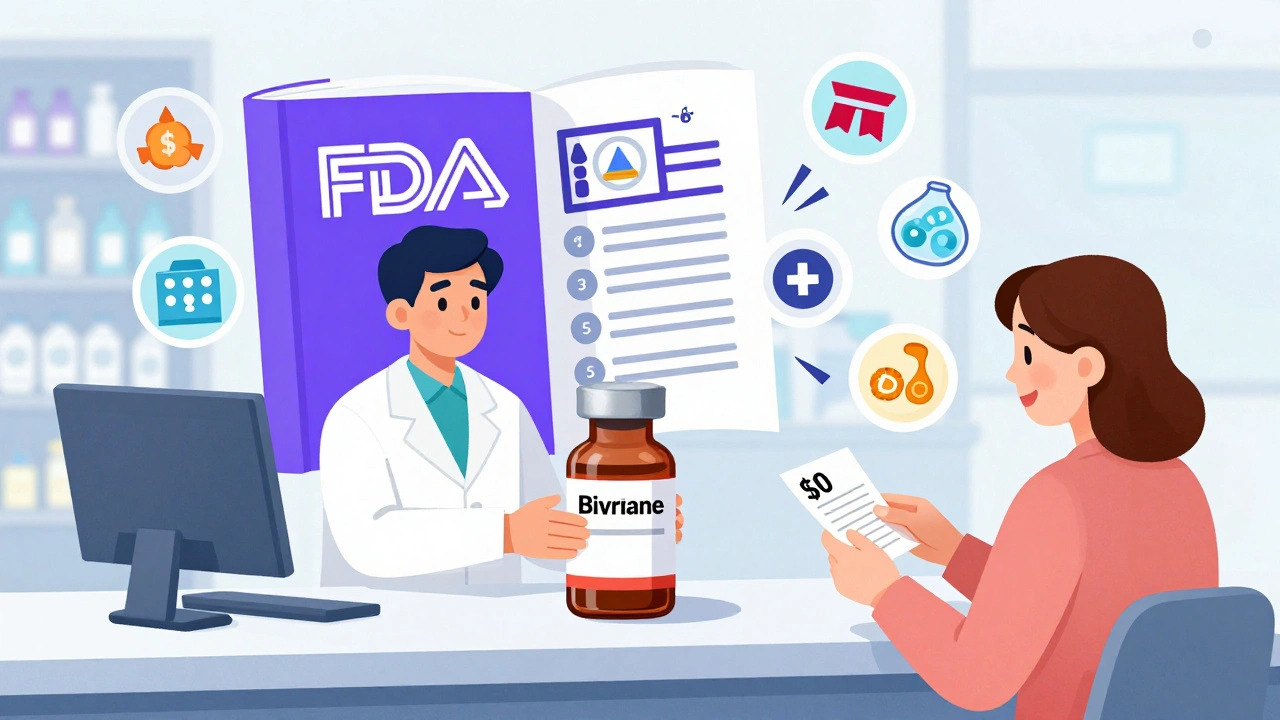
What’s Next? The Road to 2030
By 2030, the global biosimilars market is expected to hit $80 billion-up from $12.7 billion in 2024. The U.S. will account for nearly half of that, even though it’s been slow to adopt. The big question: Will biosimilars replace originators, or just compete alongside them? The answer depends on three things:- Reimbursement reform: If Medicare changes how it pays for biologics, providers will have real incentive to choose biosimilars.
- Interchangeability: More products need to be labeled as interchangeable. Right now, only 12 out of 47 approved biosimilars have that status.
- Manufacturing scale: Can companies produce enough biosimilars to meet demand? With 412 candidates in development, the pipeline is full-but building factories takes years.
Final Thoughts: A New Era of Affordable Biologics
Biosimilars aren’t just cheaper drugs. They’re a reset button for an industry that’s been dominated by high prices and patent delays. The next few years will be messy-legal battles, supply chain hiccups, provider resistance. But the trend is clear: patients will get better access. Providers will have more options. And the healthcare system will save billions. The question isn’t whether biosimilars will arrive. It’s whether we’re ready to use them.Are biosimilars safe?
Yes. The FDA requires biosimilars to show no clinically meaningful differences in safety, purity, or potency compared to the original biologic. This includes extensive lab testing, animal studies, and human clinical trials. Over 47 biosimilars are approved in the U.S., and real-world data from hospitals like Mass General Brigham show they work just as well in practice.
Why are biosimilars cheaper than the original drugs?
Biosimilars don’t need to repeat the full clinical trials that the original drug went through. Instead, developers prove they’re highly similar using advanced analytical methods and targeted studies. That cuts development costs by 30-50%. Plus, competition drives prices down. When 12 versions of Humira entered the market, prices dropped by 40% within a year.
Can pharmacists substitute biosimilars automatically?
Only if the biosimilar is labeled as “interchangeable” by the FDA. Right now, only 12 out of 47 approved biosimilars have that status. For non-interchangeable biosimilars, a doctor must specifically prescribe the biosimilar. This is especially true for cancer drugs, where even small differences could matter.
When will Keytruda biosimilars be available?
Keytruda’s main patent expires in 2028. Fourteen companies are already in Phase 3 trials. The first biosimilars could be approved as early as late 2027 or early 2028, with market entry likely in 2028. Merck has filed over 200 patents to delay competition, but the FDA’s new rules are making that harder.
How do biosimilars affect patient out-of-pocket costs?
Many insurance plans now offer $0 copays for biosimilars, while charging $50 or more for the brand-name drug. For patients on expensive biologics like Eylea or Keytruda, that can mean savings of $10,000 or more per year. Hospitals and insurers are pushing biosimilars because they reduce overall spending-money that can be redirected to care.
Are biosimilars available outside the U.S.?
Yes. The European Medicines Agency has approved 82 biosimilars compared to 47 in the U.S. Countries like Germany, Sweden, and the UK have much higher adoption rates-often over 70% for drugs like Humira and Enbrel. The U.S. is catching up, but reimbursement policies and patent laws have slowed progress.
10 Comments

Tejas Bubane
December 9 2025
Let’s be real-this isn’t about cost savings, it’s about pharma’s last gasp before the whole biologics house of cards collapses. Companies like Sandoz didn’t build these factories to save patients-they’re betting the farm on Medicare’s broken reimbursement model. And don’t get me started on those 237 patents on Keytruda. That’s not innovation, that’s legal extortion.

Sabrina Thurn
December 10 2025
The data is solid: biosimilars are safe, effective, and clinically indistinguishable from originators when properly developed. The real barrier isn’t science-it’s economics. Providers make more money prescribing the brand, payers don’t incentivize switching, and patients are confused by the terminology. We need standardized education for clinicians and transparent labeling. It’s not about replacing drugs-it’s about fixing the system that resists better value.

Nikhil Pattni
December 10 2025
Bro, you know what’s wild? In India, we’ve been using biosimilars for over a decade-Humira alternatives are everywhere, and guess what? People are alive, working, and not bankrupt. 🤷♂️ The FDA’s standards are actually more rigorous than Europe’s, and yet we’re acting like biosimilars are some kind of shady knockoff. It’s not that they’re unsafe-it’s that the US system is designed to keep prices high. Samsung Bioepis spent $450M to build one facility? That’s more than some countries spend on their entire public health system. And yet, they’re the ones making it work. 🇮🇳🇺🇸 #BiosimilarsAreNotCheapCopies

Larry Lieberman
December 11 2025
Imagine if your iPhone had a ‘biosimilar’ version that worked just as well but cost $200 instead of $1,200. Would you take it? Of course you would. So why are we treating cancer drugs like they’re sacred artifacts? 🤔💊 #BiosimilarsAreTheFuture

Lisa Whitesel
December 13 2025
Doctors are incentivized to prescribe the expensive version. That’s not a market failure. That’s corruption. And the FDA’s ‘interchangeable’ label is meaningless when pharmacists are scared to substitute. Patients deserve better.

iswarya bala
December 14 2025
im so happy biosimilars are here!! my mom switched from humira and her flare ups are gone and she saves like 8k a year 😭🙏

Courtney Black
December 14 2025
Every innovation is a mirror. Biosimilars don’t just lower prices-they reveal how much we’ve allowed profit to dictate access to life itself. The question isn’t whether we can make them. It’s whether we’re willing to let go of the illusion that medicine should be a luxury.

Michael Robinson
December 16 2025
Simple truth: if it works, it works. If it’s cheaper, it helps more people. Why is this even a debate?

Ajit Kumar Singh
December 17 2025
Look I’ve seen this movie before-generic pills came in and everyone said they’d kill innovation but we got more drugs not less. Biosimilars are the same. Big Pharma’s crying wolf because their monopoly is ending. They spent 20 years hiding behind patents and now they want us to feel bad for saving money? Nah. The FDA approved 47 of these things. If they were dangerous they’d be pulled. But they’re not. So stop the fearmongering. This is progress. Let’s get these to the people who need them. India’s been doing it right for years. The US is just catching up. And honestly? We’re late.

Elliot Barrett
December 8 2025
Ugh, another ‘biosimilars are the future’ piece. Tell me when the first one causes a patient to die because some lab in Bangalore couldn’t replicate the glycosylation pattern right. We’re playing Russian roulette with people’s lives.