
Feeling bloated after a meal? Stomach cramps after eating dairy? Floating, oily stools that won’t flush away? You’re not alone. Millions of people turn to digestive enzyme supplements hoping for relief. But here’s the truth: digestive enzymes aren’t a magic fix for every stomach issue. They work wonders for some - and do absolutely nothing for others. Knowing when they help - and when they don’t - can save you money, time, and unnecessary discomfort.
What Digestive Enzymes Actually Do
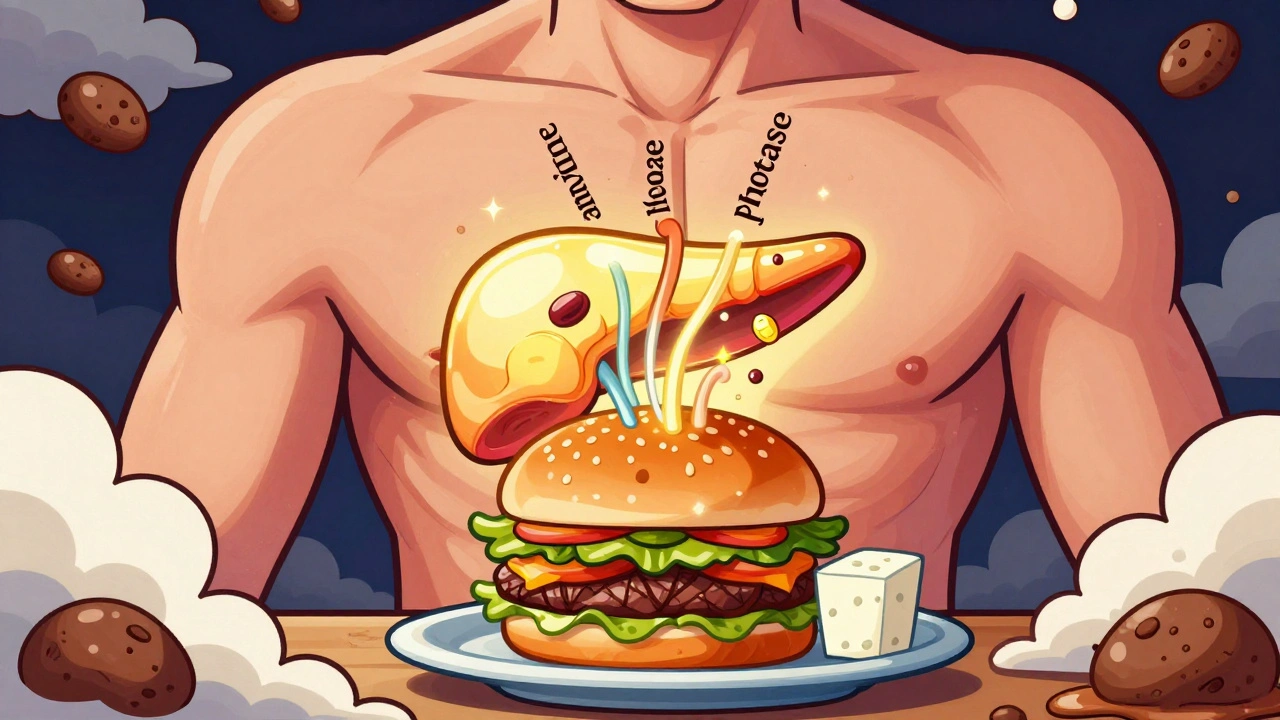
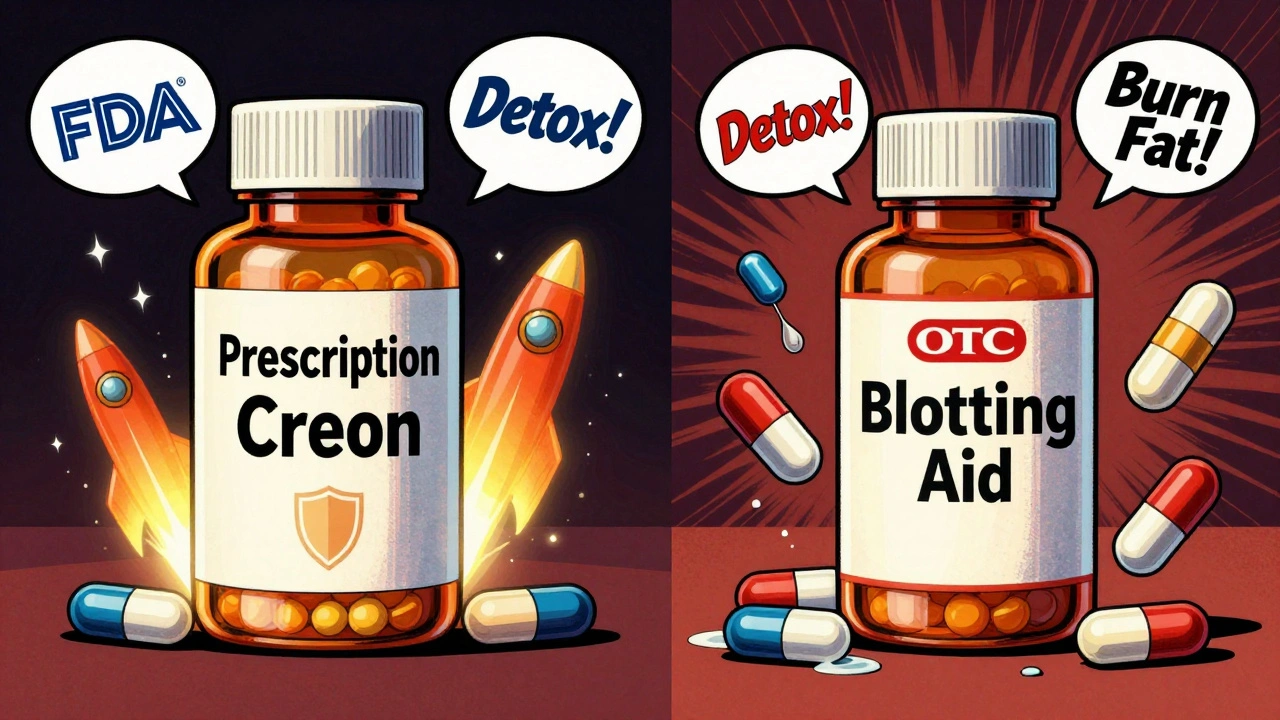
Your body makes enzymes naturally. The pancreas pumps out about 800-1,500 mL of digestive juice every day, packed with amylase (for carbs), protease (for proteins), and lipase (for fats). These enzymes break down food so your body can absorb nutrients. Without them, you’re not just digesting poorly - you’re missing out on vitamins, minerals, and energy.When your pancreas can’t keep up - like in exocrine pancreatic insufficiency (EPI) - your body struggles to digest fats and proteins. That leads to weight loss, greasy stools, and nutrient deficiencies. That’s where prescription enzyme replacements like Creon or Zenpep come in. These are FDA-approved drugs, not supplements. They contain high-dose, enteric-coated enzymes that survive stomach acid and release where they’re needed: the small intestine.
Over-the-counter (OTC) enzyme supplements are different. They’re sold as dietary supplements, meaning they’re not held to the same strict standards. You’ll find them in bottles labeled “digestive support,” “gas relief,” or “bloating aid.” Many contain plant-based or microbial enzymes from sources like Aspergillus oryzae. They’re cheaper, easier to buy, and often marketed with bold claims. But do they actually work?
When Enzyme Supplements Work - And When They Don’t
If you have EPI - caused by chronic pancreatitis, cystic fibrosis, or pancreatic surgery - prescription enzymes are life-changing. Studies show 70-85% of EPI patients see a major drop in fatty stools and improved nutrient absorption. One patient on Reddit, u/PancreasWarrior, said: “Before Creon, I lost 30 pounds in six months. After two weeks on enzymes, I started gaining weight again. It’s not a supplement. It’s medicine.”
But EPI only affects 1-5% of the general population. Most people using OTC enzymes don’t have it. So what about the rest?
For lactose intolerance, OTC lactase enzymes like Lactaid work surprisingly well. Eighty-two percent of users on Target.com report being able to eat dairy without bloating or diarrhea. That’s because lactase is a single enzyme targeting one specific sugar. It’s like a key fitting one lock - simple and effective.
For IBS, the picture is murkier. Some people get relief. A 2021 meta-analysis found OTC enzymes reduced bloating, gas, and diarrhea by 50-60% in IBS patients - especially after high-FODMAP meals. Dr. Russell Havranek, a gastroenterologist with 15 years of clinical experience, says: “I often start my IBS patients on OTC enzymes. Digestive Gold, for example, has consistent results for gas and bloating.”
But here’s the catch: 41% of IBS patients stop using OTC enzymes within three months because they don’t notice a difference. Why? Because IBS isn’t caused by enzyme deficiency. It’s a nervous system-gut communication problem. Enzymes might help with one symptom - like bloating after beans - but won’t fix the root cause.
And for people with no diagnosed condition? The evidence is thin. A 2020 FDA analysis found 78% of OTC enzyme claims - like “boost metabolism” or “detox the gut” - have no clinical backing. These aren’t just misleading. They’re dangerous. People delay seeing a doctor for real issues like celiac disease, SIBO, or even colon cancer because they think “a pill will fix it.”
Prescription vs. OTC: What’s the Real Difference?
Here’s a side-by-side breakdown:
| Feature | Prescription PERT (Creon, Zenpep) | OTC Supplements (NOW Foods, Enzymedica) |
|---|---|---|
| Enzyme Source | Porcine (pig pancreas) | Microbial (fungus/bacteria) or plant-based |
| Enteric Coating | Yes - survives stomach acid | Usually no - enzymes may break down in stomach |
| Dosage Precision | Standardized (e.g., 20,000 lipase units per capsule) | Variable - up to 30% batch inconsistency |
| Regulation | FDA-approved drug | Dietary supplement (DSHEA) |
| Cost per Dose | $1.50-$3.00 (if insured) | $0.50-$1.00 |
| Insurance Coverage | 70-90% covered under Medicare Part D | None |
| Proven Efficacy for EPI | 70-85% | 30-40% |
| Proven Efficacy for IBS | Not approved | 50-60% |
Prescription enzymes are designed for medical need. OTC enzymes are designed for convenience - and profit. The FDA has issued 12 warning letters to OTC enzyme makers since 2022 for false claims. ConsumerLab testing found 15-25% of OTC products contain less than 80% of the enzyme amount listed on the label.
How to Use Enzymes Correctly (If You Do)
If you’re going to try an enzyme supplement, do it right.
- Timing matters. Take enzymes right before you eat - not 30 minutes before, not after. They need to mix with food as it leaves the stomach.
- Start low. Begin with 10,000 lipase units per meal. If symptoms don’t improve after a week, increase by 10,000 units weekly. Most people find relief between 25,000-50,000 units per meal.
- Match the dose to the meal. A greasy burger needs more lipase than a salad. One gram of fat requires about 500 lipase units to digest properly.
- Split doses for big meals. If you’re a slow eater, take half the dose at the start of the meal and half halfway through. A 2018 trial showed this improved symptom control by 35%.
- Avoid PPIs without talking to your doctor. Proton pump inhibitors (like omeprazole) reduce stomach acid. That can prevent enzymes from activating properly, especially prescription ones.
Some people report constipation as a side effect - especially with high-dose PERT. If that happens, increase fiber and water. Don’t just stop taking them. Talk to your doctor.
Who Should Avoid Digestive Enzymes?
Not everyone should take them.
- If you have acute pancreatitis, enzymes can worsen inflammation. The FDA explicitly warns against use in this case.
- If you have SIBO (small intestinal bacterial overgrowth), enzymes can feed the overgrown bacteria, making bloating worse. A 2021 case series showed patients with undiagnosed SIBO had severe flare-ups after taking OTC enzymes.
- If you’re pregnant or nursing, there’s not enough safety data. Skip it unless your doctor says otherwise.
- If you’re taking blood thinners or immunosuppressants, some enzymes may interact. Ask your pharmacist.
What to Do If Enzymes Don’t Help
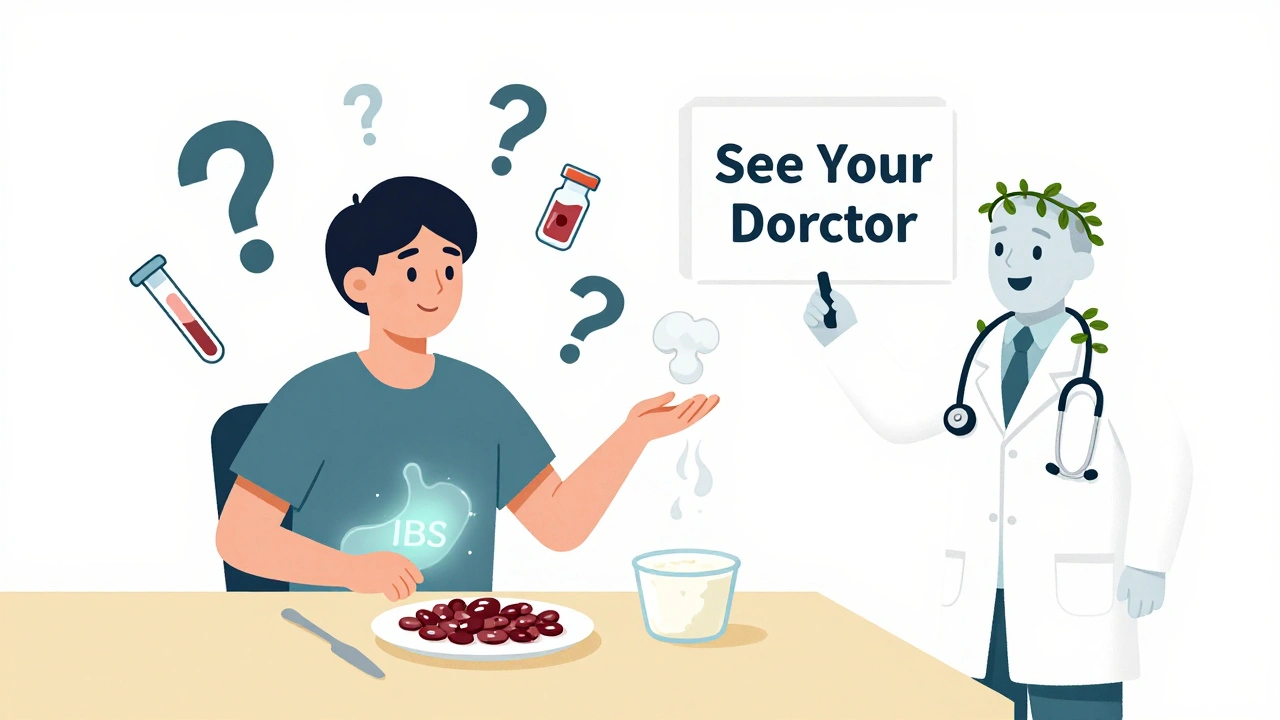
If you’ve tried OTC enzymes for a month and see no change - stop. Don’t keep buying more. Don’t double the dose. Don’t mix brands.
Instead, see a doctor. Persistent bloating, diarrhea, or weight loss could mean:
- Celiac disease
- Small intestinal bacterial overgrowth (SIBO)
- Food intolerances (like fructose or histamine)
- Chronic pancreatitis or gallbladder issues
- Even colon cancer
Testing is simple: a stool test for fat content, a breath test for SIBO, or a blood test for celiac antibodies. You don’t need to guess. You don’t need to spend $40 a month on supplements hoping for luck.
The Bottom Line
Digestive enzymes aren’t good or bad. They’re tools. And like any tool, they only work for the right job.
If you have EPI - take your prescription enzymes. They’re life-saving.
If you’re lactose intolerant - try lactase. It’s cheap, effective, and safe.
If you have IBS and bloating after beans or dairy - a low-dose OTC enzyme might help. But don’t expect miracles. And don’t use it as a substitute for identifying trigger foods.
If you’re healthy and just want to “digest better” - you don’t need them. Your body already makes enough. No supplement can replace a balanced diet, regular meals, or good sleep.
The biggest risk isn’t taking enzymes. It’s thinking they’re the answer - and ignoring the real problem.
Can digestive enzymes help with IBS?
Yes - but only for some people and only for certain symptoms. OTC enzymes can reduce bloating, gas, and diarrhea after high-FODMAP meals in about 50-60% of IBS cases. They don’t fix the underlying gut-brain communication issue, so results vary. If you don’t notice improvement after 4 weeks, stop using them and talk to a doctor.
Are OTC digestive enzymes safe?
For most healthy people, short-term use is low-risk. But quality control is a major problem. Up to 25% of OTC products contain less enzyme than labeled. Some contain undeclared ingredients. Avoid brands that make claims like “boost metabolism” or “detox your gut.” Stick to reputable companies with third-party testing (like USP or ConsumerLab).
Do I need a prescription for digestive enzymes?
Only if you have exocrine pancreatic insufficiency (EPI). Prescription enzymes like Creon are FDA-approved drugs and require a doctor’s prescription. For lactose intolerance or occasional bloating, OTC enzymes are available without a prescription. But if you’re unsure why you’re having symptoms, see a doctor before buying anything.
Can digestive enzymes cause constipation?
Yes - especially with high-dose prescription enzymes. When fats are broken down too efficiently, it can alter stool consistency and lead to constipation. Drinking more water and increasing fiber intake usually helps. If it persists, talk to your doctor about adjusting your dose.
What’s the best digestive enzyme brand?
For prescription use: Creon, Zenpep, or Pancreaze - all are FDA-approved and standardized. For OTC: Enzymedica’s Digestive Gold and NOW Foods Super Enzymes have good reputations for consistency and third-party testing. Lactaid is the top choice for lactose intolerance. Always check for third-party verification (USP, NSF, or ConsumerLab) on the label.
Can digestive enzymes help with weight loss?
No. There’s no clinical evidence that digestive enzymes help with weight loss. Any claims suggesting they “speed up metabolism” or “burn fat” are marketing hype. Weight loss comes from calorie balance, not enzyme pills. The FDA has warned multiple companies for making these false claims.
If you’ve been struggling with digestive symptoms for months, don’t keep guessing. See a doctor. Get tested. Know what’s really going on. Enzymes might help - but only if they’re the right tool for your problem.
8 Comments

Stephanie Maillet
December 11 2025
It’s fascinating, isn’t it?-how we’ve outsourced our bodily wisdom to pills, as if digestion were a mechanical process rather than a sacred, evolved dance between gut, brain, and food… And yet, I can’t deny: when I eat a heavy cheese plate, Lactaid works. So maybe it’s not about truth… but about pragmatism?

Raj Rsvpraj
December 12 2025
India has been using natural enzyme-rich foods like curd, fermented rice, and ginger for millennia - and now Westerners are paying $20 for capsules made from mold? Pathetic. You people would buy air if it had a label saying 'clinically proven.' Your entire healthcare system is a scam designed to keep you dependent. Eat real food. Stop trusting corporations.

Frank Nouwens
December 12 2025
Thank you for this incredibly well-researched and balanced piece. I’ve been advising patients on this for years, and it’s refreshing to see the nuances laid out so clearly. The distinction between prescription PERT and OTC supplements is critical - and the warning about SIBO is something too many overlook. Well done.

Aileen Ferris
December 12 2025
enzyms r not magic but i tried digestve gold after i ate a whole pizza and… shocker… i didnt feel like a balloon? maybe its placebo but hey if it works i aint complainin

Michelle Edwards
December 14 2025
If you’re reading this and feeling overwhelmed - you’re not alone. Digestive issues are confusing, and it’s easy to feel like you’re chasing pills instead of answers. But you’re already doing the right thing by learning. Start small. Track what you eat. Be kind to your body. You’ve got this.

Queenie Chan
December 15 2025
I once ate a whole wheel of brie at 2 a.m. while sobbing over a breakup - and then took a capsule of Digestive Gold like it was a spiritual incantation. The next morning? My gut felt like a calm lake after a storm. Was it the enzymes? The catharsis? The fact that I hadn’t eaten a single vegetable in three days? I don’t know. But I’ll take the lake.

Michaux Hyatt
December 16 2025
For anyone wondering where to start: if you’re bloated after dairy, try Lactaid. If you’re bloated after beans, try a broad-spectrum OTC enzyme with alpha-galactosidase. If you’re losing weight or have oily stools that float like a cork - see a doctor. Don’t self-diagnose. And if you’re healthy? Your pancreas is already doing a great job. You don’t need a pill to fix what isn’t broken.


Rebecca Dong
December 10 2025
Oh please, the FDA is just in bed with Big Pharma - Creon costs $300 a bottle because they’ve got a monopoly, but OTC enzymes are perfectly fine if you know which brands to pick. I’ve been taking NOW Foods for 3 years and my stools are normal, my energy’s up, and my doctor? She doesn’t even know what lipase units are. Wake up, sheeple.