Lumbar Radiculopathy: Causes, Treatments, and Medication Risks
When a nerve in your lower back gets pinched or irritated, it can send shooting pain down your leg—that’s lumbar radiculopathy, a condition where spinal nerve roots in the lower back become compressed or inflamed, often causing pain, numbness, or weakness that radiates into the leg. Also known as sciatica, it’s not a disease itself but a symptom of something else—like a herniated disc, spinal stenosis, or bone spurs pressing on the nerve. It affects millions, especially people over 40, and it’s one of the most common reasons folks end up in physical therapy or reach for pain meds.
Most people try NSAIDs, nonsteroidal anti-inflammatory drugs like ibuprofen or diclofenac that reduce swelling and pain around the irritated nerve first. But as the posts here show, these drugs aren’t risk-free. Long-term use can lead to stomach ulcers, kidney strain, or even dangerous interactions with heart meds—like when calcium channel blockers, blood pressure medications such as amlodipine or felodipine are taken with grapefruit juice, or when NSAIDs clash with blood thinners. Then there are muscle relaxants, drugs like cyclobenzaprine or methocarbamol used to ease spasms that worsen nerve pressure. They help short-term, but they can make you drowsy, dizzy, or even raise the risk of falls, especially in older adults.
What you won’t find in most doctor’s office brochures is how often people switch between generics without knowing the difference—or how supplements like turmeric or CBD might interfere with the meds they’re already taking. The posts below dig into exactly that: how to track your response to pain meds, when to question a prescription, and what hidden risks come with common treatments. You’ll learn how to spot early signs of nerve damage, why some drugs work better for some people than others, and how to avoid the traps that turn a manageable ache into a long-term problem.
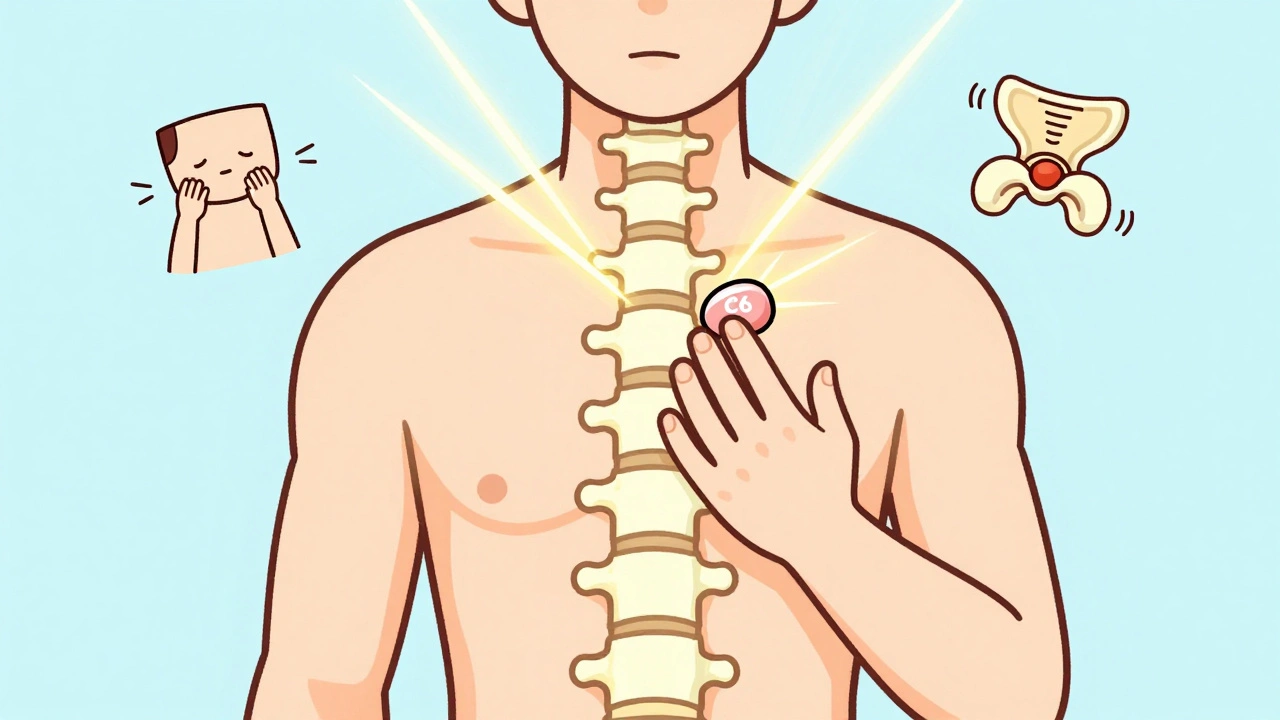
Cervical and Lumbar Radiculopathy: Nerve Pain and Rehabilitation That Actually Works
Cervical and lumbar radiculopathy cause nerve pain that shoots into arms or legs. Most cases improve with targeted rehab, not surgery. Learn what actually works, what doesn't, and how to recover faster.
View MorePopular Posts