

Lithium-Thyroid Risk & Monitoring Estimator
Risk Assessment
Based on the 2024 data, your profile indicates a specific susceptibility to lithium-induced thyroid dysfunction.
Recommended Monitoring
- Baseline Immediate
- First Year Every 6 Months
- Long-term Annually
It is a frustrating paradox: the very medication that keeps your mood stable and prevents a devastating manic episode can simultaneously crash your metabolism. For many people living with bipolar disorder, Lithium is the gold standard. It is unparalleled in its ability to stop suicide attempts and prevent relapse. But this stability often comes with a hidden price tag-your thyroid gland. If you've noticed unexplained weight gain, a constant fog of fatigue, or a feeling of coldness that won't go away, you aren't imagining things. Lithium can fundamentally change how your thyroid works, and understanding this link is the only way to keep both your mind and your metabolism in check.
How Lithium Actually Affects the Thyroid
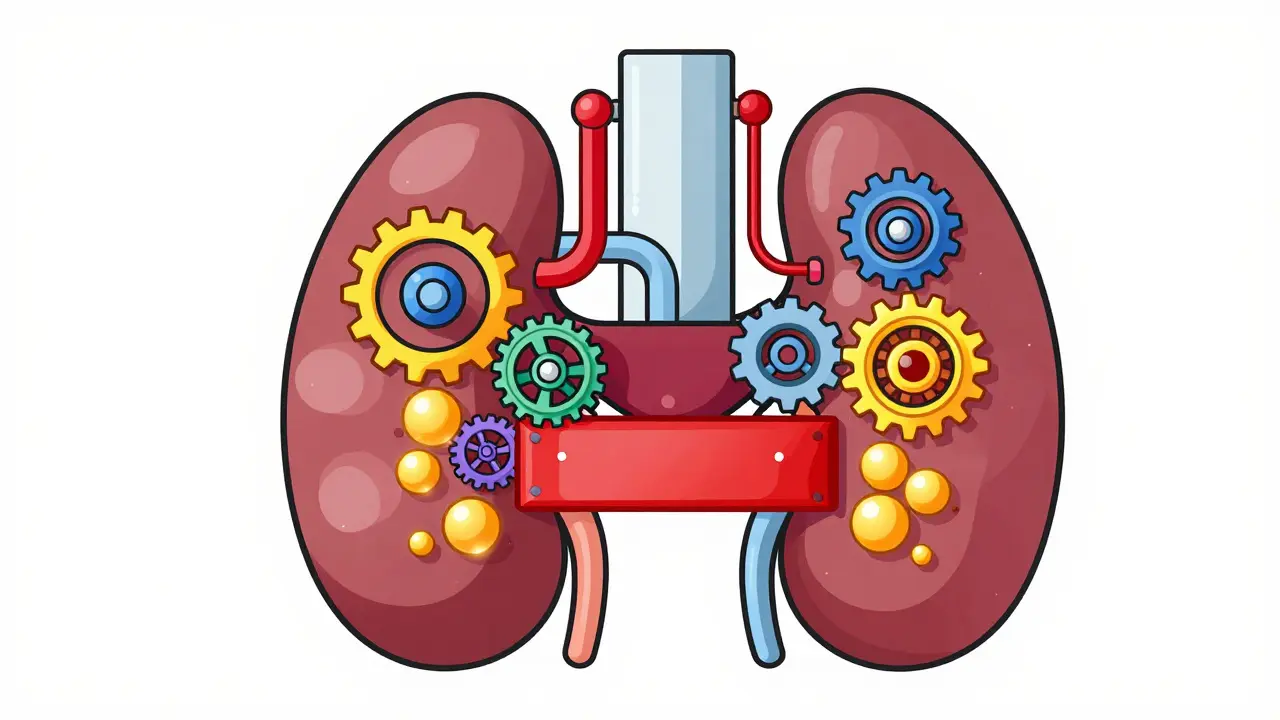
Lithium doesn't just "upset" the thyroid; it interferes with the biological machinery of the gland. It blocks the synthesis of thyroid hormones by messing with how iodine attaches to proteins in the gland. Think of it as a roadblock that prevents the thyroid from releasing the hormones it has already made into your bloodstream. Thyroglobulin is a protein produced by the thyroid gland that serves as a precursor to thyroid hormones; lithium alters this protein's structure and stops it from breaking down properly, which traps hormones inside the gland.
Beyond just blocking release, lithium can actually change the physical structure of the thyroid. It can lead to the development of a goiter-an enlargement of the gland-in up to 59% of long-term users. This happens because the body tries to compensate for the lack of circulating hormones by making the gland bigger. Interestingly, where you live matters. In places with low iodine in the diet, this enlargement happens much more frequently than in iodine-rich regions.
Hypothyroidism vs. Hyperthyroidism: The Two Paths
While most people associate lithium with an underactive thyroid, the reality is a bit more complex. The vast majority of patients-roughly 20% to 32%-develop Hypothyroidism is a condition where the thyroid gland does not produce enough crucial hormones. This is the most common scenario, characterized by a slow heart rate, depression (which can be mistaken for a bipolar depressive episode), and significant weight gain.
On the flip side, a small group of patients (about 3-5%) experience the opposite: hyperthyroidism. This usually doesn't look like a classic autoimmune disease like Graves' disease. Instead, it often manifests as a "painless thyroiditis," where the gland suddenly leaks stored hormones into the blood. This causes a temporary spike in energy, anxiety, and heat intolerance before eventually settling back down or sliding into hypothyroidism.
| Feature | Hypothyroidism (Common) | Hyperthyroidism (Rare) |
|---|---|---|
| Prevalence | 20% - 32% of patients | 3% - 5% of patients |
| Primary Symptoms | Fatigue, weight gain, cold intolerance | Anxiety, racing heart, heat intolerance |
| Mechanism | Inhibition of hormone synthesis/release | Transient painless thyroiditis (leakage) |
| Typical Treatment | Levothyroxine replacement | Observation or carbimazole |
The Dose-Response Reality: Does More Lithium Mean More Risk?
For years, there was a debate among doctors about whether the amount of lithium you take actually affects your thyroid. Recent data from 2024 suggests the answer is a resounding yes. Research indicates that for every 100 mg increase in your daily lithium dose, the odds of progressing to severe thyroid dysfunction increase by about 27%. This means the higher your therapeutic dose, the more aggressive your monitoring needs to be.
However, it isn't just about the dose. Demographics play a massive role. Women under 60 are significantly more vulnerable, developing hypothyroidism at more than three times the rate of men on the same dosage. This disparity suggests that hormonal interactions beyond just the thyroid are at play, making regular screening even more critical for women.
Step-by-Step Management and Monitoring
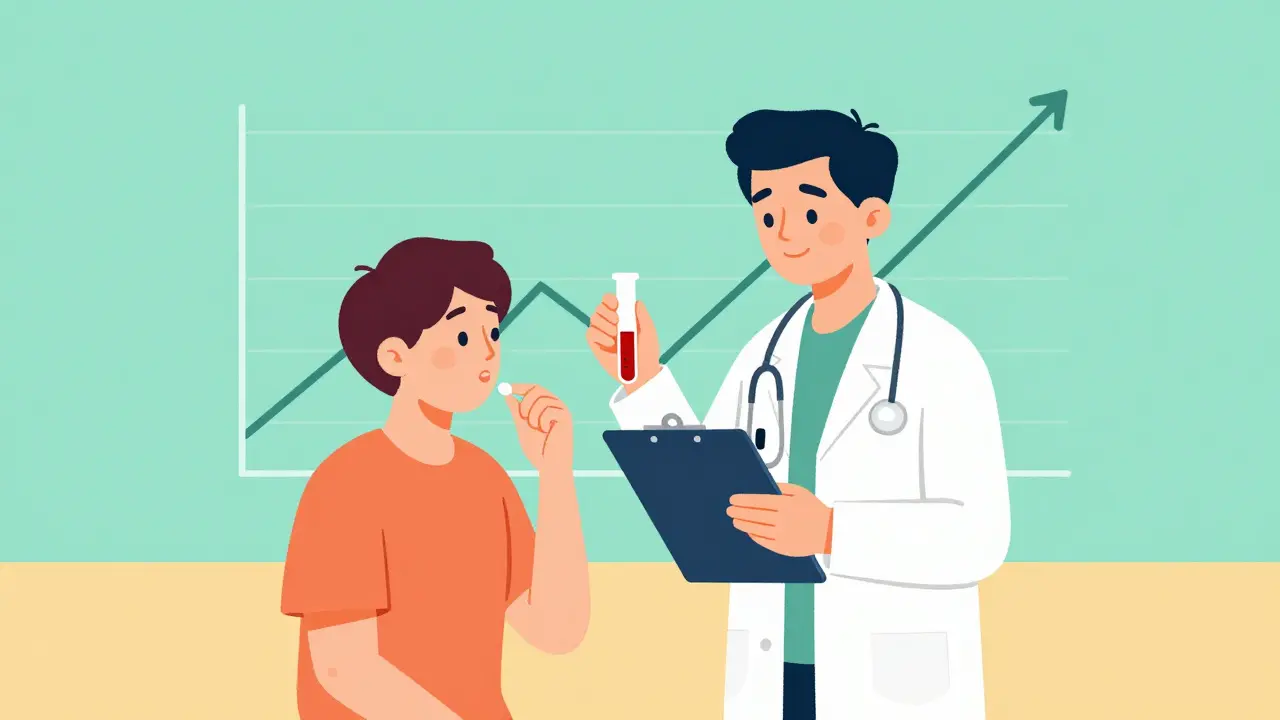
You shouldn't just wait for symptoms to appear; thyroid failure is often silent until it is severe. The gold standard for management involves a proactive schedule of Thyroid Function Tests are blood tests that measure levels of TSH and free T4 to evaluate thyroid health.
- The Baseline: Before starting lithium, get a full panel of TSH and free T4. You need to know your starting point to identify changes later.
- The First Year: Test every 6 months. The lag between starting the drug and seeing a TSH spike can be 6 to 8 weeks, so early tests might look normal even if a problem is brewing.
- Long-term Maintenance: Once stable, annual testing is usually sufficient, though your doctor may increase this if your lithium dose changes.
- Replacement Therapy: If you develop hypothyroidism, Levothyroxine is a synthetic version of the T4 hormone used to treat underactive thyroids the standard treatment. Be aware that lithium patients often need 20-30% higher doses of levothyroxine than people without lithium treatment to achieve the same TSH levels.
Comparing Lithium to Other Mood Stabilizers
If the risk of thyroid disease feels too high, you might wonder about alternatives. Drugs like Valproate is an anticonvulsant used as a mood stabilizer for bipolar disorder have a much lower risk of thyroid dysfunction (around 5-10%). Carbamazepine has almost no impact on the thyroid at all.
But here is the catch: neither of these alternatives typically matches lithium's power in preventing suicide or stabilizing severe mania. For many, the trade-off is acceptable. Taking a daily thyroid pill is a small price to pay for the psychological stability that prevents hospitalization. The key is not to stop the lithium prematurely, but to manage the endocrine side effects alongside it.
Pitfalls and Pro Tips for Patients
One of the biggest mistakes occurs when a patient feels "burnt out" and assumes it is a bipolar depressive episode, only to find out months later that their TSH has skyrocketed. If you are on lithium, never assume a mood drop is purely psychiatric-always ask for a blood test first.
There is also the danger of abrupt discontinuation. While stopping lithium can sometimes reverse thyroid issues, there are rare but documented cases where rapid removal of the drug triggered a "thyroid storm," a life-threatening state of extreme hyperthyroidism. Never stop lithium cold turkey; always taper under a psychiatrist's supervision.
For those looking for preventive measures, some emerging research suggests that selenium supplementation (around 100 mcg/day) might reduce the incidence of hypothyroidism. While not yet a universal standard of care, it is a conversation worth having with your endocrinologist.
Do I have to stop taking lithium if I develop hypothyroidism?
No, you generally do not. Most clinicians recommend continuing lithium for mood stability and treating the hypothyroidism with levothyroxine. The psychiatric benefits of lithium usually outweigh the inconvenience of taking a thyroid supplement.
How long does it take for lithium to affect my thyroid?
It varies, but there is often a 6-to-8 week lag before TSH levels begin to rise. Some people develop issues within the first year, while others may not show signs for a decade. This is why baseline and regular follow-up tests are mandatory.
Can lithium cause a goiter?
Yes, between 30% and 59% of long-term lithium users develop a goiter. This is the thyroid gland enlarging as it tries to compensate for the blocked release of hormones. It is more common in regions where dietary iodine is low.
Will levothyroxine interfere with my lithium levels?
Generally, levothyroxine does not significantly change lithium blood levels. However, treating your thyroid can sometimes change how you feel emotionally, so your psychiatrist should be aware of any dosage changes in your thyroid medication.
Is there a way to predict if I'll get thyroid disease from lithium?
While there is no perfect test, risk factors include being female, being under 60, and taking higher daily doses of lithium. New predictive algorithms are being developed that use baseline TSH and age of onset to identify high-risk patients.
10 Comments

danny Gaming
April 13 2026
Typical pharma garbage just keep us on meds that break our glands and then sell us more meds to fix it lol typical us system

Trey Kauffman
April 14 2026
Oh brilliant, so the solution to the medication that breaks your thyroid is just... more medication. Truly a peak achievement of modern medicine. I'm sure everyone is just thrilled to trade a manic episode for a permanent appointment with an endocrinologist.

Peter Meyerssen
April 14 2026
The systemic endocrine disruption here is essentially a teleological failure of the pharmacological approach 🙄. We are merely treating symptoms with more symptoms in a recursive loop of biological inefficiency. It is quite quaint that some actually believe a simple selenium supplement will mitigate the profound biochemical cascade induced by lithium. Truly a pedestrian understanding of homeostasis if you think it's that simple :)

Ben hogan
April 15 2026
Imagine actually thinking this surface-level guide is helpful. It's basically a pamphlet you'd find in a waiting room. Absolute waste of time.

Danny Wilks
April 16 2026
I have observed that the intersection of psychiatric care and endocrine health is often a neglected corridor in the broader landscape of healthcare, particularly in the United States where specialist silos frequently prevent the kind of integrated communication necessary for a patient to truly thrive on a regimen of lithium. It is quite fascinating, if one possesses the patience for it, to consider how the regional variance in iodine intake creates a disparate physical manifestation of the same chemical intervention, effectively turning a patient's geography into a variable of their clinical outcome.

Kelly DeVries
April 17 2026
girl i felt this in my soul i literally thought i was just lazy for three years until i got my tsh checked and it was through the roof lol just get the bloodwork done honey dont let your doctor gaslight you into thinking its just a depressive episode

kalpana Nepal
April 18 2026
Health is the only true wealth we have and the body is a temple that must be respected. We must rely on our own strength and our own land to heal these ailments instead of trusting only the chemicals that come from far away.

Ryan Hogg
April 18 2026
I can't even imagine the crushing weight of knowing your stability depends on something that is slowly destroying your internal balance. It's just so heartbreaking to think about the mental toll of feeling your body betray you while you're just trying to survive the day. I've spent so many nights staring at the ceiling wondering if I'll ever feel truly whole again or if I'm just a collection of side effects and prescriptions. The exhaustion isn't just physical; it's a deep, spiritual weariness that settles into your bones and makes every small task feel like climbing a mountain. Why does it have to be this way? The unfairness of the trade-off is almost too much to bear some days. I just want to wake up and not feel like a stranger in my own skin, fighting a battle against my own metabolism. It's a lonely, isolating road and the fatigue just swallows everything else whole. I feel like I'm disappearing into a fog that no amount of medicine can actually clear. It's just a cycle of hope and disappointment that never ends. I'm just so tired of fighting my own biology. Every time I think I've found a baseline, something else shifts and I'm back at square one. It's an endless loop of fragility.

Lynn Bowen
April 19 2026
This is a very useful breakdown of the risks involved.



Sarina Montano
April 11 2026
Dealing with the fog of hypothyroidism while trying to maintain emotional equilibrium is like trying to paint a masterpiece during a blackout. It's a dizzying carousel of fatigue and mood swings that can really throw a wrench in your recovery process. I've found that keeping a meticulous mood diary alongside those TSH blood tests helps pinpoint exactly when the metabolic slide starts happening before it becomes a full-blown crash. The nuance of the 20-30% higher levothyroxine dose is such a critical piece of the puzzle that often gets glossed over in basic consultations. It's all about fine-tuning the chemical symphony in your body to find that sweet spot where the mind is calm and the body isn't just dragging its feet through the day.