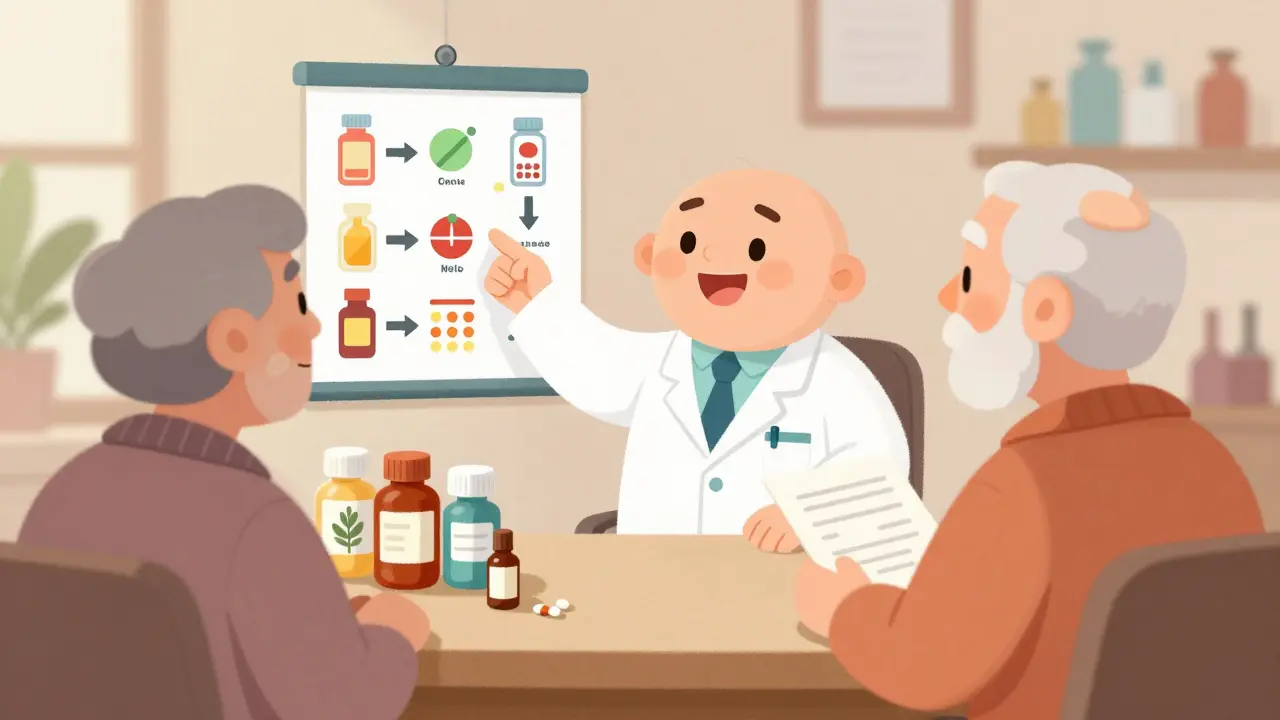
Most people think of their pharmacy as just a place to pick up prescriptions. But if you’re taking more than a few medications - especially for chronic conditions like diabetes, high blood pressure, or heart disease - your pharmacist is one of the most important people in your healthcare team. And you don’t need a doctor’s referral to talk to them. Pharmacy consultation services are free, private, and designed specifically to keep you safe from dangerous drug interactions, dosing mistakes, and unnecessary side effects.
What Happens During a Pharmacy Consultation?
A consultation isn’t just a quick chat while you wait for your pills. It’s a full review of everything you’re taking - prescription drugs, over-the-counter meds, vitamins, supplements, even herbal remedies. Pharmacists check for:- Drug interactions (like mixing blood thinners with certain painkillers)
- Duplicate prescriptions (two different doctors prescribing the same drug)
- Incorrect dosages (too high or too low for your age or kidney function)
- Medications you no longer need
- Cost-saving alternatives
According to a 2023 study in VA medical centers, pharmacist-led consultations prevented over 1,200 serious adverse drug events in just one year. In 87% of those cases, the pharmacist caught something that could have sent the patient to the ER - or worse.
These reviews usually take about 15 to 20 minutes. You’ll sit in a private consultation room (68% of UK community pharmacies now have them), and the pharmacist will ask you to bring a list of everything you take - including what you forgot to mention because you thought it didn’t matter.
Why Your Pharmacist Sees More Than Your Doctor
You might visit your GP twice a year. But you probably go to the pharmacy 17 times a year - maybe more. That’s not a coincidence. It means your pharmacist sees your meds every time you refill, every time your dose changes, every time you pick up a new prescription.One patient in Bristol told me: “My doctor prescribed me a new antidepressant. My pharmacist noticed it interacted with my blood pressure medicine. She called my doctor, and they switched me to something safer. I had no idea there was a risk.”
That’s the power of proximity. Pharmacists are trained to spot red flags others miss. A 2022 analysis found that when pharmacists reviewed medication lists during hospital discharge, they caught errors in 40% of cases - mistakes that often led to readmissions.
Who Qualifies for Free Consultations?
If you’re on Medicare Part D or a similar UK-based prescription scheme, you’re likely eligible for a full Medication Therapy Management (MTM) service at no cost. You qualify if you:- Take four or more chronic condition medications (like for diabetes, heart disease, asthma, or depression)
- Have spent over £1,000 on prescriptions in the past year
- Are at risk for hospitalization due to your meds
Even if you don’t meet those criteria, most community pharmacies offer free 10- to 15-minute consultations to anyone who asks. You don’t need an appointment - but it helps. Call ahead and say, “I’d like a medication safety review.” Many pharmacies now offer dedicated consultation hours, usually in the morning or early afternoon.
What to Bring to Your Consultation
Don’t rely on memory. Bring all your meds - in their original bottles - or a written list that includes:- Drug name and dose (e.g., “Metformin 500mg, twice daily”)
- Why you take it (e.g., “for type 2 diabetes”)
- How often you take it
- Any side effects you’ve noticed
- Any over-the-counter pills, vitamins, or supplements
- Any herbal teas or remedies (yes, even turmeric or garlic pills)
Pharmacists also need to know if you’ve missed doses, skipped refills, or stopped a drug because it made you feel sick. That’s not a judgment - it’s critical data. A 2023 survey found that 76% of patients who had a consultation improved their adherence to their meds. That’s because they finally understood why each pill mattered.
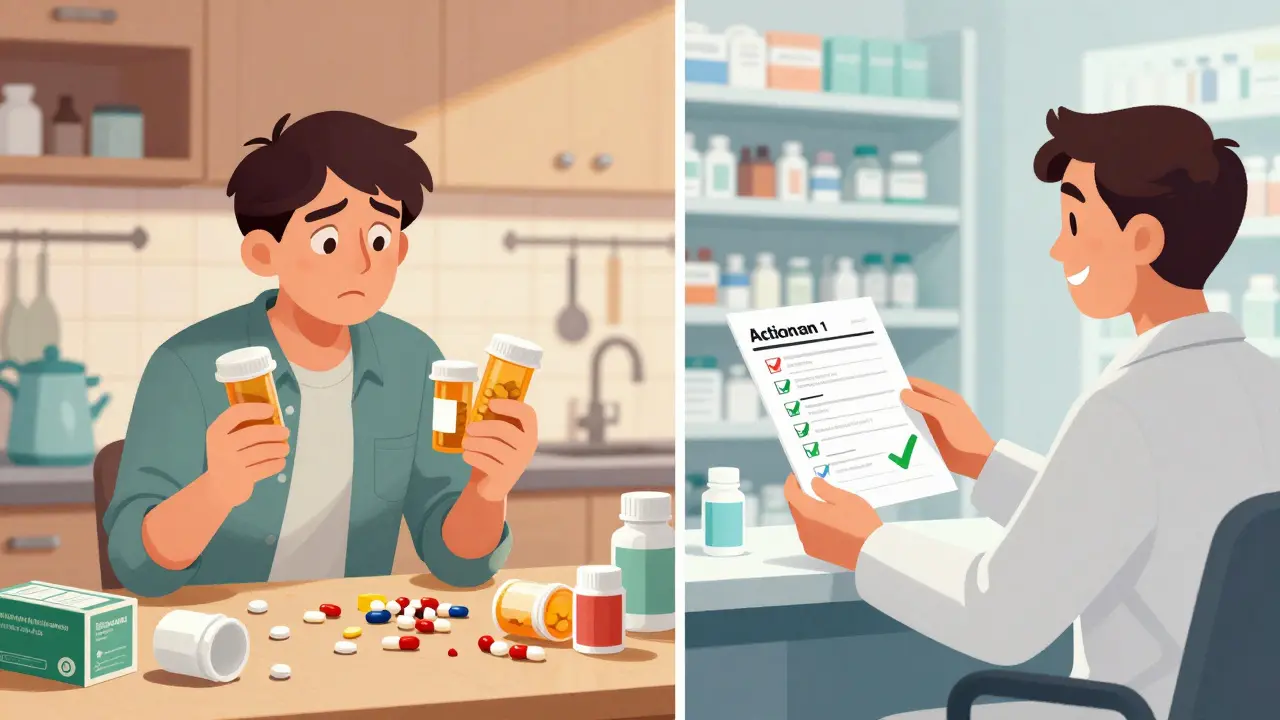
Costs and Insurance Coverage
If you’re on Medicare Part D or a UK equivalent, consultations are free. If you’re privately insured, check with your plan. About 43% of commercial insurers in the UK now cover medication reviews - up from just 12% five years ago. Some pharmacies charge £25 to £50 for a consultation if you’re paying out-of-pocket, but many waive the fee if you’re picking up your prescriptions there.And here’s the kicker: even if you pay, it often saves you money. One patient in Bristol saved £200 a month after her pharmacist switched her from a brand-name statin to a generic that worked just as well. Another avoided a £1,200 hospital bill by catching a dangerous interaction before it happened.
Common Mistakes People Make
Most people don’t use these services because they don’t know they exist - or they think they’re not “sick enough.” Here are the top three mistakes:- Waiting until something goes wrong. Don’t wait for dizziness, confusion, or falls. Ask for a review even if you feel fine.
- Only bringing your prescriptions. Supplements, OTC meds, and herbal products can be just as dangerous as prescriptions. Ibuprofen can raise blood pressure. St. John’s Wort can cancel out antidepressants. Your pharmacist needs the full picture.
- Assuming your doctor knows everything. Doctors see hundreds of patients a week. Pharmacists see your meds every day. They’re the only ones who track your entire medication history over time.
How to Get Started
1. Call your pharmacy. Ask: “Do you offer free medication consultations?”Some pharmacies now offer virtual consultations via video call - especially useful if you’re housebound or live far from town. About 62% of UK pharmacies offer this option now, up from 18% in 2020.
Real Impact: What Patients Say
Patients who use these services consistently report:- More confidence in their meds
- Fewer side effects
- Lower out-of-pocket costs
- Less anxiety about taking pills
One woman in Bristol, 72, said: “I was taking six different pills for my heart, lungs, and joints. I didn’t know half of them were for things I didn’t have anymore. My pharmacist cut three of them out. I feel like I’ve got my energy back.”
Another man, 68, had been taking a high-dose painkiller for years. His pharmacist noticed it was contributing to his memory problems. They switched him to a safer option - and his brain fog cleared up in two weeks.
What’s Changing in 2026
In 2023, eligibility for free consultations expanded. Now, if you’re taking just three chronic condition medications - not four - you may qualify. That adds millions more people to the program. Also, more pharmacists are being trained in the Pharmacists Patient Care Process - a formal method for managing meds that’s now used in over 28,000 UK pharmacies.Pharmacists are also being integrated into GP teams. In 61% of health systems now, pharmacists sit in the same office as doctors. That means better communication, fewer duplicate prescriptions, and faster fixes.
Don’t Wait for a Crisis
Medication errors are the third leading cause of death in the UK - after heart disease and cancer. Most of these aren’t mistakes by doctors or pharmacists. They’re mistakes by patients who didn’t know what they were taking, or why.Your pharmacist isn’t just filling bottles. They’re watching your safety. And they’re the only healthcare professional who sees your full medication history every single day.
Make that appointment. Bring your pills. Ask the questions. You might not realize it now - but you could be one consultation away from avoiding a hospital stay, a bad reaction, or even a life-changing mistake.
Are pharmacy consultations free in the UK?
Yes, if you’re on Medicare Part D or a similar prescription scheme, consultations are free. Even if you’re not, many community pharmacies offer free 15-minute reviews to anyone who asks. Some may charge £25-£50 if you’re paying out-of-pocket, but most waive the fee if you’re picking up prescriptions there.
Do I need to make an appointment?
Not always, but it helps. Call ahead and ask if they have dedicated consultation hours. Many pharmacies schedule these in the morning or early afternoon to avoid rush times. Walk-ins are welcome, but you might wait if the pharmacist is busy with other patients.
What if I take herbal supplements or vitamins?
Bring them. Herbal products like St. John’s Wort, garlic, ginkgo, or turmeric can interact with prescription drugs - sometimes dangerously. Your pharmacist needs to see everything you’re taking, even if you think it’s “natural” or “harmless.”
Can my pharmacist change my prescription?
No - only your doctor can change your prescription. But your pharmacist can flag problems, suggest alternatives, and call your doctor on your behalf. In fact, many doctors now welcome these calls. Pharmacists are trained to identify dangerous interactions and recommend safer options - and most doctors appreciate the heads-up.
How often should I get a medication review?
At least once a year - or anytime your meds change. If you start or stop a drug, switch doctors, go to the hospital, or notice new side effects, schedule a review. Even if nothing’s changed, yearly reviews catch slow-building problems like kidney damage from long-term NSAID use or memory issues from drug buildup.
Can I do this remotely?
Yes. About 62% of UK pharmacies now offer video consultations. You can send photos of your meds, talk to a pharmacist via Zoom or Teams, and get a written plan emailed to you. This is especially helpful if you’re elderly, disabled, or live far from town.
What if I don’t trust my pharmacist?
You don’t have to stick with one. Try another pharmacy. Most community pharmacies welcome new patients, even if you’re not picking up prescriptions there. Look for pharmacies that advertise “medication reviews” or “pharmacist consultations.” Ask friends or your GP for recommendations.
If you’re taking multiple medications, your pharmacist is your best line of defense. Don’t wait for a mistake to happen. Make the call. Bring your pills. Ask the questions. You’ve already done the hard part - taking your meds. Now make sure they’re working for you, not against you.