
Why Grandparents Are a Key Part of Pediatric Medication Safety
Every year, over 58,000 children under five end up in the emergency room because they got into medicine they shouldn’t have. And in nearly four out of ten of those cases, the medicine came from a grandparent’s purse, nightstand, or kitchen counter. It’s not because grandparents are careless-it’s because they don’t realize how easily a curious toddler can reach for a pill bottle left on a dresser or tucked into a handbag.
More than one-third of grandparents in the U.S. take daily prescription medications. Many live with or regularly care for their grandchildren. But while parents often keep medicines locked up, grandparents are more likely to leave them where they’re easy to grab-because it’s convenient, familiar, or because they don’t think a child could get to them. The truth? A 4-year-old can open a child-resistant cap in under five minutes. And 30% of them will try.
The Hidden Dangers: Where Grandparents Keep Medicine (And Why It’s Risky)
Grandparents aren’t ignoring safety-they’re working with habits formed over decades. But those habits can be deadly when a grandchild is around. Here’s where the biggest risks show up:
- Bathroom cabinets: 45% of grandparents store medicine here, but kids know where the towels are-and how to climb on the toilet.
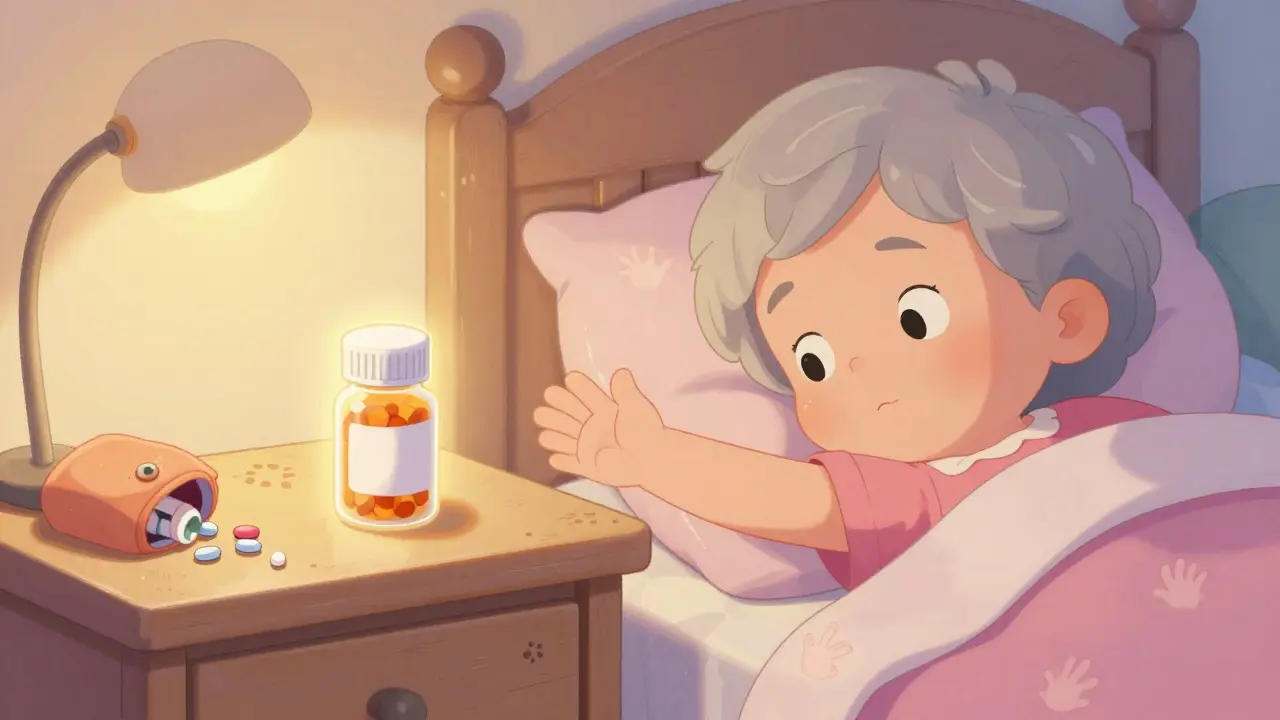
- Bedroom nightstands: 12% keep prescriptions right next to their bed. That’s within arm’s reach of a child who wakes up early or climbs in for a cuddle.
- Purses and bags: 31% carry medicine in their handbag. A child can grab it in seconds during a visit.
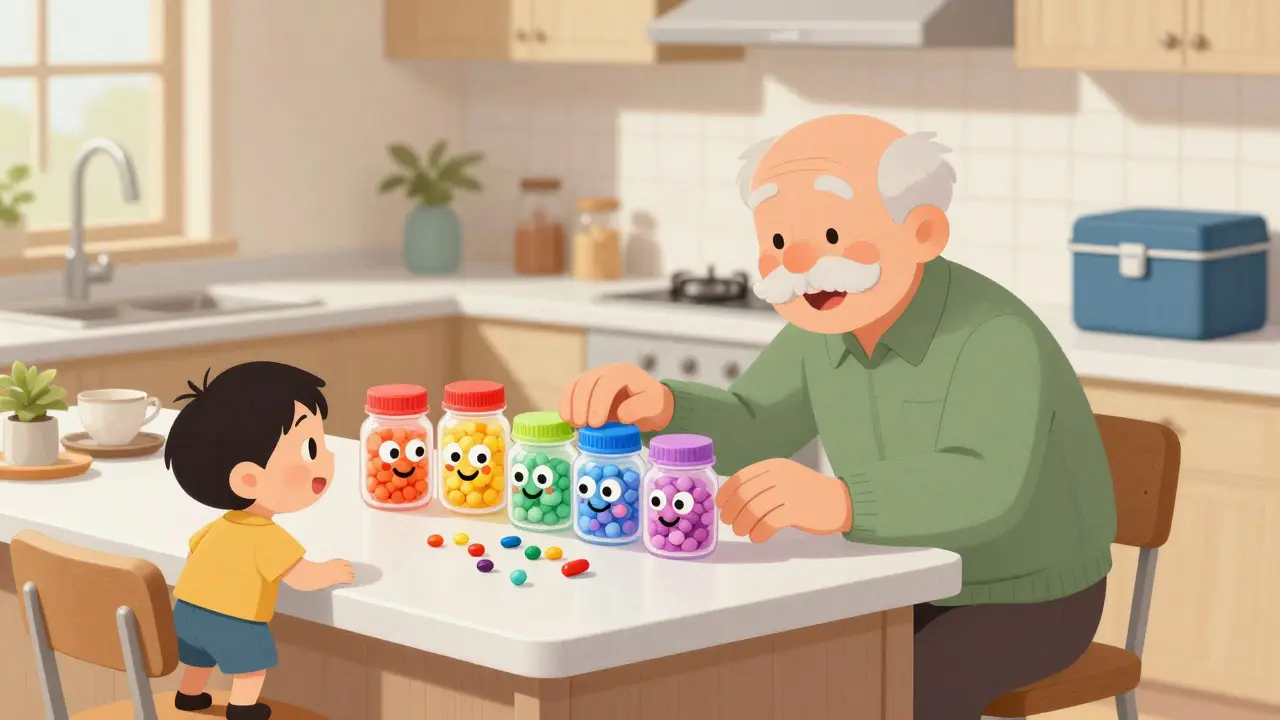
- Kitchen counters: 29% transfer pills into weekly pill organizers, which aren’t child-resistant. These look like candy to a toddler.
Even when grandparents think they’re being safe, they’re not. A pill organizer might seem tidy, but it’s not locked. A bottle on the counter might seem out of the way-but it’s not out of reach.
What Works: The Proven Way to Change Behavior
Simple warnings don’t work. A pamphlet on medicine safety? Most grandparents never read it. But a 15-minute conversation-done the right way-can change everything.
One study showed that after just one 15-minute session using the PROTECT Initiative’s "Up & Away and Out of Sight" method, safe medicine storage jumped from 39% to 78% among grandparents. The secret? It wasn’t about scaring them. It was about helping them feel like heroes.
The best programs:
- Use phrases like, "Let’s keep our grandkids safe," not "You’re putting them at risk."
- Include hands-on practice-grandparents open and close child-resistant caps themselves.
- Show real examples: "Here’s what a 4-year-old can do in 30 seconds."
- Give them a free lockbox or cabinet latch-something they can take home and use right away.
Grandparents who get this kind of support are 100% more likely to remember what to do after 90 days. That’s because they’re not being lectured-they’re being equipped.
How to Talk to Grandparents About Medicine Safety (Without Offending Them)
Many grandparents feel accused when you mention medicine safety. One Reddit user shared: "I tried to put my meds in a lockbox, but my wife said it was insulting." That’s the problem-people think it’s about trust, not safety.
Here’s how to say it right:
- "I know you’re always careful. I just want to make sure we’re both doing everything we can to keep the kids safe."
- "I noticed you keep your blood pressure pills in your purse. Would you mind if I showed you a little lockbox that fits right in your bag?"
- "Our grandkids are so clever. They’ve already figured out how to open your pill bottle. Let’s find a better spot together."
Use stories. Tell them about Grandma Jen, who caught her grandson reaching for her pills-and then got a lockbox. Or Papa Ray, who resisted at first, but now keeps his meds in a drawer with a latch because he doesn’t want to scare his grandkids again.
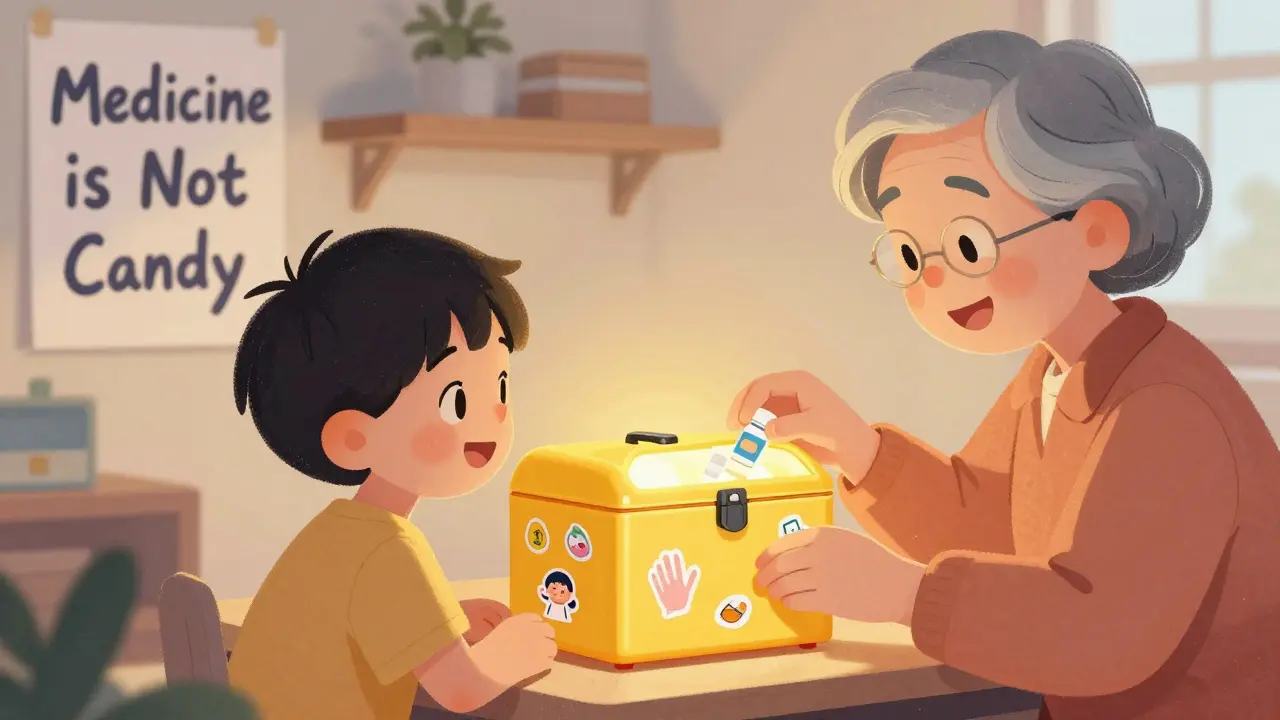
And don’t forget to include the grandchildren. Let them help pick out a colorful lockbox. Have them draw a poster that says, "Medicine is not candy." Kids remember what they help create.
Practical Steps Every Grandparent Can Take Today
You don’t need a big change. Just three small steps can cut the risk in half:
- Move medicine out of sight and out of reach. Store all medicines-prescription, over-the-counter, and supplements-in a locked cabinet, box, or drawer. It should be at least 4 feet high and require 15 pounds of force to open. That’s more than most kids can manage.
- Keep medicine in its original bottle. Never transfer pills to pill organizers, candy jars, or snack bags. Child-resistant caps only work if they’re still on the original container.
- Dispose of old medicine safely. Every few months, go through your medicine cabinet. Take expired or unused pills to a pharmacy drop-off. Don’t flush them or throw them in the trash.
If you have arthritis or trouble opening child-resistant caps, ask your pharmacist for an easy-open cap or a special tool. Most pharmacies give them out for free.
What Parents Can Do to Help
Parents can’t control what happens at grandma’s house-but they can make it easier for grandparents to do the right thing.
- Ask grandparents if they’d like a free lockbox. Many pharmacies give them out at no cost.
- Send a simple text: "Hi, just wanted to remind you-we keep all medicine in the top cabinet with the latch. Let me know if you’d like one for your place!"
- Offer to help clean out old medicine during a visit. Turn it into a shared activity.
- Use the CDC’s "Safety Talk":
- "Medicine is not candy."
- "Only adults give medicine."
- "If you find medicine, tell an adult right away."
Only 38% of families have this kind of conversation. Make yours one of them.
What’s Being Done-and What’s Still Missing
Big changes are happening. The CDC launched a free digital toolkit with videos in Spanish, Mandarin, and other languages. Pharmacies now offer free lockboxes to seniors. California now requires pharmacists to talk to patients over 60 who care for kids.
But here’s the gap: 67% of grandparents say they’ve never received a single word about medicine safety from their doctor or pharmacist. That’s unacceptable.
Doctors focus on the patient’s health-but not on the kids in their home. The American Geriatrics Society now includes "medication safety for visiting children" in its official guidelines for senior care. But most providers still don’t ask.
If you’re a grandparent, ask your pharmacist: "Do you have a lockbox for grandparents?" If you’re a parent, ask your child’s pediatrician: "Do you talk to grandparents about medicine safety?"
Final Thought: It’s Not About Blame. It’s About Connection.
Grandparents love their grandchildren more than anything. They want to protect them. But they need clear, simple, non-judgmental help to do it.
A locked box isn’t a sign of distrust. It’s a sign of love. It’s a way to say, "I care enough to make sure you’re safe when you’re here."
Start today. Move one bottle. Talk to one grandparent. Give one lockbox. You might not know it, but you could be saving a life.
9 Comments

Bennett Ryynanen
January 2 2026
Bro. My grandma keeps her meds in a Tupperware on the counter. Called her out once-she said, "I’m not gonna live in a fortress just because your kid’s a ninja." Then she gave me a cookie and changed the subject. I gave her a lockbox last Christmas. She still uses it. 😎

Deepika D
January 2 2026
As someone who raised three kids while caring for my aging mother, I can tell you this: the problem isn’t just storage-it’s communication. Grandparents aren’t ignoring safety, they’re overwhelmed. They’re juggling diabetes meds, heart pills, and bedtime stories all at once. What works? Make it simple, make it visual, make it *their* mission. I gave my mom a bright red lockbox with a sticker that said "Grandma’s Secret Superhero Kit"-now she shows it off to every grandkid like it’s a trophy. And guess what? No one’s touched her pills since. It’s not about fear-it’s about pride. Let them feel like guardians, not guilty parties. And yes, pharmacies should hand these out free. Every. Single. Time.

Aaron Bales
January 3 2026
Three steps: lock it. keep it in original bottle. dispose of expired. Done. No drama. No lectures. Just action. Pharmacies already have lockboxes. Ask for one. Use it. Save a life. Simple.

Branden Temew
January 4 2026
If we’re going to arm grandparents with lockboxes, shouldn’t we also arm them with context? Why do we assume a pill organizer is inherently dangerous but a candy dish isn’t? Is it the container-or our cultural fear of aging bodies managing their own autonomy? Maybe the real issue isn’t childproofing the medicine… but childproofing our assumptions about who’s responsible for safety.

Darren Pearson
January 4 2026
It is both astonishing and lamentable that public health messaging has devolved into a series of performative gestures-lockboxes, stickers, and condescending anecdotes-rather than systemic intervention. The fact that pharmacists are not mandated to counsel on pediatric exposure risks constitutes a gross dereliction of professional duty. One cannot reasonably expect laypersons to intuitively grasp pharmacological hazards absent standardized, evidence-based education. The PROTECT Initiative, while commendable, remains a Band-Aid on a hemorrhaging artery.

Marilyn Ferrera
January 5 2026
My mom used to keep her blood pressure pills in her purse… until I showed her the video of a toddler opening a child-resistant cap in 28 seconds. She didn’t say a word. Just put the lockbox on her nightstand that night. Now she says, "I’d rather be safe than sorry-and I’d rather be the one who keeps them safe." I didn’t lecture. I just gave her the facts. And a little box. Sometimes that’s enough.

Chandreson Chandreas
January 6 2026
Love this post 🙌 My abuela in India used to hide her meds in a cookie tin… now she has a little lockbox with a panda on it 🐼 She lets the grandkids decorate it every year. "Now medicine is safe AND pretty!" she says. No lectures. Just love + a little latch. 💕

Retha Dungga
January 7 2026
i think we just need to trust people more 🤷♀️ grandmas love their grandkids they dont wanna hurt them its not that hard to put pills away if you care enough


Stewart Smith
January 1 2026
So let me get this straight-we’re treating grandmas like walking pharmacies with toddler magnets? Cute. I bet the real problem is we stopped teaching kids "don’t touch stuff" and started blaming the adults for being too human.