
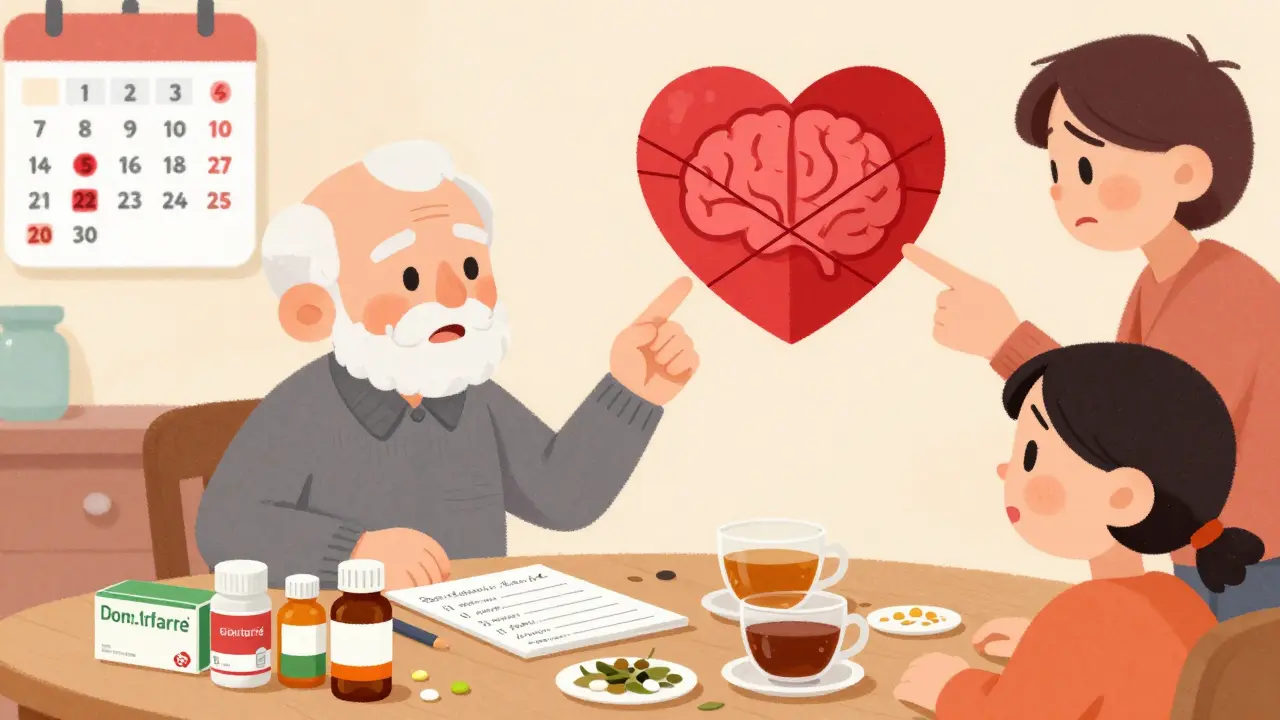
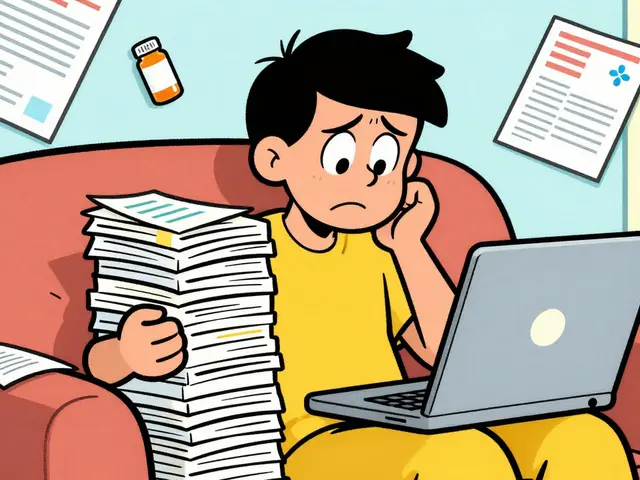
Older adults are at higher risk for dangerous drug-drug interactions than any other group. It’s not because they’re careless-it’s because their bodies change, their prescriptions pile up, and care gets split between too many doctors. By 2030, one in five Americans will be over 65. Right now, nearly 40% of them take five or more medications daily. That’s a recipe for trouble if no one is watching the interactions.
Why Elderly Patients Are at Higher Risk
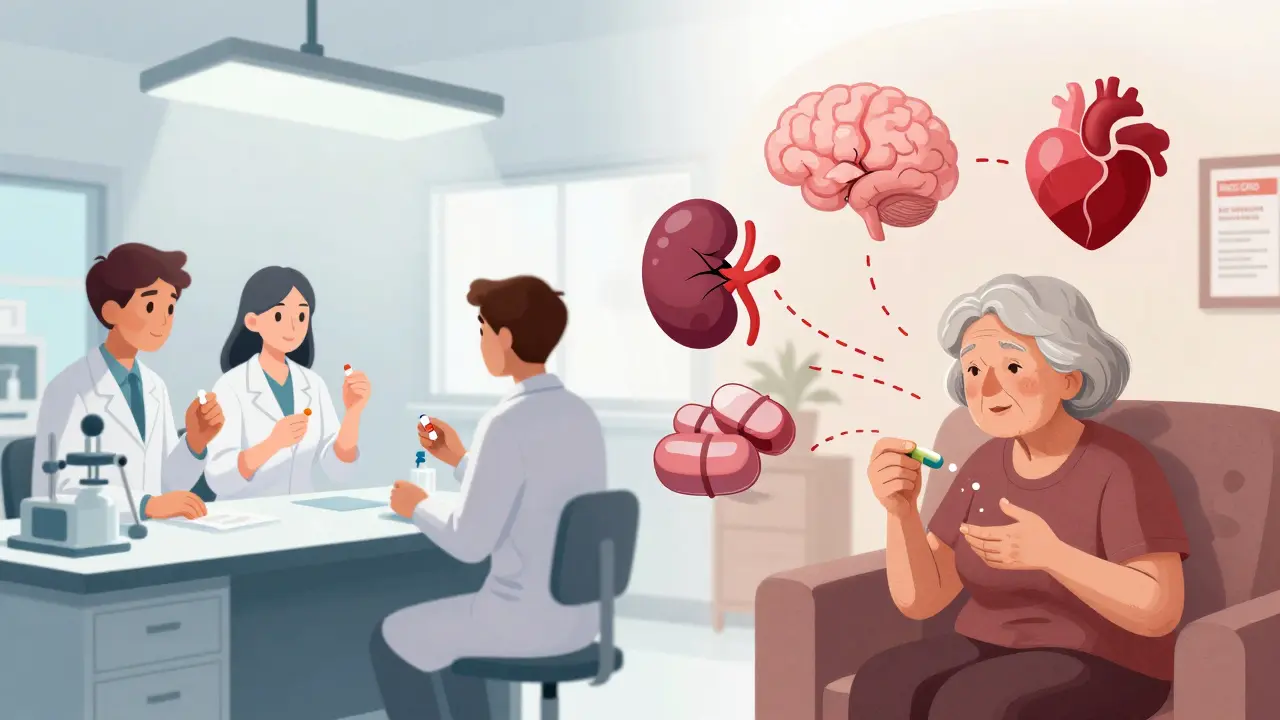
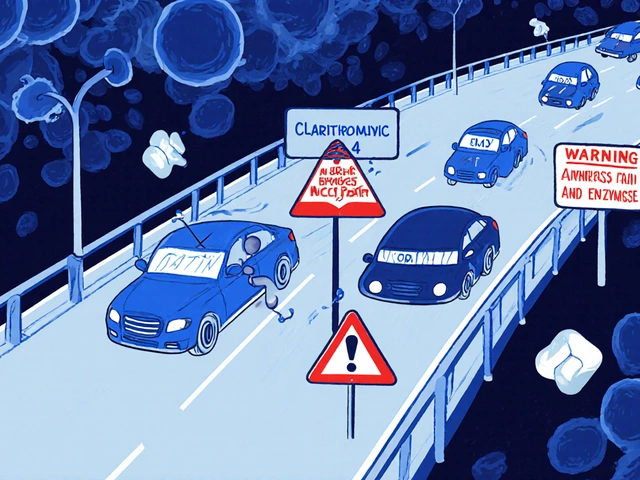
As people age, their bodies don’t process drugs the same way. The liver slows down. Kidneys filter less. Fat increases, muscle decreases. That means a drug that was safe at 50 can become toxic at 75. About 50% more adverse drug events happen in older adults compared to younger ones, even when taking the same dose.Most of these problems come from drug-drug interactions-when one medicine changes how another works. It might make the effect stronger, weaker, or cause new side effects like dizziness, confusion, or internal bleeding. The most dangerous interactions involve heart meds and brain drugs. Nearly 39% of serious interactions happen with cardiovascular drugs, and almost 30% involve the central nervous system.
Another big issue? Fragmented care. More than two-thirds of seniors see multiple doctors. One prescribes blood pressure pills. Another adds a sleep aid. A third gives painkillers. None of them talk to each other. And many patients don’t tell their doctors about the over-the-counter pills, vitamins, or herbal teas they take. In fact, 68% of older adults hide their supplement use-thinking it’s harmless.
The Beers Criteria and STOPP: Tools That Save Lives
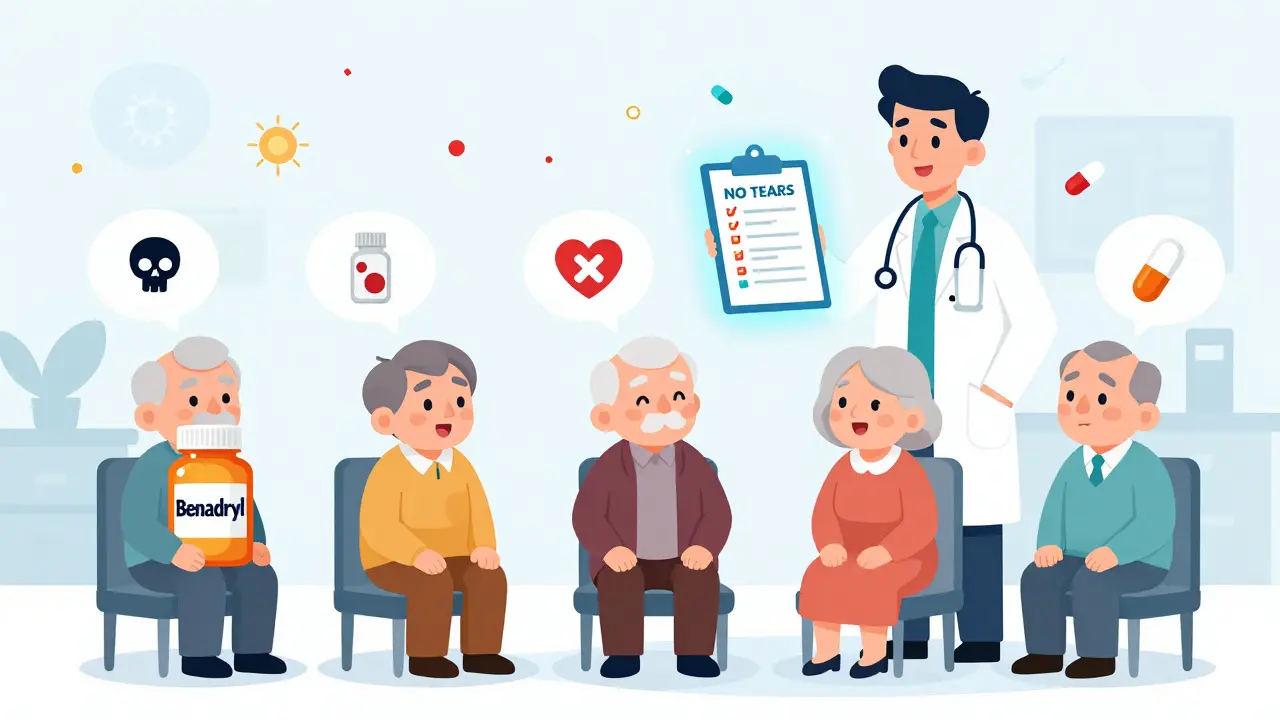
Two tools are used worldwide to spot risky prescriptions in older adults: the Beers Criteria and the STOPP criteria.The American Geriatrics Society updates the Beers Criteria every two years. The 2023 version lists 30 types of drugs that should be avoided in seniors, and 40 others that need lower doses because of kidney problems. For example, diphenhydramine (Benadryl) is on the list-not because it doesn’t work, but because it causes confusion, dry mouth, and urinary retention in older people. Even though it’s sold over the counter, it’s one of the most common culprits in hospital admissions.
STOPP (Screening Tool of Older Persons’ Potentially Inappropriate Prescriptions) goes further. It has 114 specific red flags, like prescribing a proton pump inhibitor (PPI) for more than 8 weeks without checking for need, or giving two drugs that both slow the heart rate. A 2021 study showed that using STOPP at hospital discharge cut inappropriate prescribing by 35% and reduced readmissions by over 22%.
These aren’t just guidelines-they’re proven tools. Hospitals that use them regularly see 17% fewer hospitalizations. That’s not just better care-it’s fewer ER trips, fewer falls, fewer broken hips.
NO TEARS: A Simple Framework for Medication Review
Doctors don’t always have time for deep dives. But a simple checklist can make a big difference. The NO TEARS tool breaks down medication review into seven clear steps:- Need: Is this drug still necessary? Many seniors keep taking pills they started years ago for a condition that’s now resolved.
- Optimization: Is the dose right? Kidney function declines with age-what was a normal dose at 60 might be too high at 80.
- Trade-offs: Do the benefits outweigh the risks? A statin might lower heart attack risk, but if it causes severe muscle pain and limits mobility, is it worth it?
- Economics: Can the patient afford it? One in four seniors skips doses because of cost. A $500 monthly pill might be medically right-but practically useless.
- Administration: Can they actually take it? Swallowing pills? Opening bottles? Reading tiny labels? These are real barriers.
- Reduction: Can we stop something? Sometimes the best treatment is stopping a drug entirely.
- Self-management: Does the patient understand their regimen? If they can’t explain why they take each pill, they’re at risk.
This isn’t theoretical. Clinics that use NO TEARS in every visit with seniors report higher adherence, fewer side effects, and better patient trust.
What Doctors Should Avoid
There are clear mistakes that make DDIs worse:- Starting two new drugs at once. If a patient gets dizzy after two new pills, you don’t know which one caused it. That delays fixing the problem.
- Ignoring over-the-counter meds. St. John’s Wort can make blood thinners useless. Calcium supplements can block thyroid meds. These aren’t "natural" exceptions-they’re dangerous interactions.
- Assuming all patients understand their meds. A 2023 study found that 41% of seniors couldn’t name even half their medications. If they can’t say what they’re taking, they can’t avoid interactions.
- Not checking kidney function. Many drugs are cleared by the kidneys. A simple blood test for creatinine can prevent overdose.
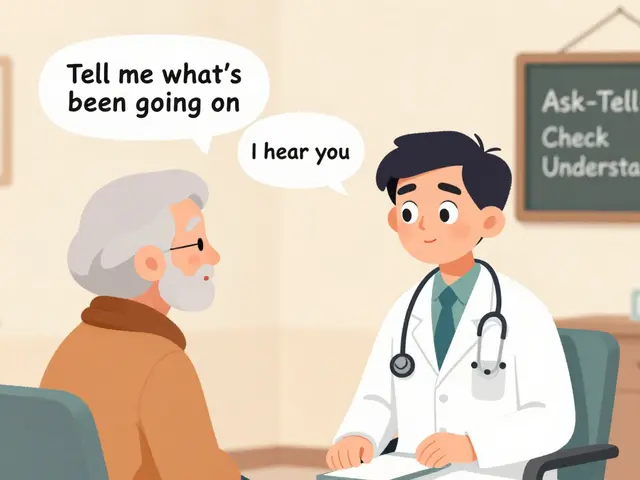
Doctors should spend at least 15 minutes per visit reviewing meds with patients on five or more drugs. For those on seven or more, that time should increase by 25%. It’s not extra-it’s essential.
The Hidden Gap: Clinical Trials Don’t Include Seniors
Here’s the uncomfortable truth: most drug studies exclude older adults. Less than 5% of participants in Phase 3 trials are over 65-even though seniors take half of all prescriptions. That means we’re guessing how drugs interact in this group.For example, a new blood thinner might be tested on healthy 50-year-olds. But in a 78-year-old with kidney disease and diabetes, the same dose could cause bleeding. We don’t know for sure because they weren’t studied.
The FDA now recommends collecting pharmacokinetic data in older adults-but only 18% of new drug applications between 2018 and 2022 did. That’s a gap in science. And it’s putting lives at risk.
Technology Is Helping-But Not Enough
AI-powered clinical decision tools are growing fast. In 2020, only 22% of U.S. hospitals used them. By 2023, it was 47%. These systems flag dangerous combinations before a prescription is written.But they’re not perfect. Most are trained on data from younger patients. They don’t always account for age-related changes in metabolism or the complex mix of conditions in older adults. Some tools still miss interactions involving supplements or herbal remedies.
There’s also a lack of predictive models that simulate how drugs behave in aging bodies. Less than 5% of current DDI models use advanced PBPK-PD modeling-which could predict real-world outcomes in seniors. Until that changes, tech will keep playing catch-up.
What Patients and Families Can Do
You don’t need to be a doctor to help prevent a dangerous interaction. Here’s what works:- Keep a written list. Include every pill, patch, cream, vitamin, and herbal tea. Update it every time something changes.
- Bring it to every appointment. Even if you think it’s "just a supplement."
- Ask: "Can we stop any of these?" Many seniors take drugs they don’t need anymore.
- Use one pharmacy. If you fill prescriptions at different stores, no one sees the full picture. One pharmacy can flag interactions across all your meds.
- Ask about cost. If you can’t afford a drug, tell your doctor. There are often cheaper alternatives.
Family members who help manage meds are the first line of defense. A daughter who notices her father is more confused than usual? A son who finds a drawer full of expired pills? Those are early warnings.
The Bigger Picture: Costs and Future Changes
Preventable drug reactions cost the U.S. healthcare system over $177 billion a year. Half of all hospital admissions for seniors are medication-related-and most could have been avoided.Changes are coming. The 2025 update to the Beers Criteria will add more drug-disease interactions and adjust dosing for 15 new medications. Medical schools are finally adding geriatric pharmacology to their curriculum-by 2026, 65% of U.S. med schools will require it, up from just 38% today.
Medicare’s Medication Therapy Management program already helps over 11 million people. Participants have seen a 15% drop in hospitalizations. That’s proof that structured reviews work.
But progress depends on action-from doctors, pharmacists, patients, and families. No single tool fixes everything. But together, the Beers Criteria, STOPP, NO TEARS, one pharmacy, and honest conversations can turn a dangerous situation into safe, effective care.
What are the most dangerous drug combinations for elderly patients?
The most dangerous combinations involve drugs that affect the heart and brain. For example, mixing blood thinners like warfarin with NSAIDs (like ibuprofen) raises bleeding risk. Combining benzodiazepines (sleep aids) with opioids or anticholinergics (like diphenhydramine) can cause severe dizziness, falls, or confusion. Antidepressants like SSRIs with certain pain meds can lead to serotonin syndrome-a rare but life-threatening condition. Always check for interactions with your pharmacist.
Can over-the-counter medications cause dangerous interactions?
Yes. Many seniors think OTC means safe, but that’s not true. Antihistamines like Benadryl can cause confusion and urinary retention. NSAIDs like Advil or Aleve can damage kidneys or cause stomach bleeding, especially when taken with blood pressure or heart meds. St. John’s Wort can make antidepressants, birth control, or blood thinners stop working. Even calcium supplements can block absorption of thyroid medication. Always tell your doctor what you’re taking-even if it’s not prescription.
How often should elderly patients have their medications reviewed?
At least once a year, but more often if they’re on five or more medications, have had a recent hospital stay, or are seeing multiple doctors. A full review should happen after any major health change-like a fall, new diagnosis, or change in memory. Many clinics now schedule medication reviews at every visit for high-risk patients. Don’t wait for an annual checkup-ask for a review if you’re unsure.
Is it safe to stop a medication on my own if I think it’s causing side effects?
No. Stopping some drugs suddenly can be dangerous. For example, stopping a blood pressure or heart medication can cause rebound high blood pressure or irregular heartbeat. Stopping antidepressants or anti-seizure drugs can trigger withdrawal symptoms or seizures. Always talk to your doctor first. They can help you taper safely or switch to a better option.
What should I do if I’m seeing multiple doctors?
Keep one master list of all your medications and bring it to every appointment. Ask each doctor: "Are you aware of what other doctors have prescribed?" If they say no, offer to share your list. Consider using one pharmacy for all prescriptions-it’s the only place that sees your full history. You can also ask your primary care provider to coordinate your care. They’re the best person to spot overlaps and conflicts.
Are there free tools or services to help manage medications?
Yes. Medicare’s Medication Therapy Management (MTM) program is free for eligible beneficiaries and includes a pharmacist review of all your meds. Many community pharmacies offer free medication reviews. Apps like MyTherapy or Medisafe help track pills and send reminders. The American Geriatrics Society also offers free patient guides on their website. Don’t wait for a crisis-use these tools before something goes wrong.
11 Comments

Samuel Bradway
February 5 2026
My grandpa’s story is wild. He was on 8 meds, all prescribed by different docs. One day he fell-broke his hip. Turned out it was the combo of his blood pressure med and that "natural sleep aid" he started after watching a YouTube video. No one ever asked what he was taking. We had to go through his medicine cabinet like detectives. So glad someone finally wrote this. Just… talk to your elders. Seriously.

Caleb Sutton
February 6 2026
This is all a scam. Big Pharma knows seniors are easy targets. They pump out pills that interact dangerously, then sell "tools" to fix the mess they created. The Beers Criteria? A PR stunt. STOPP? A distraction. They want you dependent on doctors, pharmacies, and apps. Meanwhile, the real solution? Stop taking everything. Let your body heal. The system is rigged.

Roshan Gudhe
February 7 2026
There’s a deeper truth here: modern medicine treats symptoms, not systems. We don’t ask why a 78-year-old needs 7 meds-we just add an 8th. The body isn’t broken-it’s adapting. But our tools are designed for young, single-disease models. We’re applying a 20th-century framework to 21st-century biology.
Maybe the real question isn’t "how to prevent interactions"-but "why do we keep prescribing like this?"

Rachel Kipps
February 8 2026
I think this article is very informative. I work in a clinic and we do try to review meds, but sometimes the patients dont understand the importance. Also, many times the records are not updated. I think we need more training for staff. Thank you for sharing this.

Joseph Cooksey
February 9 2026
Let me tell you something nobody else will: this isn’t about "interactions." It’s about control. The pharmaceutical-industrial complex has turned aging into a revenue stream. Every pill is a profit center. Every side effect? A new prescription. Every hospital admission? A billable event.
They don’t care if your grandma’s confused, dizzy, or bleeding. They care if her statin, her antihypertensive, her painkiller, her sleep aid, and her "natural" turmeric supplement are all generating quarterly revenue. And the NO TEARS framework? Cute. But it’s just a Band-Aid on a hemorrhage.
Real change? Ban polypharmacy. Restrict prescribing to one provider. Audit every prescription like a felony. Until then, we’re just rearranging deck chairs on the Titanic.

Coy Huffman
February 10 2026
I love the NO TEARS checklist. I’ve been using it with my mom since last year. We’ve cut 3 meds already. One was a cholesterol pill she’d been on since 2008-turns out her liver enzymes were normal and she never had a heart issue. Who knew?
Also, one pharmacy. Game changer. My pharmacist now calls me when something looks off. She’s basically our unofficial med guardian angel. 💙

Keith Harris
February 12 2026
Oh please. You think this is about safety? It’s about liability. Doctors don’t want to be sued, so they slap on meds like glitter. Then they hide behind "guidelines" like Beers or STOPP like they’re sacred scripture. Meanwhile, 80% of seniors are on meds they don’t need. Why? Because it’s easier than having a real conversation. You think a 75-year-old with dementia can explain why they’re taking 6 pills? No. So they keep them. It’s not care-it’s convenience. And the system rewards it.

Kunal Kaushik
February 12 2026
My uncle in India takes 9 pills a day. No one reviews them. His local clinic just gives him refills. I sent him the Beers list translated into Hindi. He showed it to his doctor. They cut 2. He says he feels lighter now. Not just physically. Mentally too.
It’s not rocket science. Just listen. And maybe… don’t assume.

Mandy Vodak-Marotta
February 14 2026
Okay I’m gonna be real-I’m a 32-year-old who just started helping my 80-year-old neighbor manage her meds. I didn’t know ANY of this. Like… I thought OTC meant "safe." I thought if it was in a bottle at CVS, it couldn’t hurt. I was wrong. So wrong.
Now I sit with her every Sunday. We make a list. We call her pharmacy. We Google stuff together. She’s crying because she says she’s never felt this cared for. And I’m crying because I didn’t know this was even a thing. We need more of this. Like… everywhere.

Alec Stewart Stewart
February 15 2026
My dad’s on 6 meds. I made him a color-coded chart. Red = morning, blue = night, green = as needed. He forgets sometimes. So I set phone alarms. We do a review every 3 months. No fancy tools. Just love and a little organization.
He’s been in the hospital 3 times in 5 years. Zero since we started this. Simple stuff works. You don’t need an app. You just need to care enough to show up.
Write a comment
Popular Posts
Geri Rogers
February 3 2026
OMG this is SO needed. I’ve been begging my mom’s docs to do a med review for YEARS. She’s on 12 pills, 5 supplements, and 3 herbal teas-and no one ever asks about the OTC stuff. I printed out the Beers Criteria and handed it to her pharmacist. They actually listened. 🙌
Now she’s off Benadryl, her confusion cleared up, and she’s sleeping better. Stop pretending OTC is "harmless." It’s not. It’s a silent killer.