
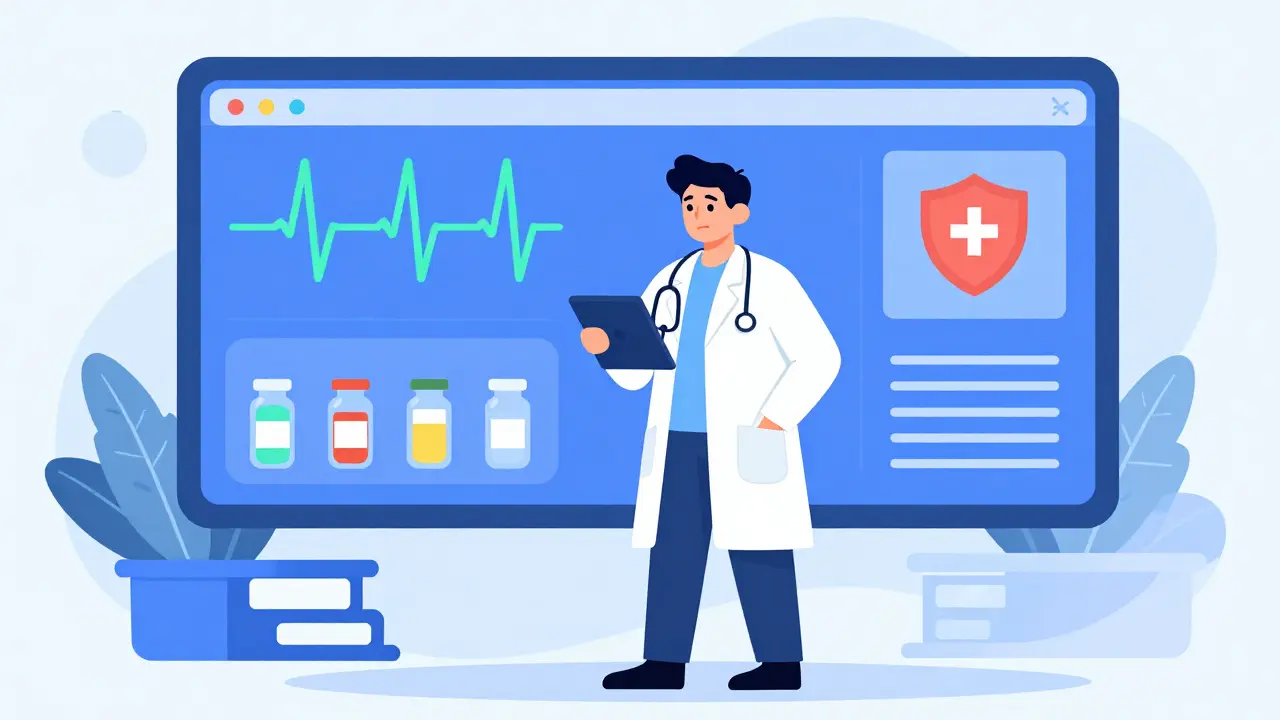
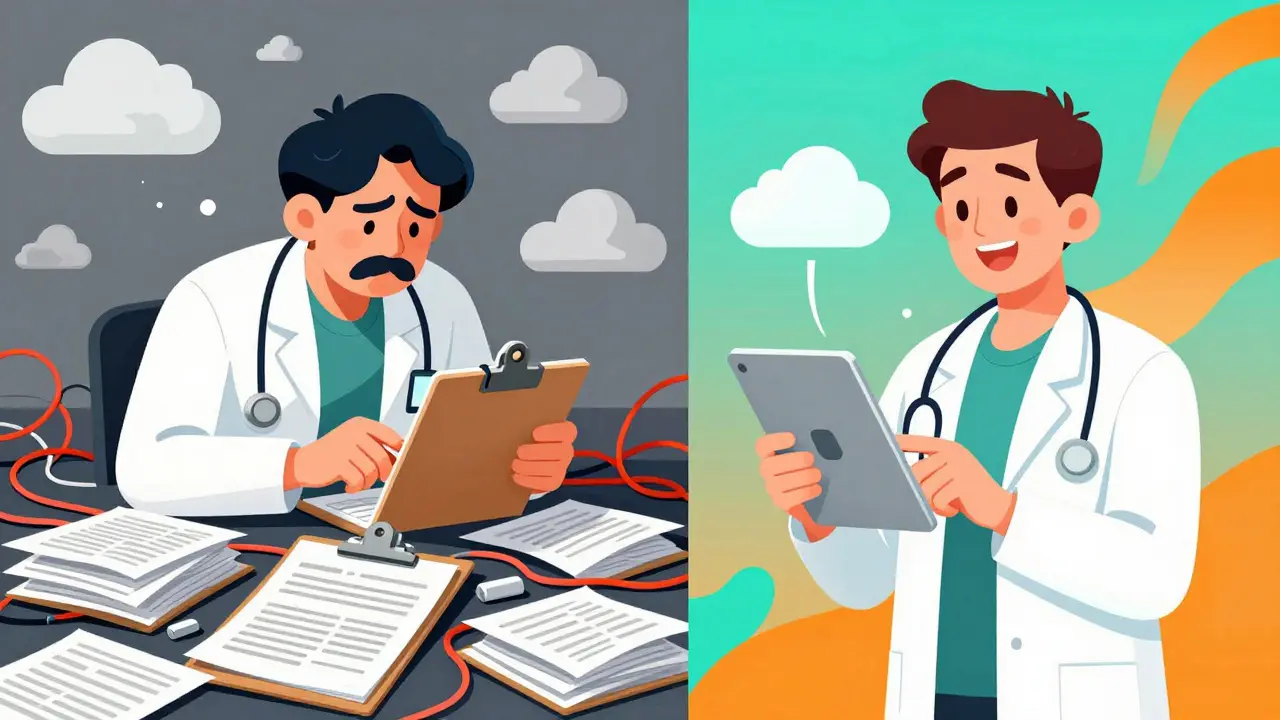
Imagine spotting a dangerous side effect in a patient’s chart before it becomes a widespread crisis. That is the promise of modern clinician portals and digital applications designed for real-time drug safety monitoring. For years, reporting adverse drug reactions (ADRs) meant filling out paper forms or navigating clunky legacy systems that felt like homework after a long shift. Today, integrated digital platforms are changing the game, allowing healthcare professionals to identify, assess, and report safety signals as they happen.
The stakes have never been higher. With regulatory bodies like the FDA and EMA pushing for faster detection times, the old way of doing things is simply not cutting it anymore. This guide breaks down exactly how to use these tools effectively, whether you are working in a high-tech clinical trial setting, a busy hospital, or a resource-limited clinic. We will look at what these platforms actually do, which ones fit your needs, and how to avoid the common pitfalls that lead to alert fatigue and data errors.
Understanding the Core Function of Safety Monitoring Tools
At their heart, these portals are bridges between raw clinical data and actionable safety insights. They don't just store information; they actively help you spot patterns that might indicate a new risk with a medication. The primary goal is to reduce the time it takes to detect an adverse event. Studies show that modern platforms can cut this time by up to 70% compared to traditional manual methods.
Think of a system like Cloudbyz, which integrates directly with clinical trial management systems. It pulls data from various sources and presents it on a dashboard with less than 15 minutes of latency. This means if a patient reports a severe reaction during a trial, the safety team sees it almost instantly. In contrast, older methods might take days or weeks to aggregate that same data. For hospitals, tools embedded within Electronic Health Records (EHRs) serve a similar purpose but focus more on daily patient care rather than trial-specific outcomes.
- Real-time Detection: Immediate alerts when specific drug-reaction combinations occur.
- Data Standardization: Converting messy clinical notes into structured formats like MedDRA codes.
- Regulatory Compliance: Automatically formatting reports to meet FDA 21 CFR Part 11 or EU regulations.
The value here isn't just speed; it's accuracy. When data flows seamlessly from the point of care to the safety database, there is less room for human error in transcription. However, this power comes with complexity. You need to understand how your specific portal handles data integration to get the most out of it.
Choosing the Right Platform for Your Setting
Not all safety monitoring apps are created equal. The best tool for a large pharmaceutical company running global trials is likely useless for a small rural clinic. Your choice depends heavily on your environment, budget, and technical capacity. Let’s look at three distinct categories of solutions currently dominating the market.
| Platform Type | Best For | Key Strength | Main Limitation | Estimated Cost |
|---|---|---|---|---|
| Cloudbyz | Clinical Trials & Pharma | Deep CTMS integration; fast signal detection | High upfront integration time (6-8 weeks) | ~$185,000/year |
| PViMS | Low/Middle-Income Countries | Simplicity; no hardware requirements | Lacks advanced analytics | Free (Donor-funded) |
| Wolters Kluwer Medi-Span | Hospitals & Clinics | EHR integration; drug interaction alerts | Alert fatigue from false positives | $22,500 - $78,000/year |
| clinDataReview | Data Scientists & Regulators | Open-source; 100% regulatory compliance | Requires R programming knowledge | Free (Open Source) |
If you are in a hospital setting, Wolters Kluwer's Medi-Span is often the go-to because it plugs directly into systems like Epic or Cerner. It helps prevent adverse events by flagging dangerous drug interactions in real-time. On the other hand, if you are working in a developing nation where internet connectivity is spotty, PViMS (PharmacoVigilance Monitoring System) is a lifesaver. It runs on basic browsers and doesn't require powerful computers, making it accessible in remote areas.
For those involved in clinical research, open-source options like clinDataReview offer transparency and control but demand a steep learning curve. You need to know R programming to customize it, which limits its usability for general clinicians. Choosing the wrong tool can lead to frustration and abandoned workflows, so match the technology to your team's actual skills and infrastructure.
Step-by-Step: Implementing a Safety Portal
Buying the software is only the beginning. Successful implementation requires careful planning to ensure adoption and data integrity. Here is a practical roadmap based on current industry standards.
- Assess Your Infrastructure: Check your existing EHR or CTMS compatibility. If you are using Epic, integration with hospital-based tools tends to be smoother (30% better success rates reported). Ensure your IT team supports HL7 and FHIR standards for data exchange.
- Define Data Mapping Rules: Before going live, map your local data fields to standard terminologies like MedDRA or CDISC SDTM. Poor mapping is the #1 cause of implementation delays, accounting for 65% of setbacks in clinical trial setups.
- Train Your Team: Don't underestimate the training requirement. Most organizations find that staff need 80-120 hours of dedicated training to become proficient. Focus on clinical pharmacology basics and data literacy. For non-technical users, hands-on workshops work better than reading manuals.
- Pilot Test with a Small Group: Roll out the portal to a single department or trial site first. Monitor for issues like internet connectivity drops (a major issue for PViMS users in remote clinics) or excessive false-positive alerts.
- Go Live and Monitor: Once launched, track key metrics like time-to-report and user engagement. Be prepared to tweak alert thresholds to reduce noise.
During the pilot phase, pay close attention to user feedback. If clinicians feel the tool is slowing them down, they will find ways around it, compromising data quality. Simplicity wins. If a feature requires five clicks to report a serious adverse event, simplify it.
Avoiding Common Pitfalls: Alert Fatigue and False Positives
One of the biggest challenges with these portals is "alert fatigue." When a system flags every minor headache as a potential adverse drug reaction, clinicians start ignoring the alerts altogether. This is dangerous. Dr. Michael O'Keefe from the FDA noted that over-reliance on automated detection without clinical context led to a 22% rate of false positive signals in recent submissions.
To combat this, you must configure your portal carefully. Adjust sensitivity settings so that only clinically significant events trigger immediate notifications. Use natural language processing (NLP) features wisely, but remember that current NLP systems only achieve 65-78% accuracy in extracting adverse events from unstructured notes. Human review is still essential.
Another pitfall is assuming AI solves everything. While AI-enhanced tools from companies like IQVIA can reduce false positives by 85%, they require massive datasets (minimum 50,000 patient records) to function well. If you are a smaller organization, you might not have enough data to train these models effectively. In such cases, rule-based systems with strong human oversight are often more reliable.
The Role of AI and Future Trends
We are standing on the brink of a major shift in pharmacovigilance. Artificial Intelligence is moving from a buzzword to a core component of safety monitoring. By 2027, Gartner predicts that 80% of pharmacovigilance operations will use AI-augmented decision support. But what does this mean for you?
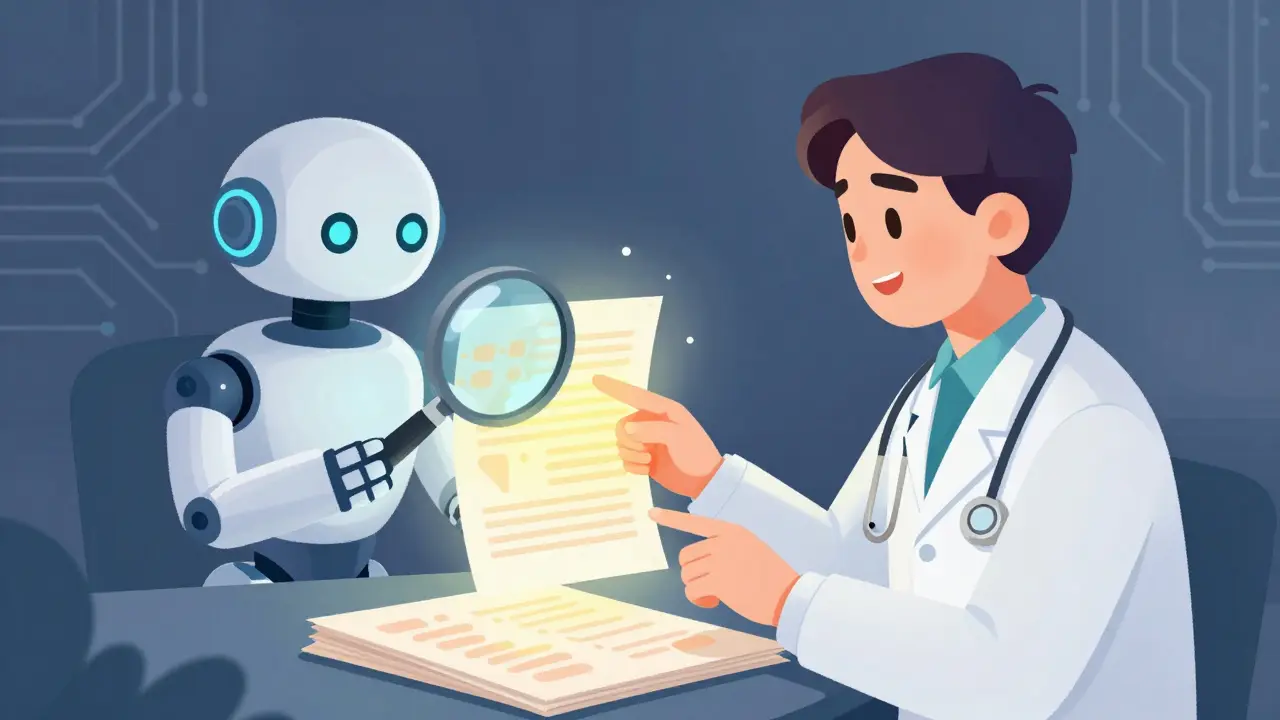
AI co-pilots are being developed to assist Qualified Persons for Pharmacovigilance (QPPVs). These tools can synthesize evidence in real-time, potentially cutting signal validation time by 35%. Imagine having a virtual assistant that scans thousands of case reports and highlights the three most suspicious patterns for your review. That is the direction the industry is heading.
However, caution is advised. The FDA is expected to release new guidance in 2026 requiring explainable AI models. This means black-box algorithms that cannot justify their decisions may face regulatory hurdles. As a user, you should prioritize platforms that provide transparency in how their AI reaches conclusions. Look for vendors who document their validation processes and allow human override capabilities.
The convergence of real-world evidence, EHR integration, and AI-assisted analysis represents the most significant evolution since the move to electronic reporting. Platforms that successfully bridge the gap between clinical workflow and safety monitoring will dominate the next decade. Those that fail to integrate smoothly will see high abandonment rates.
Practical Tips for Daily Use
Getting the most out of your clinician portal requires good habits. Here are some pro tips to keep your safety monitoring effective:
- Standardize Your Entries: Always use pre-coded lists (like MedDRA) when available. Free-text entries make data harder to analyze later.
- Verify Before Reporting: Double-check patient history and concomitant medications. A missing detail can turn a true signal into a false alarm.
- Collaborate Across Teams: Share insights with pharmacists and researchers. Safety monitoring is not a siloed activity.
- Keep Software Updated: Security patches and feature updates often include improvements to detection algorithms.
- Document Everything: Maintain clear audit trails. Regulatory inspectors love to see a paper trail that shows who did what and when.
Remember, technology is a tool, not a replacement for clinical judgment. Your expertise is what gives meaning to the data. Use the portal to enhance your ability to protect patients, not to replace your critical thinking.
What is the cost of implementing a drug safety monitoring portal?
Costs vary widely. Enterprise solutions like Cloudbyz can cost around $185,000 annually for mid-sized pharma companies. Hospital-based modules from Wolters Kluwer range from $22,500 to $78,000 per year depending on size. Open-source tools like clinDataReview are free but require technical expertise. PViMS is free for low-and-middle-income countries through donor funding.
How long does it take to implement a new safety portal?
Implementation timelines depend on complexity. Simple web-based systems like PViMS can be set up in 3-5 weeks. Hospital integrations typically take 4-6 weeks. Complex clinical trial platforms requiring deep CTMS integration may need 8-12 weeks due to data mapping challenges.
Do I need special training to use these apps?
Yes. Most organizations report that staff need 80-120 hours of training to achieve proficiency. Essential skills include clinical pharmacology knowledge, data literacy, and understanding of regulatory requirements. Non-technical users benefit from hands-on workshops.
Can AI replace human reviewers in drug safety?
No. While AI can significantly speed up signal detection and reduce false positives, human oversight remains mandatory for critical decisions. Regulatory bodies emphasize that AI should augment, not replace, the strategic stewardship of Qualified Persons for Pharmacovigilance (QPPVs).
Which platform is best for a small clinic with limited resources?
For resource-limited settings, PViMS is often the best choice. It is free, requires only a standard web browser, and has a simplified interface that needs basic computer literacy. It lacks advanced analytics but excels in simplicity and accessibility.
How do these portals handle data privacy and compliance?
Reputable platforms comply with regulations like FDA 21 CFR Part 11 and GDPR. They use secure cloud-native architectures with multi-tenant databases. Features include automated audit trails, role-based access controls, and encryption for data in transit and at rest. Always verify the vendor's compliance certifications before purchase.
What causes alert fatigue in safety monitoring apps?
Alert fatigue occurs when systems generate too many low-value or false-positive alerts. This happens when sensitivity settings are too high or when clinical context is ignored. To mitigate this, configure thresholds carefully and rely on human review to filter out noise.
Is open-source software safe for regulatory reporting?
Yes, if validated correctly. Tools like clinDataReview are designed to meet FDA and EMA guidelines, achieving 100% adherence in validation tests. However, they require specialized knowledge (e.g., R programming) to maintain and validate, which can be a barrier for some teams.
How much faster are digital portals compared to paper methods?
Digital portals can reduce time-to-detection of adverse events by up to 70%. Some case studies show audit readiness time dropping by 50% due to real-time data access and comprehensive audit trails.
What are the key interoperability standards for these platforms?
Look for support of HL7 and FHIR standards for health data exchange. For clinical trials, CDISC standards (SDTM and ADaM) are crucial. These ensure that data can flow smoothly between different systems without loss of integrity.
10 Comments

Erin Livengood
June 14 2026
there is something almost poetic about the transition from paper forms to real-time dashboards isn't there. it feels like we are finally weaving the chaotic threads of human suffering into a coherent tapestry of data that can actually save lives. i love how the article mentions the bridge between raw data and insight because that metaphor really captures the essence of what these tools do for us in the trenches

Daniella Renzon
June 16 2026
i think this is such a helpful breakdown especially for those of us working in smaller clinics who feel left behind by the big tech solutions. seeing PViMS listed as an option gives me hope that we can still participate in safety monitoring without needing a massive IT budget or fancy servers

Talilla Bailey
June 17 2026
the implementation timeline section is woefully optimistic if you have worked with legacy EHR systems before. claiming a six-week integration for Cloudbyz ignores the sheer bureaucratic nightmare of getting HL7 interfaces approved by hospital compliance departments which often takes months not weeks

Aditya Singh
June 19 2026
from a pharma perspective the interoperability standards mentioned are critical because CDISC SDTM mapping is where most vendors fail to deliver value. having clean structured data allows for better signal detection algorithms to run effectively across global trial sites reducing the noise significantly

Brett Webster
June 20 2026
i can add some context to the training aspect since i helped roll out Medi-Span at my institution. the eighty-hour estimate is accurate but only if you include shadowing sessions. new users tend to miss subtle drug interaction flags unless they see experienced pharmacists navigate the interface first hand so peer mentoring is essential

Sherry Wheeler
June 21 2026
it is terrifying to think about the black box AI models making decisions about patient safety without any transparency. we need strict regulations on explainable AI because trusting an algorithm that cannot justify its reasoning is like flying blind in a storm. the FDA guidance coming in 2026 is long overdue but hopefully it will force vendors to be more accountable

shreya sinha
June 23 2026
one must consider the ethical implications of relying on automated systems for adverse event reporting when the accuracy of natural language processing is nowhere near perfect. it is morally questionable to allow machines to filter clinical notes when a single missed keyword could result in harm to a vulnerable patient population and the current error rates are simply unacceptable for such high stakes decision making processes

Lee Coates
June 23 2026
typical western tech solution trying to fix problems that don't exist while ignoring the fact that basic healthcare access is still a struggle in many parts of the world :P. maybe if we spent less money on fancy dashboards and more on actual medicine we would have fewer side effects to monitor in the first place

Miranda River
June 24 2026
so basically we are replacing doctors with robots and calling it progress lol. the idea that ai can replace human judgment is laughable because machines dont have intuition or empathy. plus the typos in the free text fields will drive the algorithms crazy anyway so why bother trying to standardize everything when humans are inherently messy creatures
Write a comment
Popular Posts


rebecca torres
June 14 2026
honestly the part about alert fatigue is the only thing that matters here because nobody wants to click through fifty false positives just to find one real signal. we spend more time silencing the software than actually looking at patient charts and its a huge waste of clinical hours