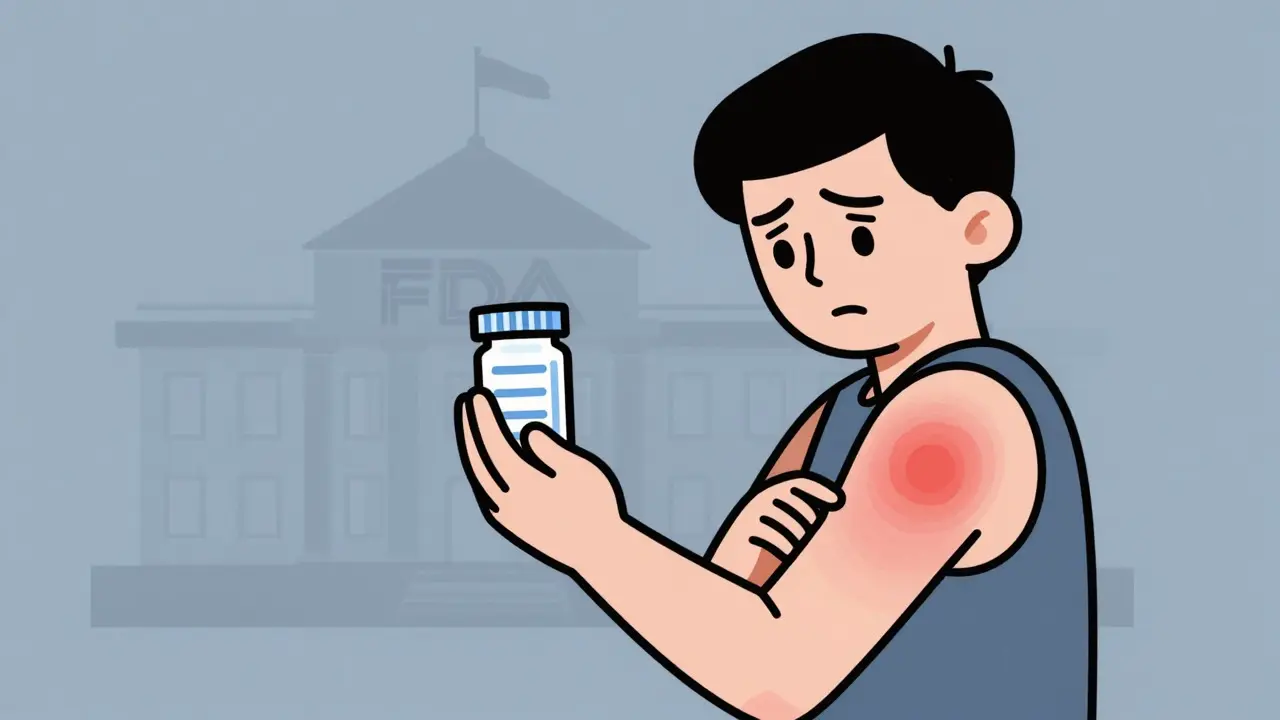
Imagine you or a loved one starts taking a new medication. Within days, strange symptoms appear-rashes, dizziness, or something more severe. You stop the drug and feel better, but you’re left wondering: was it the medicine? More importantly, should anyone else know?
This is where adverse drug reaction (ADR) reporting comes in. It’s not just a bureaucratic box to check; it’s a critical safety net that protects millions of people. When you report a suspected side effect to the Food and Drug Administration (FDA), you help identify hidden risks that clinical trials might have missed. These trials typically involve only 1,000 to 5,000 patients, whereas post-market surveillance captures data from millions of real-world users.
If you’ve ever felt hesitant to report because you weren’t sure if the reaction was “serious enough,” you’re not alone. But here’s the truth: even minor reactions matter. They contribute to the bigger picture of drug safety. In this guide, we’ll walk you through exactly how to report a suspected adverse drug reaction to the FDA, what information you need, and why your voice counts.
Why Reporting Matters: The Big Picture
The FDA doesn’t approve drugs based on perfect knowledge. Clinical trials are controlled environments, but real life isn’t. People take medications alongside other drugs, with different diets, genetics, and health conditions. That’s where post-marketing surveillance steps in.
The cornerstone of this system is the FDA Adverse Event Reporting System (FAERS). Established in 1969 after the thalidomide tragedy, FAERS has evolved into a sophisticated electronic database. As of 2022, the FDA received approximately 2 million reports annually. Each report adds a piece to the puzzle, helping regulators detect signals-patterns that suggest a drug may cause harm.
Consider this: in 2022, a nurse reported severe hypoglycemia linked to a new diabetes medication. Her single report triggered an investigation that led to a label update within 47 days. Without her action, thousands could have faced similar risks. Your report might be the one that saves someone else.
| Metric | Value |
|---|---|
| Annual Reports Received (2022) | ~2 million |
| Electronic Submissions Processed | 1.8 million ICSRs |
| System Launch Year | 1969 (modernized in 1997) |
| Data Standard | ICH E2B (since 2014) |
Who Can Report? Everyone Counts
You don’t need a medical degree to file a report. Consumers, healthcare professionals, caregivers, and even family members can submit information. The FDA encourages voluntary reporting from all sources because every perspective adds value.
Healthcare providers often face barriers like time constraints or uncertainty about whether an event qualifies as reportable. A 2022 survey by the American Medical Association found that 63% of providers cited “lack of time” as the primary reason for not reporting. Yet, their insights are invaluable. If you’re a patient, you’re closer to the experience than anyone else. Your firsthand account helps bridge gaps in clinical data.
Manufacturers also play a role, but they operate under stricter rules. They must report serious and unexpected adverse events within 15 calendar days. For consumers, there’s no deadline-just encouragement to report whenever you suspect a link between a drug and a negative outcome.
What Qualifies as a Reportable Event?
Not every bad feeling while on medication is an adverse drug reaction. But if you suspect a connection, it’s worth reporting. The FDA defines a serious adverse event as one that results in death, is life-threatening, requires hospitalization, causes persistent disability, leads to congenital anomalies, or requires intervention to prevent permanent impairment.
However, non-serious events still matter. Mild rashes, temporary nausea, or mood changes can signal broader issues when aggregated. Think of it like weather forecasting: one cloudy day isn’t alarming, but consistent patterns predict storms.
- Fatal: Death occurred during treatment.
- Life-threatening: Immediate risk of death at the time of the event.
- Hospitalization: Required admission or extended stay.
- Disability: Significant disruption of daily activities.
- Congenital Anomaly: Birth defect linked to maternal drug use.
If you’re unsure, err on the side of caution. The FDA reviewers will assess causality later. Your job is simply to share what happened.

Three Ways to Submit a Report
The FDA offers multiple channels to make reporting accessible. Choose the method that fits your situation best.
- Online via MedWatch Portal: Visit www.accessdata.fda.gov/scripts/medwatch and complete Form 3500 electronically. This is the fastest option, with most submissions processed instantly. The portal is user-friendly, though mobile accessibility scores lower (4.2/10 stars in a 2021 survey).
- Phone: Call the toll-free number 1-800-FDA-1088. Representatives guide you through the process, answering questions in real-time. Average wait times are around 8 minutes.
- Mail: Download Form 3500, fill it out by hand, and mail it to the FDA. This option suits those without internet access or who prefer physical records.
For healthcare professionals, additional options exist, including direct reporting to manufacturers. However, consumer-focused channels remain the most straightforward for individuals.
Information You Need Before Starting
To ensure your report is actionable, gather these details beforehand:
- Patient Demographics: Age, sex, weight, and any relevant medical history.
- Drug Details: Brand or generic name, dosage, route of administration (oral, injection, etc.), start and stop dates.
- Adverse Event Description: Onset date, duration, severity, and specific symptoms. Be as descriptive as possible.
- Outcome: Did the patient recover? Was hospitalization required?
- Reporter Contact Info: Name, phone number, or email for follow-up questions.
Don’t worry if some details are missing. The FDA accepts partial reports and follows up if needed. Accuracy matters more than completeness.

Common Challenges and How to Overcome Them
Reporting isn’t always smooth. Here’s how to navigate common hurdles:
Uncertainty About Causality: Use tools like the Naranjo Adverse Drug Reaction Probability Scale to assess likelihood. While not mandatory, it helps structure your thoughts. Remember, you don’t need to prove causation-only suspicion.
Time Constraints: Pharmacists report spending 20-25 minutes completing Form 3500. Break the task into smaller steps. Fill out patient demographics first, then drug details, and finally the event description.
Technical Issues: The FDA’s Division of Pharmacovigilance provides support via [email protected], with a 24-hour response time for technical problems. Keep screenshots of errors for reference.
Underreporting Culture: Only 5-10% of serious adverse events reach the FDA through voluntary systems. Combat this by normalizing reporting in your community. Share success stories, like the nurse whose report led to a label change.
What Happens After You Submit?
Your report enters the FAERS database, where it’s coded using MedDRA terminology-a standardized language for describing medical events. Reviewers analyze trends across thousands of reports to detect signals.
If a pattern emerges, the FDA may request more data, issue warnings, or mandate label changes. In extreme cases, drugs are withdrawn from the market. Your contribution fuels this entire process.
While you won’t receive immediate feedback, know that your effort matters. The FDA processes over 1.8 million electronic Individual Case Safety Reports (ICSRs) annually. Yours is part of that vital stream.
Future Developments in Drug Safety Reporting
The landscape is evolving. Recent updates include:
- FAERS Public Dashboard 2.0: Launched in August 2023, offering real-time analytics with 99.7% uptime.
- AI-Assisted Signal Detection: Required for companies with 50+ marketed products since May 2023.
- Social Media Monitoring: Mandatory reporting of social media-sourced adverse events by December 2025.
- EHR Integration: Direct electronic reporting from electronic health records expected by December 2025.
These advancements aim to reduce underreporting and improve detection speed. As technology improves, so does our ability to protect public health.
Do I need proof that the drug caused the reaction?
No. Suspicion is enough. The FDA evaluates causality later using expert review and statistical analysis. Your role is to report what you observed.
Is my identity kept confidential?
Yes. Personal information is protected under privacy laws. Only essential contact details are stored for follow-up purposes.
Can I report a reaction to an over-the-counter medication?
Absolutely. Both prescription and OTC drugs fall under FDA jurisdiction. All suspected adverse reactions are welcome.
How long does it take for the FDA to act on a report?
There’s no fixed timeline. Signals are reviewed continuously. Major actions, like label updates, may take weeks to months depending on complexity.
What if I already told my doctor?
Great! Doctors may report separately, but duplicate reports strengthen signal detection. Encourage them to file independently if they haven’t yet.