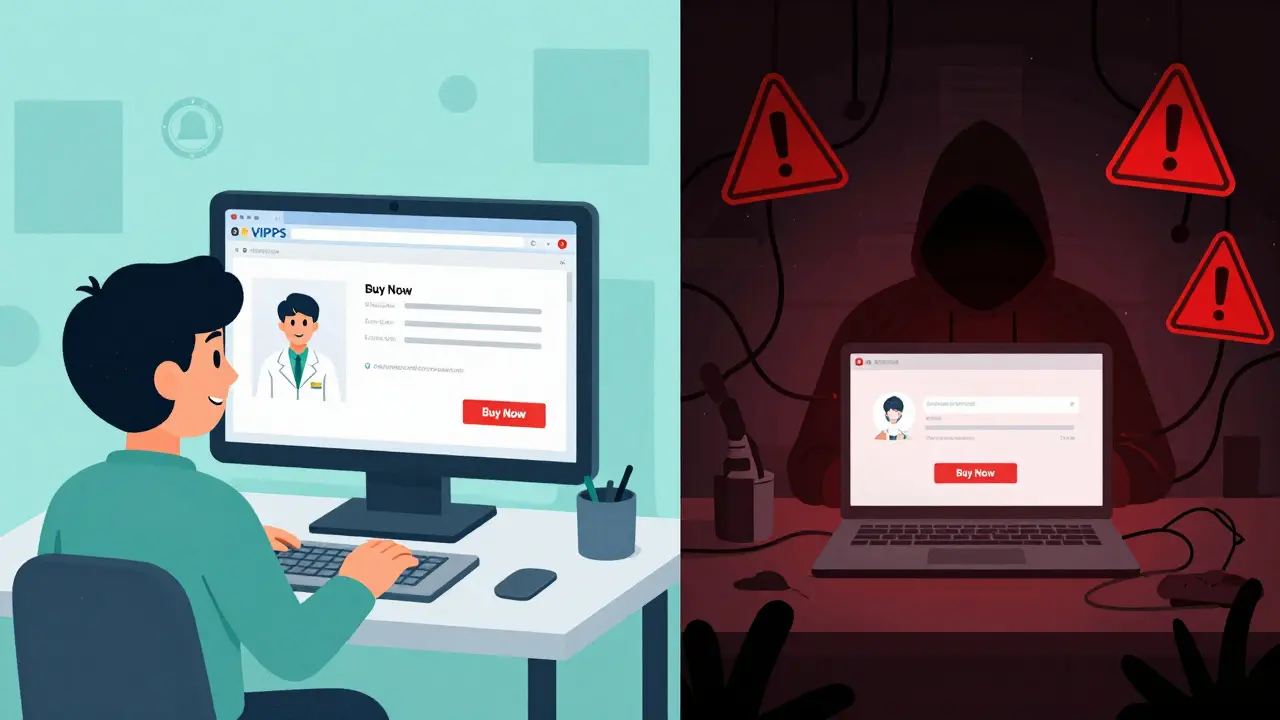
Buying medication online is supposed to be convenient. You skip the drive to the store, avoid the awkward questions at the counter, and get your pills delivered to your door. But for many people, that convenience comes with a hidden cost. A huge number of websites selling medicine are not what they claim to be. They are rogue online pharmacies, which are illegal operations that sell unregulated, counterfeit, or dangerous medications without proper licensing or oversight. The scale of this problem is staggering. According to data from LegitScript in 2021, roughly 96% of online pharmacy websites operate illegally. That means if you randomly click on a search result for cheap blood pressure meds or antibiotics, you have a very high chance of landing on a site that poses serious health risks. This isn't just about saving money; it's about whether the pill you swallow contains the active ingredient, the wrong ingredient, or something toxic entirely.
The Core Differences: Legitimate vs. Rogue Operations
To stay safe, you first need to understand what makes an online pharmacy legitimate. A legitimate online pharmacy is a digital healthcare provider that complies with national pharmaceutical regulations, requires valid prescriptions, employs licensed pharmacists, and maintains verifiable physical addresses. These businesses operate under strict frameworks set by bodies like the National Association of Boards of Pharmacy (NABP) in the US or the General Pharmaceutical Council (GPhC) in the UK. Rogue pharmacies, on the other hand, exist outside these safeguards. The NABP defines them as sites that facilitate the sale of prescription drugs while violating federal or state laws. They often operate across international borders to evade jurisdiction. A 2023 study published in the *Journal of Medical Internet Research* (JMIR) analyzed 116 online pharmacy websites. The results were stark: 55 of them (47%) were confirmed as rogue operations. Only 41% were verified as legitimate by the GPhC. The rest fell into a gray area or were verified by less rigorous bodies. The difference isn't just bureaucratic. It’s about safety controls. Legitimate pharmacies verify your identity, check your medical history, and ensure your prescription is valid. Rogue pharmacies want one thing: your credit card number. They remove every barrier between you and the purchase because their goal is volume, not patient care.
Top Red Flags You Must Spot Immediately
You don’t need to be a cybersecurity expert to spot a scam. Rogue pharmacies leave clues everywhere. Here are the most critical red flags based on FDA guidance and recent academic studies.
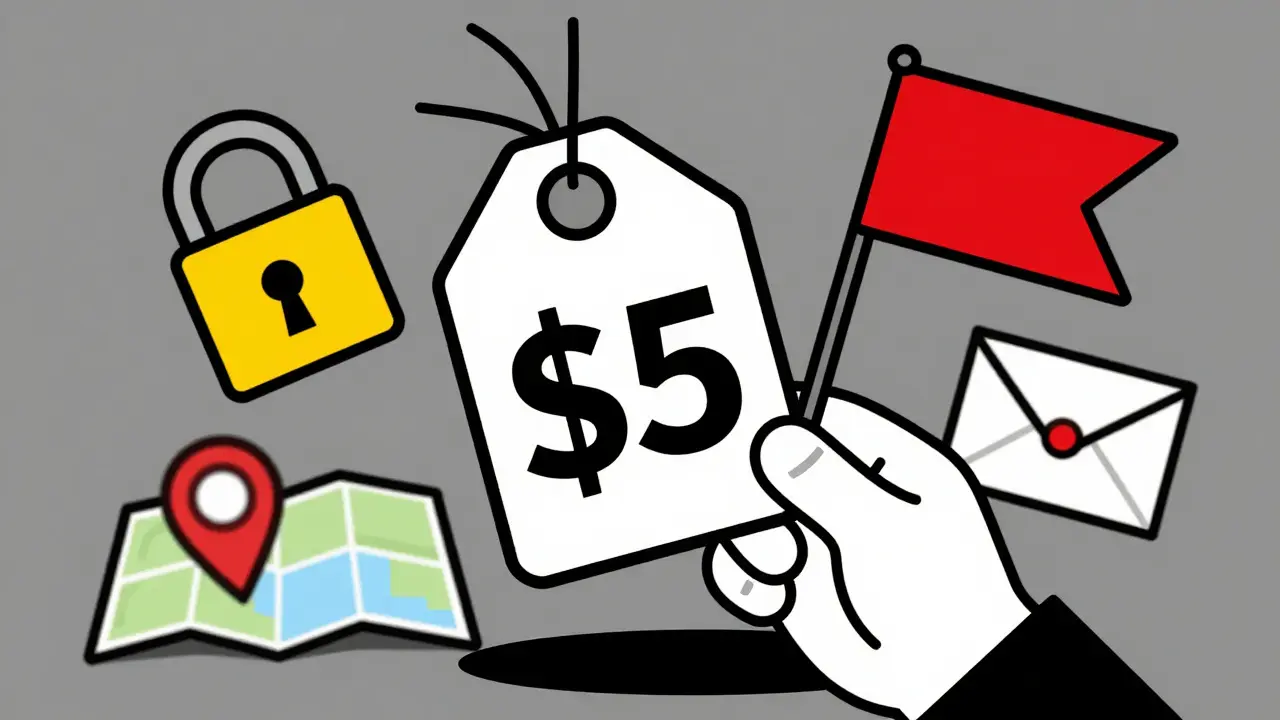
- No Prescription Required: This is the biggest warning sign. If a site sells prescription-only medicines (POMs) without asking for a doctor’s note, it is illegal. The NIH study found that 98.2% of rogue operations did not require prescriptions for POMs. Compare that to 0% of legitimate operations. If you can buy antibiotics or ADHD medication without talking to a doctor, run away.
- Prices That Are Too Good to Be True: Deep discounts are a major lure. The Reginfo.gov document noted that 76.4% of rogue sites offer extremely low prices. Real pharmaceutical companies have production costs. If a drug costs $5 online but $50 at your local pharmacy, ask yourself where the savings came from. Usually, it came from cutting corners on quality control.
- Fake Verification Seals: Scammers know you look for trust badges. The NIH study revealed that 41.8% of rogue sites displayed counterfeit LegitScript or VIPPS accreditation logos. Do not just look for the logo; click it. A real VIPPS seal links directly to the NABP website. A fake one might link to nowhere or a generic "trust us" page.
- Missing Contact Information: Legitimate pharmacies provide a physical address and a phone number staffed by humans. The JMIR study found that 89% of rogue sites lack verifiable contact information. If the only way to contact them is through a generic web form, that is a major red flag.
- Spam Emails: Have you received unsolicited emails offering cheap Viagra or weight loss pills? The Reginfo.gov data shows that 68.9% of rogue sites engage in spamming. Legitimate pharmacies do not advertise controlled substances via bulk email blasts.
Technical Tricks Used by Scammers
Rogue pharmacies are getting smarter. They use technical tricks to look professional. For example, many now use SSL encryption (the padlock icon in your browser). In the JMIR study, 78% of rogue sites used SSL. This protects your payment data during transmission, but it does nothing to verify the legality of the business. Just because the connection is secure doesn't mean the seller is honest. Another common trick is location spoofing. The Reginfo.gov document from 2021 specified that 67.7% of rogue pharmacies declare a physical location that doesn't match their actual server location. IP address analysis showed that 62% of these servers were located in jurisdictions with lax pharmaceutical regulations, such as Eastern Europe or Southeast Asia. They list a fake address in New York or London to gain your trust, while the operation runs from a basement overseas.
| Feature | Legitimate Pharmacy | Rogue Pharmacy |
|---|---|---|
| Prescription Requirement | Mandatory for all POMs | Often waived or fake online consultations |
| Pharmacist Access | Licensed pharmacist available for questions | No pharmacist or unverified staff |
| Pricing | Competitive but realistic market rates | Extremely low, "too good to be true" prices |
| Contact Info | Verifiable physical address and phone number | Fake address, no phone, or web-only forms |
| Verification Badges | Clickable seals linking to official regulators | Static images or broken links |
| Payment Methods | Credit cards, standard processors | Cryptocurrency, wire transfers, gift cards |
How to Verify an Online Pharmacy
Don't guess. Verify. Different regions have different verification systems, but the principle is the same: check the official registry.
In the United States: Look for the VIPPS (Verified Internet Pharmacy Practice Sites) seal. As of December 2021, only 68 US online pharmacies held this accreditation. You can search the NABP database to confirm if a site is listed. If it claims to be VIPPS accredited but isn't in the database, it is lying. Additionally, check your state board of pharmacy website. Most states maintain a list of licensed pharmacies operating within their borders.
In the United Kingdom: Use the General Pharmaceutical Council (GPhC) register. You can search by registration number, trading name, or postcode. The 2023 JMIR study found that 47 out of 116 analyzed pharmacies were verified through this system. If a UK-based pharmacy isn't on the GPhC register, it is operating illegally.
In the European Union: Legal online pharmacies must display a mandatory EU common logo. Clicking this logo should take you to a government verification page showing the pharmacy's authorization status. A 2022 report from *Pharmaceutical Technology* noted that many non-compliant sites still appear on the first two pages of Google searches for common drugs like ibuprofen, lacking this authenticated logo. Always click the logo to verify.
The Hidden Dangers of Counterfeit Drugs
Why does it matter if you buy from a rogue site? Because the product itself is compromised. The FDA has documented numerous cases where medications from illegal sources contained the wrong ingredients, incorrect dosages, or harmful contaminants. A study published in PMC (NIH) highlighted that rogue pharmacies are significantly more likely to guarantee refunds for medication. This sounds like a benefit, but it’s a psychological trick. They know the drugs might fail or cause side effects, so they offer refunds to reduce friction. However, you can't refund the damage done to your body. Taking a contaminated antibiotic can lead to treatment failure and antibiotic resistance. Taking a fake heart medication can lead to a stroke or heart attack. Furthermore, the lack of professional oversight is dangerous. Gareth Jones, Head of Corporate Affairs at the UK's National Pharmacy Association, noted that while illegal pharmacies aren't causing massive commercial trouble, "the impact on patients is much more worrying." Without a pharmacist checking for drug interactions, you could mix medications that are deadly together. Legitimate pharmacies perform these checks automatically. Rogue sites do not.
Why Search Engines Make It Harder
You might wonder why these scams are so easy to find. Part of the problem is how search engines work. The *Pharmaceutical Technology* report alleged that algorithm updates have negatively impacted many legitimate sites while allowing illegitimate pharmacies to outrank well-established businesses. Rogue pharmacies invest heavily in SEO and social media advertising. They target vulnerable consumers looking for quick fixes or lower prices. During crises, this gets worse. The NABP reported that during the 2022 infant formula shortage, 62% of investigated rogue sites sold unauthorized or counterfeit products. They exploit fear and scarcity. When you are desperate for a specific medication, you are less likely to check the fine print. This is when you are most vulnerable.
Practical Steps to Protect Yourself
Start with your own doctor. Ask them if they recommend any specific online pharmacies. Many healthcare providers partner with reputable mail-order services. This is the safest route. If you go it alone, follow this checklist before entering your credit card details:
- Check the URL: Does it look professional? Is it spelled correctly?
- Look for the Physical Address: Use Google Maps to verify the location exists. Call the number if provided.
- Verify the Seal: Click the VIPPS, GPhC, or EU logo. Ensure it leads to the official regulator's site.
- Read the Fine Print: Look for privacy policies and terms of service. Rogue sites often have vague or missing legal text.
- Avoid Crypto Payments: Legitimate pharmacies accept standard credit cards. Requests for Bitcoin or wire transfers are almost always scams.
What is the VIPPS seal and why is it important?
The VIPPS (Verified Internet Pharmacy Practice Sites) seal is an accreditation program run by the National Association of Boards of Pharmacy (NABP) in the US. It indicates that an online pharmacy meets strict standards for safety, legitimacy, and compliance with state and federal laws. As of late 2021, only 68 pharmacies held this accreditation, making it a rare and trustworthy marker. Always click the seal to verify it links to the official NABP database.
Can I trust an online pharmacy that offers free consultations?
Be very cautious. While some legitimate telehealth services offer consultations, rogue pharmacies often use fake online questionnaires to bypass prescription requirements. A 2023 NIH study found that 98.2% of rogue operations did not require valid prescriptions. If the "consultation" takes two minutes and guarantees approval regardless of your answers, it is likely a scam designed to sell you medication without proper medical oversight.
Why do rogue pharmacies offer such low prices?
Rogue pharmacies cut costs by skipping regulatory compliance, quality testing, and licensed staffing. They often sell counterfeit drugs made with cheaper, inactive, or harmful ingredients. According to Reginfo.gov data, 76.4% of rogue sites use deep discounts as a primary lure. These prices are unsustainable for legitimate businesses because they do not account for the real costs of pharmaceutical manufacturing and safety protocols.
How can I verify an online pharmacy in the UK?
In the UK, you should verify any online pharmacy through the General Pharmaceutical Council (GPhC) register. You can search by the pharmacy's name, registration number, or postcode. If the pharmacy is not listed on the GPhC website, it is operating illegally. A 2023 study found that nearly half of analyzed online pharmacy sites were rogue operations, making this verification step critical for patient safety.
Is it safe to buy prescription drugs from international online pharmacies?
Generally, no. Most rogue pharmacies operate outside the US or UK to evade jurisdiction. Data shows that 62% of rogue servers are located in regions with lax regulations, such as Eastern Europe or Southeast Asia. Even if the site appears professional, the lack of local regulatory oversight means there is no recourse if the medication is counterfeit, contaminated, or causes harm. Stick to pharmacies licensed in your own country.