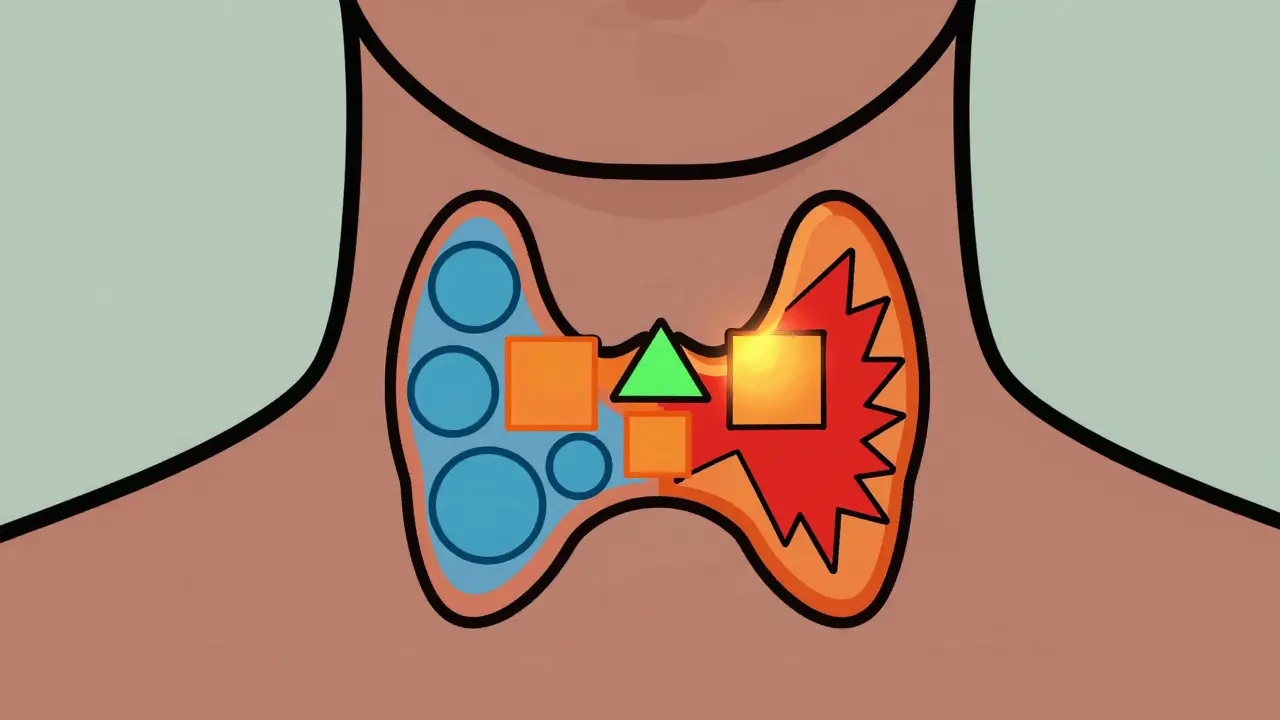
Getting a diagnosis of thyroid cancer is a malignant growth originating in the butterfly-shaped endocrine gland at the base of the neck can feel like the ground has dropped out from under you. You might be staring at ultrasound results or waiting for biopsy confirmation, wondering if your life is about to change forever. Here is the good news that often gets lost in the medical jargon: for most people, this is highly treatable. The 10-year survival rate for papillary thyroid cancer-the most common type-is over 98% for patients under 45. But "highly treatable" doesn't mean "easy." It means you are facing a specific set of decisions about surgery, radiation, and lifelong medication. This guide breaks down exactly what those decisions look like, so you aren't just going along for the ride.
Understanding the Four Main Types of Thyroid Cancer
Not all thyroid cancers behave the same way. Knowing which type you have is the single most important factor in deciding your treatment plan. Doctors classify these cancers based on the cells they start in. Think of it like different species of fish; they live in the same ocean (your body), but they swim differently and react differently to the environment.
| Type | Frequency | Growth Speed | Treatment Approach |
|---|---|---|---|
| Papillary Thyroid Carcinoma (PTC) | 70-80% | Slow | Surgery + possible Radioactive Iodine |
| Follicular Thyroid Carcinoma (FTC) | 10-15% | Moderate | Surgery + possible Radioactive Iodine |
| Medullary Thyroid Carcinoma (MTC) | 3-5% | Variable | Surgery only (RAI ineffective) |
| Anaplastic Thyroid Carcinoma (ATC) | <2% | Rapid/Aggressive | Immediate multimodal therapy |
Papillary thyroid carcinoma (PTC) is the big one. It accounts for roughly three-quarters of all cases. It tends to grow slowly and often spreads to lymph nodes in the neck, but it rarely travels far beyond that. Because it grows so predictably, doctors can sometimes even watch small tumors (under 1 cm) without immediate surgery, a strategy called active surveillance. Japanese data shows that only 3.8% of these tiny tumors progress over ten years.
Follicular thyroid carcinoma (FTC) is similar to papillary but slightly more likely to spread through the blood to bones or lungs rather than lymph nodes. It still responds well to standard treatments, but because it spreads differently, the monitoring approach changes slightly.
Medullary thyroid carcinoma (MTC) is different. It starts in the C-cells, which produce calcitonin, not the hormone-producing cells. Crucially, MTC does not absorb iodine. This means radioactive iodine therapy will not work for this type. Some cases are hereditary, linked to genetic mutations like RET, so family members may need screening too.
Anaplastic thyroid carcinoma (ATC) is the rarest and most aggressive. It represents less than 2% of cases but requires immediate, intense action. Survival drops significantly with every week of delay, so treatment involves a combination of surgery, radiation, and targeted drugs right away.
Thyroidectomy: What Happens During Surgery?
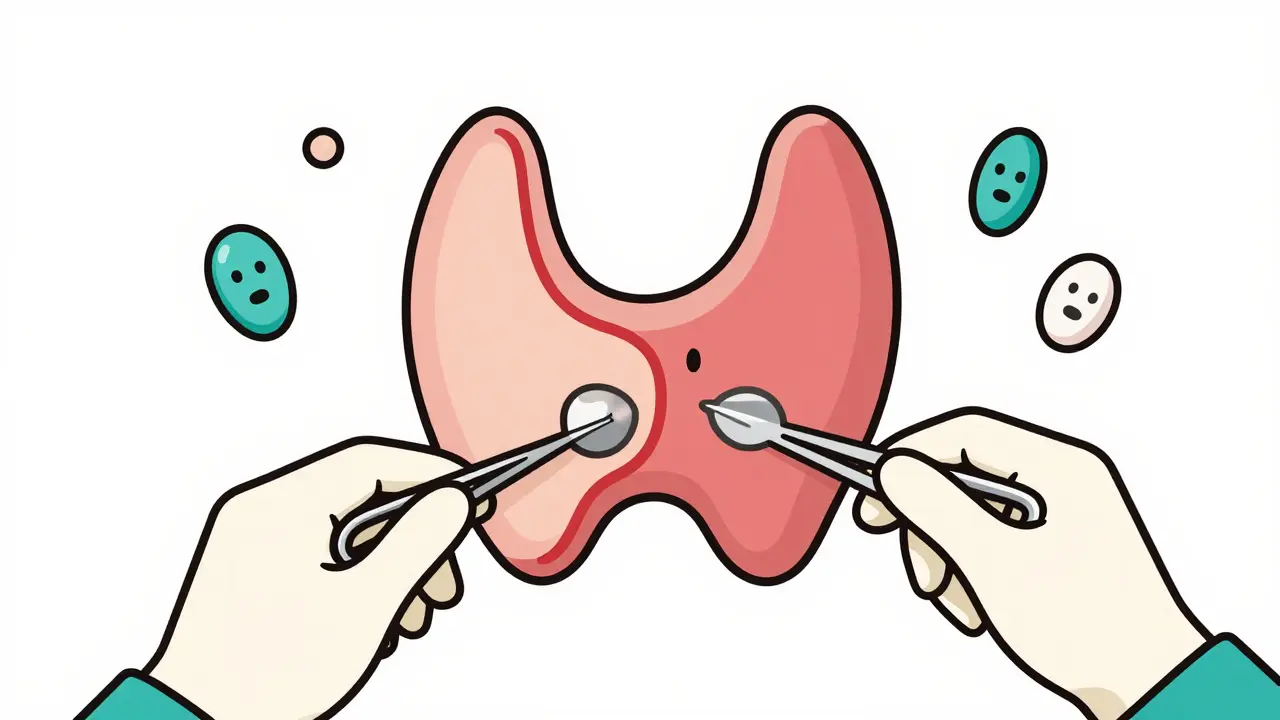
For most differentiated thyroid cancers (papillary and follicular), surgery is the first step. The procedure is called a thyroidectomy is the surgical removal of part or all of the thyroid gland. You’ll hear two main terms: lobectomy and total thyroidectomy.
A lobectomy removes just one side (lobe) of the thyroid. This is often enough for low-risk, small tumors confined to one lobe. The incision is smaller (about 4-6 cm), recovery is faster, and many people go home the same day. The benefit? You keep half your thyroid, so you might not need lifelong hormone replacement pills, or if you do, the dose is lower.
A total thyroidectomy removes the entire gland. This is done for larger tumors, cancers that have spread to lymph nodes, or if there’s a high risk of recurrence. The incision is slightly larger (6-8 cm), and the surgery takes 2-3 hours. You will stay in the hospital for 1-2 days. After this, you will need to take levothyroxine daily for the rest of your life to replace the hormone your body can no longer make.
Why choose total over lobectomy? If you have a total thyroidectomy, doctors can use radioactive iodine afterward to clean up any remaining microscopic cells. They can also monitor you using thyroglobulin blood tests-a protein made only by thyroid tissue. If your levels rise after a total removal, it’s an early warning sign that cancer might be returning. With a lobectomy, that test isn’t useful because the remaining healthy lobe produces thyroglobulin anyway.
Modern surgeons use nerve monitoring devices during these operations. These tools help protect the recurrent laryngeal nerve, which controls your voice box. Thanks to this technology, permanent voice changes have dropped significantly, though temporary hoarseness is still common in the first few weeks. Another key focus is preserving the parathyroid glands-tiny structures behind the thyroid that regulate calcium. Damage here can lead to low calcium levels, causing tingling in your fingers or muscle cramps.
Radioactive Iodine Therapy: Cleaning Up After Surgery
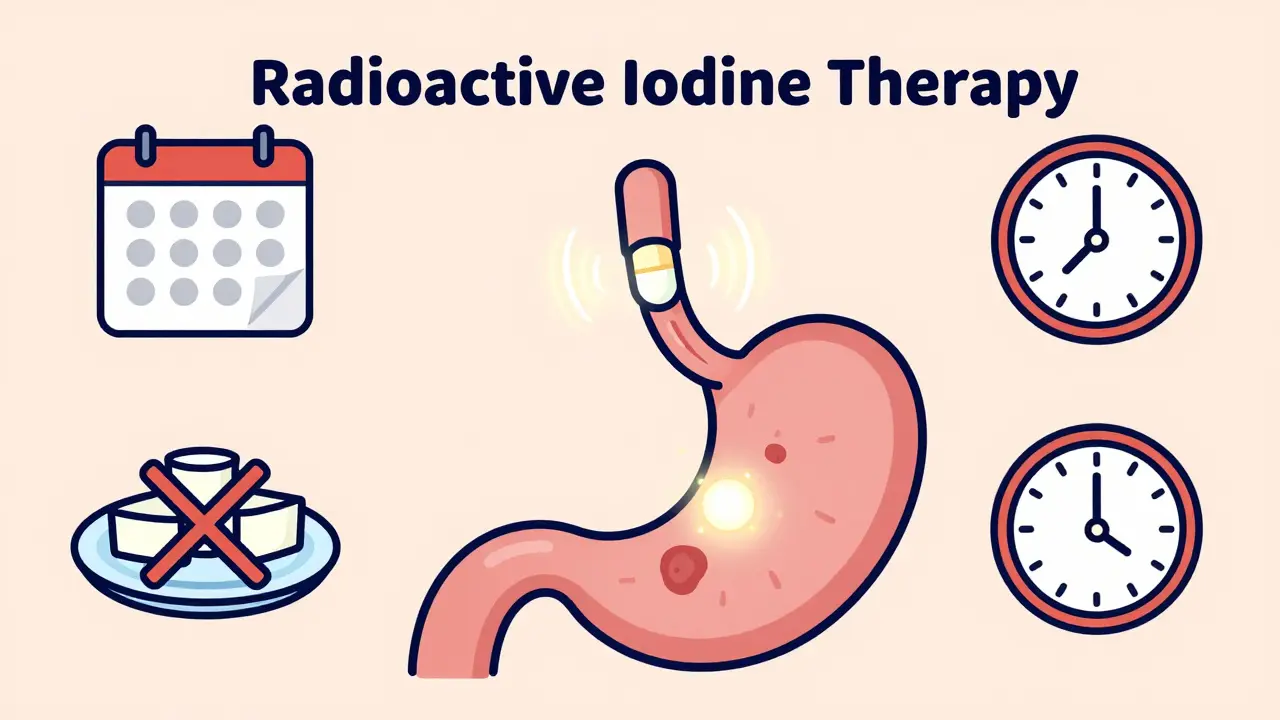
If you had a total thyroidectomy for papillary or follicular cancer, your doctor might recommend radioactive iodine therapy (RAI) is a treatment using I-131 isotopes to destroy remaining thyroid tissue. Also known as RAI ablation, this isn’t external beam radiation like you see in movies. You swallow a capsule or liquid containing I-131.
Here’s why it works: thyroid cells are the only cells in your body that actively soak up iodine. Normal thyroid cells and cancerous thyroid cells both grab onto the radioactive iodine. Once inside, the radiation kills them from the inside out, while sparing other organs. It’s like giving the cancer cells a Trojan horse.
The preparation is often the hardest part. For the iodine to work, your thyroid-stimulating hormone (TSH) levels need to be high. TSH tells thyroid cells to absorb iodine. To raise TSH, you have two options:
- Hormone withdrawal: You stop taking your thyroid medication for 3-4 weeks. This induces severe hypothyroidism. Symptoms include extreme fatigue, depression, brain fog, and sensitivity to cold. Many patients find this period physically and emotionally draining.
- Recombinant human TSH (Thyrogen®): You continue taking your thyroid meds but receive injections of synthetic TSH. This avoids the misery of withdrawal but is more expensive and not always covered by insurance.
You’ll also follow a low-iodine diet for 1-2 weeks before treatment. This means avoiding dairy, eggs, seafood, and iodized salt. Why? If your body is already full of stable iodine, it won’t absorb the radioactive kind. Patients often report this diet feels restrictive and contributes to fatigue.
Doses vary. For simple cleanup (ablation) after surgery, doses are low (30 mCi). For treating known metastases, doses can go up to 200 mCi. After swallowing the dose, you’ll need to isolate for a few days to protect others from radiation exposure. No close contact, no sharing utensils, and strict bathroom hygiene. It sounds intense, but it’s temporary. Most people return to normal activities within a week.
Side effects can include dry mouth, nausea, and a metallic taste. Rarely, it can affect tear ducts or salivary glands long-term. Sucking on sour candies helps flush the radiation out of the salivary glands. Long-term studies show no significant increase in secondary cancers from standard RAI doses.
Life After Treatment: Managing Hypothyroidism
Whether you had a lobectomy or total thyroidectomy, you are now managing hypothyroidism. Your body no longer makes enough thyroid hormone. You’ll take levothyroxine, a synthetic version of T4. It’s cheap, effective, and safe-but timing matters.
Take your pill on an empty stomach, ideally 30-60 minutes before breakfast. Avoid coffee, calcium supplements, and iron supplements for at least four hours after taking it, as they block absorption. Consistency is key. Take it at the same time every day.
Your doctor will monitor your TSH levels. For cancer survivors, the target TSH isn’t always "normal." It depends on your risk level:
- Low risk: TSH kept in the normal range (0.5-2.0 mIU/L).
- Intermediate/High risk: TSH suppressed below normal (0.1-0.5 mIU/L) to prevent cancer cells from growing.
Many patients struggle with "brain fog," weight gain, and fatigue despite being on medication. A survey of thyroid cancer survivors found that 68% reported persistent symptoms. Don’t ignore this. Work with your endocrinologist to fine-tune your dose. Sometimes, adding a small amount of T3 (liothyronine) helps, though this is debated. Lifestyle factors like sleep, stress management, and balanced nutrition play a huge role in how you feel.
Monitoring and Follow-Up: Staying Vigilant
Thyroid cancer doesn’t disappear overnight. You’ll enter a phase of active surveillance. This usually includes:
- Blood tests: Thyroglobulin (Tg) and anti-thyroglobulin antibodies (TgAb) every 6-12 months. Rising Tg levels can signal recurrence.
- Ultrasounds: Neck ultrasounds annually for the first few years to check lymph nodes.
- Whole-body scans: Occasionally, if Tg levels rise unexpectedly, a diagnostic RAI scan may be ordered.
Most recurrences happen in the first five years. After that, the risk drops significantly. If you’re medullary thyroid cancer patient, you’ll also monitor calcitonin levels instead of thyroglobulin.
Don’t panic if you see a slight fluctuation in labs. Focus on trends. One high reading doesn’t mean cancer is back. Two or three rising readings do. Keep a personal health journal. Track your symptoms, medication doses, and lab results. This data empowers you in conversations with your doctor.
Is thyroid cancer curable?
Yes, for most types. Papillary and follicular thyroid cancers have cure rates exceeding 95% when treated early. Medullary thyroid cancer is manageable but harder to cure completely. Anaplastic thyroid cancer is very difficult to cure due to its aggressiveness, but new targeted therapies are improving outcomes.
Do I need radioactive iodine after surgery?
Not always. Low-risk patients with small tumors (<1 cm) often don't need RAI. It's typically recommended for intermediate-to-high-risk cases, such as tumors larger than 4 cm, those that have spread to lymph nodes, or if the cancer has invaded nearby tissues. Your doctor will weigh the benefits against potential side effects.
How long does recovery from thyroidectomy take?
Most people feel better within 2-4 weeks. Light activities can resume immediately, but heavy lifting should be avoided for 3 weeks. Voice changes may last a few weeks. Full energy levels often return once thyroid medication doses are stabilized, which can take several months.
Can thyroid cancer come back?
Yes, recurrence is possible, especially in the neck lymph nodes. However, most recurrences are slow-growing and treatable. Regular monitoring with blood tests and ultrasounds catches these early. The risk decreases significantly after 5-10 years of disease-free status.
What causes thyroid cancer?
The exact cause is often unknown. Risk factors include previous radiation exposure to the head or neck, family history of thyroid cancer (especially medullary type), certain genetic syndromes (like MEN2), and being female or over 60 years old. Iodine deficiency or excess may also play a role in some regions.
Popular Posts