
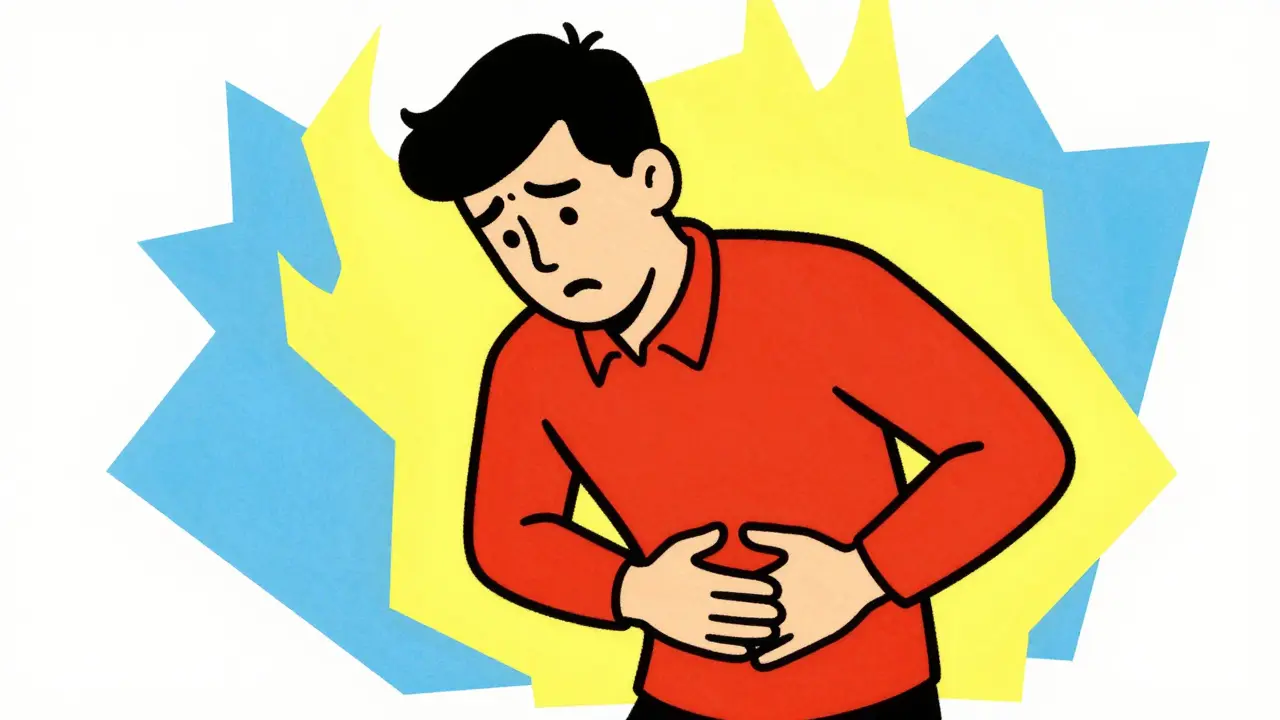
Imagine a sharp, stabbing pain in your lower left abdomen that makes it hard to stand up straight. You might feel feverish, nauseous, and completely drained. This isn't just a bad stomach bug; it could be diverticulitis, a condition where small pouches in your colon become inflamed or infected. For decades, doctors told patients to avoid nuts and seeds, but recent research has flipped the script on how we understand and treat this common gastrointestinal issue. With over 35% of adults under 50 now showing signs of the precursor condition, understanding what triggers these flare-ups and how modern medicine handles them is more important than ever.
What Are Diverticula and Why Do They Get Infected?
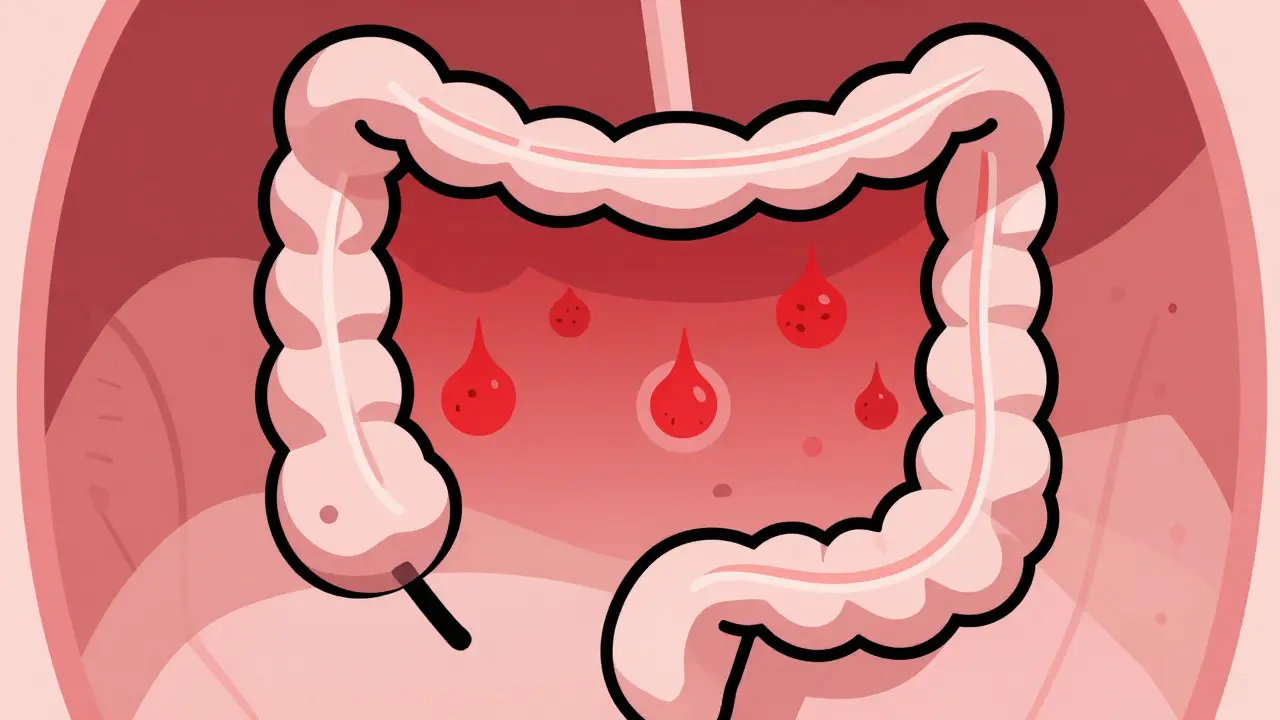
To understand the inflammation, you first need to look at the anatomy. Your colon wall isn't perfectly smooth. In many people, especially as they age, weak spots develop in the muscular layer. Pressure from inside the colon pushes the inner lining out through these weak spots, creating small sacs called diverticula. Having these pouches without any symptoms is known as diverticulosis. It’s incredibly common-about 58% of people over age 60 have them.
The problem arises when one or more of these pouches get blocked by stool or waste. Bacteria multiply in the trapped area, leading to infection and inflammation. This is diverticulitis. Most of these pouches form in the sigmoid colon, which is why pain usually hits the lower left side of your belly. However, if you are of Asian descent, there is a higher chance (up to 40%) that the pouches will form on the right side due to differences in colonic anatomy. The pouches themselves are tiny, usually measuring between 5 and 10 millimeters, but when they rupture or become severely infected, the consequences can be serious.
Recognizing the Symptoms: Is It Diverticulitis or Something Else?
Identifying diverticulitis early can prevent complications. The hallmark symptom is persistent abdominal pain, often described as feeling like "hot knives" are stabbing the area. Unlike the cramping associated with irritable bowel syndrome (IBS), which comes and goes, diverticulitis pain is constant and typically worsens with movement. About 70-80% of patients also experience a fever above 38°C (100.4°F).
Other signs include nausea, vomiting, and changes in bowel habits, such as constipation or diarrhea. Because the symptoms overlap with other conditions, misdiagnosis is common. Doctors sometimes confuse it with ovarian cysts in women or kidney stones. A key differentiator is the localized tenderness-if you press on your lower left abdomen and it hurts sharply, combined with a high white blood cell count (leukocytosis >11,000 cells/µL), it points strongly toward diverticulitis. A CT scan is the gold standard for diagnosis, showing inflammation around the colon and confirming the presence of diverticula.
| Condition | Pain Location | Fever Presence | Key Differentiator |
|---|---|---|---|
| Diverticulitis | Lower Left (usually) | Yes (70-80%) | Constant pain, worsens with movement |
| Irritable Bowel Syndrome (IBS) | Generalized/Crampy | No | Intermittent pain, relieved by bowel movement |
| Crohn's Disease | Varies | Variable | Transmural inflammation, chronic history |
| Kidney Stones | Flank/Back to Groin | Only if infected | Severe colicky pain, blood in urine |
How Doctors Classify Severity
Not all cases of diverticulitis are created equal. Medical professionals use the Hinchey classification system to determine how severe the infection is and what treatment is needed. This system helps decide whether you can go home or need surgery.
- Stage I: Localized inflammation or a small abscess (less than 3cm) near the colon.
- Stage II: A larger pelvic abscess (3-5cm) that may require drainage.
- Stage III: Generalized pus-filled peritonitis (infection spreading throughout the abdominal cavity).
- Stage IV: Fecal peritonitis, caused by a hole in the colon leaking stool into the abdomen. This is a life-threatening emergency.
Understanding your stage is crucial because it dictates everything from medication choices to surgical interventions. Mild cases (Stage I) are often managed at home, while Stage III and IV require immediate hospital care.
Modern Treatment Approaches: Antibiotics and Beyond
Treatment guidelines have shifted dramatically in recent years. For a long time, antibiotics were mandatory for every case. However, the 2021 DIVERT trial changed the landscape. This study found that for mild, uncomplicated cases, patients recovered just as quickly without antibiotics as those who took them. The average recovery time was 7 days regardless of antibiotic use.
Today, doctors often recommend a "watchful waiting" approach for mild cases. This involves:
- Bowel Rest: Sticking to a clear liquid diet for 48-72 hours to let the colon heal.
- Hydration: Drinking plenty of water to prevent dehydration.
- Pain Management: Using acetaminophen (paracetamol) for pain. Avoid NSAIDs like ibuprofen or aspirin, as they can increase the risk of bleeding or perforation.
If you have a high fever (>38.5°C) or significant signs of infection, antibiotics are still necessary. Common prescriptions include amoxicillin-clavulanate. For more severe cases requiring hospitalization, intravenous antibiotics like piperacillin-tazobactam are used until the infection stabilizes. Newer treatments also include mesalazine (Pentasa), which was approved in 2023 for maintenance therapy to reduce recurrence rates by 31%.
Dietary Myths and Prevention Strategies
One of the biggest myths about diverticulitis is that you must avoid nuts, seeds, corn, and popcorn. This advice dates back to the mid-20th century when doctors feared these small particles would get stuck in the pouches. An 18-year study of 47,000 nurses debunked this myth completely. There is no evidence that these foods cause attacks. In fact, avoiding them might deprive you of essential nutrients.
The real key to prevention is fiber. A high-fiber diet keeps stool soft and reduces pressure in the colon, preventing the formation of new pouches and blocking existing ones. Aim for 25-35 grams of fiber daily from sources like fruits, vegetables, whole grains, and legumes. If you increase fiber slowly, you can avoid bloating and gas.
Lifestyle factors also play a huge role. Smoking doubles your risk of developing diverticulitis. Obesity (BMI >30) increases the risk by 2.1 times. Regular exercise-more than two hours a week-can lower your incidence by 38%. So, staying active and maintaining a healthy weight are just as important as what you eat.

When Surgery Becomes Necessary
Surgery is not the first line of defense, but it becomes critical when complications arise. If you have a perforated colon (Stage IV Hinchey) or an abscess that cannot be drained via needle, surgery is required. Laparoscopic lavage (washing out the abdomen) is increasingly preferred for contained perforations, with an 82% success rate compared to traditional resection.
Elective surgery is considered for patients who have recurrent attacks. Guidelines previously suggested waiting for three attacks before considering surgery. Now, experts recommend discussing surgery after two hospitalizations, especially if quality of life is significantly impacted between episodes. The procedure usually involves removing the affected section of the colon and reconnecting the healthy ends. After surgery, most patients return to normal activities within weeks, though full recovery takes time.
Long-Term Outlook and Recurrence
About 15-30% of people who have one episode of diverticulitis will have another. The good news is that many people never have a second attack. To stay ahead of recurrence, follow-up care is essential. Doctors typically recommend a colonoscopy 6-8 weeks after the acute episode resolves. This isn't to check for diverticulitis itself, but to rule out colorectal cancer, which can mimic diverticulitis symptoms. Studies show a 1.3% detection rate of cancer in patients over 50 following a diverticulitis diagnosis.
Emerging research is looking at the gut microbiome. Patients with recurrent attacks often have lower levels of beneficial bacteria like Faecalibacterium prausnitzii. While probiotics aren't yet a standard cure, maintaining a diverse gut flora through a plant-rich diet may help modulate inflammation. AI-driven predictive tools are also being developed to assess individual recurrence risks based on CT scans and lab results, offering personalized prevention plans in the near future.
Can I eat nuts and seeds if I have diverticulitis?
Yes, you can. Recent large-scale studies have shown that eating nuts, seeds, corn, and popcorn does not increase the risk of diverticulitis attacks. During an acute flare-up, stick to a low-fiber or clear liquid diet as advised by your doctor, but once you recover, these foods are safe and healthy to include in your regular diet.
Do I always need antibiotics for diverticulitis?
Not necessarily. For mild, uncomplicated cases, recent clinical trials suggest that bowel rest and hydration alone can lead to recovery similar to antibiotic treatment. However, if you have a high fever, severe pain, or signs of systemic infection, antibiotics are still recommended to prevent complications. Always follow your doctor's specific advice for your situation.
How do I know if my abdominal pain is diverticulitis?
Diverticulitis typically causes constant pain in the lower left abdomen, often accompanied by fever, nausea, and changes in bowel habits. Unlike IBS, the pain doesn't come and go and often worsens with movement. A definitive diagnosis requires a physical exam, blood tests (to check for high white blood cell counts), and usually a CT scan to visualize inflammation in the colon.
When is surgery required for diverticulitis?
Emergency surgery is needed if the colon perforates (bursts) causing fecal peritonitis or if a large abscess cannot be drained. Elective surgery may be recommended after two or more severe attacks that require hospitalization, or if the condition significantly impacts your quality of life despite medical management. The goal is to remove the diseased portion of the colon to prevent future complications.
What should I eat during a diverticulitis flare-up?
During the acute phase, start with a clear liquid diet for 48-72 hours. This includes water, broth, apple juice, and gelatin. As symptoms improve, gradually introduce low-fiber foods like white rice, bananas, and cooked vegetables without skin. Avoid high-fiber foods, raw vegetables, and whole grains until the inflammation has fully subsided and your doctor clears you to resume a normal diet.
14 Comments

princess lovearies
May 3 2026
I always find it fascinating how our bodies signal distress in such specific ways. The idea that pain can feel like 'hot knives' is visceral and highlights just how much inflammation affects our perception. It makes me think about the importance of listening to those subtle changes in our daily routines before they become crises.

Srinivas Komakula
May 3 2026
One must consider the broader implications of this dietary advice reversal. The sudden abandonment of the nut-and-seed prohibition suggests a coordinated effort by pharmaceutical interests to promote fiber supplements rather than natural whole foods. Is it coincidence that the same entities funding these large-scale studies also profit from probiotic sales? The 'myth-busting' narrative serves to create new markets for maintenance therapies like mesalazine. We should remain skeptical of these convenient reversals in medical dogma, as they often mask underlying commercial motivations rather than pure scientific inquiry.

Joel Bonstell
May 3 2026
Hey folks, i had this last year and honestly the clear liquid diet was the hardest part. Just stick with broth and apple juice for a couple days, trust me it helps your gut rest. Dont try to push through with solid food or youll just make it worse. Hope everyone stays healthy!

Seema Karanje
May 5 2026
Stop making excuses! If you are overweight and smoking, you are inviting this condition into your life. Take responsibility for your health. Exercise two hours a week, eat your vegetables, and stop blaming genetics or bad luck. You have the power to change your outcomes right now. Get up and move!

Andrew Hanssen
May 6 2026
This article is completely missing the point. Diverticulitis is not just an anatomical issue; it is a symptom of a fundamentally broken digestive system caused by modern processed diets. Focusing on individual pouches ignores the systemic inflammation driving the disease. Furthermore, the reliance on CT scans exposes patients to unnecessary radiation without addressing the root cause. The medical community would do well to look at holistic approaches rather than patching holes in the colon.

J. Walter Jenkem
May 7 2026
I appreciate the detailed breakdown of the Hinchey classification. It provides clarity for patients who might otherwise feel lost during a diagnosis. Understanding that Stage I can often be managed at home is reassuring, but it is equally important to recognize the red flags for Stage III and IV. Early recognition of worsening symptoms can prevent the need for emergency surgery. Let us support each other in understanding these conditions better.

Allison Maier
May 8 2026
boring read :/

Prudence Wesson
May 8 2026
It is quite disheartening to observe the lack of rigorous adherence to traditional diagnostic protocols in recent years. The casual dismissal of antibiotic therapy for mild cases seems premature, given the potential for rapid deterioration in susceptible populations. One must question the long-term data supporting such lenient approaches. Furthermore, the emphasis on lifestyle factors, while valid, often overlooks the genetic predispositions that play a significant role in colonic wall integrity. This oversimplification does a disservice to patients seeking comprehensive care.

Divya Patel
May 8 2026
In many cultures, we have long understood the importance of gentle digestion. The concept of resting the gut aligns with traditional practices that prioritize balance over aggressive intervention. It is interesting to see modern medicine catching up to what herbalists have known for centuries. Perhaps we can learn more from integrating these ancient wisdoms with contemporary science.

Jimmy Crocker
May 10 2026
Look, i get that people want quick fixes, but the reality is that diverticulitis is a mess. The anatomy stuff is correct, but the treatment part feels like guesswork. Why wait for two hospitalizations before considering surgery? That seems arbitrary. Also, the idea that nuts are safe is counterintuitive to anyone who has actually seen a blockage. I think the guidelines are shifting too fast without enough long-term follow-up data. It’s risky to rely solely on short-term trials when dealing with chronic conditions.

Alexa Mack
May 12 2026
I love how this post breaks down the differences between IBS and diverticulitis. So many people confuse the two because the symptoms overlap so much. Knowing that fever and constant pain are key differentiators really helps. It makes me want to pay closer attention to my own body's signals. Thanks for sharing this info!

SWATI NAWANGE
May 12 2026
How utterly pedestrian. The average reader likely lacks the intellectual capacity to grasp the nuances of the Hinchey classification without oversimplification. Moreover, the suggestion that exercise alone can mitigate risk is a gross understatement of the complex pathophysiology involved. One would expect a higher standard of discourse from a platform purportedly dedicated to information exchange. Instead, we receive a diluted summary suitable only for the most unrefined minds.

Preety Singh
May 14 2026
The inclusion of Asian descent statistics is a rare nod to anatomical diversity, yet the overall tone remains disappointingly generic. True expertise lies in recognizing the limitations of Western-centric medical models. The failure to address the socioeconomic disparities in access to CT scans further undermines the utility of this information. One cannot simply prescribe 'watchful waiting' to populations lacking reliable healthcare infrastructure. Such oversight reveals a profound ignorance of global health realities.
Write a comment
Popular Posts

Mark Koepsell
May 3 2026
The DIVERT trial results are genuinely significant for clinical practice. It is refreshing to see evidence-based medicine challenging the reflexive prescription of antibiotics for uncomplicated cases. The shift towards supportive care-hydration, bowel rest, and acetaminophen-is a logical progression that reduces unnecessary drug exposure. However, patient education is critical here. Many individuals will still demand antibiotics due to historical conditioning, so clinicians must be prepared to explain the rationale behind watchful waiting thoroughly.