
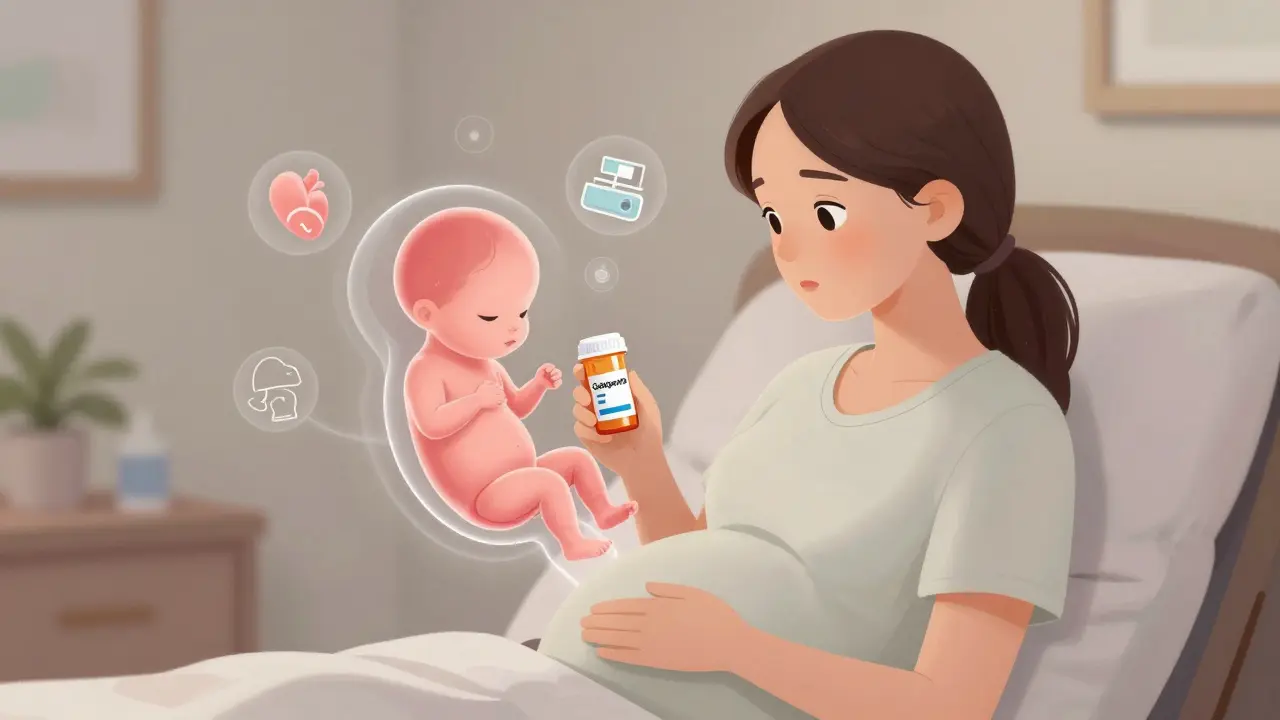
When a pregnant person needs relief from chronic pain, anxiety, or seizures, finding a safe medication isn’t simple. Gabapentin and pregabalin - often called gabapentinoids - are commonly prescribed for these conditions. But as their use in pregnancy has climbed sharply over the last two decades, so have questions about what they might do to a developing baby. The latest research, based on data from hundreds of thousands of pregnancies, gives us clearer answers - and some serious red flags.
How Common Is Gabapentin Use During Pregnancy?
In 2000, less than 1 in 500 pregnant women in the U.S. filled a prescription for gabapentin. By 2014, that number jumped to nearly 1 in 25. Today, about 4.2% of all pregnancies involve gabapentin or pregabalin. That’s more than 160,000 pregnancies a year in the U.S. alone. Most of these prescriptions aren’t for epilepsy. They’re for nerve pain - from diabetes, shingles, or back injuries - or sometimes for anxiety or insomnia. The rise in use reflects a shift away from older, riskier drugs like valproic acid. But now, we’re learning that gabapentinoids aren’t risk-free either.
What Does the Science Say About Birth Defects?
The biggest concern with any drug in pregnancy is whether it causes major birth defects. A landmark 2020 study in PLOS Medicine, tracking over 1.7 million pregnancies, found that gabapentin did not significantly increase the overall risk of major malformations. The absolute risk was 3.21% for exposed babies versus 3.00% for unexposed - a tiny difference. That’s reassuring compared to drugs like valproic acid, which can raise the risk to over 10%.
But here’s where it gets complicated. While the overall number of defects didn’t rise much, a specific type did. Babies exposed to gabapentin, especially when the mother took it regularly in the first trimester, had a 40% higher chance of developing a conotruncal heart defect. These are serious structural problems affecting the outflow tracts of the heart - things like tetralogy of Fallot or transposition of the great arteries. The absolute risk? Still low: about 0.82% in exposed pregnancies versus 0.59% in unexposed. But for families with a history of heart defects or those on higher doses, this signal can’t be ignored.
Neonatal Risks: More Than Just Birth Defects
Birth defects aren’t the only concern. The biggest clinical impact of gabapentin in pregnancy may come after birth. A 2018 study in Neurology found that 38% of babies exposed to gabapentin until delivery needed to go to the NICU - compared to just 2.9% of unexposed babies. That’s a 13-fold increase in NICU admissions. These infants often showed signs of withdrawal or adaptation syndrome: jitteriness, poor feeding, excessive crying, or breathing trouble. Some needed extra oxygen, IV fluids, or even time on a ventilator. This wasn’t full-blown neonatal abstinence syndrome like with opioids - but it was enough to disrupt bonding, delay breastfeeding, and extend hospital stays.
Another red flag: preterm birth. The same 2020 study found that women taking gabapentin had a 34% higher chance of delivering before 37 weeks. They were also more likely to have babies who were small for their gestational age - meaning the baby didn’t grow as expected in the womb. These outcomes can lead to long-term problems with development, feeding, and even learning.
How Does Gabapentin Reach the Baby?
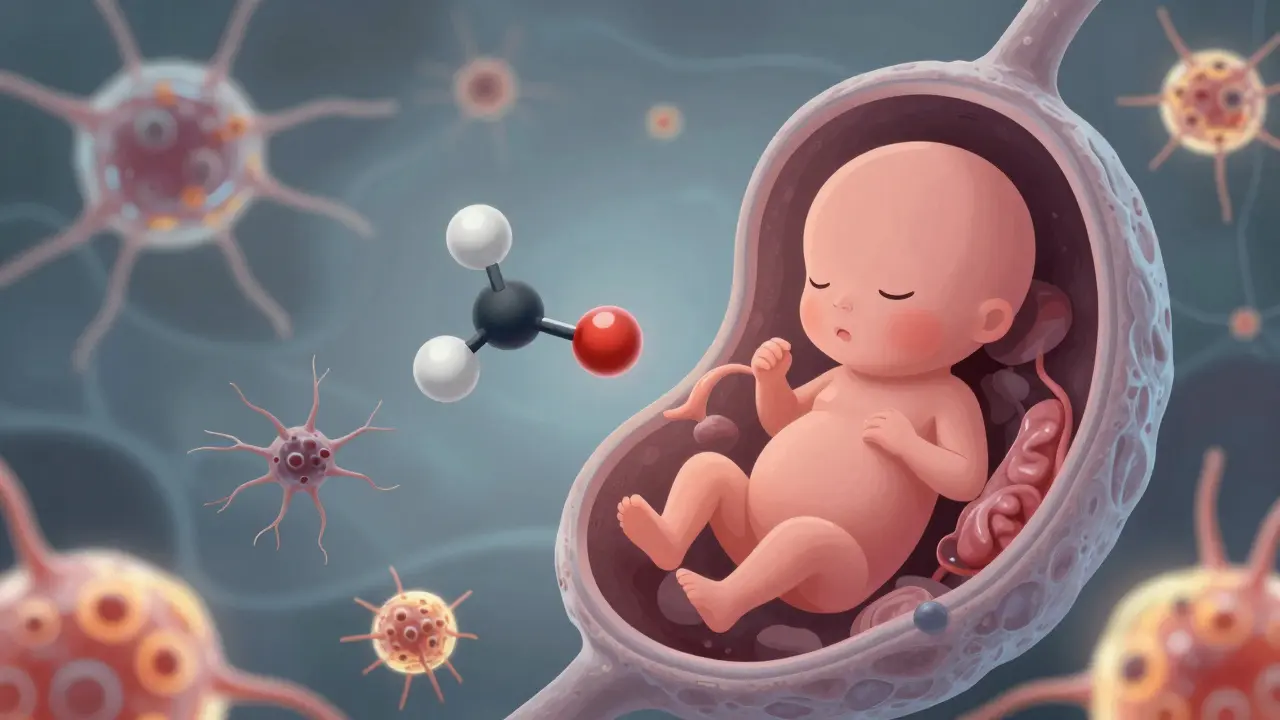
Gabapentin crosses the placenta easily. Its small molecular size (171 g/mol) and high water solubility let it move freely from mother to baby. Studies using fetal tissue samples have confirmed it’s present in the baby’s brain. Animal research shows it can interfere with the development of dopamine-producing neurons - the same brain cells involved in movement, mood, and reward. In lab studies, gabapentin at therapeutic levels reduced the growth of nerve connections by over 40% and turned down key genes like Nurr1 and Bdnf, which are critical for brain development. While we don’t yet know if this translates to long-term neurological changes in humans, it’s a strong biological signal.
What About Pregabalin?
Pregabalin, the stronger cousin of gabapentin, raises even more concern. Animal studies show clear signs of developmental toxicity - including skeletal and organ abnormalities. The European Medicines Agency (EMA) issued a safety alert in 2022 advising against pregabalin use in pregnancy unless absolutely necessary. The British National Formulary now says manufacturers recommend avoiding it entirely. The FDA still labels both drugs as Category C - meaning animal studies show risk, and human data is limited. But experts agree: pregabalin carries a higher risk profile than gabapentin. Many doctors are already switching patients off pregabalin during pregnancy.
When Is It Still Okay to Use?
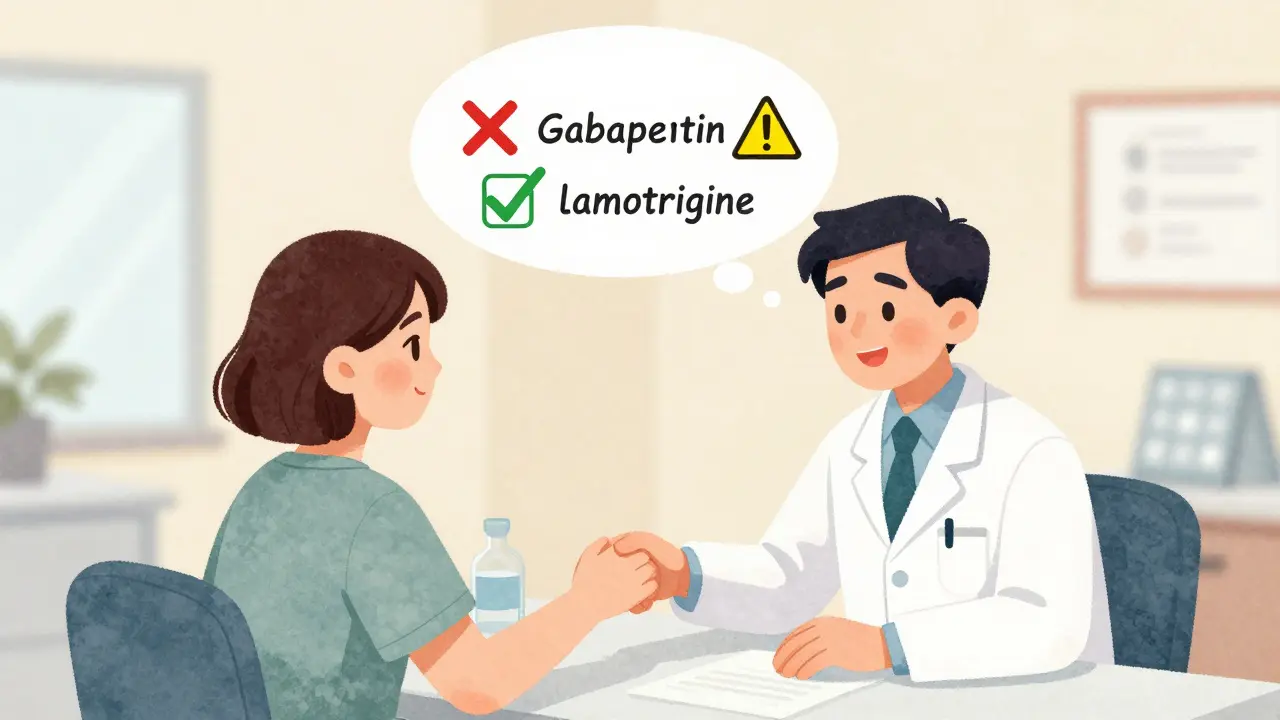
No one is saying gabapentin should be banned in pregnancy. For some women - especially those with severe, treatment-resistant nerve pain or uncontrolled seizures - the risks of stopping may be greater than the risks of continuing. A 2023 survey of Canadian obstetricians found that 32% of clinicians would still prescribe gabapentin if no other option worked. The key is intentionality. If you’re planning a pregnancy and take gabapentin, talk to your doctor months in advance. Can your condition be managed with physical therapy, acupuncture, or non-drug therapies? Is there a safer alternative like lamotrigine or duloxetine? If gabapentin is still needed, use the lowest effective dose and avoid it in the third trimester if possible.
What Should You Do If You’re Already Taking It?
If you’re pregnant and currently taking gabapentin, don’t stop cold turkey. Sudden withdrawal can trigger seizures, worsen pain, or cause anxiety that harms both you and your baby. Talk to your provider about tapering slowly - especially if you’re in your third trimester. If you’re in the first trimester and taking it for pain, consider switching to a safer option. If you’re taking it for epilepsy, your neurologist may need to adjust your regimen carefully. Always document your medication use clearly. Many clinics still use outdated guidelines. Ask if your hospital has a current protocol for gabapentin in pregnancy - if not, bring the 2020 PLOS Medicine findings and ACOG’s 2020 guidance to your appointment.
What’s Coming Next?
The FDA now requires all gabapentinoid manufacturers to track at least 5,000 pregnancy outcomes by 2027. A long-term study tracking 1,200 children exposed to gabapentin in the womb is already underway and will follow them until age 5. Preliminary results are expected in late 2025. We’ll learn whether early exposure affects motor skills, attention, or language development. Until then, the best advice is simple: avoid gabapentinoids in pregnancy unless the benefit clearly outweighs the risk - and if you must use them, monitor closely.
Bottom Line: A Risk, Not a Danger
Gabapentin isn’t a teratogen like thalidomide. It doesn’t cause widespread, catastrophic birth defects. But it’s not harmless either. It carries a small but real risk of heart defects, preterm birth, low birth weight, and neonatal withdrawal. The decision to use it should be made with full awareness - not because it’s the easiest option, but because it’s the necessary one. For most women, safer alternatives exist. For those who don’t, careful planning, close monitoring, and informed consent are non-negotiable.
11 Comments

Timothy Haroutunian
February 27 2026
Let me get this straight - we're now treating anxiety and back pain in pregnant people with a drug that crosses the placenta like it's a free pass, and the medical community is acting like it's no big deal? The fact that we're only now catching this after 160,000 pregnancies a year is criminal. The FDA's Category C label is a joke. If animal studies show toxicity and human data shows NICU spikes, then the burden of proof should be on the manufacturers to prove safety, not the other way around. This is systemic negligence dressed up as 'evidence-based.'

Erin Pinheiro
February 27 2026
i cant believe how many people are just like 'oh its fine' like its tylenol. my cousin had a baby with a heart defect and they never even asked if she was on gabapentin. like. how? they just assume you're taking 'safe' meds. and now we're supposed to trust the same system that let opioids flood the market? nope. not buying it. also. pregabalin is way worse. why are we even prescribing it?

Michael FItzpatrick
March 1 2026
This isn’t just about medication - it’s about how we treat pregnant people as vessels instead of patients. We’re quick to say 'avoid this' or 'don’t do that' but never ask, 'what’s your quality of life?' If someone’s in constant pain or having seizures, denying them relief isn’t protection - it’s cruelty. The real issue is the lack of alternatives. We need more research into non-pharmaceutical options, better integrative care, and doctors who actually listen. Gabapentin isn’t the villain - our healthcare system is. Let’s stop shaming and start solving.

Gwen Vincent
March 2 2026
I'm a nurse in OB and I see this every day. Women are terrified to ask about meds because they’re told 'just don’t take anything.' But if you're in agony, you'll take anything. We need clear, compassionate guidelines - not fear-mongering. I’ve had patients switch to acupuncture and it helped, but not everyone has access. The data is real, but so is the suffering. We need balance, not binary thinking.

Nandini Wagh
March 3 2026
Wow. So in the US, they’re still prescribing this like it’s coffee? In India, we don’t even use gabapentin for anxiety in pregnancy - we use it for epilepsy only, and even then with extreme caution. The fact that this is normalized in your system is… honestly, terrifying. You have access to so much data, yet you’re still treating pregnancy like a glitch in the system.

tia novialiswati
March 4 2026
I'm so glad someone finally broke this down clearly! 🙌 My OB didn't mention any risks when I was on gabapentin for sciatica - I had no idea. I'm so relieved I found this. For anyone else reading: talk to your provider, don't panic, but DO ask questions. You're not overreacting. You're being responsible. And if your doc doesn't know this info, bring it to them. You've got this! 💪❤️

Valerie Letourneau
March 6 2026
The data presented here is both compelling and concerning. As a public health professional based in Canada, I note that our clinical guidelines have evolved in parallel with this evidence, particularly since the 2020 PLOS Medicine study. The emphasis on intentionality, dose minimization, and pre-conception counseling aligns with best practices in maternal-fetal medicine. That said, the absence of standardized national protocols across U.S. institutions remains a critical gap. A national registry for gabapentinoid exposure in pregnancy, as proposed, would be a vital step toward evidence-based policy.

Bhaskar Anand
March 7 2026
This is why America is falling apart. You let people take drugs like candy during pregnancy and then act shocked when babies have problems? In India, we know better. We don’t give random painkillers to pregnant women. We use Ayurveda, yoga, diet - natural solutions. You people are addicted to pills. You think science means 'more drugs' - no, it means 'less nonsense.' This post proves it. Stop poisoning your kids with corporate meds.

William James
March 7 2026
It’s funny how we treat pregnancy like it’s a war zone where every molecule is an enemy. But what if the real enemy is the belief that we must choose between suffering and safety? Gabapentin isn’t the problem - it’s the lack of holistic care. We’ve reduced maternal health to a checklist of risks while ignoring emotional, social, and economic factors. A woman with chronic pain who can’t sleep or function isn’t 'endangering her baby' - she’s surviving. Maybe the real question isn’t 'is this drug safe?' but 'is our system caring enough?'

David McKie
March 8 2026
I’ve seen this before. The same pattern. First, they tell you it’s safe. Then, they say 'maybe.' Then, they bury the data under jargon. This isn’t science - it’s corporate PR wrapped in a lab coat. NICU admissions up 13-fold? Heart defects? Preterm births? And yet, no black box warning? No FDA recall? No media outcry? This is how industries get away with murder. Someone’s getting rich off this. And the babies? They’re just collateral damage in a system that profits from silence.
Write a comment
Popular Posts



Steven Pam
February 25 2026
Honestly, this post is a game-changer. I never realized how common gabapentin use is during pregnancy. My sister was on it for nerve pain and had a perfectly healthy baby, but now I'm wondering if we missed something. The NICU stats are wild - 38% vs 2.9%? That’s not a coincidence. We need better screening protocols.