Why Your Generic Pill Works Just Like the Brand Name
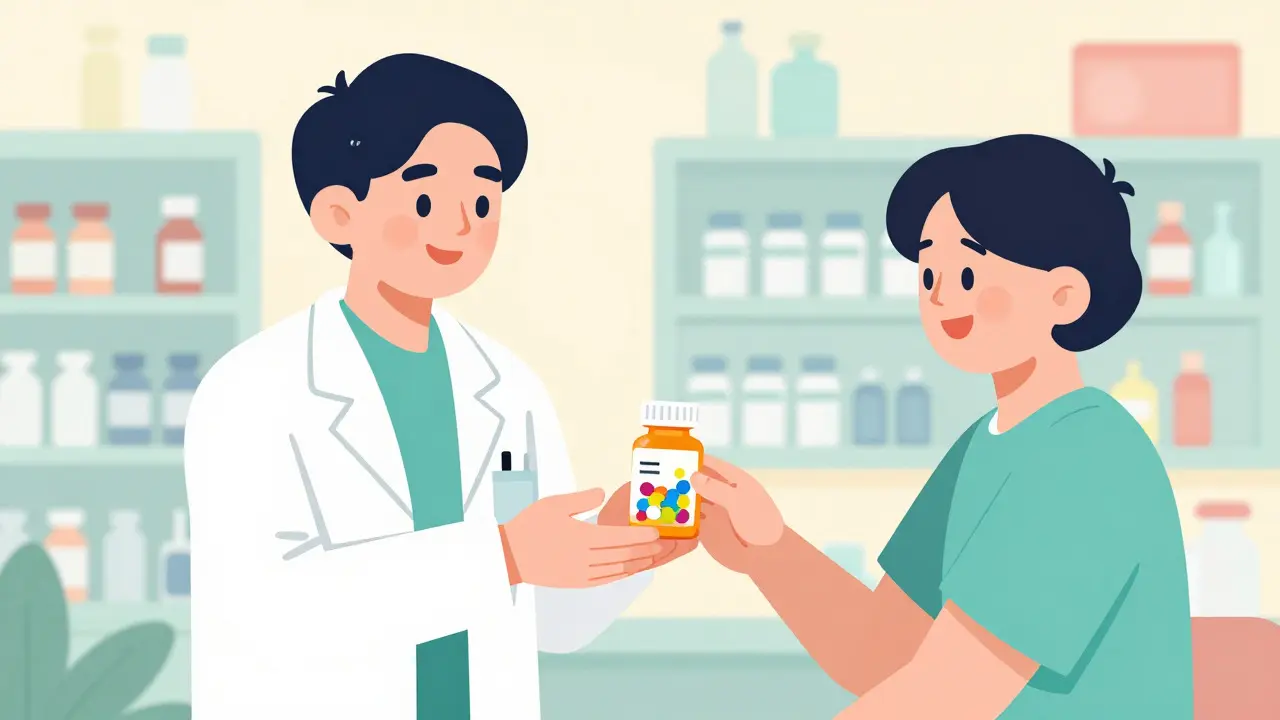
You pick up a prescription at the pharmacy. The pharmacist hands you a bottle with a different color pill than the one your doctor originally prescribed, but it costs a fraction of the price. You might wonder: is this really the same medicine? The answer lies in bioavailability studies, the rigorous scientific tests that prove generic drugs work exactly like their brand-name counterparts. These studies are not just paperwork; they are the backbone of modern pharmaceutical safety and affordability.
When the U.S. Food and Drug Administration (FDA) approves a generic drug, it doesn't require the manufacturer to run expensive, multi-year clinical trials on thousands of patients. Instead, they rely on data from bioavailability and bioequivalence (BE) studies. This system was established by the 1984 Drug Price Competition and Patent Term Restoration Act, commonly known as the Hatch-Waxman Act. This law changed everything by allowing the FDA to approve generics based on evidence that they deliver the active ingredient into your bloodstream at the same rate and extent as the original brand-name drug. Without these studies, we wouldn't have access to the affordable medications that keep healthcare costs manageable today.
What Exactly Is Bioavailability?
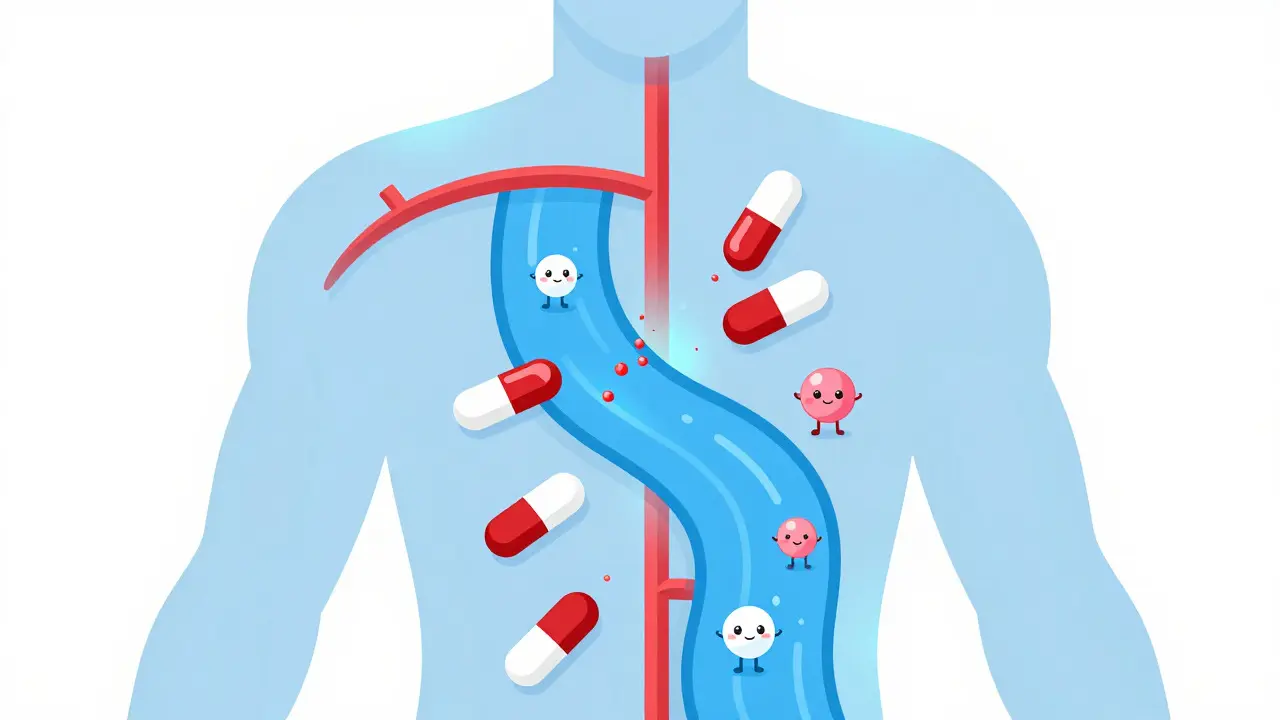
To understand why these studies matter, you first need to know what bioavailability actually means. In simple terms, bioavailability is the measure of how much of a drug gets into your system and how fast it gets there. It’s not enough for a pill to contain the right amount of active chemical; that chemical has to dissolve, pass through your gut wall, travel through your liver, and enter your bloodstream where it can do its job.
Bioavailability is defined as the rate and extent to which a therapeutically active chemical is absorbed from a drug product into the systemic circulation and becomes available at the site of action. If a drug has low bioavailability, your body isn't getting enough of the medicine to treat your condition. If it's too high or enters your system too quickly, you might experience dangerous side effects. That’s why measuring this precisely is critical for every medication, whether it’s a blood pressure pill or an antibiotic.
The FDA requires manufacturers to use the most accurate methods available to measure this. For most oral solid dosage forms-like tablets and capsules-the gold standard is an in vivo pharmacokinetic study. This involves taking blood samples from human volunteers at specific times after they take the drug. By analyzing these blood samples, scientists can create a curve that shows exactly how the drug moves through the body over time.
The Three Key Metrics: AUC, Cmax, and Tmax
During a bioavailability study, researchers don’t just look at one number. They track three specific pharmacokinetic parameters that tell the full story of how the drug behaves in the body. Understanding these metrics helps explain why two pills with the same active ingredient can still be considered different if they don’t match up here.
- AUC (Area Under the Curve): This represents the total exposure to the drug over time. Think of it as the total amount of medicine that successfully entered your bloodstream. It measures the extent of absorption. If the AUC is too low, you’re under-dosed. If it’s too high, you’re over-dosed.
- Cmax (Maximum Concentration): This is the peak level of the drug in your blood. It tells us how high the concentration gets. This metric reflects the rate of absorption. A higher Cmax might mean the drug hits your system faster, which could lead to sudden side effects.
- Tmax (Time to Maximum Concentration): This records when that peak concentration occurs. Did the drug hit its peak in 30 minutes or 2 hours? While less strictly regulated than AUC and Cmax, Tmax helps ensure the timing of the drug’s effect matches expectations.
Scientists calculate the AUC using mathematical methods, typically integrating the blood concentration versus time curve from the moment the drug is taken until it’s completely cleared from the body. These numbers aren’t just abstract concepts; they determine whether a generic drug is safe for you to take.
How Bioequivalence Is Proven: The 80-125% Rule
So, how does the FDA decide if a generic is good enough? They compare the test drug (the generic) against the reference listed drug (the brand name). This comparison is called bioequivalence. The goal isn’t for the generic to be identical down to the molecule-it’s for it to be statistically equivalent in how it performs in the body.
The regulatory standard is strict. For a generic to be approved, the 90% confidence interval of the ratio of geometric means for both AUC and Cmax must fall within the range of 80% to 125%. This might sound like a wide margin, but it’s rooted in clinical reality. Dr. John Jenkins, former Director of the Office of New Drugs at the FDA, explained that a 20% difference in bioavailability is generally not clinically significant for most drugs. In other words, if your brand-name drug works well, a generic that delivers 90% or 110% of that dose will perform just as effectively for the vast majority of patients.
| Drug Type | Acceptance Range (90% CI) | Reason for Difference |
|---|---|---|
| Conventional Drugs | 80% - 125% | Standard variability is acceptable for most medications |
| Narrow Therapeutic Index (NTI) Drugs | 90% - 111% | Small changes in dose can cause toxicity or treatment failure (e.g., Warfarin, Levothyroxine) |
| Highly Variable Drugs | 75% - 133% (Scaled) | Reference-Scaled Average Bioequivalence (RSABE) allows wider limits due to natural biological variability |
For narrow therapeutic index (NTI) drugs like warfarin or digoxin, the stakes are higher. These drugs have a small window between being effective and being toxic. For these, the FDA tightens the acceptance criteria to 90-111%, ensuring the generic is even closer to the brand name. This precision ensures that patients relying on these sensitive medications don’t face unexpected health risks.
The Study Design: How Volunteers Help Approve Generics
Bioequivalence studies aren’t conducted in a vacuum. They follow a highly controlled protocol, usually involving healthy adult volunteers. The most common design is a two-period, two-sequence crossover study. Here’s how it works:
- Randomization: Volunteers are randomly assigned to receive either the generic drug first or the brand-name drug first.
- Washout Period: After the first dose, there is a waiting period-usually at least five half-lives of the drug-to ensure the medication is completely out of their system. This prevents carryover effects.
- Second Dose: Volunteers then receive the other formulation.
- Blood Sampling: Throughout both periods, researchers take frequent blood samples (often 12-18 times over 24-72 hours) to measure drug levels.
This crossover design is powerful because each volunteer serves as their own control. Since individual metabolism varies wildly from person to person, comparing the generic and brand name within the same body eliminates much of that noise. Studies typically involve 24 to 36 subjects, a number determined by statistical power analysis to ensure the results are reliable. The bioanalytical methods used must also be validated, requiring accuracy within 85-115% of nominal values to ensure the data is trustworthy.

Exceptions and Complex Cases
Not all drugs fit neatly into the standard bioequivalence box. Some formulations are complex, such as extended-release tablets, inhalers, or topical creams. For these, the FDA uses alternative approaches. For example, if a drug is poorly absorbed through the skin, measuring blood levels might not make sense. Instead, researchers might use pharmacodynamic endpoints, like measuring vasoconstriction for topical treatments.
There’s also the Biopharmaceutics Classification System (BCS), which can sometimes waive the need for clinical studies altogether. If a drug is classified as BCS Class 1 (high solubility, high permeability) and dissolves rapidly, the FDA may accept in vitro dissolution testing instead of human trials. This speeds up approval for simple generics without compromising safety. However, for complex generics like budesonide inhalers, the FDA has issued specific guidances to establish novel methodologies, acknowledging that standard BE criteria might not fully capture therapeutic equivalence for these products.
Real-World Impact: Do Generics Really Work?
Skeptics often point to anecdotal reports where patients felt worse after switching to a generic. While these experiences are real, they are rare. A comprehensive review in the Journal of Clinical Psychiatry concluded that the bioequivalence paradigm has been remarkably successful, with no documented therapeutic failures attributable solely to bioequivalence limits for conventional drugs. The Generic Pharmaceutical Association cites FDA estimates that 90% of Americans cannot distinguish generics from brand-name products in terms of effectiveness.
However, vigilance remains important. The Epilepsy Foundation tracks patient reports, noting that while most issues are related to adherence rather than the drug itself, some patients do experience changes in seizure frequency. This highlights why the FDA continues to refine its standards, such as implementing Reference-Scaled Average Bioequivalence (RSABE) for highly variable drugs. As technology advances, including AI-driven predictions of bioequivalence, the process is becoming even more precise, ensuring that the generics you take today are safer and more reliable than ever before.
What is the difference between bioavailability and bioequivalence?
Bioavailability measures how much and how fast a single drug enters your bloodstream. Bioequivalence compares two versions of the same drug (generic vs. brand) to prove they behave similarly in the body. Bioavailability is about the drug itself; bioequivalence is about the comparison.
Why is the 80-125% range accepted by the FDA?
The 80-125% range is based on clinical judgment that a 20% difference in drug exposure is unlikely to change the therapeutic outcome for most medications. It accounts for natural biological variability between individuals while ensuring the generic is statistically equivalent to the brand name.
Are bioequivalence studies done on patients with the disease?
Typically, no. Most bioequivalence studies are conducted on healthy volunteers. This simplifies the data by removing variables related to illness. The assumption is that if the drug reaches the bloodstream at the same rate and extent in healthy people, it will work the same way in patients.
Can I request my doctor not to substitute my brand-name drug with a generic?
Yes, you can ask your doctor to write "Dispense as Written" on the prescription. However, insurance coverage may vary, and you might pay more. This is often recommended for narrow therapeutic index drugs like levothyroxine or warfarin, where tighter control is needed.
What happens if a generic fails bioequivalence testing?
If a generic fails to meet the 80-125% criteria (or stricter limits for NTI drugs), the FDA will reject the Abbreviated New Drug Application (ANDA). The manufacturer must reformulate the drug or repeat the study until the data proves equivalence.