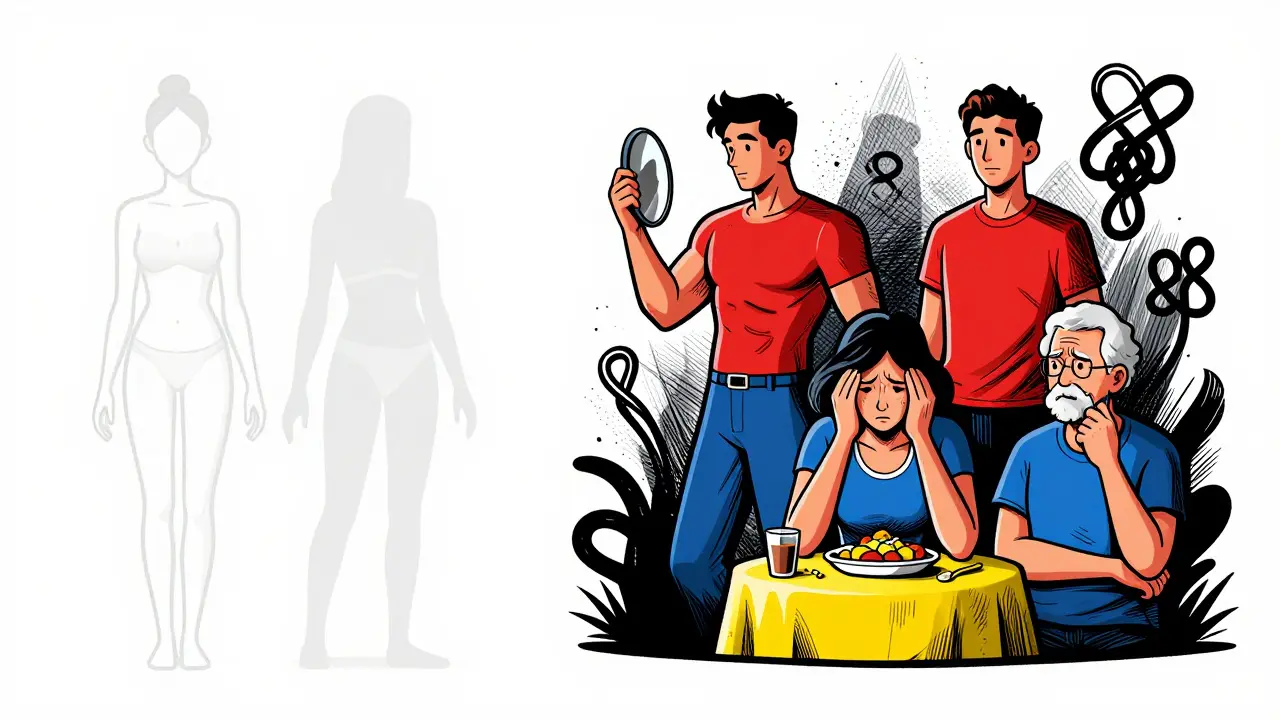
For years, we’ve been fed a narrow image of what an eating disorder looks like. You know the stereotype: the painfully thin teenager staring at herself in the mirror, refusing to eat a single bite. But if you’re looking for help for yourself or someone you love, that picture might be misleading. The reality is far more complex, hidden, and dangerous than pop culture suggests. Eating disorders are serious psychiatric conditions that affect people of all shapes, sizes, ages, and genders. They carry high mortality rates and require specialized, evidence-based care to treat effectively.
If you clicked this title, you likely want to understand what’s really happening beneath the surface. Maybe you’re worried about a friend who seems obsessed with food rules. Perhaps you’re struggling with your own relationship with weight and control. Or maybe you’re a caregiver trying to navigate the confusing landscape of treatment options. This guide cuts through the noise. We’ll look at the hard facts about Anorexia Nervosa, Bulimia Nervosa, and Binge Eating Disorder, and explain why standard therapy often falls short without specific, proven protocols.
The Hidden Epidemic: Who Is Really Affected?
Let’s start by busting the biggest myth: that only underweight women get eating disorders. According to data from the National Eating Disorders Association (NEDA), about 9% of the U.S. population-roughly 28.8 million Americans-will experience an eating disorder in their lifetime. That’s not a niche issue; it’s a widespread public health crisis. Even more shocking? Less than 6% of people with these disorders are medically diagnosed as "underweight." If you’re waiting for someone to look visibly starving before you take their struggle seriously, you might miss the warning signs entirely.
We also need to talk about men and boys. Historically, diagnoses skewed heavily female, but recent data shows a rising tide of cases among males. For every ten girls diagnosed with anorexia, one boy is too-but that ratio is shifting. Boys often hide their symptoms behind sports performance goals or muscle-building obsessions, making them harder to spot. Whether it’s a woman restricting calories or a man abusing laxatives after a binge, the underlying psychological pain is the same: a desperate, maladaptive attempt to regain control in a chaotic world.
| Disorder | Lifetime Prevalence (Women) | Key Symptoms | Primary Risk Factor |
|---|---|---|---|
| Anorexia Nervosa | ~1% | Significantly low body weight, intense fear of gaining weight, distorted body image | High mortality rate (5.1 deaths per 1000 person-years) |
| Bulimia Nervosa | ~1.5% | Binge eating followed by compensatory behaviors (vomiting, laxatives, excessive exercise) | Electrolyte imbalance, dental erosion |
| Binge Eating Disorder (BED) | ~3.5% | Recurrent binge episodes without compensatory behaviors | Strong genetic component (~50% heritability) |
Anorexia Nervosa: More Than Just Hunger
Anorexia nervosa is a severe mental illness characterized by self-starvation and excessive weight loss. It has the highest case mortality rate of any mental illness. A 2023 study published in PubMed found that individuals with anorexia have a mortality rate nearly six times higher than age-matched peers without the condition. Why? Because starvation shuts down the body. Your heart weakens, your bones become brittle, and your brain literally shrinks due to lack of nutrients.
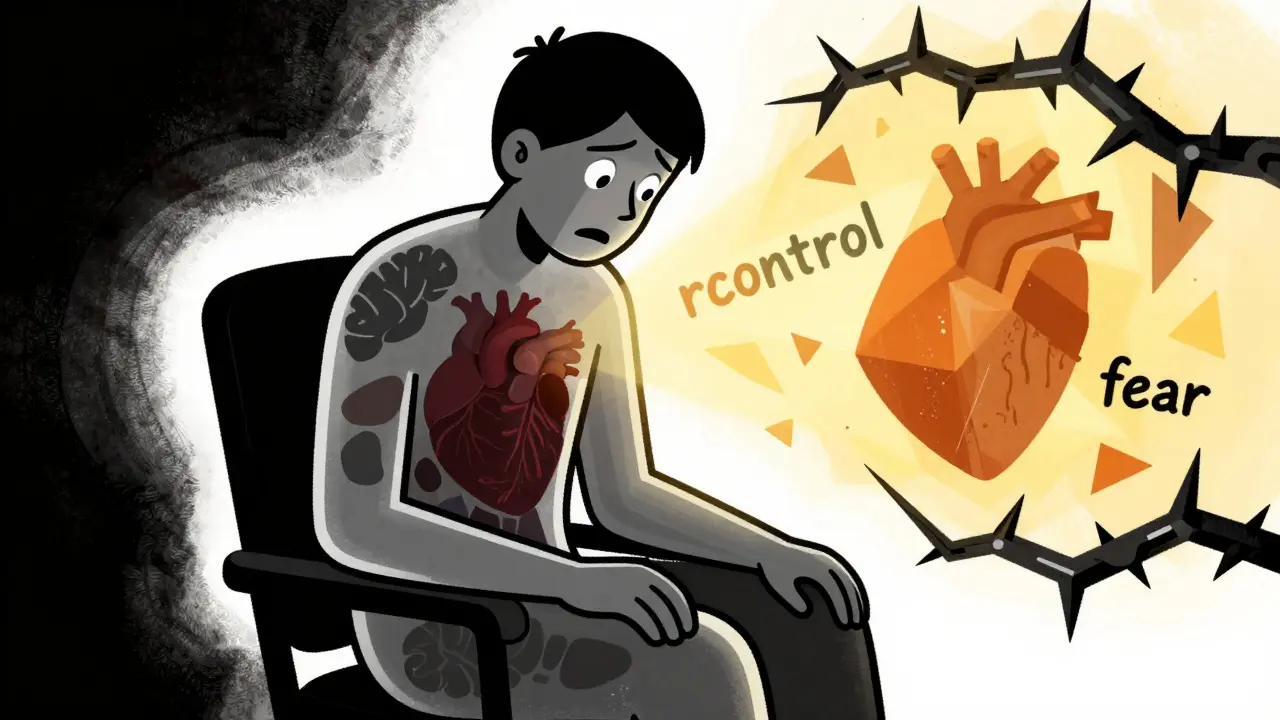
But here’s the thing that confuses families and friends: the person with anorexia is often terrified of getting better. Weight gain feels like failure. Food feels like the enemy. This isn’t stubbornness; it’s the disorder talking. The brain, starved of glucose, enters a survival mode that prioritizes restriction above all else. Trying to reason with someone in this state using logic alone rarely works. That’s why medical stabilization must come first. As Dr. Jennifer Gaudiani, author of *Sick Enough*, points out, 97% of patients have at least one physical complication. You can’t do cognitive therapy on a brain that is actively shutting down.
Bulimia Nervosa and Binge Eating Disorder: The Secret Struggles
If anorexia is about restriction, Bulimia nervosa involves cycles of binge eating followed by purging. People with bulimia often maintain a normal or even above-average weight, which makes the disorder incredibly easy to miss. The cycle starts with a binge-eating large amounts of food rapidly while feeling a loss of control. Then comes the purge: self-induced vomiting, misuse of laxatives, or compulsive exercise. One in ten patients experiences painful swelling in the cheeks and face from repeated vomiting, yet they keep going because the shame is so overwhelming.
Then there’s Binge Eating Disorder (BED), the most prevalent of the three. Unlike bulimia, there’s no purging. People with BED consume massive amounts of food in secret, often until they are physically uncomfortable, driven by emotional distress rather than hunger. It affects 3.5% of women and 2% of men. The risk is partly genetic-a 2012 study cited by the Eating Recovery Center suggests half the risk is hereditary. But the result is the same: profound isolation, depression, and physical health risks like type 2 diabetes and heart disease.
Why Standard Therapy Often Fails
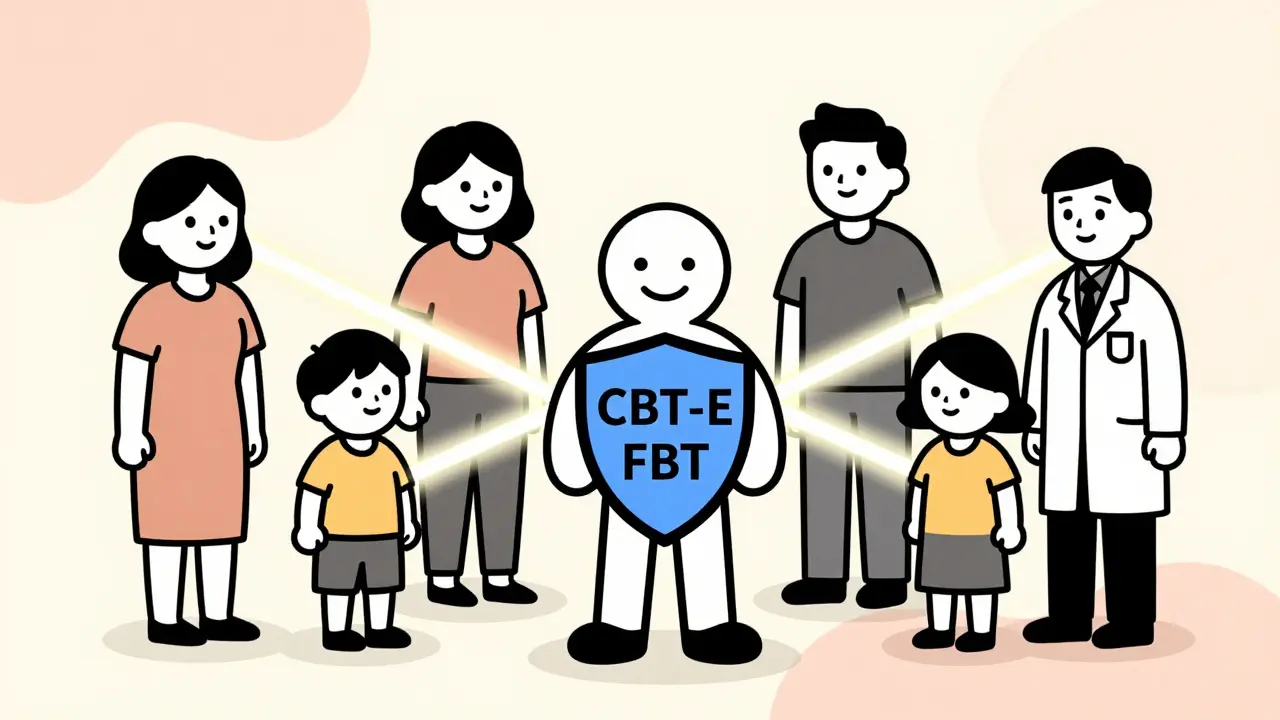
You might wonder, "Can’t I just talk my way out of this with a regular therapist?" Unfortunately, general counseling often isn’t enough. Eating disorders are highly specialized. They require treatments that address both the behavioral patterns and the medical realities. Two approaches stand out in the research: Family-Based Treatment (FBT) and Enhanced Cognitive Behavioral Therapy (CBT-E).
For adolescents with anorexia, FBT is considered the gold standard. Also known as the Maudsley Approach, it treats parents as the primary agents of change. Instead of blaming the family, FBT empowers them to refeed their child at home. Research shows recovery rates of 40-50% after 12 months with FBT, compared to just 20-30% with individual therapy alone. It’s intense, it’s demanding, but it works because it tackles the life-threatening starvation head-on.
For adults with bulimia or anorexia, CBT-E is the leading evidence-based protocol. Developed by Dr. Christopher Fairburn, it’s a transdiagnostic approach, meaning it works across different eating disorder diagnoses. A 2021 meta-analysis found remission rates of 60-70% after 20 sessions. CBT-E doesn’t just focus on food; it looks at the underlying overvaluation of shape and weight that drives the disorder. It helps patients break the cycle of dieting, binging, and purging by challenging the core beliefs that fuel them.
The Barrier to Care: Insurance and Access
Here’s the frustrating part: even when we know what works, accessing it is a nightmare. In the UK and the US alike, wait times are long. A 2023 audit by the Reality Coalition found that average wait times for outpatient care hit 68 days, and over four months for intensive programs. Meanwhile, insurance denials are rampant. NEDA’s 2022 survey revealed that 68% of women reported at least one denial for eating disorder treatment. Many people end up crowdfunding their care, as one user on the Eating Disorder Hope forum shared, raising $78,000 after 11 denials for residential treatment.
This gap between need and access is widening. Hospital admissions for children under 12 rose 119% between 2012 and 2021. Yet, there are only about 35 specialized residential facilities in the US, with a total bed capacity of 1,200. That serves less than 0.004% of the affected population annually. We are facing a crisis of infrastructure. Telehealth is helping-digital tools like the Recovery Record app showed 32% greater symptom reduction in a 2023 JAMA study-but it’s not a replacement for acute medical care when someone is dangerously underweight.
Hope on the Horizon: New Treatments and Medications
It’s not all bad news. Science is moving forward. In 2023, the FDA approved lisdexamfetamine (Vyvanse) for Binge Eating Disorder. This was a historic moment-the first medication specifically indicated for an eating disorder. Clinical trials showed a 50.9% remission rate compared to 21.9% for placebo. While it’s not a cure-all and requires careful monitoring, it offers a new tool for those trapped in the binge cycle.
Research is also expanding into early biomarkers. The NIH’s HEALthy Brain and Child Development Study is tracking 7,500 children from birth to identify early signs of vulnerability. Preliminary data is expected in late 2025, which could revolutionize how we prevent these disorders before they take hold. And let’s not forget the power of community. Online spaces like Reddit’s r/EatingDisorders provide peer support that many find lifeline-saving, though they should always complement, not replace, professional care.
How to Start: Practical Steps for Recovery
If you’re ready to seek help, here is a realistic roadmap:
- Medical Assessment First: Before diving into therapy, get a full physical check-up. Doctors need to check your vital signs, electrolytes, and EKG. Starvation affects your heart and kidneys immediately.
- Find a Specialist: Look for therapists trained in CBT-E or FBT. General counselors may not have the specific skills needed. Ask directly: "What is your training in evidence-based eating disorder treatments?"
- Nutritional Rehabilitation: Work with a registered dietitian who specializes in eating disorders. They will help you create a meal plan that restores your body without triggering panic. Expect to start with 1,200-2,500 calories daily, depending on severity.
- Prepare for Setbacks: Recovery is not linear. You will have bad days. Refeeding syndrome-a dangerous shift in fluids and electrolytes-can occur in severe anorexia cases, so medical supervision is crucial during weight restoration.
- Advocate for Yourself: If insurance denies coverage, appeal. Use resources like the Treatment Access Matters database to find providers who accept your plan. Don’t give up after the first "no."
Is anorexia nervosa curable?
Yes, anorexia nervosa is treatable, especially with early intervention. While "cure" is a complex term in mental health, many people achieve full remission and live healthy, fulfilling lives. Evidence-based treatments like Family-Based Treatment (FBT) for adolescents and CBT-E for adults have shown significant success rates. However, it requires commitment, medical supervision, and often a multidisciplinary team including doctors, therapists, and dietitians.
What is the difference between bulimia and binge eating disorder?
The key difference lies in the behavior after the binge. People with bulimia nervosa engage in compensatory behaviors such as self-induced vomiting, laxative abuse, or excessive exercise to "undo" the calorie intake. Those with binge eating disorder (BED) do not use these compensatory methods. Both involve recurrent episodes of eating large amounts of food with a sense of loss of control, but the aftermath and associated health risks differ significantly.
Can men and boys develop eating disorders?
Absolutely. While historically diagnosed more frequently in women, eating disorders affect people of all genders. Men and boys may present with symptoms related to muscle dysmorphia or athletic performance enhancement, such as strict dieting or steroid use. The female-to-male ratio for anorexia is roughly 10:1, but this gap is narrowing as awareness increases. Symptoms in males are often overlooked because they don't fit the stereotypical "thin" narrative.
What is CBT-E and how does it help?
CBT-E stands for Enhanced Cognitive Behavioral Therapy. It is a specialized form of therapy designed specifically for eating disorders. Unlike standard CBT, CBT-E addresses the core psychopathology of the disorder: the overvaluation of shape and weight. It helps patients identify and challenge the thoughts and behaviors that maintain the eating disorder, such as dietary restraint and body checking. Studies show it achieves remission rates of 60-70% in adults with bulimia and anorexia.
How long does treatment for an eating disorder typically last?
Treatment duration varies widely depending on the severity of the disorder and the individual's progress. Outpatient therapy like CBT-E often lasts around 20 sessions, spanning several months. Inpatient or residential care can range from 30 days to several months. Recovery is a long-term process, and many people benefit from ongoing maintenance therapy or support groups to prevent relapse. Early intervention generally leads to shorter treatment timelines and better outcomes.