
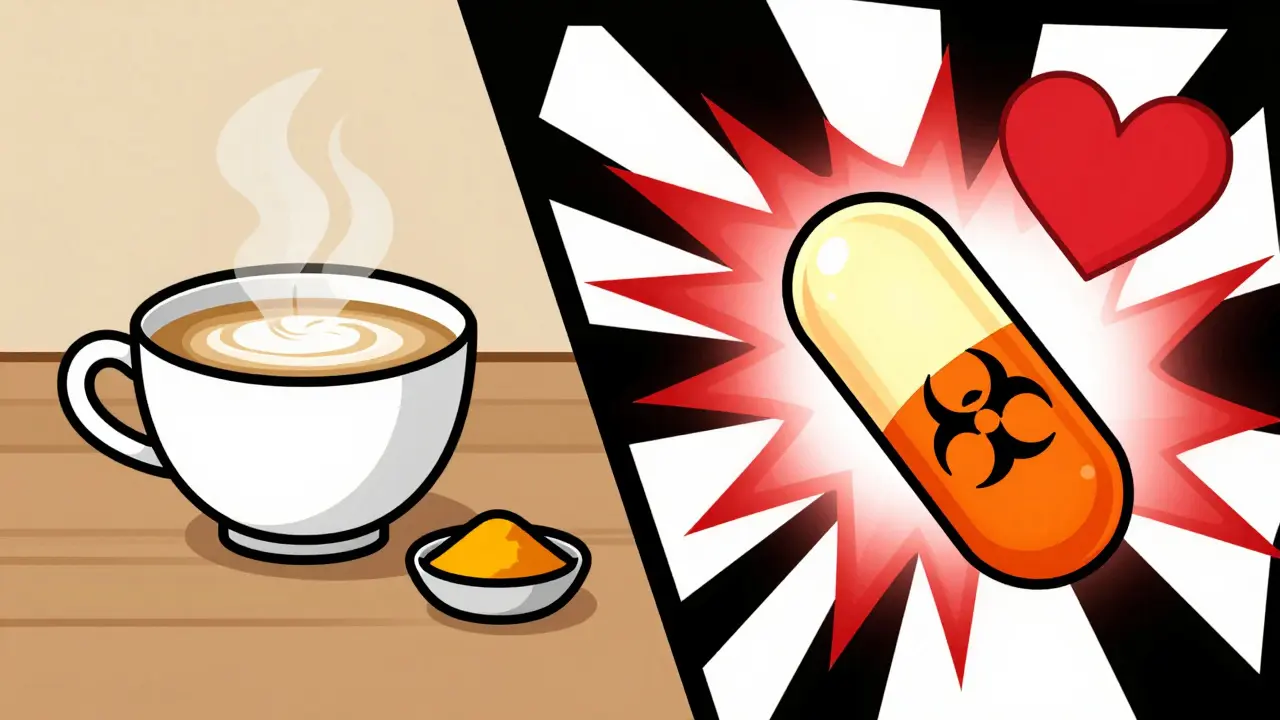
You love the earthy warmth of turmeric in your morning latte or rely on that daily capsule for joint support. It feels harmless-maybe even healthy. But if you are taking prescription blood thinners like warfarin, mixing them with turmeric could be putting your life at serious risk. This isn't just a minor side effect warning; it is a documented medical emergency waiting to happen.
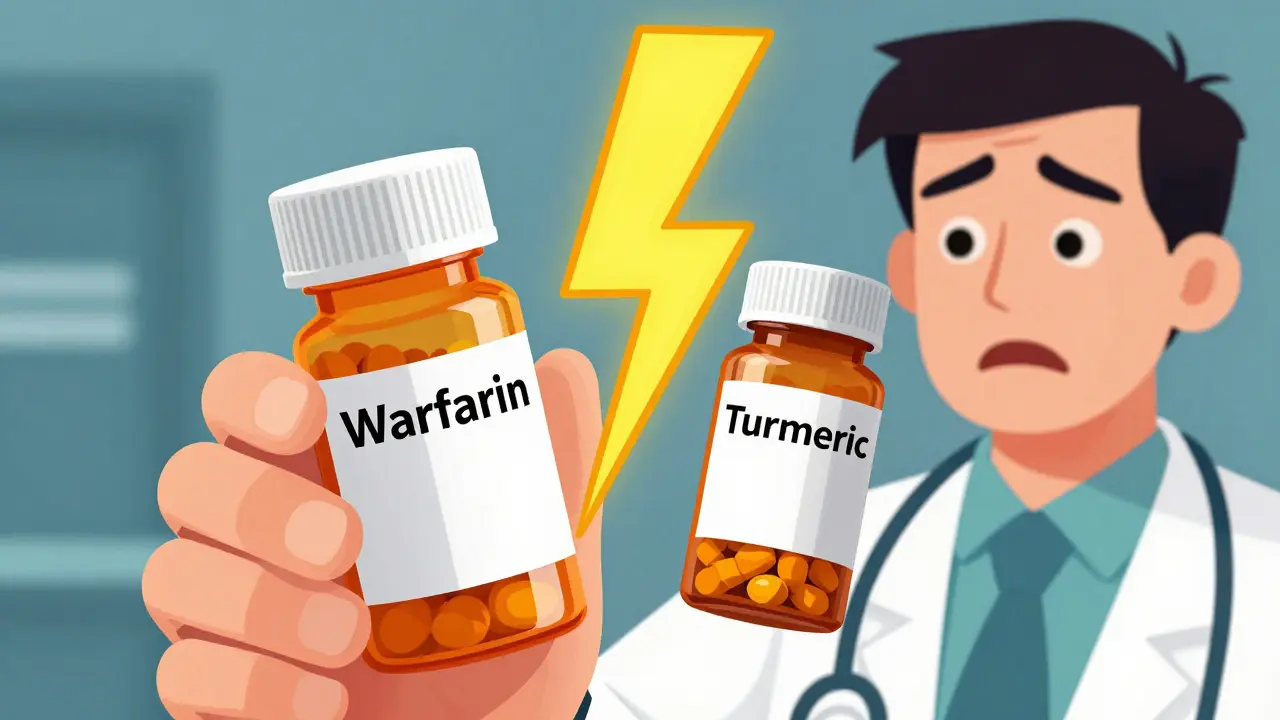
The gap between what we know about "natural" remedies and how they interact with powerful medications is widening. Many patients assume that because turmeric comes from a kitchen spice, it is safe to combine with any medication. The evidence says otherwise. Recent case reports and clinical studies show that curcumin, the active compound in turmeric, can dangerously amplify the effects of blood thinners, leading to uncontrolled bleeding.
Why Turmeric Acts Like a Blood Thinner
To understand the danger, you first need to look at what turmeric actually does inside your body. Curcumin is the primary bioactive compound in turmeric responsible for its anti-inflammatory and antioxidant properties. While these benefits are great for general health, they work by interfering with the same biological processes that blood thinners target.
Blood clots are essential for stopping bleeding when you get cut. They form through a complex cascade involving proteins called clotting factors and cells called platelets. Prescription anticoagulants like warfarin slow down this process to prevent dangerous clots in the heart or brain. Curcumin, however, also slows this process-but unpredictably.
Research published in PubMed (PMID: 22531131) found that curcumin significantly prolongs two key measures of clotting time: activated partial thromboplastin time (aPTT) and prothrombin time (PT). In simpler terms, it takes longer for your blood to clot. Furthermore, curcumin inhibits thrombin and factor Xa, which are critical enzymes in the clotting cascade. When you add this natural inhibition to the chemical inhibition of a drug like warfarin, the result is not additive-it is multiplicative and dangerous.
There is another layer to this risk. Curcumin doesn't just affect clotting factors; it also stops platelets from sticking together. Platelet aggregation is how your body forms the initial plug in a wound. By decreasing platelet aggregation via the inhibition of platelet-activating factor, turmeric creates a dual threat: it weakens both the chemical and cellular mechanisms of clotting.
The Warfarin Danger Zone: Real Cases of Critical Failure
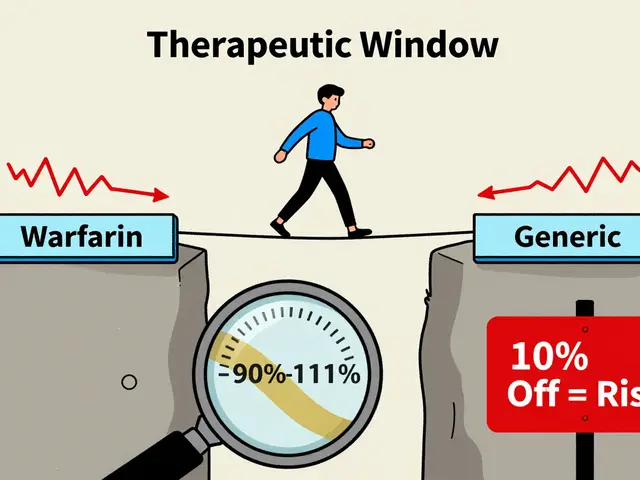
If you take warfarin (often sold as Coumadin), the stakes are incredibly high. Warfarin has a narrow therapeutic index, meaning the difference between a dose that prevents clots and a dose that causes fatal bleeding is very small. Doctors monitor this closely using a test called the International Normalized Ratio (INR).
An INR between 2.0 and 3.5 is typically the target range for most conditions. An INR above 4.0 signals a high risk of bleeding. An INR over 10 is a medical emergency.
Consider the case highlighted by Medsafe New Zealand in April 2018. A patient had stable INR measurements while on warfarin therapy. They decided to start taking a turmeric-containing supplement. Within weeks, their INR skyrocketed to over 10. This wasn't a slight fluctuation; it was a massive spike that placed the patient at immediate risk of spontaneous internal bleeding, such as a hemorrhagic stroke or gastrointestinal bleed.
This isn't an isolated incident. The Welsh Medicines Information Centre (WMIC) updated their guidance in October 2024, reiterating that curcumin might decrease the clearance of warfarin from the body. When warfarin stays in your system longer than intended, its effects intensify. The WMIC confirmed that raised INR levels associated with serious bleeding risks have been reported in people taking warfarin who started turmeric products.
| Feature | Warfarin (Coumadin) | Curcumin (Turmeric Extract) |
|---|---|---|
| Primary Mechanism | Inhibits Vitamin K epoxide reductase (VKORC1) | Inhibits thrombin, Factor Xa, and platelet aggregation |
| Dosing Precision | Highly precise, monitored via INR tests | Variable; raw turmeric has 2-8% curcumin, extracts up to 95% |
| Regulatory Oversight | Rigorous FDA/EMA clinical trials | Minimal human trial data on specific drug interactions |
| Bleeding Risk Profile | Managed and predictable with monitoring | Unpredictable and potentially synergistic with drugs |
It’s Not Just Warfarin: DOACs and Antiplatelets
You might think switching to newer blood thinners solves the problem. Direct Oral Anticoagulants (DOACs) like rivaroxaban (Xarelto) or apixaban (Eliquis) work differently than warfarin, directly inhibiting Factor Xa. However, because curcumin *also* inhibits Factor Xa, combining them creates a redundant but potent effect. The British Heart Foundation noted in 2023 that high doses of turmeric supplements could interact with both DOACs and warfarin.
What about antiplatelet drugs? If you take aspirin, clopidogrel (Plavix), or NSAIDs like ibuprofen (Advil) or naproxen (Aleve) for pain, the risk remains. These drugs prevent platelets from clumping. Since curcumin also reduces platelet aggregation, adding turmeric is like stepping on the brakes twice. MedicineNet lists heparin, enoxaparin (Lovenox), and dalteparin (Fragmin) among other medications that interact with turmeric due to this combined anticoagulant effect.
The Metabolic Mess: How Your Liver Gets Confused
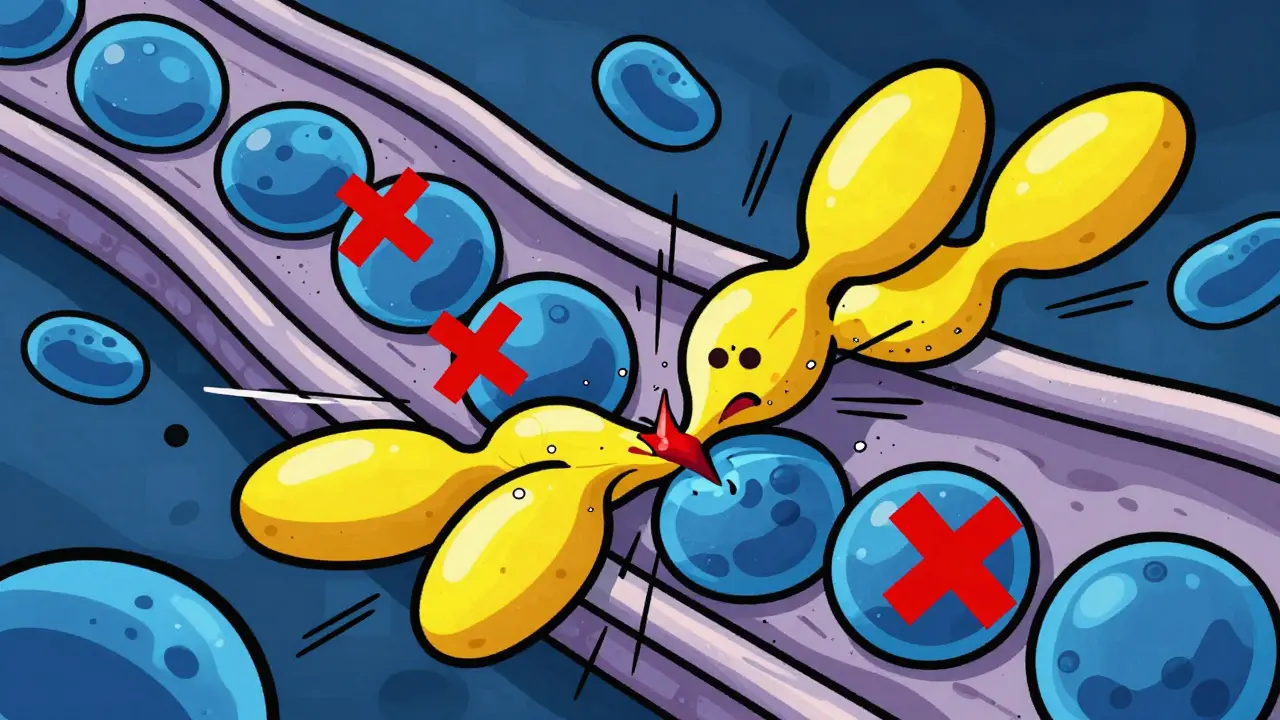
The interaction goes deeper than just clotting mechanics. It involves how your liver processes drugs. Your liver uses enzymes, particularly from the Cytochrome P450 family (like CYP3A4), to break down medications so they leave your body.
Turmeric can inhibit these enzymes. A case report cited by the WMIC described a transplant patient who took "15 or more spoonfuls" of turmeric powder daily for ten days. This led to acute kidney injury and dangerously high levels of tacrolimus (an immunosuppressant) in their blood-reaching 29 nanograms/mL. While tacrolimus isn't a blood thinner, this proves that turmeric can block the metabolic pathways that clear drugs from your system.
If your liver can't clear warfarin or other anticoagulants efficiently because curcumin is blocking the enzyme, the drug builds up in your bloodstream. This leads to toxic levels without you realizing it until it's too late. Another study showed that sulfasalazine plasma concentrations were 3.2 times higher when taken with a 2g daily dose of curcumin. This metabolic interference is a silent killer because you don't feel the drug building up-you only feel the consequences when bleeding starts.
Supplements vs. Spice: Does Quantity Matter?
Here is where confusion often sets in. Is a pinch of turmeric in your curry dangerous? Probably not. The WMIC notes that it is unlikely turmeric poses significant risks when used in small quantities as a spice. Raw turmeric root contains only about 2-8% curcumin.
The real danger lies in supplements. Commercial curcumin capsules often contain concentrated extracts with up to 95% curcumin. Some formulations add piperine (black pepper extract) to increase absorption, which further boosts the bioavailability of curcumin, making its blood-thinning effects even stronger. When you pop a pill containing 500mg of highly absorbable curcumin, you are delivering a pharmacological dose, not a culinary one.
Dr. Oracle’s analysis in 2023 stated unequivocally that "the evidence clearly indicates that the anticoagulant properties of turmeric/curcumin create a significant risk when combined with warfarin." The Mayo Clinic Health System echoes this, warning that turmeric in large doses can act like a blood thinner, causing bleeding or dangerously enhancing the effects of blood-thinning medications.
Safety Guidelines: What You Should Do Now
If you are currently taking any anticoagulant or antiplatelet medication, do not ignore this information. Here is a practical checklist to protect your health:
- Stop Self-Medicating: Do not start any new turmeric or curcumin supplement without explicit approval from your prescribing doctor.
- Review Your Current Regimen: If you are already taking turmeric, tell your doctor immediately. Ask if you should taper off or stop completely.
- Monitor Closer: If your doctor allows you to continue low-dose turmeric (as a spice), request more frequent INR testing if you are on warfarin. Look for signs of unusual bruising, nosebleeds, or blood in urine/stool.
- Surgery Prep: The Mayo Clinic advises stopping turmeric supplements at least two weeks before any scheduled surgery to reduce bleeding risks during and after the procedure.
- Check Other Supplements: Be wary of "joint health" or "anti-inflammatory" blends. They often hide high doses of curcumin behind vague labels like "proprietary blend."
Medsafe explicitly advises that concurrent use of turmeric/curcumin-containing natural health products with blood thinners "should be avoided." This is strong language from regulatory bodies. It means the risk outweighs the benefit for most patients.
Conclusion: Natural Does Not Mean Safe
We live in an era where "natural" is marketed as synonymous with "safe." But nature is full of potent chemicals. Foxglove gives us digoxin for heart failure; willow bark gives us aspirin. Both can kill you if misused. Turmeric is no different. Its ability to inhibit clotting is a powerful biological action, not a gentle wellness boost.
For the 2-3% of adults in developed countries taking anticoagulants, the margin for error is zero. An intracranial hemorrhage has a mortality rate as high as 50%. Don't let a yellow powder become the cause of a tragedy. Respect the power of your medication, communicate openly with your healthcare provider, and treat supplements with the same caution as prescriptions.
Can I eat turmeric in food if I am on blood thinners?
Generally, yes. Using turmeric as a spice in cooking (e.g., in curry or soup) provides a very small amount of curcumin, usually less than 1-2 mg per serving. Most medical guidelines suggest that culinary amounts are unlikely to cause significant interactions. However, avoid consuming large quantities of turmeric-rich dishes daily, and always inform your doctor about your diet.
How long does it take for turmeric to affect my INR levels?
Effects can appear within days to weeks. In the Medsafe case report, the patient's INR rose to over 10 within weeks of starting supplementation. Because warfarin has a half-life of about 40 hours, changes in metabolism or clotting factors can accumulate steadily. Regular monitoring is essential if you introduce any new substance into your routine.
Does black seed oil or ginger have similar risks?
Yes. Many herbal supplements have mild anticoagulant properties. Ginger, garlic, ginkgo biloba, and fish oil can all increase bleeding risk when combined with blood thinners. Always check with your pharmacist or doctor before adding any new herbal supplement to your regimen if you are on anticoagulant therapy.
What are the symptoms of excessive bleeding from this interaction?
Watch for unusual bruising, prolonged bleeding from cuts, nosebleeds that won't stop, red or brown urine, black or tarry stools, coughing up blood, or severe headaches. If you experience any of these, seek emergency medical attention immediately, as they may indicate internal bleeding.
Is there a safe brand of turmeric for people on warfarin?
No brand is inherently safe if the active ingredient interacts with your medication. The issue is the chemical compound curcumin itself, not the manufacturer. Even "gentle" formulas can contain enough curcumin to interfere with warfarin metabolism. Avoid concentrated extracts entirely unless specifically prescribed and monitored by your hematologist.
13 Comments

Amy Bogdahn
June 23 2026
People need to stop treating their bodies like experiment zones. If you are on blood thinners, you follow the rules or you bleed out. Simple as that. The idea that supplements are safe because they are in the grocery store is lazy thinking. Doctors warn you for a reason. Stop ignoring medical advice because you want to feel 'holistic'.

Sonam Norbu
June 23 2026
This is exactly what happens when we rely on weak regulatory systems instead of strict national health standards. Other countries have tighter controls on these herbal interactions. We let anyone sell poison in a capsule and then act surprised when people get hurt. It is a failure of our system to protect citizens from corporate greed pushing unverified remedies.

Koushiki Behera
June 23 2026
In my culture, turmeric is sacred and used daily in cooking 🌿✨ But reading this makes me realize there is a huge difference between culinary use and concentrated extracts. The balance of nature is delicate. We must respect both traditional wisdom and modern science. It is not about rejecting tradition but understanding context. Thank you for clarifying the distinction between spice and supplement 🙏💛

KESHAV KUMAR
June 25 2026
Oh great, another thing I can't eat. Next they will tell me water interacts with my medication if I drink it while standing up. Typical fear-mongering article designed to scare you into buying more pharma products. Relax, a pinch of curry powder isn't going to kill you unless you eat a whole jar at once.

Tumble Farm
June 27 2026
The data regarding CYP3A4 inhibition is particularly concerning for patients on multiple medications. Many individuals do not realize that liver enzyme pathways are shared across various drug classes. When curcumin blocks these enzymes, it does not just affect warfarin; it can elevate levels of statins, antidepressants, and immunosuppressants simultaneously. This creates a polypharmacy risk that is often missed during routine checkups. Patients should request a comprehensive medication review specifically focusing on herb-drug interactions. Pharmacists are trained to spot these metabolic conflicts but require full disclosure of all supplements taken. Do not assume that 'dietary' means 'non-pharmacological' in terms of biochemical impact.

Ashley Jacelyn
June 28 2026
I am so glad someone finally wrote this clearly. I had a friend who started taking high-dose curcumin for her knee pain without telling her cardiologist. She ended up in the ER with a nosebleed that wouldn't stop. It was terrifying for everyone involved. We need to normalize talking to our doctors about every single thing we put in our bodies, even vitamins. Your health is precious and deserves that level of care and attention. Please share this with anyone you know who is on anticoagulants.

Hafiz Omeiza
June 28 2026
It is fundamentally irresponsible to ignore clinical evidence in favor of anecdotal wellness trends. The scientific method exists to protect us from exactly this kind of self-inflicted harm. One does not simply mix complex organic compounds with narrow-therapeutic-index drugs without rigorous testing. The human liver is not a trash compactor for random herbs. Individuals must adhere to established medical protocols rather than chasing internet fads. Ignorance is not bliss; it is a precursor to preventable tragedy. Educate yourself properly before altering your physiological state.

Alex Johnston
June 30 2026
They don't want you to heal naturally because it doesn't fit the profit model :). The big pharma lobby suppresses studies that show natural cures work. Turmeric has been used for thousands of years without incident until now. Now suddenly it's dangerous? Convenient timing for selling more synthetic drugs. Wake up and question the narrative. They want you dependent on pills for life. Don't let them win.

Sam Dudgeon
July 1 2026
i mean sure maybe its risky but honestly who checks their labels anyway. most people just swallow whatever looks pretty. you probably take other stuff that is worse too. dont pretend you are pure. we are all just waiting to die eventually. might as well enjoy the spice. i took some yesterday and im fine so far lol

Kimberly Maten-ao
July 2 2026
Wait, so does this apply to golden milk lattes bought at cafes too? I see those everywhere and they seem to use a lot of turmeric powder. Is the concentration high enough in a drink to cause issues? I am on Eliquis and I love those drinks. Should I stop immediately or is it only the capsules that are bad?

Jake Kitzmiller
July 3 2026
Hey there, good question. Generally, culinary amounts are safer, but cafe lattes can vary wildly. Some places use pre-made mixes that are highly concentrated. If you are on Eliquis, it is best to ask your doc. Better safe than sorry. You can still enjoy flavor without the risk by using small amounts of fresh root in cooking. Stay healthy!

Annemarie Kautz
July 5 2026
ugh another long boring article about food restrictions. i just want to eat what i want. why is everything so complicated nowadays. cant we just live our lives without worrying about every little interaction. typical health nut nonsense. probly gonna scare half the readership into throwing away their spices lol
Write a comment
Popular Posts


Dez Johnston
June 22 2026
I really appreciate this detailed breakdown because it highlights something so many people overlook. My dad has been on warfarin for years and he always thought his morning turmeric latte was just a nice healthy habit. Seeing the specific mechanism about platelet aggregation makes it click why doctors are so strict about diet changes. It is scary to think that something sold as 'natural' can have such a potent chemical effect on your body chemistry. I hope this post reaches more families who might be making similar assumptions.