Surgery for Cancer: What It Really Involves and What to Expect
When you hear surgery for cancer, a medical procedure to remove tumors or affected tissue as part of cancer treatment. Also known as oncologic surgery, it's one of the oldest and most direct ways to fight cancer—when it’s localized and hasn’t spread. But not every cancer needs it. Some tumors respond better to radiation, chemo, or newer targeted therapies. The decision isn’t made lightly—it depends on the type of cancer, how early it was caught, and your overall health.
There are different kinds of tumor removal, the surgical excision of abnormal growths to eliminate or reduce cancer burden. Some surgeries are curative—like removing a colon tumor before it spreads. Others are preventive, like removing healthy breast tissue if you have a strong genetic risk. Then there are palliative surgeries, meant to ease pain or blockages, not cure. Each has a different goal, different risks, and different recovery paths. For example, removing a small skin cancer takes minutes under local anesthesia, while removing part of the lung or pancreas requires days in the hospital and weeks of healing.
People often think surgery means the problem is solved. But it’s rarely the end of the journey. Many patients need follow-up treatments—chemo, radiation, or immunotherapy—to kill any leftover cells. And recovery isn’t just about healing the incision. It’s about regaining strength, managing side effects like fatigue or nerve damage, and adjusting to changes in your body. Some lose a part of an organ; others face long-term changes in how they eat, move, or even feel about themselves.
Not everyone is a candidate. If cancer has spread too far, surgery won’t help—and might do more harm than good. Age alone doesn’t rule it out, but overall health does. Heart problems, lung issues, or poor immune function can make surgery riskier than the cancer itself. That’s why doctors use scans, biopsies, and blood tests to map out exactly what they’re dealing with before cutting.
What you’ll find in these posts isn’t a list of surgical techniques. It’s real-world insight from people who’ve been through it—or helped them. You’ll read about how to prepare mentally, what questions to ask your surgeon, how to spot complications after discharge, and why some patients recover faster than others. There’s no sugarcoating. Some stories are tough. Others are hopeful. But they’re all grounded in what actually happens, not what brochures say.
Whether you’re considering surgery, just had it, or are supporting someone who did, this collection gives you the practical truths behind the procedure. No jargon. No fluff. Just what you need to know to make sense of it all.
Radiation vs. Surgery: Choosing Local Control Strategies for Cancer
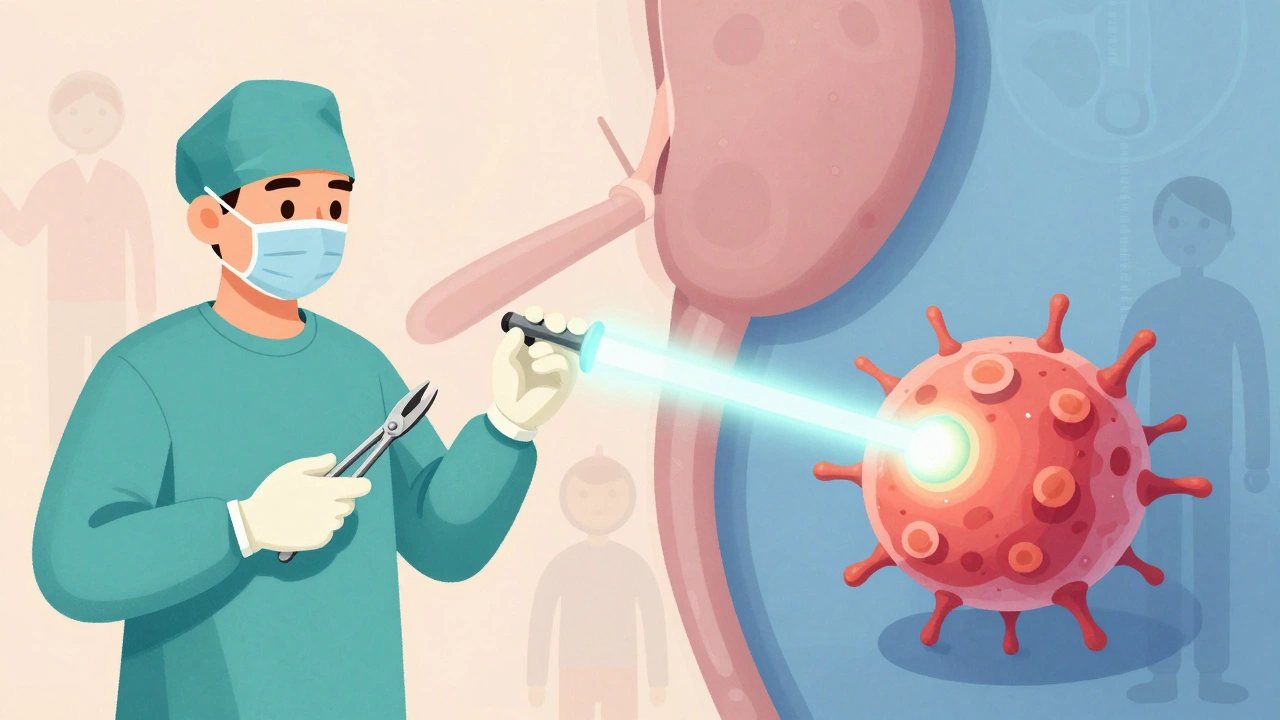
Choosing between radiation and surgery for localized cancer isn't about which is better-it's about which fits your life, cancer type, and risk level. Learn how outcomes, side effects, and logistics differ between the two.
View MorePopular Posts