
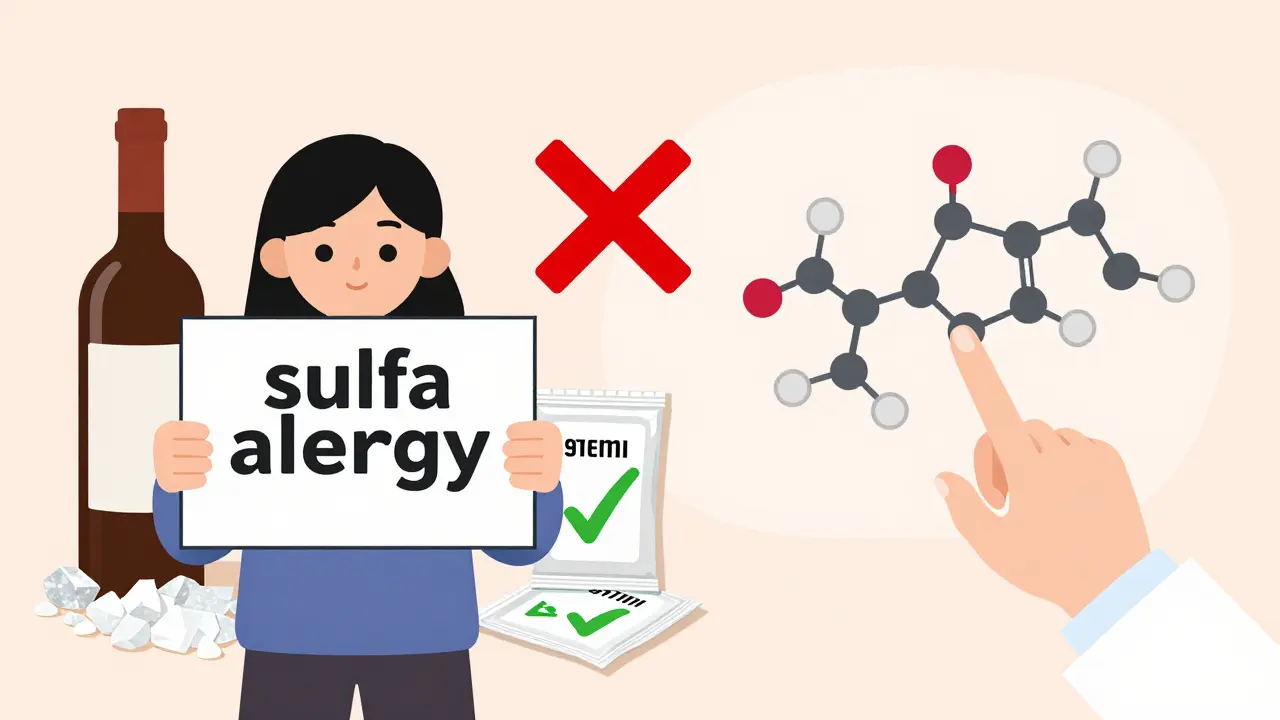
If you've been told you have a sulfa allergya common but often misunderstood term referring to allergic reactions to sulfonamide antibiotics, you're not alone. About 3% of people report this, but most don't realize it's often a misunderstanding. The truth is, 'sulfa allergy' usually refers only to specific antibiotics-not all medications containing sulfur. This confusion can lead to avoiding safe treatments for conditions like high blood pressure or glaucoma.
What "Sulfa Allergy" Really Means
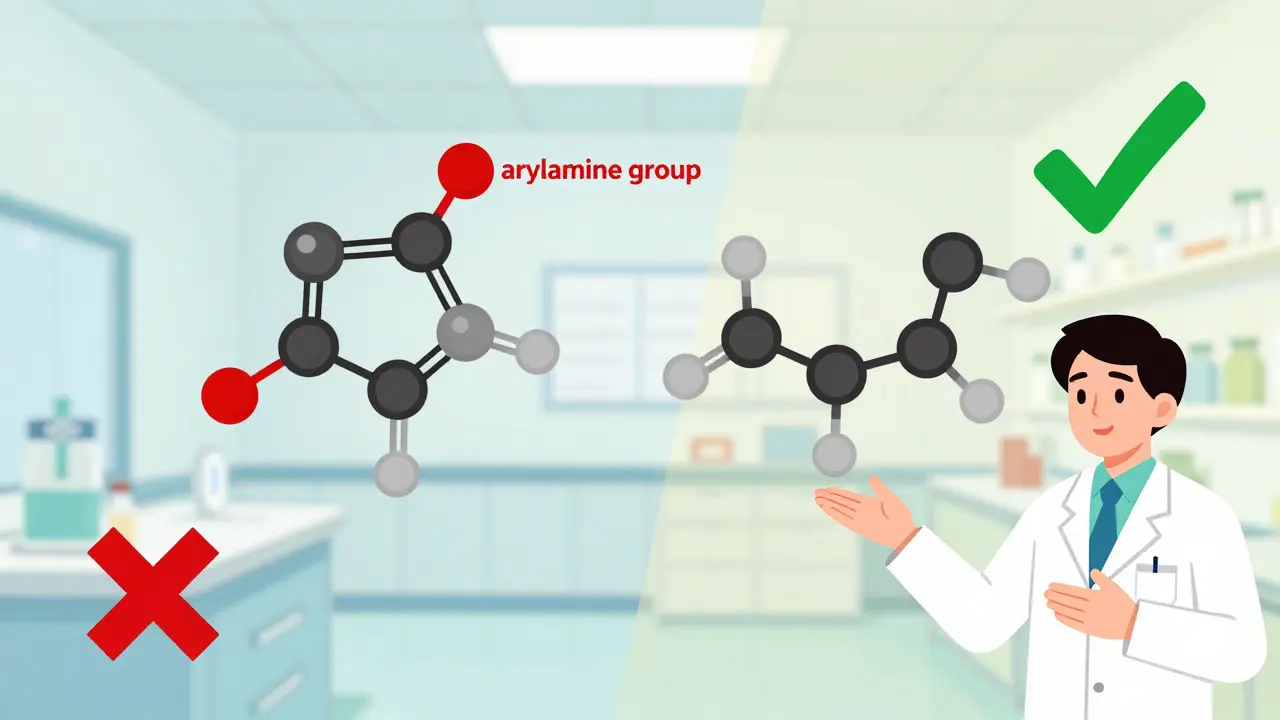
The term "sulfa allergy" is misleading. It's not about sulfur itself. Sulfur is in many harmless substances like Epsom salts, wine preservatives, and sweeteners. The real issue is a specific chemical structure in certain antibiotics. Sulfonamide antibiotics, like sulfamethoxazole (in Bactrim), have an arylamine group at the N4 position. When your body processes this, it creates hydroxylamine-a reactive compound that can trigger immune responses. Non-antibiotic sulfonamides, like hydrochlorothiazide (HCTZ) for blood pressure or celecoxib (Celebrex) for pain, lack this exact structure. So they don't cause the same reactions.
Why the Confusion Exists
Many people think "sulfa" means all sulfur-containing drugs. But that's not true. The confusion started decades ago when sulfonamide antibiotics were first used. Doctors and patients used "sulfa" as shorthand for all drugs with sulfur. But science has since clarified the difference. A 2018 study in the Journal of Allergy and Clinical Immunology found only 1.5-2% of people with reported sulfa allergies actually have IgE-mediated reactions. The rest often experience side effects like nausea or rashes that aren't true allergies. This misunderstanding has serious consequences. For example, a patient with heart failure might be denied furosemide (Lasix), a life-saving diuretic, simply because of a mislabeled allergy.
Which Medications Are Safe?
Not all sulfonamide-containing drugs are risky. Here's a clear breakdown:
| Antimicrobial Sulfonamides (Avoid if allergic) | Non-Antibiotic Sulfonamides (Generally Safe) |
|---|---|
| Sulfamethoxazole-trimethoprim (Bactrim, Septra) | Hydrochlorothiazide (HCTZ) |
| Sulfadiazine | Furosemide (Lasix) |
| Sulfacetamide | Celecoxib (Celebrex) |
| Dapsone | Acetazolamide |
| Sulfasalazine (Azulfidine) has about 10% cross-reactivity due to its metabolism into sulfapyridine | |
This table shows the key difference. Antimicrobial sulfonamides like Bactrim share the arylamine structure, so cross-reactivity is common. Non-antibiotic drugs like HCTZ or celecoxib don't. A 2019 review in the Journal of Allergy and Clinical Immunology: In Practice studied 1,200 patients with sulfonamide antibiotic allergies. Only 0.8% had reactions to non-antibiotic sulfonamides-similar to the general population's 0.7% reaction rate.
Real-World Impact of Mislabeling
Misunderstanding sulfa allergies has real costs. A 2023 analysis by the Agency for Healthcare Research and Quality found improper restrictions cost the U.S. healthcare system $1.2 billion annually. For example, patients with "sulfa allergy" labels often get broader-spectrum antibiotics like fluoroquinolones when treating UTIs. These carry higher risks of C. difficile infection (odds ratio 2.15). The FDA Adverse Event Reporting System (FAERS) shows 1,247 allergic reactions to sulfamethoxazole-trimethoprim between 2018-2022. But only 17 reports involved hydrochlorothiazide, with none classified as severe reactions like Stevens-Johnson Syndrome.
How to Document Your Allergy Correctly
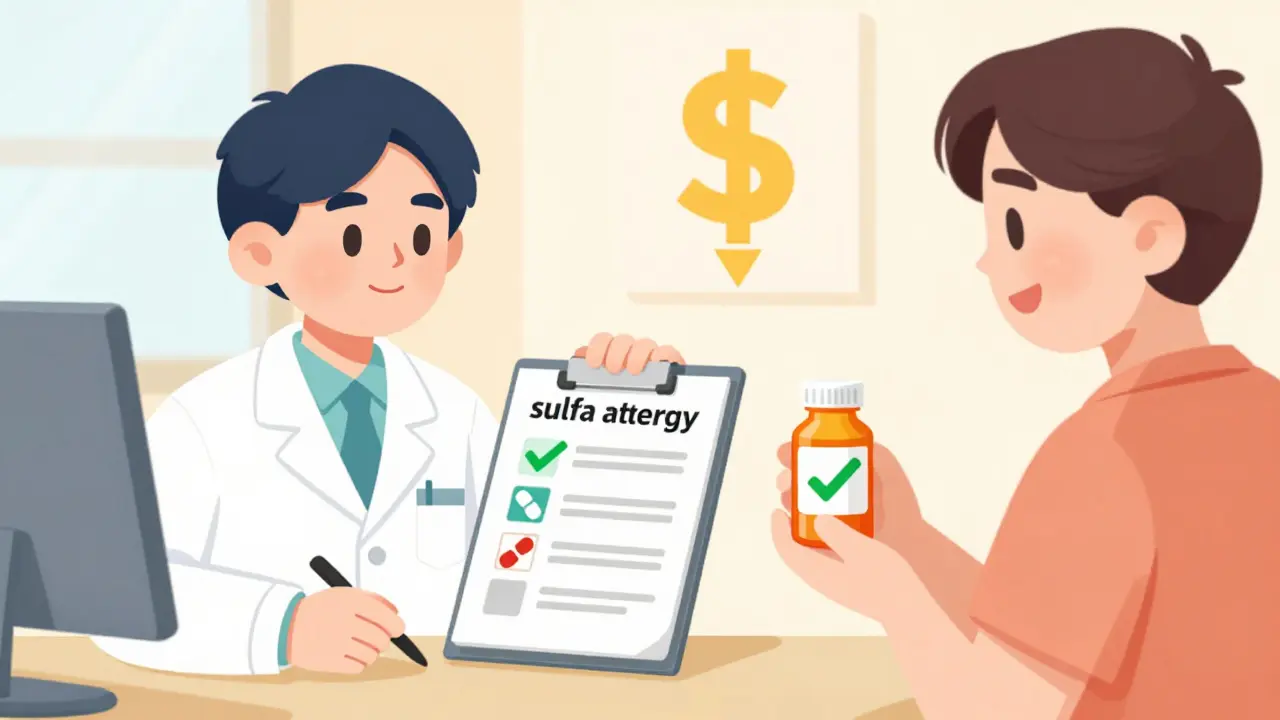
Doctors now recommend precise language. Instead of "sulfa allergy," say "sulfonamide antibiotic allergy." This distinction matters. For mild reactions (like a rash without fever or breathing issues), a single-dose challenge under medical supervision can confirm safety with non-antibiotic sulfonamides. A 2019 study by Macy et al. tested 327 patients this way-98.7% tolerated hydrochlorothiazide without issues. For severe reactions (like Stevens-Johnson Syndrome), avoid all antimicrobial sulfonamides, but non-antibiotic options remain safe. Pharmacists play a key role too. A 2021 study found pharmacist-led allergy clarification reduced unnecessary restrictions by 68.4% across hospitals, saving $287 per patient.
Frequently Asked Questions
Is hydrochlorothiazide safe if I have a sulfa allergy?
Yes. Hydrochlorothiazide (HCTZ) is generally safe for people with sulfonamide antibiotic allergies. A 2019 study by Macy et al. found 98.7% of patients with documented sulfonamide antibiotic allergy tolerated HCTZ after a challenge test. The chemical structure of HCTZ lacks the arylamine group that causes reactions in antimicrobial sulfonamides.
What about celecoxib (Celebrex)?
Celecoxib is safe for most people with sulfonamide antibiotic allergies. The American College of Rheumatology's 2021 guideline states that celecoxib has no increased risk in these patients. A multi-center trial of 450 patients showed only 0.44% had mild reactions, similar to the control group's 0.22%.
Does sulfasalazine (Azulfidine) cross-react?
Yes, sulfasalazine has about 10% cross-reactivity risk. It breaks down into sulfapyridine, which is an antimicrobial sulfonamide. Patients with sulfonamide antibiotic allergies should avoid sulfasalazine unless a doctor confirms safety through testing.
Can I take furosemide (Lasix) with a sulfa allergy?
Yes. Furosemide is a non-antibiotic sulfonamide and is safe for most people with sulfonamide antibiotic allergies. Studies show no increased reaction risk compared to the general population. The American Heart Association recommends it for heart failure patients with sulfa allergy labels.
What about other sulfur-containing substances?
Sulfates (like Epsom salts), sulfites (wine preservatives), and saccharin (Sweet'N Low) are safe. These compounds don't share the arylamine structure of antimicrobial sulfonamides. The Cleveland Clinic's 2023 guidelines confirm no cross-reactivity risk with these substances.
8 Comments

Brendan Ferguson
February 7 2026
Actually, this is a common misconception. The term "sulfa allergy" is misleading because it's not about sulfur itself. Sulfur is in many harmless things like Epsom salts. The real issue is the specific chemical structure in certain antibiotics. Sulfonamide antibiotics like Bactrim have an arylamine group that causes reactions. Non-antibiotic ones like HCTZ don't have that, so they're safe. A 2019 study showed only 0.8% of people with antibiotic allergies react to non-antibiotic sulfonamides. So it's important to clarify this to avoid unnecessary medication restrictions.

jan civil
February 8 2026
So HCTZ is safe? Good to know. Thanks for the info.

Jennifer Aronson
February 10 2026
I had no idea that "sulfa allergy" was such a misnomer. It's not about sulfur at all-it's about the arylamine group in certain antibiotics. Things like Epsom salts and wine preservatives have sulfur but are completely safe. Non-antibiotic sulfonamides like hydrochlorothiazide don't have that structure, so they don't cause the same reactions. This is really important info for people who might be avoiding necessary meds due to confusion.

Elliot Alejo
February 11 2026
Exactly. I had a friend who was denied Lasix for heart failure because of a "sulfa allergy" label. Turns out it's safe. Pharmacists can help clarify this. A 2021 study showed pharmacist-led clarification reduced unnecessary restrictions by 68.4%.

lance black
February 12 2026
Yes! HCTZ is safe. No worries. :)

Pamela Power
February 14 2026
Ugh, I can't believe how many people still think "sulfa allergy" means all sulfur-containing drugs. It's such a stupid misunderstanding. The term is a relic from decades ago when doctors didn't know better. Sulfur is in Epsom salts, wine preservatives, and sweeteners-none of which cause allergic reactions. The real issue is the arylamine group in antimicrobial sulfonamides like Bactrim. Non-antibiotic sulfonamides like hydrochlorothiazide, furosemide, and celecoxib don't have that structure. A 2019 review of 1,200 patients showed only 0.8% had reactions to non-antibiotic sulfonamides. The FDA Adverse Event Reporting System shows only 17 reports of HCTZ reactions, none severe. If you're avoiding necessary meds because of this myth, you're risking your health. It's time to get educated and stop being paranoid. This misinformation costs the healthcare system $1.2 billion annually. Wake up, people! The American Heart Association recommends furosemide for heart failure patients with sulfa allergy labels. If you're a doctor or pharmacist, you should be clarifying this for patients. Stop perpetuating myths and start using accurate terminology. It's not rocket science-just basic pharmacology.

anjar maike
February 15 2026
Yeah Pamela ur right 😂 but some people just don't get it 🤷♀️



Matthew Morales
February 6 2026
Hey, I've been told I'm alergic to sulfa but I take HCTZ for blood pressure and it's fine. Turns out it's not the same thing! :)