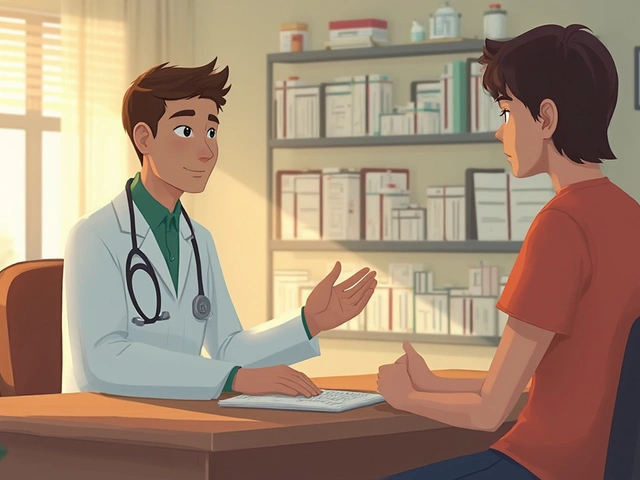
Sexual Side Effects of Antidepressants: What You Need to Know
When you start taking an antidepressant, a medication used to treat depression, anxiety, and other mood disorders by balancing brain chemicals. Also known as SSRIs, it can help you feel like yourself again—but for many, it comes with a hidden cost: sexual side effects, reduced libido, trouble getting or keeping an erection, or delayed or absent orgasm. These aren’t rare. Up to 70% of people on SSRIs report some form of sexual change. It’s not weakness. It’s chemistry.
Not all antidepressants hit the same way. SSRIs, a class of antidepressants that increase serotonin levels in the brain. Also known as selective serotonin reuptake inhibitors, it like sertraline or fluoxetine are the most common culprits. Paroxetine? Even higher risk. But bupropion? It’s often the go-to for people who’ve had this issue before—it doesn’t mess with sexual function the same way. And then there’s vortioxetine, newer and less likely to cause problems. You don’t have to just live with it. Switching meds, lowering the dose, or adding a tiny boost like sildenafil can make a difference. But you won’t know unless you talk about it.
Why don’t people speak up? Shame. Fear of being told to just "try harder." Or worse—being told their depression isn’t bad enough to warrant help. But this isn’t about willpower. It’s about serotonin’s effect on nerve signals that control arousal and orgasm. It’s the same reason some people get dry mouth or nausea. You wouldn’t ignore those. Don’t ignore this. Your doctor can’t fix what they don’t know is broken. And yes, they’ve heard it before. They’ve seen it. They’ve helped others get back their sex life while staying on meds that work.
You might be wondering if this is permanent. For most, it reverses when the drug is stopped—or adjusted. But not always. A small number report lasting issues, even after quitting. That’s why tracking your symptoms matters. Keep a note: when did it start? What changed? Did it get worse with a dose increase? That journal helps your doctor decide faster. And if you’re on meds for PTSD or anxiety, you’re not alone—many of the posts below show how people navigate this exact trade-off: mental health stability vs. sexual well-being.
This collection doesn’t just list problems. It gives you tools. You’ll find real comparisons between antidepressants that affect sex less. You’ll see how platelet dysfunction from SSRIs links to bleeding risks—because your body doesn’t handle these drugs in isolation. You’ll learn how to talk to your doctor without feeling judged, how to spot if a new med is the cause, and what alternatives exist beyond just switching pills. This isn’t about giving up on treatment. It’s about making sure treatment doesn’t take more than it gives.
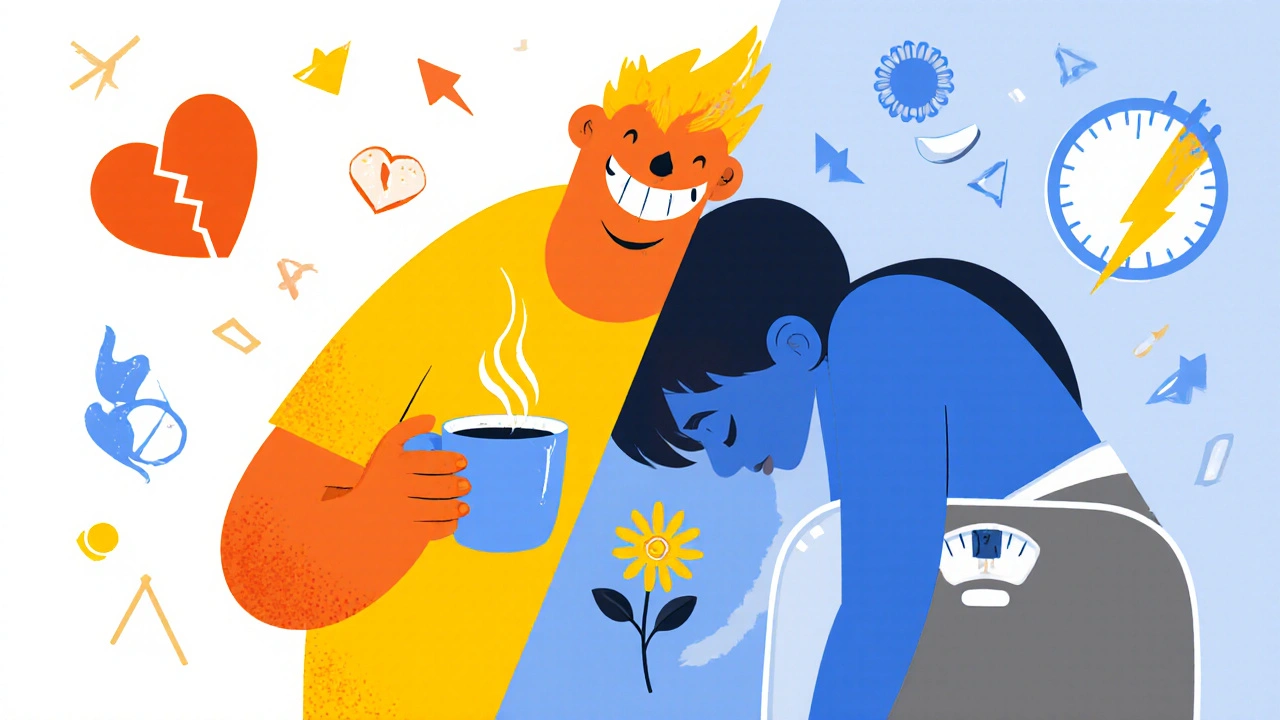
Bupropion vs SSRIs: Side Effects Compared for Real-World Use
Bupropion and SSRIs work similarly for depression, but their side effects are very different. Bupropion is less likely to cause weight gain or sexual problems but can trigger anxiety or seizures. SSRIs help anxiety but often reduce libido and cause weight gain.
View More