
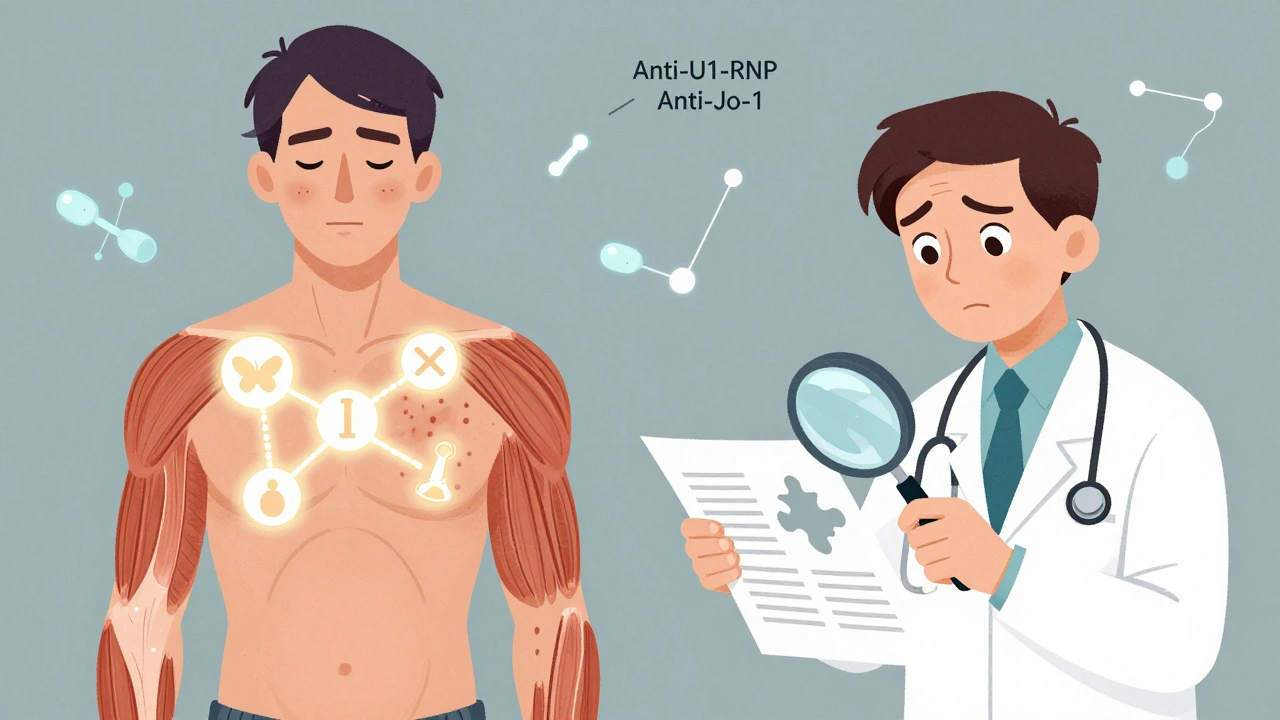
When someone has symptoms of more than one autoimmune disease at once - like joint pain from rheumatoid arthritis, skin tightening from scleroderma, and lung trouble from interstitial disease - doctors don’t always know what to call it. This isn’t rare. About one in four people with a connective tissue disease will develop features of another within five to ten years. These are called autoimmune overlap syndromes, and they’re some of the most confusing - and dangerous - conditions in rheumatology.
What Exactly Is an Autoimmune Overlap Syndrome?
An autoimmune overlap syndrome happens when a person meets the diagnostic criteria for two or more distinct autoimmune diseases at the same time. It’s not just having a few extra symptoms. It’s having full-blown, measurable disease processes from different conditions working together. The five main diseases involved are systemic lupus erythematosus (SLE), scleroderma, polymyositis, rheumatoid arthritis, and Sjögren’s syndrome. One of the most well-known is Mixed Connective Tissue Disease (MCTD) a condition defined by high-titer anti-U1-RNP antibodies and overlapping features of lupus, scleroderma, myositis, and arthritis. Patients often have puffy hands, Raynaud’s phenomenon (fingers turning white in the cold), and swollen joints. Another common type is Antisynthetase Syndrome characterized by anti-Jo-1 antibodies, muscle weakness, lung scarring, and mechanic’s hands - rough, cracked skin on the fingers. Then there’s Polymyositis/Scleroderma (PM/Scl) Overlap marked by anti-PM/Scl antibodies, muscle inflammation, and skin thickening.These aren’t just theoretical labels. Each has specific blood markers. For example, anti-U1-RNP titers above 1:10,000 are nearly diagnostic for MCTD. Anti-Jo-1 antibodies show up in 75-80% of antisynthetase cases. And anti-PM/Scl antibodies are found in 2-5% of scleroderma patients - but in up to 10% of those with muscle inflammation. These antibodies aren’t just clues; they’re diagnostic anchors.
Why Diagnosis Takes So Long - and Why It Matters
The biggest problem with overlap syndromes? No one agreed on how to diagnose them. The American College of Rheumatology and European League Against Rheumatism have clear rules for lupus, scleroderma, or myositis individually. But when symptoms blur across boundaries? There’s no official checklist. That’s why patients wait. A 2022 study found that 45% of people with overlap syndromes waited more than 18 months for a correct diagnosis - nearly double the delay of those with a single autoimmune disease. Many see seven or more doctors before someone connects the dots. Take the case of someone with stiff fingers, muscle weakness, and shortness of breath. One doctor sees scleroderma. Another sees myositis. A third sees lung disease. Each treats their piece. But no one sees the whole picture. That’s when the real damage happens - untreated lung scarring, progressive muscle loss, or irreversible joint damage.And it’s not just about missing the label. Misdiagnosis leads to wrong treatment. Giving a lupus patient high-dose steroids might help joint pain but worsen lung fibrosis. Prescribing a drug for myositis might trigger a flare in Sjögren’s. The lack of a unified diagnostic framework means patients get caught in a loop of trial and error.
What the Symptoms Actually Look Like
Overlap syndromes don’t follow textbook patterns. Here’s what real patients experience:- MCTD: 95% have Raynaud’s. 80% have swollen, puffy hands. 75% have finger swelling. 70% develop arthritis that looks like rheumatoid arthritis but doesn’t destroy joints the same way.
- Antisynthetase Syndrome: 85% have muscle weakness. 65-70% develop interstitial lung disease - often the most life-threatening part. 30-40% get mechanic’s hands - cracked, dirty-looking skin on the fingertips.
- PM/Scl Overlap: 75% have skin tightening, especially on the hands and face. 70% have muscle inflammation. 45-50% have lung scarring - and it often progresses faster than in classic scleroderma.
Some patients develop Multiple Autoimmune Syndrome (MAS) a condition where three or more autoimmune diseases occur together, such as Sjögren’s, lupus, and thyroiditis. Type 2 MAS, for example, often includes Sjögren’s, rheumatoid arthritis, and autoimmune thyroid disease. These cases are harder to manage because each disease requires different drugs - and those drugs can interact dangerously.

How Doctors Are Learning to Diagnose Better
The field is changing. In 2020, EULAR issued guidelines that changed everything: every suspected overlap patient needs a lung scan. Why? Because interstitial lung disease shows up in 65-70% of antisynthetase cases and 45-50% of PM/Scl cases. If you don’t check the lungs, you’re missing the biggest threat. Blood tests are now routine. Testing for anti-U1-RNP, anti-Jo-1, and anti-PM/Scl antibodies is no longer optional - it’s standard. These markers are highly specific. Anti-Jo-1, for instance, has a 98% specificity. If it’s positive, you’re almost certainly dealing with antisynthetase syndrome, even if symptoms are mild. AI is helping too. A 2022 study in Nature Medicine showed that machine learning models could predict overlap syndrome development with 82% accuracy - just by analyzing electronic health records. That means a patient with mild joint pain and dry eyes might get flagged before they develop full-blown lung disease.Treatment: Less Is Sometimes More
There’s no one-size-fits-all treatment. But there are proven starting points. Most patients begin with prednisone (0.5-1 mg per kg per day) plus one immunosuppressant - usually methotrexate or mycophenolate mofetil. That’s it. No need to jump to three drugs right away. For lung disease, rituximab has become a game-changer. Given as two infusions every six months, it stabilizes or improves lung function in 60-70% of antisynthetase patients within a year. In March 2023, the FDA approved tocilizumab specifically for antisynthetase-related lung scarring - the first drug approved for this purpose. But here’s the catch: overtreating is dangerous. A 2019 study found that 35% of overlap patients were on three or more immunosuppressants - even though there’s no solid evidence that combining them works better. Worse, triple therapy increases infection risk from 15% to 28%. One patient I spoke with developed pneumonia after being put on methotrexate, mycophenolate, and azathioprine. She didn’t need all three. She just needed the right one.The Care Coordination Crisis - And How to Fix It
This is where most systems fail. Patients see a rheumatologist for joints, a pulmonologist for lungs, a dermatologist for skin, and a gastroenterologist for Sjögren’s-related dry mouth. No one talks to anyone else. A 2022 Cleveland Clinic study found that patients with a dedicated care coordinator - a nurse or case manager who schedules appointments, tracks medications, and communicates between specialists - had 35% fewer hospital visits and 42% better medication adherence. The best models look like this: a rheumatologist leads the team. They order the key tests - antibody panels, lung CTs, muscle biopsies. Then they bring in specialists only when needed. Instead of six separate appointments, the patient has one visit where three doctors collaborate. Some centers now use digital dashboards that show all test results, medications, and symptoms in one place. Patients who get this kind of coordination report better quality of life. One woman from Bristol told me, “For years, I was just a collection of symptoms. Now I have a team that sees me as a whole person.”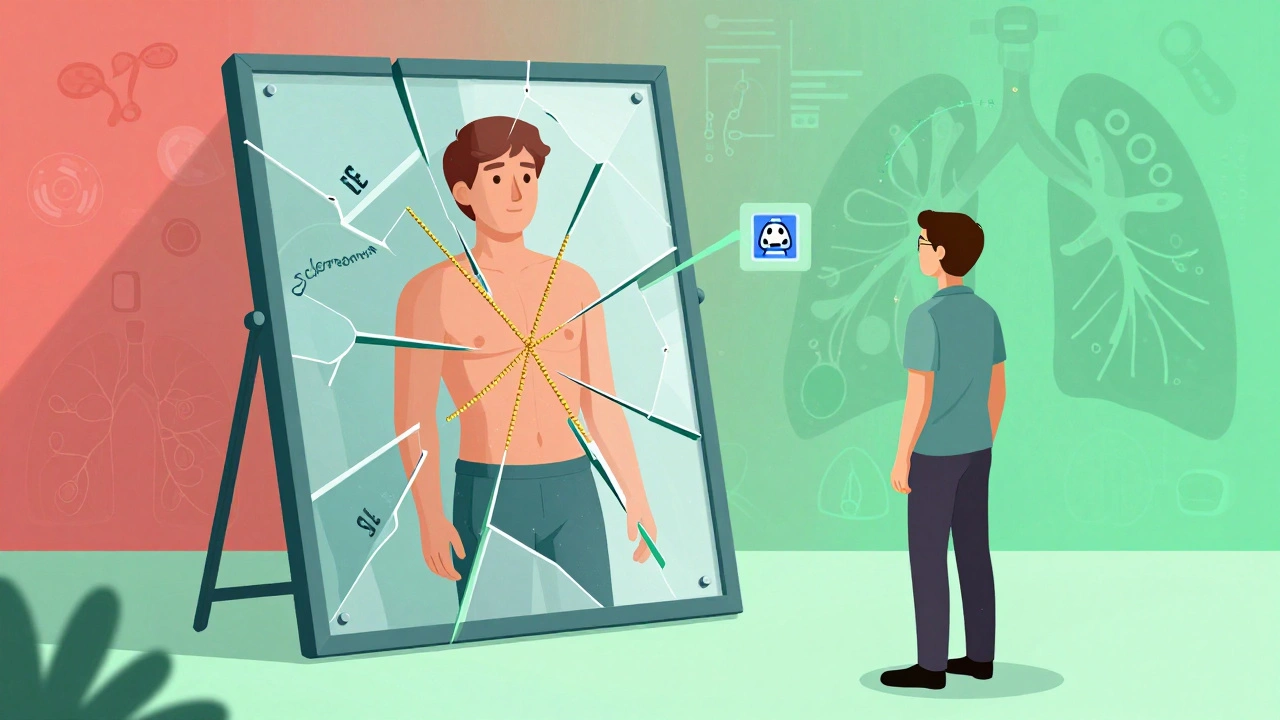
What’s Next? Precision Medicine Is Coming
The future of overlap syndromes isn’t just about better drugs - it’s about predicting who will develop what. The NIH launched the Overlap Syndrome Biomarker Consortium in January 2023 with $15 million to find blood markers that predict disease progression. They’re looking for patterns that say, “This patient will get lung disease in six months,” or “This antibody profile responds best to rituximab.” Trials are underway for drugs like anifrolumab - originally developed for lupus - now being tested in MCTD. If it works, it could be the first targeted therapy for this group. New tools are also being developed to measure disease activity across multiple organs at once. Instead of separate scores for skin, muscle, and lungs, doctors may soon use one unified index. That could make clinical trials faster and treatment decisions clearer.What Patients Should Ask Their Doctors
If you suspect you have an overlap syndrome, here’s what to ask:- “Have I been tested for anti-U1-RNP, anti-Jo-1, or anti-PM/Scl antibodies?”
- “Have I had a high-resolution CT scan of my lungs?”
- “Am I on more than two immunosuppressants? Is that really necessary?”
- “Is there a care coordinator or multidisciplinary clinic I can be referred to?”
- “What’s the plan if my lung function drops?”
Don’t accept vague answers. These syndromes are complex, but they’re not mysterious. With the right testing and coordination, outcomes can be good - even when multiple diseases are involved.
What’s the difference between an overlap syndrome and undifferentiated connective tissue disease (UCTD)?
UCTD means you have some symptoms and maybe one autoantibody, but not enough to meet full criteria for any specific disease. Overlap syndromes are different - you meet full diagnostic criteria for two or more diseases. About 30-40% of UCTD patients eventually develop a defined overlap syndrome within five years. The key is progression: if new symptoms appear that match another disease, it’s no longer UCTD - it’s an overlap.
Can you have an overlap syndrome without any autoantibodies?
It’s extremely rare. Autoantibodies are the cornerstone of diagnosis. While a few patients may have clinical features of overlap without detectable antibodies, they’re usually reclassified as UCTD or given a different diagnosis. If you have symptoms of lupus and myositis but negative for all known antibodies, your doctor should investigate other causes - like infections, cancers, or drug reactions - before labeling it an overlap.
Are overlap syndromes inherited?
No, they’re not directly inherited like cystic fibrosis. But having a family history of autoimmune diseases - like lupus, thyroiditis, or rheumatoid arthritis - increases your risk. Certain genes (like HLA-DR3 or HLA-DR4) are linked to higher susceptibility. Environmental triggers - like infections, stress, or exposure to silica dust - often set off the disease in genetically prone people.
Is there a cure for autoimmune overlap syndromes?
There’s no cure yet. But many patients can achieve long-term remission with the right treatment. The goal isn’t to eliminate the disease - it’s to control it. With proper management, people with MCTD or antisynthetase syndrome can live for decades without major complications. The key is early diagnosis, avoiding overtreatment, and staying on a coordinated care plan.
Why don’t more doctors recognize overlap syndromes?
Most rheumatologists are trained to diagnose single diseases, not combinations. Medical education still focuses on textbook cases. Also, insurance often doesn’t cover the full battery of tests needed - like high-resolution CT scans or specialized antibody panels - unless a clear diagnosis is already suspected. And without standardized guidelines, many doctors just treat the most obvious symptom and hope for the best.
Final Thoughts: You’re Not Just a Collection of Symptoms
Autoimmune overlap syndromes are complex, but they’re not hopeless. They’re a reminder that the body doesn’t always follow neat categories. The real breakthrough isn’t a new drug - it’s better coordination. A team that talks to each other. A care plan that treats the whole person, not just one organ at a time.If you’re living with overlapping symptoms - don’t give up. Push for antibody testing. Ask for a lung scan. Request a care coordinator. You deserve more than fragmented care. You deserve a team that sees the whole picture.
13 Comments

Myles White
December 7 2025
This is actually one of the most coherent summaries of overlap syndromes I’ve seen in a long time. The part about anti-Jo-1 being 98% specific is huge - most clinicians still treat antibody results as suggestions rather than diagnostic anchors. And the lung scan recommendation? Absolutely critical. I’ve seen too many patients with progressive ILD because no one thought to check the lungs until they were on oxygen. The real tragedy isn’t the misdiagnosis - it’s that we still treat organs in silos instead of the person. If we had a unified activity index like they’re developing, we could stop guessing and start predicting.

Ibrahim Yakubu
December 9 2025
You people in the West think you invented medicine. In Nigeria, we’ve known for decades that the body doesn’t care about your diagnostic boxes. My cousin had lupus, myositis, and Sjögren’s all at once - the doctors in Lagos didn’t even have the right antibody tests. They just gave her herbs and told her to pray. She’s alive today. Maybe the real problem isn’t the syndromes - it’s your over-reliance on machines and patents.

Chris Park
December 10 2025
Let me guess - the NIH funded this ‘research’ because Big Pharma wants to sell more drugs. Anti-U1-RNP? Anti-Jo-1? All just marketing tools to justify triple-immunosuppressant regimens. The real cause of overlap syndromes? 5G radiation, glyphosate in the water, and mRNA vaccines. They don’t want you to know that. They need you to believe in ‘antibodies’ so you keep paying for infusions. The ‘care coordinator’? That’s just a middleman to bill insurance for more visits. Wake up.

Ashish Vazirani
December 11 2025
This article is written by someone who has never seen a real Indian patient. In India, we don’t have ‘high-resolution CT scans’ in every clinic. We don’t have ‘rituximab’ available without bribing bureaucrats. And yet - we survive. We don’t need AI models or FDA approvals. We just need doctors who listen. Your ‘precision medicine’ is a luxury. Our patients are dying from lack of insulin - not lack of anti-Jo-1 testing.

pallavi khushwani
December 12 2025
Honestly, this made me cry a little. I’ve been stuck in the overlap syndrome loop for 7 years. Saw 9 doctors. Got prescribed 12 different meds. One of them almost killed me with liver failure. The day I finally met a rheumatologist who said, ‘Let’s check your lungs and your antibodies before we touch another pill’ - that was the first time I felt seen. Not a collection of symptoms. Just… me. Thank you for writing this.

Dan Cole
December 12 2025
The notion that ‘over-treatment increases infection risk’ is statistically trivial compared to the existential threat of untreated interstitial lung disease. You cite a 2019 study showing 35% on triple therapy - but you ignore the mortality rate of untreated antisynthetase syndrome, which is 40% at 5 years. The real toxicity isn’t the drugs - it’s the hesitation. If you have anti-Jo-1 and ILD, you don’t ‘wait and see.’ You start rituximab. Period. This article is too soft. The stakes are life or death.

Jackie Petersen
December 13 2025
So now we’re supposed to trust AI predicting autoimmune flares? Next they’ll be using TikTok algorithms to diagnose lupus. I’m not getting a CT scan because some algorithm thinks I might get lung scarring. I’m not a data point. I’m a person. And if my doctor wants to treat me like a robot, I’ll find another one.

Kumar Shubhranshu
December 14 2025
Anti-Jo-1 positive. ILD confirmed. Rituximab started. Lung stable. No other meds. Done.

Priya Ranjan
December 15 2025
How dare you suggest that people with autoimmune diseases need coordination? They should just be grateful for any care at all. Most of them are lazy, overweight, and stress-prone. If they ate less sugar and prayed more, they wouldn’t need all these expensive tests. This ‘team-based care’ is just another way for doctors to make money off the sick.

Shayne Smith
December 15 2025
I just got diagnosed with MCTD last month. I didn’t even know what that was. But now I’m reading everything I can. I’m so glad I found this. I feel less alone.

Nava Jothy
December 16 2025
OMG I’m crying 😭 this is the first time anyone has ever understood me... I have Raynaud’s, mechanic’s hands, AND dry eyes... and everyone just told me to ‘drink more water’... I’ve been waiting for someone to say: ‘you’re not crazy, you have an overlap’... I’m getting my CT scan next week 💪💖

brenda olvera
December 17 2025
This is why I love medicine. Not because of the drugs or the labs - but because of the people. That woman from Bristol? She’s me. For years I was just a list of symptoms. Now I have a team. And I finally feel like I’m not broken - just complex. Thank you for seeing us.




Annie Gardiner
December 6 2025
I mean, sure, doctors love their labels... but what if we’re just overmedicalizing normal human variation? I had puffy fingers and dry eyes for years. Turned out I was just stressed and drank too much coffee. Why do we need a syndrome for everything now?