
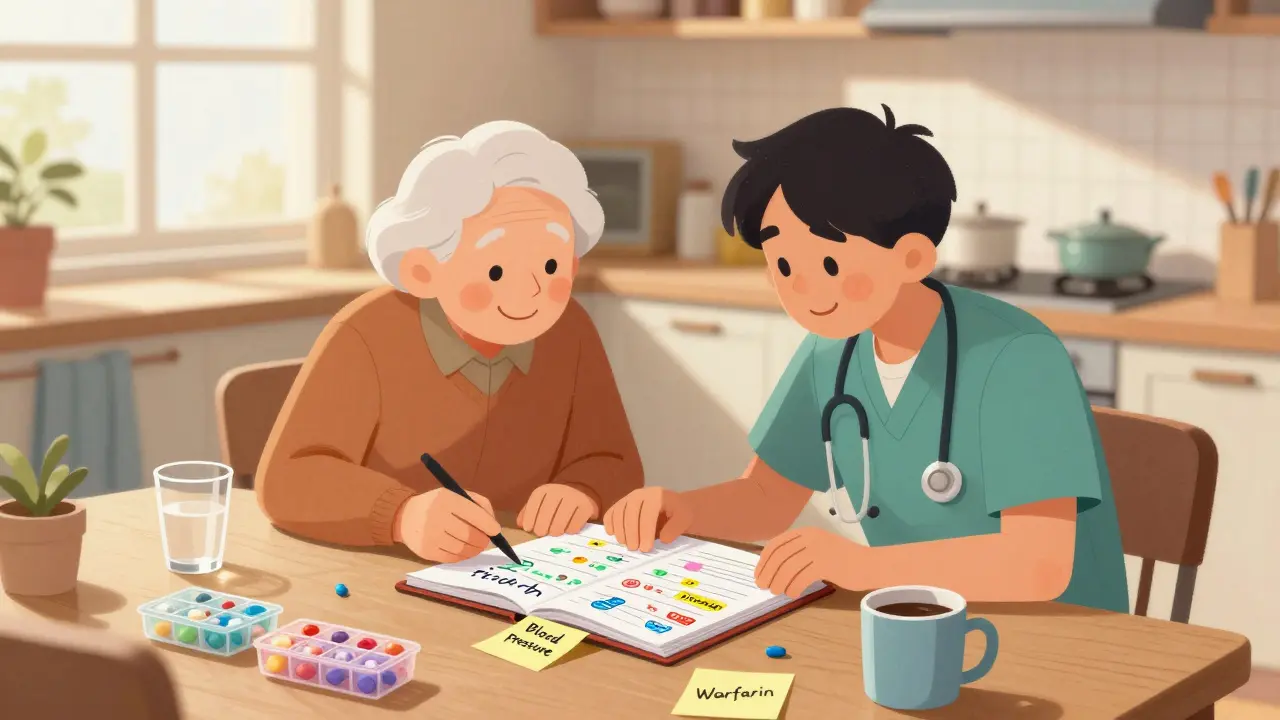
When someone you love is taking multiple medications, it’s easy to assume they’re managing it all on their own. But the truth is, nearly half of all adults over 65 in the U.S. are taking five or more prescriptions. And without help, many miss doses, mix up pills, or don’t know why they’re taking them. That’s where family and caregivers come in-not as replacements for doctors, but as essential partners in keeping medications safe and effective.
Start with a Complete Medication List
Before you do anything else, sit down and make a full list of every medication your loved one takes. Not just the big ones. Include vitamins, supplements, and over-the-counter drugs like ibuprofen or antacids. For each one, write down:- Brand and generic name (e.g., Lisinopril 10mg)
- Exact dose and frequency (e.g., "Take 1 tablet daily at 8 AM with food")
- Why it’s prescribed (e.g., "for high blood pressure")
- Prescribing doctor’s name and phone number
- Any side effects or warnings (e.g., "may cause dizziness")
- When it was last reviewed
This isn’t a one-time task. Update it within 24 hours of any change-whether it’s a new prescription, a dose adjustment, or something stopped. The Agency for Healthcare Research and Quality says this simple step cuts medication errors by 33%. And it’s the first thing doctors and pharmacists ask for during appointments.
Keep it in a binder, a notebook, or a digital app-but make sure everyone involved has access. Many caregivers use the same list during hospital visits, ER trips, and pharmacy consultations. One caregiver in Ohio told me, "I caught a dangerous interaction between my mom’s blood pressure med and her arthritis pill because I had the list handy. The pharmacist said if I hadn’t brought it, she could’ve ended up in the hospital."
Use Tools That Actually Work
Paper reminders and mental notes don’t cut it anymore. Studies show that people miss doses 50% of the time without a system. The best tools are simple, reliable, and easy to use.For most people, a 7-day pill organizer with morning and evening compartments reduces missed doses by 37%. These are cheap, available at any pharmacy, and work even if someone has trouble with phones or apps.
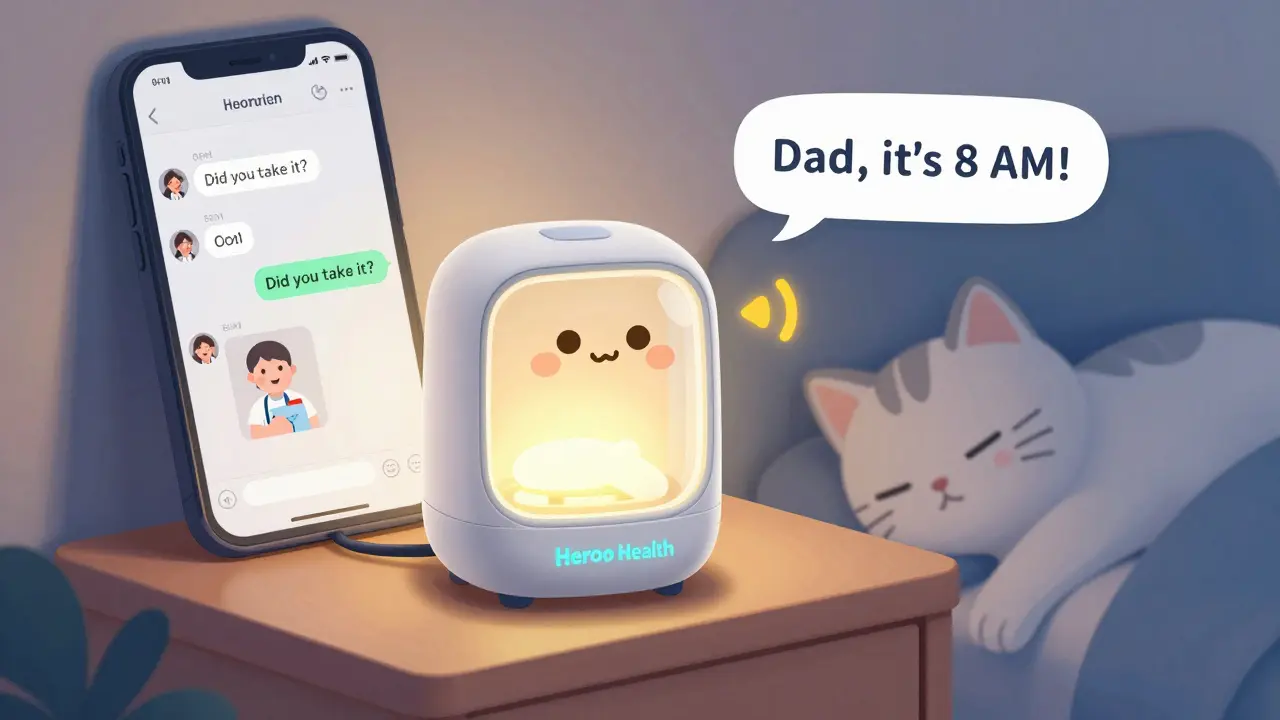
If your loved one has memory issues or a busy schedule, consider an electronic dispenser like Hero Health or MedMinder. These devices beep, flash, and even call a family member if a dose is skipped. Clinical trials show they cut missed doses by 62%. Some even connect to Alexa or Google Home-so you can ask, "Alexa, did Dad take his pill?" and get a real-time update.
Pharmacies like CVS and Walgreens offer automatic refills. Set this up 7-10 days before the prescription runs out. You’ll get a text or email when it’s ready. No more scrambling at the last minute. Eighty-five percent of major pharmacies offer this service as of early 2024.
Build Routines, Not Reminders
People remember habits better than alarms. That’s why linking medication times to daily routines works so well. This technique is called "habit stacking," and it’s backed by the National Institute on Aging.Instead of saying, "Take your pill at 8 AM," say, "Take your blood pressure pill right after you brush your teeth." Or, "Take your diabetes med with breakfast." The more tied it is to something they already do every day, the less likely they are to forget.
One caregiver in Michigan started pairing her father’s evening meds with his favorite TV show. "He watches The Great British Bake Off at 8 PM," she said. "Now, the pills come out when the opening music plays. No reminders needed."
Know the Four Questions to Ask the Pharmacist
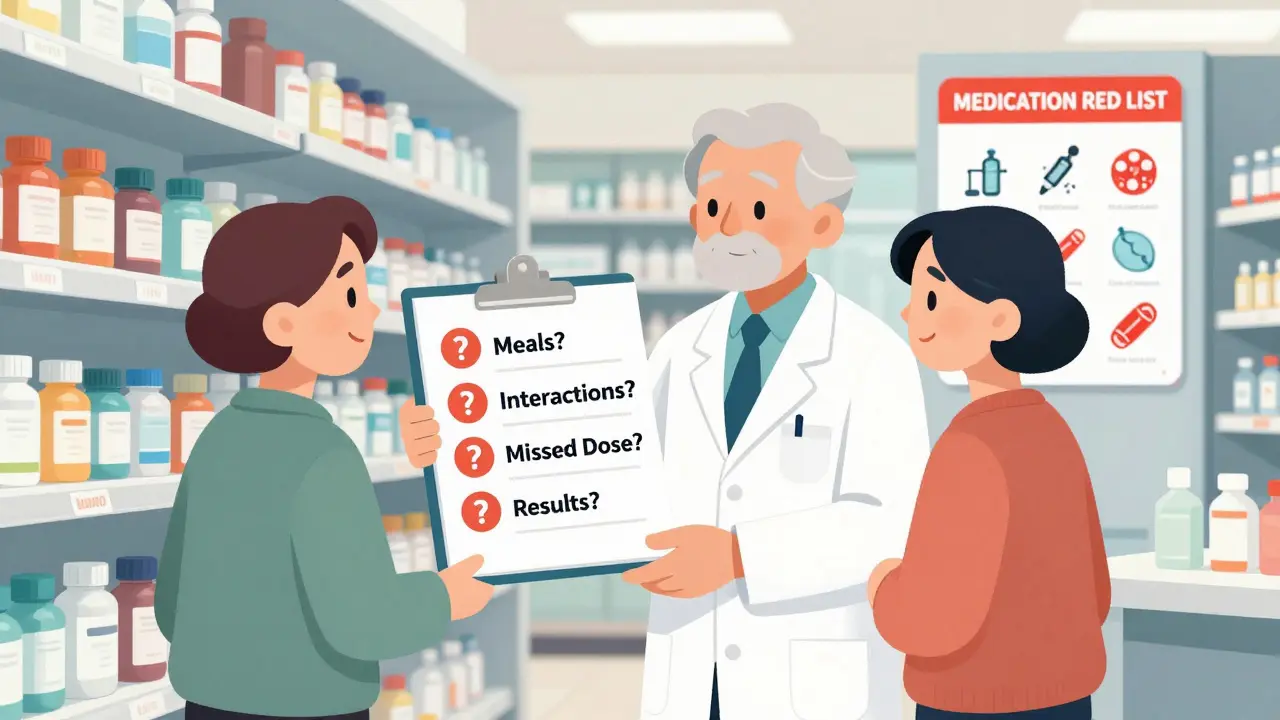
Pharmacists are the most underused resource in medication safety. They’re trained to spot dangerous interactions, explain side effects, and simplify confusing regimens. And in the U.S., 92% of pharmacies have a pharmacist available without an appointment.When you pick up a new prescription, ask these four questions:
- When should this be taken relative to meals? (Some meds need an empty stomach; others need food.)
- Are there foods, drinks, or other meds I should avoid? (Grapefruit can interfere with blood pressure drugs. Alcohol can make painkillers dangerous.)
- What should I do if a dose is missed? (Don’t double up. Sometimes you skip it. Sometimes you take it right away. It depends.)
- When should I expect to see results? (Some meds take weeks. If you think it’s not working, don’t stop it-ask first.)
These questions come straight from the American Pharmacists Association’s 2022 guidelines. And they’ve helped families avoid countless hospital visits.
Review Medications Every Quarter
Over time, people end up taking pills they don’t need anymore. A 2023 study found that 45% of adults over 65 are on five or more medications-and 30% of those are on drugs the American Geriatrics Society says are risky for older adults.Use the Beers Criteria-a list of medications that can be dangerous for seniors-to check each prescription. Bring the list to every doctor visit. Ask: "Is this still necessary? Can anything be stopped?"
Quarterly reviews cut inappropriate prescriptions by 22%. One woman in Florida told me she got her mother off three unnecessary painkillers after a pharmacist flagged them during a refill. "She stopped feeling dizzy all day. Her balance improved. It was like getting her old self back."
Prepare for Emergencies
Not all missed doses are equal. Some meds are safe to skip once. Others can cause a medical emergency.Create a "medication red list"-a separate note with the names of drugs that need immediate attention if missed:
- Insulin
- Anticoagulants (like warfarin or Eliquis)
- Heart medications (like beta-blockers or digoxin)
- Seizure drugs
- Steroids (like prednisone)
Write down what to do if one of these is missed: call the doctor, go to urgent care, or go to the ER. Keep this list taped to the fridge or saved in a phone note. A 2023 study found that families with this plan cut emergency visits by 19%.
Go to Appointments Together
Doctors often talk fast. They assume patients understand everything. But most people forget 80% of what they hear after leaving the office.When you attend appointments with your loved one, you become their memory. Take notes. Ask questions. Bring the medication list. The AARP found that 89% of caregivers who went to appointments said they understood the medication plan better than when they went alone.
Also, ask: "Who is the main doctor managing all these meds?" Too often, people see specialists who each prescribe something new-without knowing what the others ordered. That’s how dangerous interactions happen.
Watch for Burnout
Managing medications is hard. It’s time-consuming. It’s stressful. And it’s often invisible.One in three caregivers say medication tasks are their most stressful responsibility. If you’re feeling overwhelmed, you’re not alone. And you don’t have to do it alone.
Look into Medication Therapy Management (MTM) services. These are free for Medicare Part D beneficiaries who take eight or more medications and have three or more chronic conditions. A pharmacist reviews everything, calls the doctor if something’s wrong, and gives you a simplified plan. In 2023, 68% of eligible people used these services.
Also, check if your local Area Agency on Aging offers caregiver support groups. Many have medication safety workshops. Some even send trained volunteers to help organize pills.
What to Do When Things Go Wrong
Even with the best systems, mistakes happen. Here’s what to do:- Missed a dose? Don’t guess. Check the label or call the pharmacist. Never double up unless told to.
- Found an old pill bottle? Don’t assume it’s safe. Bring it to the pharmacy for disposal and check if it’s still needed.
- Got a new prescription? Don’t start it until you’ve reviewed it with the pharmacist and updated your list.
- Someone went to the hospital? Medication errors are most common during hospital-to-home transitions. Get a full list of changes before leaving. Ask for a written discharge summary.
And if you’re ever unsure-call the pharmacy. They’d rather answer a hundred questions than have someone end up in the ER because of a mix-up.
Can a family member legally give someone their medication?
Yes, as long as they’re not taking the medication themselves or giving it to someone else. Family members and caregivers can help organize, remind, and administer medications as long as they’re following the doctor’s instructions. They can’t change doses or refill prescriptions without authorization. Always check with the prescribing doctor or pharmacist if you’re unsure about your role.
What if my loved one refuses to take their meds?
Refusal is common, especially if side effects are uncomfortable or the person doesn’t understand why they need the drug. Start by asking why they’re resisting. Is it the taste? The number of pills? Fear of side effects? Talk to the pharmacist about alternatives-like liquid forms, smaller pills, or different times of day. Sometimes switching to a once-daily version makes a big difference. Never force pills. Build trust by listening and working with the medical team to find solutions.
Do I need to tell the doctor if I’m helping with meds?
Yes. Many doctors assume patients manage their own meds. If you’re involved, let them know. Ask to be added to the care team or given permission to speak with the doctor or pharmacist. Some clinics have caregiver forms you can fill out. This helps them avoid giving conflicting advice and ensures you’re included in important updates.
Are digital apps better than pill organizers?
It depends. For people who are tech-savvy and have good vision or hearing, apps like Medisafe or Round Health can be great-they send alerts, track adherence, and even notify family members. But for those with memory loss, poor eyesight, or no smartphone, a simple 7-day pill organizer is more reliable. Many families use both: apps for reminders and organizers to physically sort pills. The key is matching the tool to the person’s abilities, not the latest trend.
How often should I update the medication list?
Update it within 24 hours of any change-whether it’s a new prescription, a dose change, or something being stopped. Also review it every three months, even if nothing changed. That’s when you’ll catch old meds that are no longer needed or interactions you missed. Hospitals and pharmacies often ask for the most current list during emergencies, so keeping it up to date is a safety habit.
Final Thought: You’re Not Just Helping-You’re Saving Lives
Medication errors cause 125,000 preventable deaths in the U.S. every year. Most happen at home. But with a clear list, a simple routine, and a little help from the pharmacy, you can stop those mistakes before they happen. You don’t need to be a nurse. You just need to care enough to pay attention. And that makes all the difference.Popular Posts




How Pets Help People Recover from Illness
6 Oct 2025