Radiation Therapy: What It Is, How It Works, and What to Expect
When you hear radiation therapy, a cancer treatment that uses targeted high-energy beams to kill tumor cells while sparing healthy tissue. Also known as radiotherapy, it's one of the most common tools doctors use to fight cancer—often alongside surgery or chemotherapy. It’s not magic. It’s science. And it works by damaging the DNA inside cancer cells so they can’t multiply. Healthy cells can repair themselves better than cancer cells, which is why the treatment can be precise enough to use without wiping out your whole body.
But radiation therapy isn’t one-size-fits-all. There’s external beam radiation, the most common type, where a machine aims beams at your tumor from outside your body. Then there’s brachytherapy, a method where tiny radioactive sources are placed inside or near the tumor. And in some cases, doctors use radioactive liquids you swallow or get through an IV. The goal is always the same: hit the cancer hard, miss the rest as much as possible.
Side effects vary depending on where you’re being treated. If you’re getting radiation to your head or neck, you might get a sore throat or dry mouth. Pelvic radiation can cause bladder irritation or fatigue. Skin in the treatment area might turn red or peel—like a sunburn that doesn’t go away after a few days. These aren’t side effects you ignore. They’re signals. Your care team tracks them closely and adjusts your plan. That’s why radiation oncology isn’t just about machines. It’s about people—doctors, nurses, therapists—who monitor your response every step of the way.
People often think radiation means you’re radioactive afterward. That’s not true for most types. If you get external beam therapy, you’re not a danger to others. You can hug your kids, sit next to your partner, go to work. Only with certain internal treatments—like radioactive seeds or liquids—do you need temporary precautions. Your team will tell you exactly what to do. No guessing. No fear based on myths.
What you won’t find in the headlines is how radiation therapy has changed. Modern machines use imaging to track tumors in real time. They adjust for breathing, movement, even weight loss. Treatments are shorter. More accurate. Less punishing. And for many cancers, it’s the difference between living with disease and living well after it.
Below, you’ll find real-world guides on how radiation fits into cancer care—from managing side effects to understanding why some patients need it and others don’t. You’ll see how it connects to drug safety, what to watch for when combining it with other treatments, and how to track your progress. This isn’t theory. It’s what people are actually experiencing—and what you need to know to make smart choices.
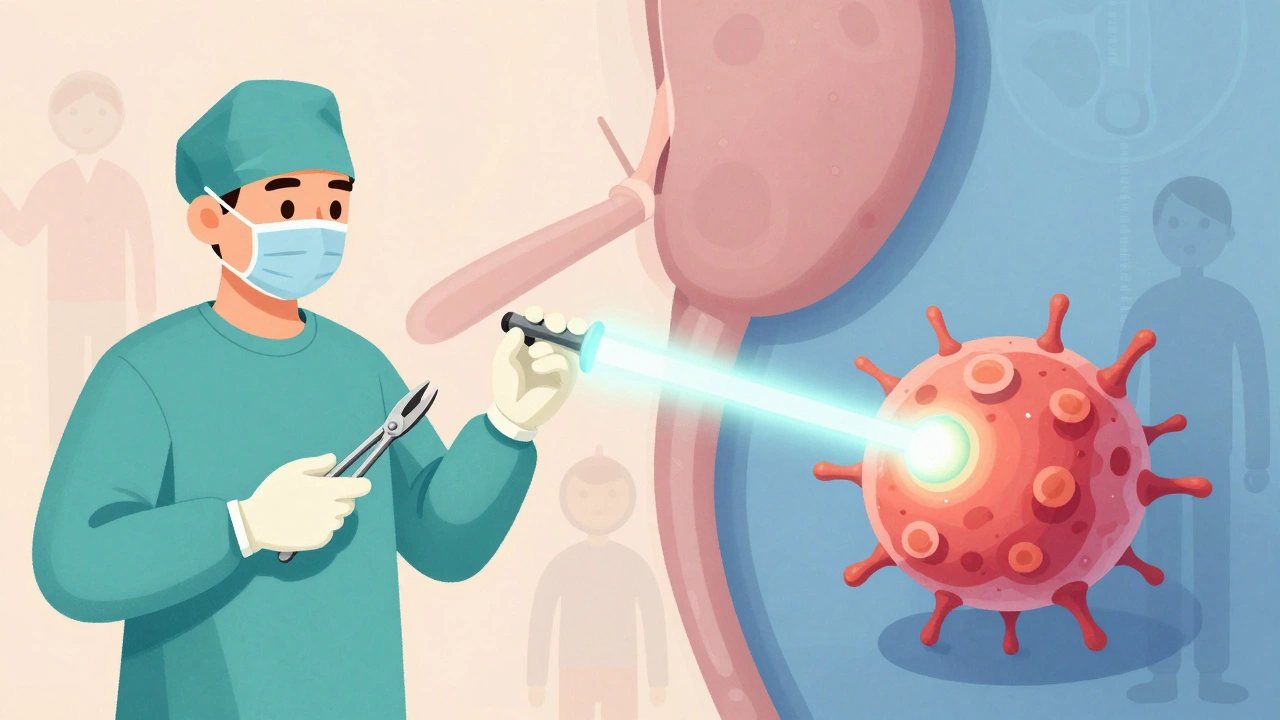
Radiation vs. Surgery: Choosing Local Control Strategies for Cancer
Choosing between radiation and surgery for localized cancer isn't about which is better-it's about which fits your life, cancer type, and risk level. Learn how outcomes, side effects, and logistics differ between the two.
View More