Prostate Cancer Treatment: What Works, What to Avoid, and How to Stay Informed
When it comes to prostate cancer treatment, the range of medical approaches used to manage or eliminate cancer in the prostate gland, often tailored to age, stage, and overall health. Also known as prostate cancer therapy, it’s not one-size-fits-all—what helps one man might do little for another. The prostate is a small gland in men that makes fluid for semen. When cancer grows there, it often moves slowly, but it can spread. That’s why knowing your options—and what’s backed by real data—matters more than ever.
Many men first hear about it through a high PSA testing, a blood test that measures prostate-specific antigen levels, often used as an early warning sign for prostate issues. Also known as prostate-specific antigen test, it’s not perfect, but it’s the most common starting point. A raised PSA doesn’t mean cancer, but it triggers more tests: biopsies, MRIs, sometimes genetic scans. Once cancer is confirmed, the big questions begin: Should I wait? Should I act? What are the side effects? hormone therapy, a treatment that lowers testosterone to slow prostate cancer growth, often used for advanced or recurring cases. Also known as androgen deprivation therapy, it can shrink tumors but brings fatigue, weight gain, and loss of libido. Then there’s radiation therapy, targeted high-energy beams that destroy cancer cells in the prostate, used alone or after surgery. Also known as radiotherapy, it avoids surgery but can cause bladder irritation or bowel issues over time. Surgery—removing the prostate—is still common, but not always needed. Some men, especially older ones or those with slow-growing tumors, choose active surveillance: regular checkups, no immediate treatment. It’s not giving up. It’s choosing quality of life.
What you won’t find in most brochures? The real trade-offs. Hormone therapy might extend life but make you feel like you’ve aged 20 years in 6 months. Radiation can save you from surgery but leave you with lasting bladder problems. And not all treatments are covered equally by insurance. Some men end up paying thousands out of pocket for drugs that barely move the needle. That’s why tracking your own symptoms, asking about alternatives, and knowing when to get a second opinion isn’t optional—it’s survival.
Below, you’ll find real-world guides on what medications actually work, how to spot dangerous interactions with supplements, how to read drug labels for hidden risks, and how to track your response to treatment over time. No fluff. No hype. Just what patients and doctors are seeing on the ground.
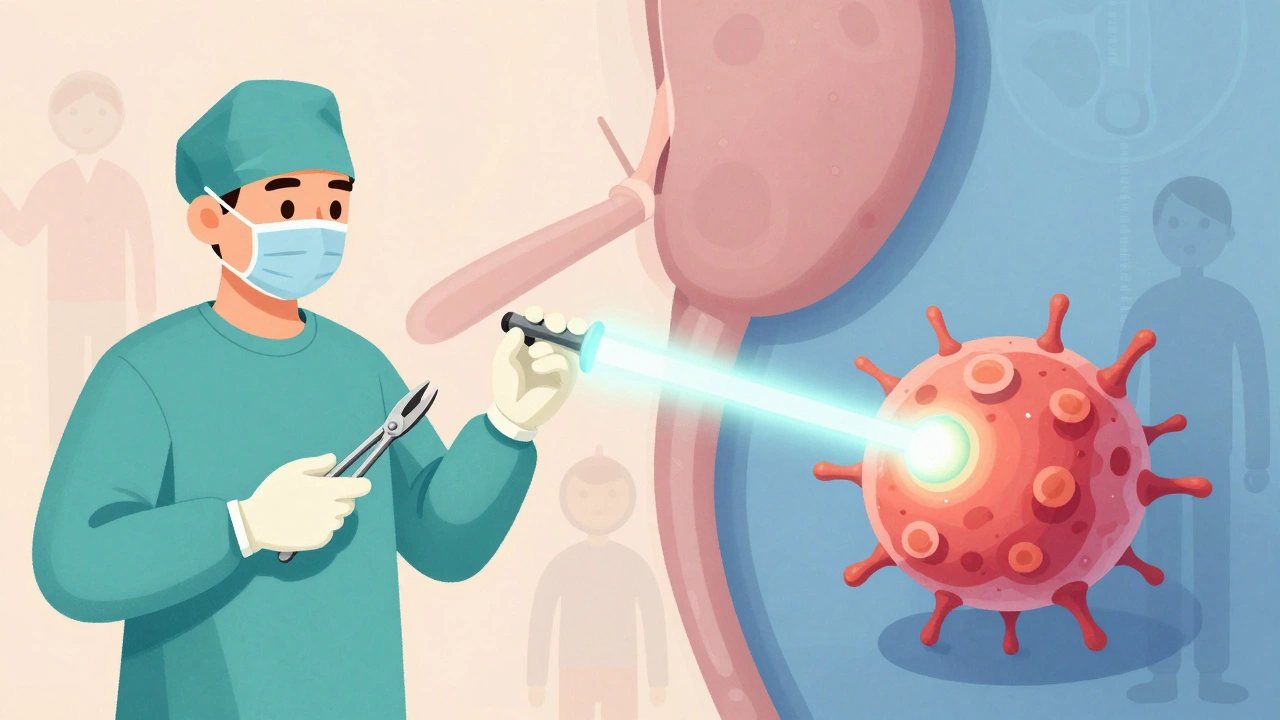
Radiation vs. Surgery: Choosing Local Control Strategies for Cancer
Choosing between radiation and surgery for localized cancer isn't about which is better-it's about which fits your life, cancer type, and risk level. Learn how outcomes, side effects, and logistics differ between the two.
View MorePopular Posts