Local Cancer Control: What It Means and How It Saves Lives
When we talk about local cancer control, the strategy of stopping cancer at its original site before it spreads to other parts of the body. Also known as regional tumor control, it’s not just about removing a tumor—it’s about making sure it doesn’t come back or grow into something deadly. This isn’t theory. It’s what happens in operating rooms, radiation clinics, and follow-up visits every day. When a breast tumor is removed with clean margins, or a lung nodule is zapped with precision radiation before it invades nearby tissue, that’s local cancer control in action. It’s the difference between a treatable condition and a life-threatening one.
It works hand-in-hand with other tools like cancer screening, early detection methods that catch tumors before they become invasive. Mammograms, colonoscopies, low-dose CT scans—they all feed into local control by finding cancer when it’s still small and contained. And when it’s found early, treatments like surgery, the physical removal of localized tumors or radiation therapy, targeted high-energy beams that destroy cancer cells in a specific area can be highly effective. You don’t always need chemo or immunotherapy to win. Sometimes, just stopping the cancer where it is is enough.
But local cancer control isn’t just about the procedure. It’s about timing, precision, and follow-up. A tumor might look gone after surgery, but if cells are left behind, it can return. That’s why radiation often follows surgery, or why doctors monitor blood markers or scans after treatment. It’s also why some cancers—like prostate or early-stage skin cancer—can be managed with active surveillance instead of immediate surgery. The goal isn’t always to remove everything. It’s to keep the cancer from taking over.
What you’ll find below are real, practical stories from people who’ve faced this head-on. Articles on how drug interactions affect cancer treatment, how patients track side effects after radiation, how generic meds are used in supportive care, and how to read labels when you’re juggling multiple prescriptions. These aren’t abstract medical concepts. They’re daily realities for people managing cancer care. Whether you’re a patient, caregiver, or just trying to understand what local control really means, this collection gives you the facts without the fluff.
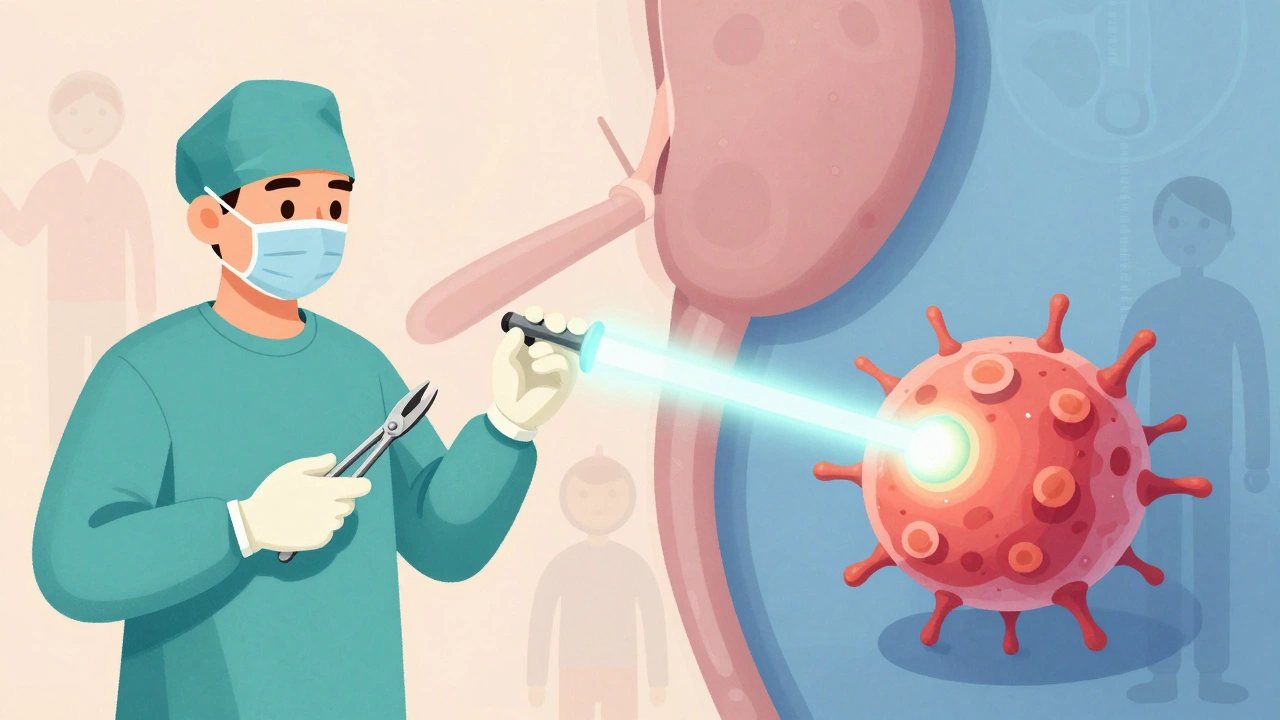
Radiation vs. Surgery: Choosing Local Control Strategies for Cancer
Choosing between radiation and surgery for localized cancer isn't about which is better-it's about which fits your life, cancer type, and risk level. Learn how outcomes, side effects, and logistics differ between the two.
View More