Cervical Radiculopathy: Causes, Treatments, and Medication Risks
When a nerve in your neck gets squeezed or irritated, it can send sharp pain, tingling, or weakness down your arm—that’s cervical radiculopathy, a condition where a pinched nerve in the cervical spine causes radiating symptoms into the arm. Also known as a pinched nerve in the neck, it’s not just discomfort—it can make simple tasks like holding a coffee cup or turning your head painful.
This isn’t just aging. It often starts with a herniated disc, bone spurs from arthritis, or even poor posture over time. The nerve doesn’t just hurt where it’s squeezed; it screams all the way down to your fingers. That’s why treating it isn’t just about popping painkillers. You need to understand what’s pressing on the nerve and how meds interact with your body. For example, NSAIDs, nonsteroidal anti-inflammatory drugs like diclofenac used to reduce swelling around the nerve can help, but they carry risks like stomach bleeding or kidney stress, especially if you’re already on blood pressure meds. And if you’re taking SSRIs, antidepressants sometimes prescribed for nerve pain, they can increase bleeding risk if combined with NSAIDs—a combo that’s more common than you think.
Medication isn’t the whole story. Some people find relief with physical therapy, while others need injections or surgery. But even then, what you take daily matters. If you’re on thyroid meds like levothyroxine, switching brands without checking TSH levels can throw off your metabolism and make nerve pain worse. Or if you’re using muscle relaxants, mixing them with alcohol or sleep aids can slow your breathing dangerously. And don’t forget: supplements like turmeric or omega-3s, often taken for inflammation, can interact with blood thinners or raise bleeding risk when paired with NSAIDs.
This collection of posts doesn’t just list drugs. It shows you how real people manage this condition—and what hidden risks they’ve run into. You’ll find guides on reading prescription labels so you don’t accidentally combine risky meds, how to track side effects in a journal, and why some pain relievers work better than others depending on your other health conditions. There’s advice on avoiding dangerous combos, like grapefruit with blood pressure drugs, and how to spot early signs of liver damage from long-term use. You’ll learn how to talk to your doctor about overdose risk, when to ask for a translator if language is a barrier, and how to know if your generic meds are doing what they should.
There’s no one-size-fits-all fix for cervical radiculopathy. But with the right info, you can cut through the noise, avoid harmful mistakes, and find a path that actually works—for your body, your meds, and your life.
Cervical and Lumbar Radiculopathy: Nerve Pain and Rehabilitation That Actually Works
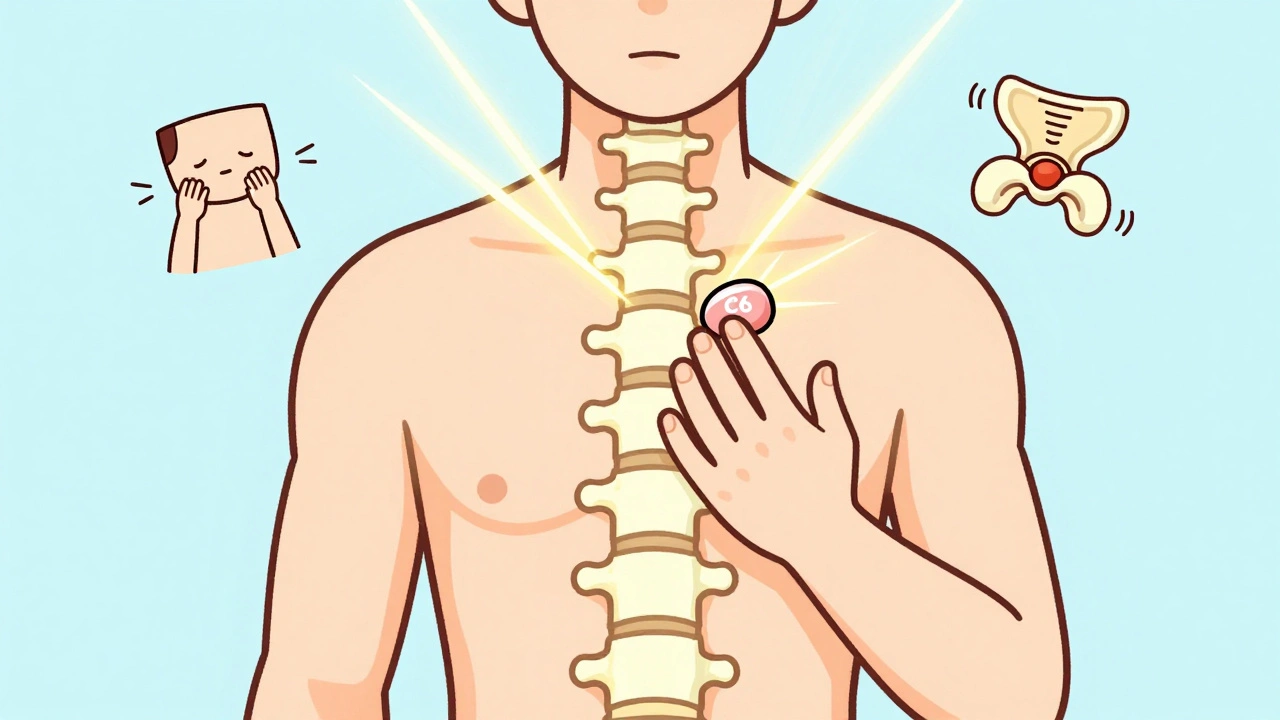
Cervical and lumbar radiculopathy cause nerve pain that shoots into arms or legs. Most cases improve with targeted rehab, not surgery. Learn what actually works, what doesn't, and how to recover faster.
View More