
Rhodiola Medication Interaction Checker
Check Your Medication Risks
Rhodiola can dangerously interact with certain medications, especially antidepressants. This tool helps you assess potential risks.
Risk Assessment Results
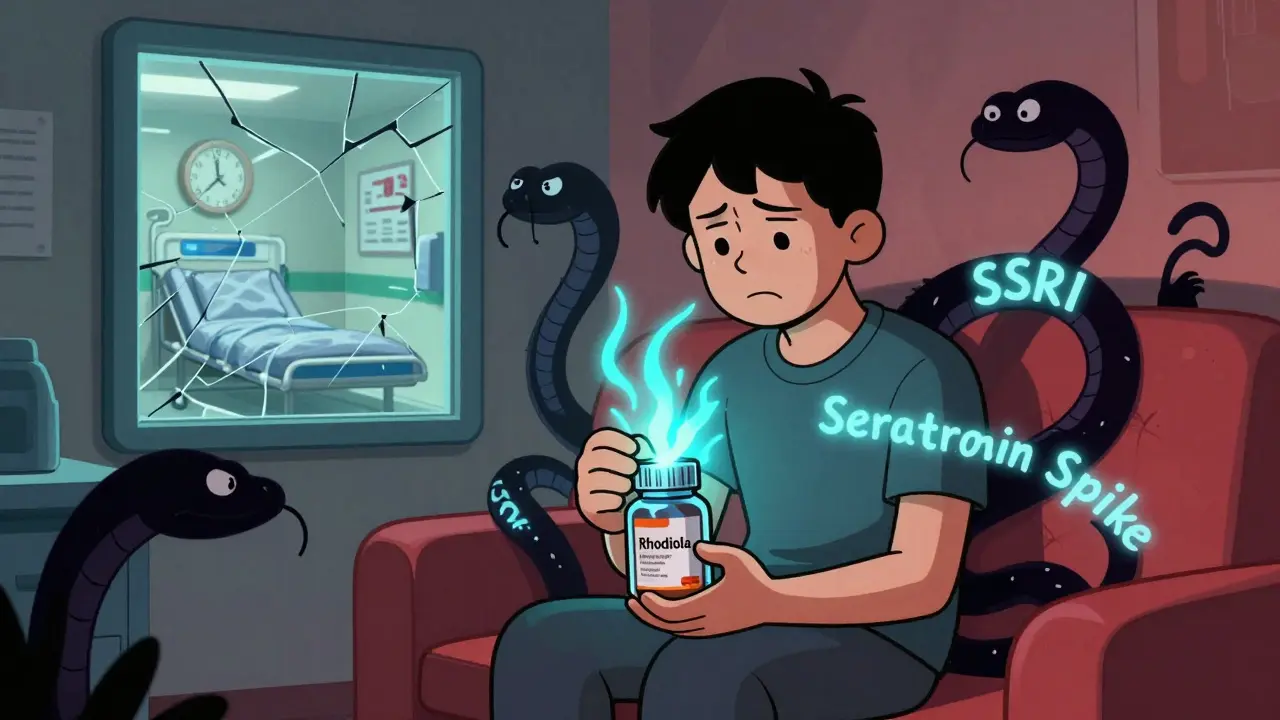
When people start feeling overwhelmed by stress or low mood, it’s common to look for natural solutions. Rhodiola rosea, an herb used for centuries in Russia and Scandinavia, has become a popular supplement for fatigue, burnout, and mild depression. But if you’re already taking an antidepressant, adding Rhodiola could be dangerous-seriously dangerous. This isn’t just a theoretical concern. Real people have ended up in the emergency room because they didn’t know the risks.
What Rhodiola Actually Does in Your Body
Rhodiola isn’t just another herbal tea. It contains active compounds like salidroside and rosavin that directly affect brain chemistry. Studies show it inhibits two key enzymes: monoamine oxidase A (MAO-A) and COMT. These enzymes normally break down serotonin, norepinephrine, and dopamine. When they’re slowed down, those neurotransmitters build up in your brain. That’s why some people feel more alert or less anxious after taking Rhodiola-it’s boosting mood chemicals.
But here’s the catch: if you’re already taking an SSRI like sertraline (Zoloft), escitalopram (Lexapro), or fluoxetine (Prozac), your body is already doing the same thing-blocking serotonin reuptake to keep levels high. Add Rhodiola on top of that, and serotonin levels can spike dangerously fast. There’s no safe middle ground. It’s not "a little more"-it’s a race toward serotonin syndrome.
Serotonin Syndrome: Not Just a Bad Day
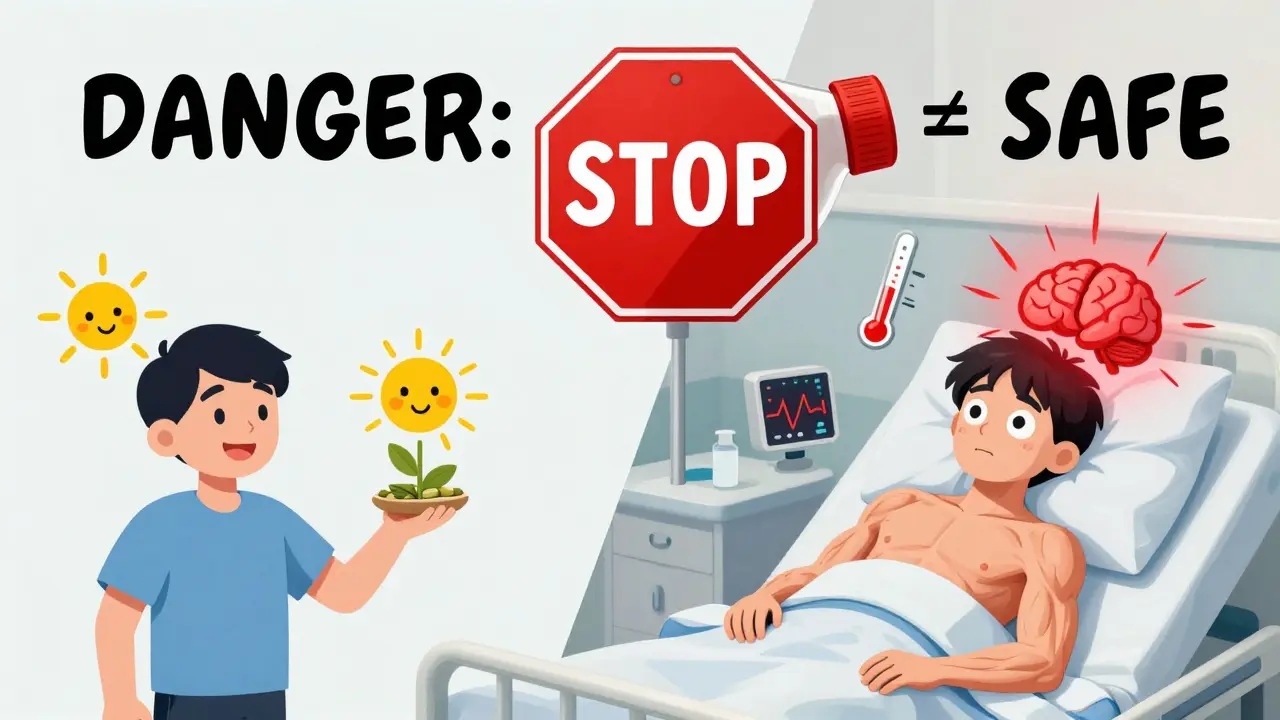
Serotonin syndrome isn’t a mild side effect. It’s a life-threatening condition. Symptoms can show up within hours and include:
- High fever (over 103°F)
- Shaking, muscle rigidity, or spasms
- Fast heart rate (over 130 bpm)
- Confusion, agitation, or hallucinations
- Loss of coordination, nausea, vomiting
A 2014 case published in PubMed described a 69-year-old woman who developed full-blown serotonin syndrome after taking Rhodiola with paroxetine. She had to be hospitalized. More recently, a Reddit user on r/SSRI reported a fever of 103.1°F, muscle spasms, and confusion after adding Rhodiola to their fluoxetine regimen. They needed emergency care. These aren’t rare outliers. The FDA documented 127 serotonin syndrome cases linked to Rhodiola and antidepressants in 2023-up from just 43 in 2020.
Why Most People Don’t Realize the Danger
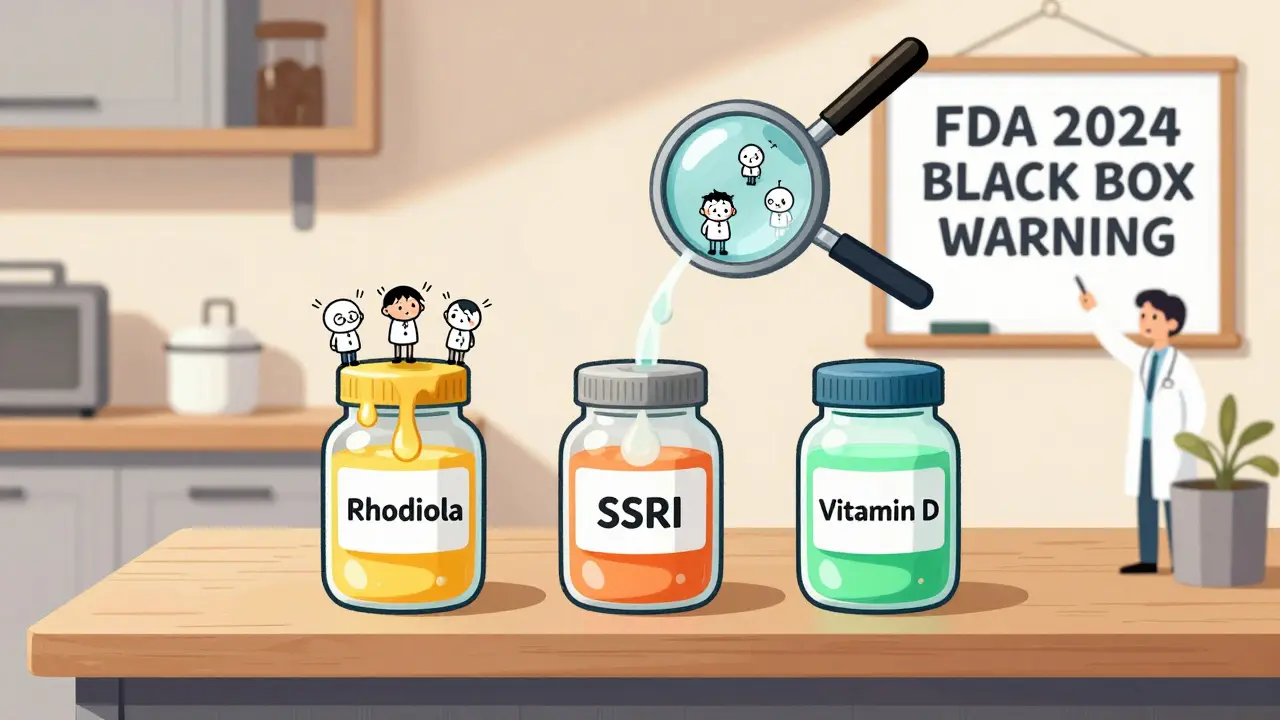
You won’t find warnings on most Rhodiola bottles. In fact, a 2021 FDA review found that only 22% of commercial Rhodiola products included any warning about antidepressant interactions. Compare that to prescription MAOIs, which carry black box warnings-the strongest possible alert. Rhodiola supplements are sold as "dietary supplements," which means they’re not held to the same safety standards as drugs. Manufacturers can claim it helps with "stress" or "energy," but they’re not allowed to say it treats depression-even though many label it as a "natural antidepressant."
And most users don’t even know to ask. A 2021 survey by the National Center for Complementary and Integrative Health found that 63.7% of people taking Rhodiola along with antidepressants had no idea there was a risk. They thought, "It’s natural, so it must be safe." That’s exactly what companies count on.
It’s Not Just About Serotonin
Rhodiola doesn’t just affect your brain. It can also interfere with other medications you might be taking:
- Blood pressure meds: Rhodiola can lower systolic blood pressure by 8-12 mmHg. If you’re on lisinopril or metoprolol, this could push your pressure too low, causing dizziness or fainting.
- Diabetes drugs: It can drop blood sugar by 15-20 mg/dL. If you’re on insulin or metformin, this raises your risk of dangerous hypoglycemia.
- Autoimmune conditions: Rhodiola may increase TNF-alpha, a protein linked to inflammation. For people with rheumatoid arthritis or lupus, this could trigger a flare.
These aren’t minor concerns. They’re real, measurable risks backed by clinical data. And they’re rarely mentioned on supplement labels.
What the Experts Say
Major medical institutions are unified in their warning. Dr. Jun J. Mao, a leading integrative medicine expert at Memorial Sloan Kettering, explicitly states that Rhodiola "may enhance the serotonergic side effects of antidepressant drugs." His team classifies it as a high-risk interaction in their official herb-drug database.
The American Psychiatric Association’s 2022 supplement interaction database lists Rhodiola as "Category X: Avoid Combination" with all serotonergic antidepressants. The European Medicines Agency added it to its "Herbal Interactions Monitoring List" in January 2023, requiring warning labels on all EU products by 2025. The FDA is following suit-by Q3 2024, all Rhodiola supplements sold in the U.S. will be required to carry a black box warning about serotonin syndrome.
There’s no credible counter-argument. A single 2015 study suggested low-dose Rhodiola (<200 mg/day) might be cautiously used under supervision for SSRI-resistant depression. But even that study had no clinical trials to back it up. No major medical group recommends combining the two.
What If You’re Already Taking Both?
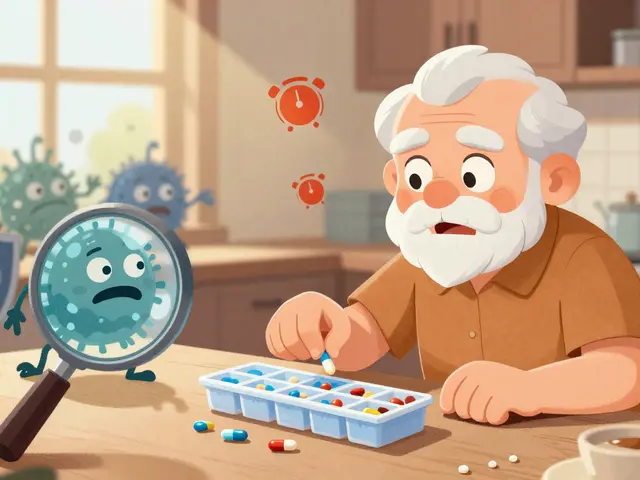
If you’re currently taking Rhodiola and an antidepressant, don’t stop your medication cold turkey. That’s dangerous too. But you need to act.
Here’s what to do:
- Stop taking Rhodiola immediately.
- Monitor yourself for symptoms of serotonin syndrome (see above).
- Contact your prescribing doctor or pharmacist. Tell them exactly what you’ve been taking-brand names, doses, and how long.
- If you experience fever, rapid heartbeat, muscle stiffness, or confusion, go to the ER. Don’t wait.
Memorial Sloan Kettering recommends a two-week washout period between stopping an SSRI and starting Rhodiola. But even that’s not a green light-it’s a last-resort measure only under strict medical supervision.
What About the People Who Say It Helped Them?
You’ll find plenty of reviews online where people say Rhodiola "fixed their depression" or "got them off Zoloft." Those stories are real to them-but they’re misleading.
Of 217 "helpful" reviews on ConsumerLab.com, 82% praised Rhodiola for stress relief. But none of those users were taking antidepressants. The positive experiences all come from people using Rhodiola alone. The negative experiences? They’re almost always from people combining it with SSRIs or SNRIs. On Amazon, 68% of negative reviews specifically mention antidepressant interactions. One top review says: "Developed severe tremors and panic attacks after taking Rhodiola with Lexapro-ER visit confirmed serotonin toxicity."
It’s not that Rhodiola doesn’t work. It’s that it works too well when mixed with other drugs. And that’s where the danger lies.
What Should You Do Instead?
If you’re struggling with low mood or burnout and want to avoid antidepressants, here are safer, evidence-backed options:
- Exercise: Just 30 minutes of brisk walking 5 days a week has been shown to be as effective as SSRIs for mild depression (Journal of Clinical Psychiatry, 2020).
- Cognitive Behavioral Therapy (CBT): Online CBT programs are now covered by many insurers and have proven long-term results.
- Mindfulness and sleep hygiene: Poor sleep and chronic stress are root causes of low mood. Fixing those often eliminates the need for supplements.
- Therapeutic doses of vitamin D or omega-3s: These have strong data for mood support without interaction risks.
If you’re considering any supplement while on medication, always check with your doctor first. Don’t rely on Amazon reviews, YouTube videos, or supplement labels. Your safety depends on accurate, science-based advice-not marketing claims.
Looking Ahead
The global Rhodiola market is growing fast-$287 million in 2022 and climbing. But with that growth comes more risk. The Institute for Safe Medication Practices projects 214-300 U.S. emergency visits linked to Rhodiola-antidepressant interactions by 2026 if nothing changes.
Regulatory changes are coming. The FDA’s new labeling rules, the EMA’s warning requirements, and the NIH’s ongoing $4.2 million clinical trial (NCT05812345) are all steps toward better safety. But until then, the burden falls on you. Know the risks. Ask questions. And never assume "natural" means "safe."
Can I take Rhodiola with my SSRI if I use a low dose?
No. Even low doses of Rhodiola can raise serotonin levels enough to trigger serotonin syndrome when combined with SSRIs or SNRIs. There is no proven safe dosage for this combination. The risk isn’t linear-it’s unpredictable and potentially life-threatening. Experts uniformly advise against it.
Is Rhodiola FDA-approved as an antidepressant?
No. The FDA has never approved Rhodiola for any medical use, including depression. It’s sold as a dietary supplement under DSHEA, which means manufacturers don’t need to prove safety or effectiveness before selling it. Any claims that it treats depression are illegal but still common on product labels.
How long does it take for Rhodiola to leave my system?
There’s no clear data on how long Rhodiola’s active compounds stay in your body because human pharmacokinetic studies are lacking. However, because its effects on serotonin enzymes can last for days, experts recommend waiting at least two weeks after stopping Rhodiola before starting an SSRI-or vice versa-to minimize interaction risk.
Are all Rhodiola supplements the same?
No. A 2018 USP study found that only 13.2% of tested Rhodiola supplements met their label claims for salidroside content. Some had none. Others had double the stated dose. This inconsistency makes predicting interactions nearly impossible. Look for products with USP verification, but even those don’t eliminate the risk when combined with antidepressants.
What should I do if I think I have serotonin syndrome?
Go to the emergency room immediately. Serotonin syndrome can worsen rapidly and become fatal within hours. Do not wait for symptoms to pass. Tell the staff you’re taking both Rhodiola and an antidepressant. Early treatment with serotonin blockers and supportive care can save your life.
15 Comments

jerome Reverdy
March 18 2026
This is why we need better labeling. I didn't know rhodiola was an MAOI inhibitor until I read this. My doc never mentioned it. The supplement industry is a Wild West. We need regulation, not just warnings.

Andrew Mamone
March 19 2026
Serotonin syndrome is no joke. 🚨 I had a friend who ended up in ICU over this. Rhodiola + SSRI = chemical tsunami. If you're on antidepressants, just skip the herbal 'boosts'. Your brain doesn't need extra fireworks.

MALYN RICABLANCA
March 20 2026
OH MY GOD. I just realized I've been taking this for 8 months with Lexapro. I've had heart palpitations, brain zaps, and night sweats. I thought it was just 'stress'. I'm literally going to the ER tomorrow. THIS IS A LIFETHREATING MISTAKE. WHY ISN'T THIS ON THE BOTTLE??

gemeika hernandez
March 21 2026
I'm on Prozac. Took rhodiola for energy. Felt great. Then I felt weird. Now I'm scared. Why didn't anyone tell me?

Nicole Blain
March 21 2026
I took rhodiola for a week. Felt like a new person. Then I got dizzy. Didn't connect it. Now I know. 😅

Kathy Underhill
March 23 2026
The body isn't a machine with isolated systems. When you interfere with neurotransmitter regulation, you're not 'enhancing'-you're destabilizing. Natural doesn't imply benign. This is pharmacology, not tea.

Sanjana Rajan
March 23 2026
Americans are so lazy. You take pills for everything. Just meditate. Or go outside. No need for herbs or drugs. You're all just weak.

Kendrick Heyward
March 25 2026
I knew this was gonna happen. People think supplements are harmless because they're 'natural'. You're playing Russian roulette with your brain. I told my cousin. She ignored me. Now she's in therapy. Karma.

Ayan Khan
March 26 2026
In India, we've used ashwagandha and tulsi for centuries. But we also know when to stop. You don't mix traditional medicine with pharmaceuticals without guidance. This isn't about fear. It's about wisdom. Respect the tradition and the science.

Emily Hager
March 28 2026
I'm not saying you shouldn't take rhodiola. I'm saying you shouldn't be stupid. If you're on antidepressants, you're already in a delicate state. Don't add more variables. That's not self-care. That's self-sabotage.

Melissa Starks
March 29 2026
I'm so glad someone finally said this. I was terrified to speak up because I thought I was the only one. I took rhodiola with Celexa for three weeks. I had tremors, paranoia, and a 102.8 fever. I thought I was dying. My husband took me to the hospital. The ER doc said, 'You're lucky you didn't have a seizure.' I'm never touching that stuff again. Please, if you're reading this-don't risk it. Your mental health is fragile. Don't gamble with it.

Lauren Volpi
March 29 2026
They call it 'natural' so you'll buy it. Same as with CBD. Same as with every other supplement. Capitalism preys on desperation. They don't care if you end up in the hospital. They just want your money.

Kal Lambert
March 30 2026
If you're on SSRIs, skip rhodiola. Period. The data is clear. There are safer alternatives like exercise, sleep hygiene, and therapy. Don't gamble with your neurochemistry.

Melissa Stansbury
March 31 2026
I took rhodiola for two weeks. Felt amazing. Then I stopped. Now I feel worse than before. Is this withdrawal? Am I broken? I need answers.
Write a comment
Popular Posts

Laura Gabel
March 18 2026
Natural doesn't mean safe bro. I took rhodiola with my Zoloft and woke up sweating and shaking like I had a fever. ER visit. Don't be dumb.