
Remote Monitoring Platform Selector
Select a platform below to see detailed capabilities, costs, and suitability analysis.
AiCure
AI-driven visual verification & behavioral analysis
$249/patient/monthMedisafe
Wearable integration & HRV monitoring
$99/patient/yearHealthArc
Advanced correlation analytics engine
Enterprise LicensingMango Health
NLP symptom reporting & gamification
Freemium/SubscriptionAiCure
Founded by Dr. David A. B. Lindquist, uses smartphone cameras to verify ingestion with 96.7% accuracy. Monitors micro-movements and facial cues for psychiatric medication reactions.
Best For:
Key Features:
- Visual ingestion verification
- Facial expression analysis
- Micro-movement detection
- Tremor identification
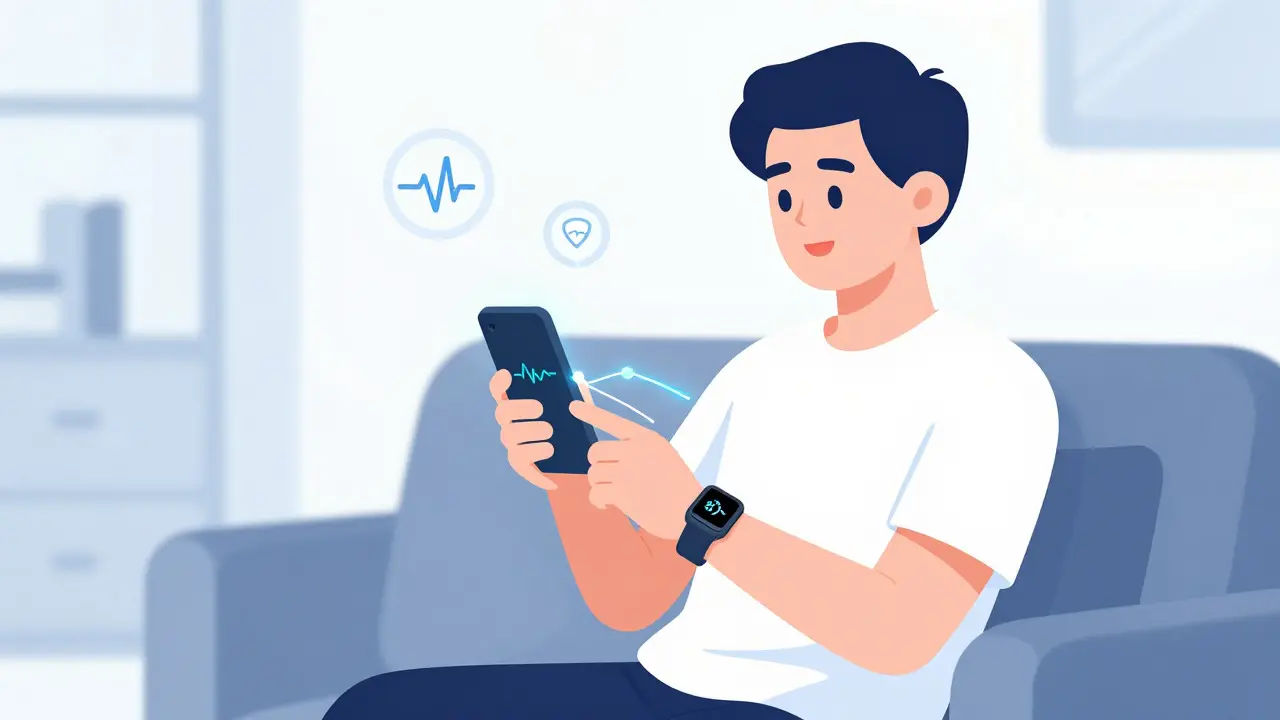
Imagine taking a new prescription for heart failure. Two days later, you feel dizzy and your heart races. Is it the stress of your job? Or is it an adverse drug event (ADE) caused by an electrolyte imbalance from your diuretic? In the past, you might have ignored these subtle signs until they became an emergency room visit. Today, connected devices and intelligent apps can catch these shifts before they spiral out of control.
This isn't science fiction; it's the current reality of remote monitoring for medication side effects. As of 2026, this technology has moved beyond simple pill reminders. It now combines physiological tracking with AI to detect reactions in real-time. With adverse drug events causing 5-7% of hospital admissions in the United States, the stakes are high. The annual cost of these preventable issues hits $30 billion. Remote monitoring offers a way to slash those numbers while keeping patients safe at home.
How Remote Monitoring Detects Side Effects
Traditional medication management focused on adherence-did you take the pill? Modern systems focus on reaction-what did the pill do to your body? This shift requires integrating data from multiple sources. Apps no longer just log when you swallow a capsule. They cross-reference that action with biometric data from wearables and self-reported symptoms.
For example, if you start a beta-blocker, your resting heart rate should drop. If your wearable detects that your heart rate variability (HRV) deviates by more than 15% from your baseline for 48 hours, the system flags it. This threshold was established through clinical validation studies, such as those conducted with Massachusetts General Hospital. The app then alerts both you and your care team. This early detection prevents minor discomfort from turning into severe toxicity or organ stress.
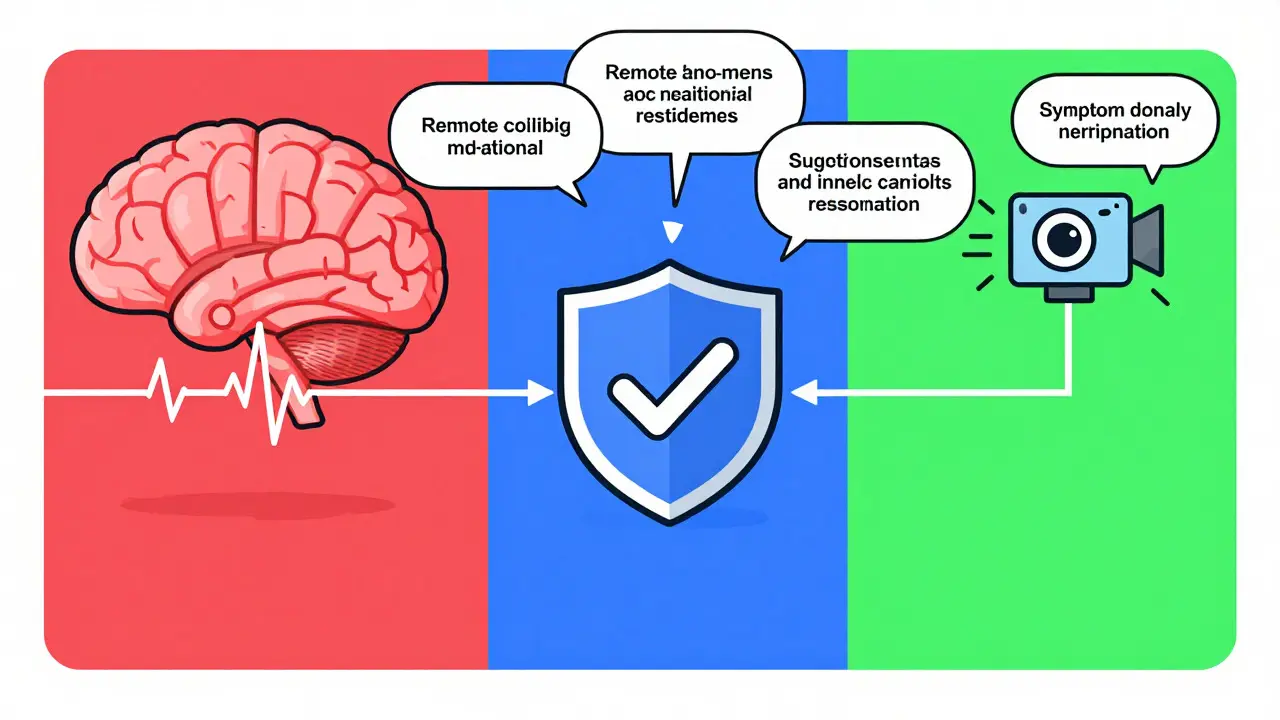
The technology relies on three core pillars:
- Physiological Tracking: Using smartwatches and medical-grade sensors to monitor heart rate, blood pressure, glucose levels, and sleep patterns.
- Behavioral Analysis: Employing smartphone cameras and AI to observe movement patterns, facial expressions, or speech changes that indicate drowsiness, confusion, or pain.
- Symptom Correlation: Using natural language processing to analyze your text inputs against vast databases like the FDA Adverse Event Reporting System (FAERS).
When these three streams converge, the system can identify potential side effects with remarkable accuracy. For instance, platforms like Mango Health achieve nearly 90% accuracy in linking reported fatigue to specific antidepressants, distinguishing it from normal daily tiredness.
Top Platforms and Their Capabilities
The market is crowded, but only a few platforms offer robust side effect monitoring rather than just basic logging. Here is how the leading solutions stack up in 2026.
| Platform | Key Strength | Cost Model | Best For |
|---|---|---|---|
| AiCure | AI-driven visual verification and behavioral analysis | $249/patient/month | Clinical trials and complex chronic conditions |
| Medisafe | Broad wearable integration and HRV monitoring | $99/patient/year (organizational) | General practice and hypertension management |
| HealthArc | Advanced correlation analytics across 1,850+ relationships | Enterprise licensing | Hospitals and large healthcare networks |
| Mango Health | NLP-based symptom reporting and gamification | Freemium / Subscription | Patient engagement and mental health support |
AiCure stands out for its precision. Founded by Dr. David A. B. Lindquist, it uses smartphone cameras to verify ingestion with 96.7% accuracy. More importantly, it monitors micro-movements and facial cues. If a patient exhibits tremors or unusual stillness after taking a psychiatric medication, the algorithm flags it. However, at $249 per patient per month, it remains expensive for widespread consumer use, making it ideal for clinical research settings where data integrity is paramount.
Medisafe, on the other hand, excels in accessibility. Its latest version integrates with 78 wearable devices, including the Apple Watch Series 9 and Fitbit Charge 6. For a patient managing blood pressure, Medisafe can correlate medication times with sudden spikes in heart rate. It’s less about deep behavioral analysis and more about continuous physiological surveillance. This makes it a practical choice for primary care providers looking to reduce readmissions without breaking the bank.
HealthArc offers the deepest analytical engine. Its Adaptive Side Effect Detection Engine (ASDE) maps over 1,850 medication-side effect relationships. It doesn’t just look at one drug; it analyzes polypharmacy-the interaction of multiple drugs. If you are taking five different medications, HealthArc can pinpoint which combination is likely causing nausea or cognitive fog. The trade-off is complexity. Staff training takes nearly 15 hours, so it’s best suited for specialized clinics.
The Human Element: Expert Perspectives and Bias
Technology is powerful, but it isn't perfect. Experts warn against blind trust in algorithms. Dr. Sarah Chen of Mayo Clinic reports a 37% reduction in severe adverse events among heart failure patients using these tools. She credits early detection of electrolyte imbalances. Yet, Dr. Michael Reynolds from Johns Hopkins raises a critical concern: algorithmic bias.
In preliminary data, side effect detection algorithms generated 23% fewer alerts for elderly African American patients compared to white patients. Why? Because the training data lacked diversity. The FDA responded in February 2025 with new guidance requiring rigorous demographic validation testing. Until these biases are corrected, clinicians must remain vigilant. An app might miss a subtle sign in certain populations, meaning human oversight is non-negotiable.
Privacy is another major hurdle. Dr. Elena Rodriguez notes that current HIPAA regulations struggle to protect sensitive side effect data. If this data leaks, could insurers use it to deny coverage? Patients worry about this. A KLAS Research survey found that 72% of patients fear their side effect data will be shared with insurers. Trust is built on transparency. Providers must clearly explain how data is stored, who sees it, and how it benefits the patient directly.
Real-World User Experiences
What does this look like for everyday users? Feedback from thousands of reviews reveals a mixed bag of relief and frustration.
Many users praise the peace of mind. One verified user on Capterra shared how Medisafe integrated with their Apple Watch to alert them to abnormal heart rate changes after starting a new blood pressure medication. That early warning allowed them to adjust the dosage before a crisis occurred. Caregivers also benefit significantly. Platforms like mySeniorCareHub received high marks for flagging potential drug interactions before administering multiple medications to elderly parents. The Drug Interaction Checker feature alone has prevented numerous accidental overdoses.
However, "alert fatigue" is a growing problem. Sixty-eight percent of healthcare providers report disabling certain alerts due to excessive false positives. Imagine getting a notification every time you feel slightly tired, only to find out it’s not related to your meds. Over time, you stop checking. Reddit users complain about apps flagging normal fatigue as a side effect of antidepressants, causing unnecessary anxiety. The key is calibration. Systems need to learn your baseline. If you’re naturally low-energy, the app shouldn’t panic every time you skip a workout.
Implementation Challenges for Providers
For hospitals and clinics, rolling out these systems is a logistical puzzle. A successful deployment typically takes 12 to 16 weeks. It starts with EHR integration, which demands 35-40 hours of IT staff time. Then comes staff training. Clinicians need to understand how to interpret the data, not just see red flags. Binariks’ analysis shows that effective training averages 12.3 hours per clinician.
Patient onboarding is equally critical. Setting up devices and educating patients takes 45-60 minutes per person. Geisinger Health solved this by hiring "digital health navigators." These dedicated staff members guide patients through the process, achieving an 89% engagement rate compared to the industry average of 63%. Without this human touch, even the best tech fails. Elderly patients, in particular, need help connecting devices and understanding notifications. Cellular-enabled devices like Medtronic’s CareLink help maintain connectivity, boasting 99.2% uptime, but they require initial setup support.
Future Trends: Digital Twins and Pharmacogenomics
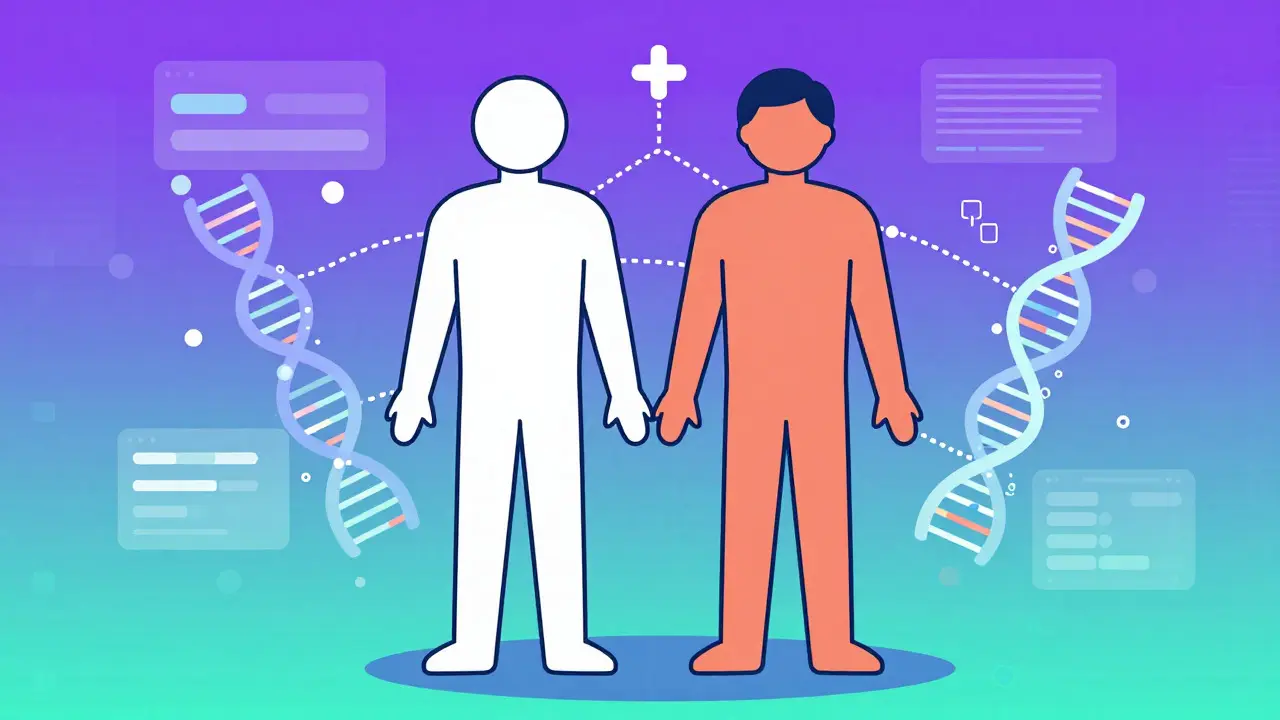
The next frontier is personalization. AiCure is developing "Digital Twin" technology. This creates a virtual model of your body’s response to medication. Phase 2 trials show a 43% improvement in predicting individual side effect susceptibility. Instead of generic warnings, you get predictions based on your unique physiology.
Even more promising is the integration with pharmacogenomics. The Mayo Clinic’s RIGHT Study combines genetic testing with remote monitoring. By knowing your DNA, doctors can predict how you metabolize drugs. When combined with real-time monitoring, this approach prevents 67% of adverse drug events in genetically susceptible patients. By 2028, Gartner predicts 92% of US healthcare systems will implement some form of integrated side effect monitoring. The goal is clear: move from reactive treatment to proactive prevention.
Are remote monitoring apps covered by insurance?
Coverage varies, but trends are improving. In 2025, CMS expanded reimbursement for Remote Therapeutic Monitoring (RTM) codes to include medication side effect monitoring. Qualifying services can generate $52-$67 per patient monthly payments. Check with your specific provider and insurer, as private payers may have different policies regarding device costs versus service fees.
Which wearable devices work best with these apps?
Most leading platforms integrate with major consumer wearables like the Apple Watch Series 9, Fitbit Charge 6, and Samsung Galaxy Watch. For medical-grade precision, devices like Medtronic’s CareLink or specialized BP monitors are preferred. Ensure your device supports Bluetooth Low Energy (BLE) and has APIs compatible with FHIR standards for seamless data transfer.
How accurate are these apps in detecting side effects?
Accuracy depends on the platform and data source. Visual verification apps like AiCure claim 96.7% accuracy in confirming ingestion. Symptom correlation tools like Mango Health achieve around 89% accuracy in identifying medication-related issues. However, false positives remain a challenge, occurring in 18-22% of cases, often due to difficulty distinguishing side effects from underlying condition symptoms.
Is my health data safe from being sold to advertisers?
Reputable healthcare platforms adhere to HIPAA and GDPR regulations, meaning your data is encrypted and protected. However, consumer-grade apps may have looser privacy policies. Always check the privacy policy for terms regarding data sharing. Look for platforms that explicitly state they do not sell personal health information to third-party advertisers or insurers without consent.
Can I use these apps if I am not tech-savvy?
Yes, but you may need initial help. Many platforms design interfaces for simplicity, but setting up wearables and syncing data can be tricky. Look for programs that offer caregiver access or digital health navigators. Apps like Medisafe and mySeniorCareHub are designed with large fonts and simple buttons specifically for older adults or those less familiar with smartphones.
11 Comments

Lilith Stepanyan
August 9 2026
The article glosses over the sheer volume of noise these systems generate. You think an algorithm can distinguish between 'medication-induced drowsiness' and 'I stayed up too late watching Netflix'? Please. The 18-22% false positive rate isn't a bug; it's a feature designed to keep liability low while annoying users into compliance or resignation. It’s surveillance capitalism dressed up as healthcare. They want your biometric data because it’s more valuable than the health outcome itself. Don’t let the shiny tech distract you from the fact that they are mining your life for profit margins.

jackie healey
August 11 2026
I have to agree with some concerns about privacy,, but I also see the immense value in early detection! For instance,, my mother uses a similar system for her hypertension,, and it literally saved her from a stroke last year by flagging a sudden BP spike that she attributed to stress. The key is transparency! Providers must explain exactly how the data is stored and who sees it. If insurers can use this against us,, then we are walking into a trap. However,, the potential to reduce hospital admissions by even 5% is significant! We just need stricter regulations on data sharing!

Josh Atkinson
August 12 2026
Honestly, folks are overthinking the bias issue. :D Yes, there were discrepancies in the initial training data, but that’s just how machine learning works-you feed it garbage, you get garbage out. The FDA guidance in 2025 was a necessary step, but now we’re past that. The algorithms are self-correcting based on real-world feedback loops. If you’re worried about your specific demographic being under-represented, just manually log your symptoms more frequently. The system learns faster when you engage with it actively. Stop complaining and start using the tools available to you. Your health is your responsibility, not the app’s. ;)
Lilith Stepanyan
August 14 2026
Oh, look at Josh playing doctor again. 'Stop complaining and start using the tools.' Typical techno-utopian nonsense. The bias isn't just a 'training data' issue; it's structural. If the sensors don't read dark skin tones accurately for pulse oximetry, no amount of manual logging fixes the hardware flaw. And blaming the user for the system's failure is the oldest trick in the corporate playbook. You're defending a system that profits from your anxiety while failing the most vulnerable populations. It’s not 'self-correcting'; it’s selectively ignoring outliers until they become emergencies.

Fenton Quinn
August 15 2026
The definition of health shifts when we quantify it constantly. We risk pathologizing normal human variance.

Tegan Morey
August 16 2026
I’m curious about the digital twin concept mentioned. Does anyone know if that requires genetic testing upfront? I’d love to try it out but the idea of paying for both the app and the DNA test seems like a lot. Also, how does it handle polypharmacy? I take four different meds and keeping track of interactions is already a headache without adding AI predictions to the mix. Sounds cool but maybe too complex for everyday use right now?

Gary Browne
August 18 2026
You probably aren't taking your meds correctly anyway. Most people fail because they lack discipline, not because the tech is flawed. I bet you skip doses and then blame the app when you feel weird. Check your own habits before questioning the science. The data doesn't lie, only you do.

Minal Aditi
August 19 2026
Oh wow, Gary, what a surprise. Always so insightful with your personal attacks. Truly, the depth of your analysis is staggering. Maybe if you spent less time policing strangers' medication habits and more time examining your own ego, we’d all benefit. But then again, why bother? You’re probably too busy feeling superior to notice anything else. How exhausting it must be to be so utterly convinced of your own righteousness. Bravo.

charlie student
August 19 2026
It’s interesting how we’ve moved from trusting our own bodies to trusting a black box algorithm. There’s a certain peace in knowing the numbers, but also a loss of autonomy. I guess that’s the trade-off for modern convenience. We outsource our intuition to silicon. Not necessarily bad, just... different. Makes you wonder what happens when the server goes down. Do we forget how to listen to ourselves?

Ambria St louis
August 19 2026
The philosophical implications are profound! When we digitize our physiological responses,, we essentially create a proxy self that exists in the cloud. This raises questions about identity and agency! If the app says you are fine,, but you feel terrible,, whose reality takes precedence? The algorithm’s or the human’s? This tension between objective data and subjective experience is central to the future of medicine. We must remain vigilant about preserving the patient’s voice in this data-driven landscape!
Write a comment
Popular Posts

Top Alternatives to North Drugstore in 2025
18 Mar 2025


Morikeoluwa Ayodeji
August 8 2026
Yo, this is actually huge for folks in developing regions like Nigeria where specialist access is limited. Imagine if we could catch those electrolyte imbalances via a basic smartphone sensor instead of waiting three weeks for a clinic appointment that might still be understaffed. The cost barrier mentioned for AiCure is real though, $249/month is steep for most households here. But Medisafe looking at $99/year? That’s doable. We just need better infrastructure support to make sure the data syncs reliably without spotty internet connections killing the session.