When a blockbuster drug’s core patent expires, you might expect generic copies to flood the market immediately. That’s not how it works anymore. In fact, most pharmaceutical companies keep their monopolies alive long after that initial patent runs out. They do this using market exclusivity extensions, a complex web of regulatory rules and secondary patents designed to delay competition.
These mechanisms are not just loopholes; they are built into the law. But understanding them is tricky because they operate differently from standard patents. While a patent protects an invention, regulatory exclusivity protects the right to sell a specific product based on government approval data. For patients, this means higher prices for longer. For pharma companies, it means billions in protected revenue. Let’s break down exactly how these systems work, why they exist, and what they mean for the future of medicine.
The Foundation: Hatch-Waxman and the Balance of Power
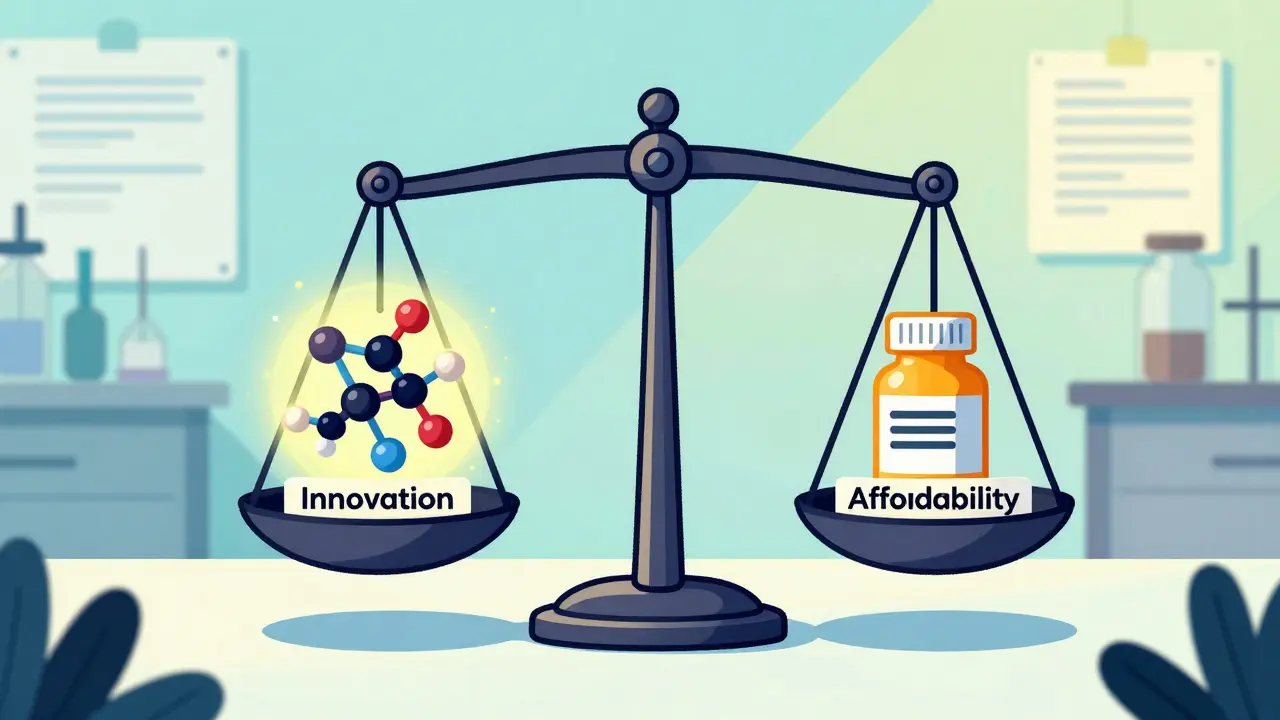
To understand where we are today, we have to look at 1984. The Drug Price Competition and Patent Term Restoration Act, commonly known as the Hatch-Waxman Act, was a landmark piece of legislation in the United States. It tried to solve a difficult problem: how to encourage innovation while ensuring affordable generics eventually reach patients.
Before this act, drug development took so long that by the time the Food and Drug Administration (FDA) approved a new medication, only a few years of patent life remained. Companies argued there wasn’t enough profit incentive to innovate. The Hatch-Waxman Act introduced two key concepts:
- Patent Term Extension (PTE): This compensates for the time lost during FDA review. It can add up to five years to a patent, but the total post-approval patent life cannot exceed 14 years.
- Abbreviated New Drug Application (ANDA): This allows generic manufacturers to skip clinical trials if they can prove their drug is bioequivalent to the brand-name version.
The original goal was roughly nine years of market protection after approval, with PTE adding some buffer. However, the landscape has shifted dramatically since then. A 2023 study in the Yale Law and Policy Review found that 91% of drugs receiving patent term extensions continue their monopolies well beyond those limits. How? By stacking other types of exclusivity on top of the patent.
Regulatory Exclusivity vs. Patent Protection
This is the most critical distinction to grasp. A patent is granted by the US Patent and Trademark Office (USPTO) and protects the chemical compound or method of manufacture. Regulatory exclusivity is granted by the FDA and prevents the agency from approving generic versions, regardless of patent status.
You can think of patents as a wall around your house. Regulatory exclusivity is like having a private security team that stops people from entering, even if the wall crumbles. These protections run independently. If a company holds both, the exclusivity often lasts longer than the patent.
In the US, there are five main types of regulatory exclusivity:
- New Chemical Entity (NCE) Exclusivity: Five years of protection for a completely new active ingredient. During this time, the FDA cannot even accept applications for generic versions.
- Orphan Drug Exclusivity: Seven years of market exclusivity for drugs treating rare diseases (affecting fewer than 200,000 Americans). This is powerful because many orphan drugs lack strong patent coverage, making this exclusivity their primary shield.
- New Clinical Investigation Exclusivity: Three years of protection for new indications (uses), dosages, or formulations of existing drugs.
- Pediatric Exclusivity: An extra six months added to any existing exclusivity period or patent term if the company completes agreed-upon pediatric studies.
- Patent Challenge Exclusivity: 180 days of exclusive marketing rights for the first generic company to successfully challenge a brand-name patent.
The European Union uses a different system. Instead of NCE exclusivity, they rely on Supplemental Protection Certificates (SPCs). An SPC can extend protection up to 15 years beyond the standard 20-year patent term. The EU also offers 10 years of data exclusivity for orphan medicines, extendable to 12 years if pediatric data is provided. Additionally, the EU has the Pediatric-Use Marketing Authorization (PUMA), which grants eight years of data protection plus two years of market exclusivity for pediatric-specific medicines without patent protection.
The Art of Stacking: Extending Monopolies
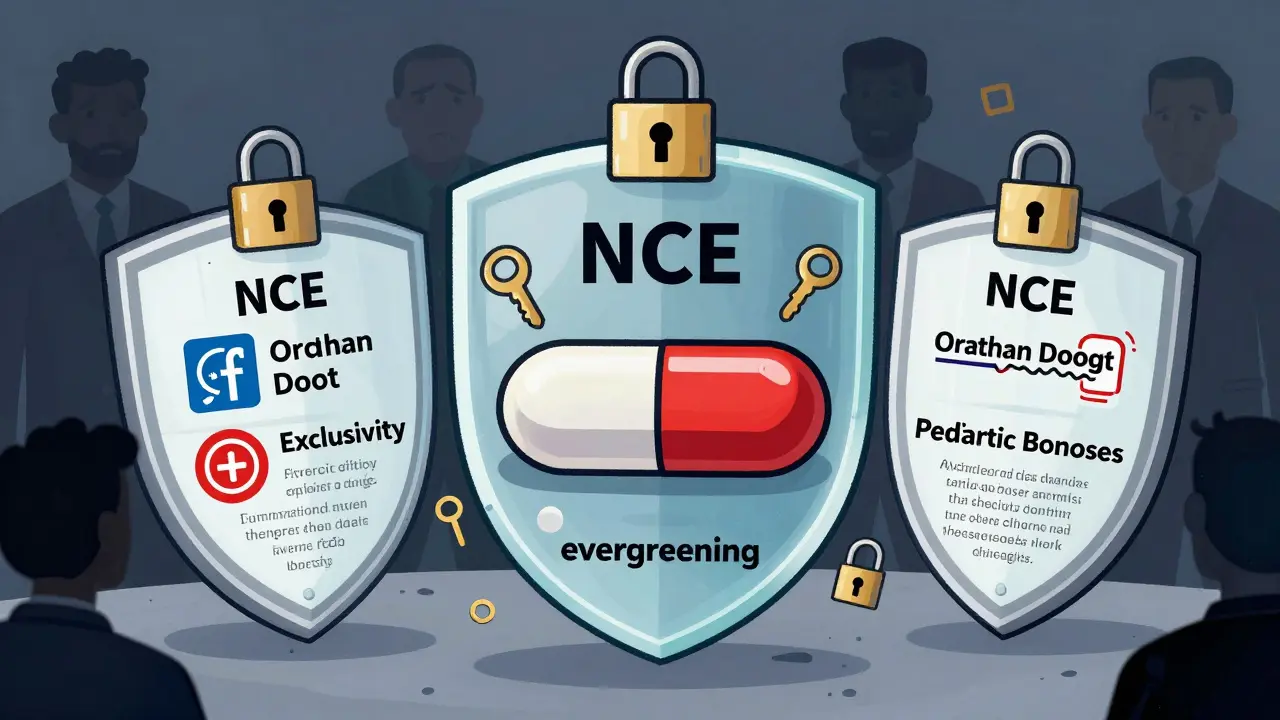
The real power lies in combining these mechanisms. Pharmaceutical strategists don’t just rely on one tool; they stack them to create layers of defense. This practice, often called "evergreening," involves filing secondary patents for minor changes-like a new pill coating, a different dosage strength, or a combination therapy-to trigger additional exclusivity periods.
Consider the case of tazarotene, a skin medication. According to research, it accumulated 48 additional patents beyond its core compound patent. Each of these secondary patents could potentially block generic entry or serve as leverage in licensing negotiations. Similarly, Vertex Pharmaceuticals extended the effective market exclusivity of its cystic fibrosis therapies to over 20 years post-approval by strategically combining patent extensions with regulatory exclusivities.
Why does this matter financially? A 2023 study in JAMA Health Forum analyzed four top-selling drugs (bimatoprost, celecoxib, glatiramer, and imatinib). They found that extended market exclusivity resulted in $3.5 billion in additional spending over a two-year period following generic competition. Without these extensions, net spending would have dropped significantly once generics entered the market.
| Mechanism | United States | European Union |
|---|---|---|
| Primary Post-Patent Extension | Patent Term Extension (PTE): Up to 5 years (max 14 years post-approval) | Supplemental Protection Certificate (SPC): Up to 15 years beyond patent |
| New Drug Data Exclusivity | 5 years (NCE) | 8+2 years (Data Exclusivity) |
| Orphan Drug Exclusivity | 7 years | 10 years (12 with pediatric compliance) |
| Pediatric Incentive | +6 months to existing exclusivity/patent | +6 months to SPC or PUMA |
| New Indication Exclusivity | 3 years (requires new clinical investigation) | No direct equivalent; relies on SPC or supplementary certificates |
Criticism and Regulatory Scrutiny
These strategies are not without controversy. Critics argue that the current system rewards incremental tweaks rather than true innovation. Dr. Aaron Kesselheim of Harvard Medical School noted that the end of monopoly time rarely comes at the expiration of the core patent. Instead, it happens after companies exhaust all secondary patents and exclusivities.
The Federal Trade Commission (FTC) has taken notice. In June 2023, the FTC filed an amicus brief arguing that "product hopping"-where a company switches its drug to a new formulation just before patent expiry to reset the clock-violates antitrust laws. This signals a potential shift in how aggressively regulators will challenge these tactics.
Furthermore, the FDA tightened its guidance in April 2023 regarding three-year new indication exclusivity. Companies now need more substantial evidence of clinical benefit to qualify. Previously, minor changes sometimes slipped through. Now, the bar is higher. This suggests that while stacking remains possible, it is becoming more difficult and resource-intensive.
Who Benefits and Who Loses?
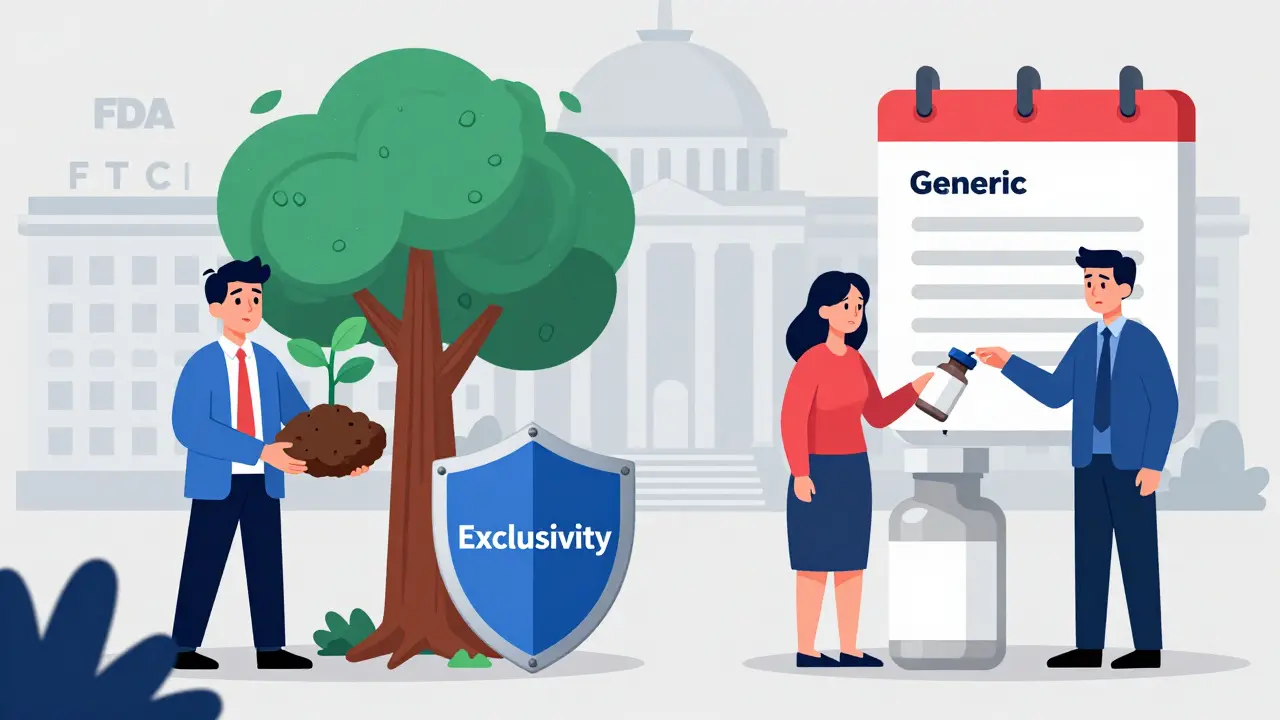
For biotech startups, these extensions are vital. A 2023 survey by the Biotechnology Innovation Organization (BIO) found that 68% of biotech firms consider market exclusivity extensions critical for securing venture capital. Developing a drug costs an average of $2.3 billion. Without guaranteed periods of high revenue, investors would be hesitant to fund risky projects.
However, patients and payers bear the cost. When generics are delayed, prices remain high. Generic drugs typically cost 80-85% less than brand-name equivalents. Delaying their entry by even a few months can cost insurers and governments millions. For example, Teva Pharmaceuticals reported that product hopping tactics delayed generic entry for 17% of their target molecules in 2022.
There is a silver lining for rare disease patients. Orphan drug exclusivity directly enables the development of treatments for conditions affecting fewer than 200,000 Americans. In 2022, orphan drug designations accounted for 38% of all new drug approvals. Without the seven-year exclusivity guarantee, many of these niche therapies would never see the light of day because the market size is too small to recoup R&D costs through volume alone.
Looking Ahead: The Future of Exclusivity
The landscape is evolving. Analysts at Evaluate Pharma predict that by 2028, the average effective market exclusivity period for new drugs will reach 16.3 years, up from 12.7 years in 2018. This growth is driven by strategic stacking and the increasing complexity of regulatory frameworks.
The European Commission proposed revisions to the SPC system in June 2023 to better incentivize true innovation. Meanwhile, the US faces ongoing legal battles over the definition of "new clinical investigation." As regulations tighten, pharmaceutical companies are investing heavily in regulatory affairs teams. Major pharma firms dedicate 15-25 specialists to managing exclusivity for blockbuster drugs alone.
For stakeholders, the key takeaway is clarity. Understanding the difference between patent life and regulatory exclusivity is essential for predicting when generic competition will actually begin. It is no longer enough to look at a patent expiration date. You must analyze the entire portfolio of exclusivities attached to a drug.
What is the difference between a patent and market exclusivity?
A patent is a property right granted by the USPTO that prevents others from making, using, or selling the invention. Market exclusivity is a regulatory privilege granted by the FDA that prevents the agency from approving generic versions of a drug, even if no patent exists or the patent has expired. Patends protect the invention; exclusivity protects the market access.
How long does orphan drug exclusivity last in the US?
In the United States, orphan drug exclusivity lasts for seven years. This applies to drugs designated for treating rare diseases affecting fewer than 200,000 people. During this period, the FDA cannot approve another application for the same drug and indication, unless the new applicant proves clinical superiority.
Can a company stack multiple exclusivity periods?
Yes. Companies often stack exclusivities by obtaining pediatric bonuses (adding six months) on top of existing exclusivity periods, or by filing for new indication exclusivity (three years) for existing drugs. This strategy extends the total time before generic competition can legally enter the market.
What is the maximum patent term extension allowed under Hatch-Waxman?
The Patent Term Extension (PTE) can add up to five years to a patent’s life. However, the total post-approval patent life cannot exceed 14 years. Only the first approval of a new active ingredient qualifies for PTE, and only one patent per new active ingredient can be extended.
Why do pharmaceutical companies use 'product hopping'?
Product hopping involves switching a drug to a new formulation, dosage, or delivery method just before the core patent expires. This forces generic manufacturers to start over with new bioequivalence studies, effectively resetting the clock on market entry and extending the brand-name company’s monopoly.
How does the EU's SPC differ from the US PTE?
The US Patent Term Extension (PTE) adds up to five years, capped at 14 years post-approval. The EU’s Supplemental Protection Certificate (SPC) can provide up to 15 years of protection beyond the standard 20-year patent term. The EU system generally offers longer potential extension periods but operates under different calculation rules regarding regulatory review time.
What is the economic impact of market exclusivity extensions?
Extensions significantly increase healthcare spending. A JAMA Health Forum study found that for four top-selling drugs, extended exclusivity resulted in $3.5 billion in additional spending over two years post-generic entry. While this helps pharma companies recoup R&D costs, it delays the lower prices associated with generic competition.