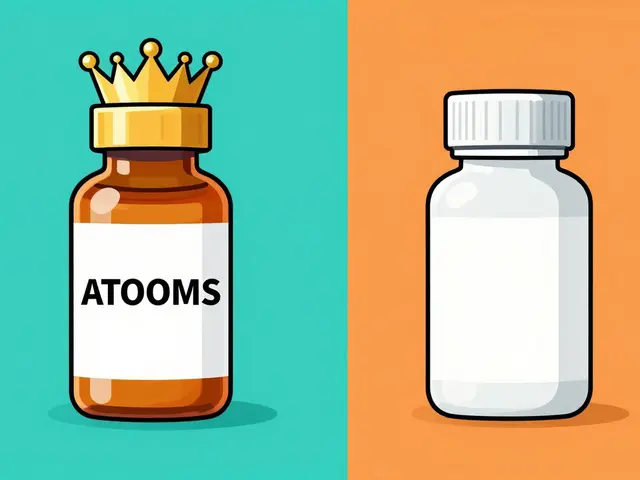
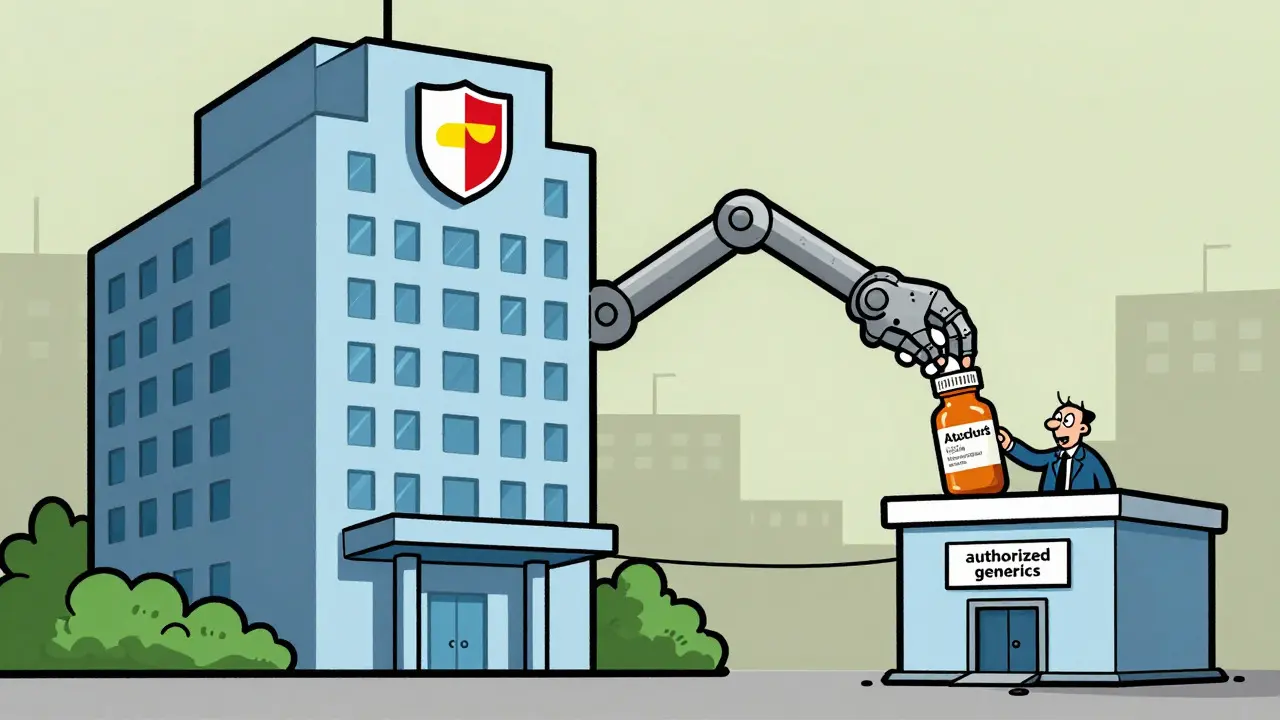
When a big pharma company loses a patent lawsuit, you might expect the price of their drug to drop immediately. But sometimes, the branded maker just slaps a new label on the same pill and sells it as a "generic" themselves. This practice, known as launching authorized generics, is a legal loophole that keeps prices high while technically adding a competitor to the market. It confuses patients, frustrates independent generic makers, and creates a unique headache for antitrust regulators.
This strategy sits at the center of modern pharmaceutical patent litigation. While the Hatch-Waxman Act of 1984 was designed to encourage cheaper alternatives by giving the first generic challenger 180 days of exclusive market access, authorized generics allow brand owners to enter that exclusive window without paying the full cost of proving bioequivalence. The result? A distorted competitive landscape where the biggest players often compete against themselves, squeezing out smaller rivals and complicating the path to affordable medicines.
Key Takeaways
- Authorized generics are identical to branded drugs but sold under a generic name, requiring no new FDA approval.
- They capture 25-35% of the market during the 180-day exclusivity period, reducing first-filer revenues by up to 52%.
- The FTC views these products as a tool for anti-competitive behavior, particularly when used in patent settlement deals.
- Recent trends show a decline in authorized generic launches following settlements, suggesting industry adaptation to regulatory pressure.
- Legislation like the Preserve Access to Affordable Generics Act aims to close this gap by prohibiting delays in authorized generic entry.
How Authorized Generics Work Within Patent Law
To understand why this matters, you have to look at how the system is supposed to work. Under the Hatch-Waxman framework, when a generic company files an Abbreviated New Drug Application (ANDA) and challenges a patent, they get a reward: 180 days where only they can sell the generic version. This exclusivity is meant to pay off the risk of litigating against a giant corporation.
However, the law is silent on whether the original brand owner can also sell a generic version during those 180 days. The FDA has ruled that they can, as long as the product is identical. This means a company like Pfizer or Merck can watch a rival win a court case, then immediately launch their own "authorized generic" through a subsidiary. They don't need to run new clinical trials; they just repackage the existing drug. This bypasses the expensive and risky process that independent generic firms must undergo.
The economic impact is immediate. Data from the Federal Trade Commission (FTC) shows that when an authorized generic enters the market, it typically grabs 25-35% of the sales that would have gone to the first-filing generic. For the independent challenger, this isn't just a lost sale; it's a massive hit to their return on investment. In some cases, their revenues drop by 40-52% during the exclusivity period. If the brand company prices its authorized generic slightly lower than the branded version but higher than the true generic, it creates a confusing middle tier that dilutes the incentive for anyone else to challenge patents in the future.
The Role of Reverse Payment Settlements
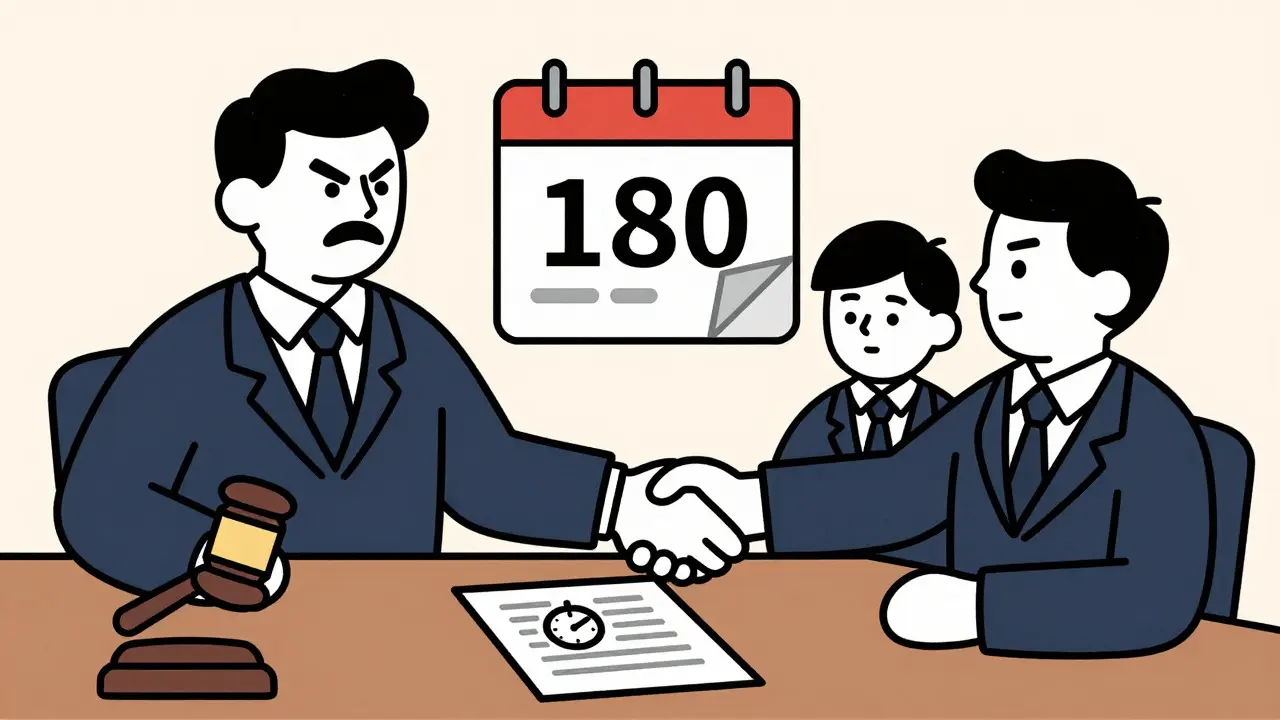
Things get legally murky when authorized generics are used as bargaining chips in patent lawsuits. Often, instead of fighting to the end, the brand and the generic company settle. In many of these deals, the brand pays the generic firm to delay entry. But increasingly, the "payment" isn't cash-it's the promise not to launch an authorized generic.
Think about it from the generic company's perspective. If they know the brand will flood the market with its own cheap version the moment they launch, their profit margins shrink. So, they agree to wait a few extra months in exchange for a guarantee that the brand won't undercut them. To an outsider, this looks like cooperation rather than competition. Joseph Simons, former FTC Chairman, called these arrangements "the most egregious form of anti-competitive behavior in the pharmaceutical sector."
Data from fiscal years 2004-2010 revealed that about 25% of patent settlements involving first-filing generics included these explicit agreements. These deals extended monopoly periods by an average of 37.9 months beyond what the original settlement date suggested. Essentially, consumers paid higher prices for longer because two competitors agreed to keep the market quiet. The Supreme Court’s ruling in FTC v. Actavis (2013) opened the door for antitrust scrutiny of these reverse payments, but it didn't specifically target authorized generics, leaving a gray area that companies have exploited for years.
Economic Impact on Consumers and Markets
You might wonder if all this corporate maneuvering actually affects your wallet. The short answer is yes, though the effect is subtle. When authorized generics are present, they do offer a slight price reduction compared to the branded drug. Health Affairs research cited by PhRMA suggests that pharmacy invoice prices were 13-18% lower when an authorized generic was available compared to when it wasn't. For some patients, that’s a relief.
But for the broader market, the damage lies in the chilling effect on innovation. If independent generic companies see that their hard-won exclusivity will be eroded by the brand owner, they may decide not to challenge weak patents at all. The Congressional Research Service noted that for drugs with moderate sales volumes, the threat of authorized generic competition could tip the balance against bringing a patent challenge entirely. This means fewer generics entering the market overall, keeping prices artificially high across the board.
The scale is significant. Between 2005 and 2010, authorized generics were present in 47% of markets where a first generic filer had exclusivity, affecting roughly $140 billion in annual prescription drug sales. While the prevalence has dropped recently-falling from 42% of relevant markets in 2010 to 28% in 2022-the financial stakes remain enormous. Teva Pharmaceutical, one of the largest generic makers, reported a $275 million revenue shortfall in 2018 directly linked to authorized generic competition.
| Factor | Market Without Authorized Generic | Market With Authorized Generic |
|---|---|---|
| First-Filer Market Share (Exclusivity Period) | 80-90% | 45-60% |
| First-Filer Revenue Impact | High (Full Exclusivity Value) | Reduced by 40-52% |
| Pricing Structure | Branded vs. Low-Cost Generic | Branded vs. Mid-Price AG vs. Low-Cost Generic |
| Incentive for Future Challenges | Strong (Clear ROI) | Weakened (Diluted ROI) |
| Regulatory Scrutiny Level | Standard Antitrust Review | Heightened FTC Monitoring |
Regulatory Response and Legislative Efforts
The regulatory community hasn't sat idly by. The FTC has been actively monitoring this space, opening 17 investigations into potential anticompetitive authorized generic arrangements since 2020. Their 2022 Policy Statement explicitly identified agreements to delay authorized generic entry as a priority enforcement area. Holly Vedova, Director of the Competition Bureau, stated clearly that the Commission will challenge any arrangement that uses these products to circumvent the competitive structure Congress intended.
Congress has also tried to step in multiple times. The Preserve Access to Affordable Generics Act (S.27) was reported out of the Senate Judiciary Committee in 2011, and Senators Amy Klobuchar and Chuck Grassley reintroduced a similar bill in March 2023. These bills aim to prohibit agreements that delay authorized generic entry, effectively closing the loophole that allows brands to use their own products as leverage in settlements.
Despite this pressure, the practice persists. Why? Because it works. For brand companies, it’s a low-cost way to protect market share. For generic companies, accepting a delayed-entry deal is often safer than risking total loss. And for now, the legal ambiguity remains. Until legislation passes or a major court ruling clarifies the status of authorized generics in settlements, the pharmaceutical market will continue to navigate this complex intersection of patent law and antitrust policy.
Future Outlook and Industry Adaptation
Looking ahead, the trend seems to be shifting. A 2023 study in the American Journal of Health-System Pharmacy found that authorized generics became significantly less likely to enter the market following patent settlements. This suggests that companies are adapting to the increased regulatory risk. They may be finding other ways to manage lifecycle extension, such as reformulations or new delivery mechanisms, which are harder to classify as simple authorized generics.
Industry analysts at Evaluate Pharma project that authorized generics will still represent 20-25% of all generic drug entries through 2028. They aren't going away, but their role is evolving. The focus is moving from blatant market sharing to more sophisticated lifecycle management strategies that stay within the letter of the law. For patients, the key takeaway is that the presence of an authorized generic doesn't always mean the best price. It often signals a strategic move by the brand owner to maintain control over the market transition.
As we move further into the 2020s, the battle over authorized generics will likely remain a central feature of pharmaceutical patent litigation. It’s a reminder that in the world of medicine, competition isn't just about who makes the best drug-it's about who controls the narrative around price, access, and innovation.
Are authorized generics approved by the FDA?
Yes, but they don't require a new full approval. Since they are identical to the already-approved branded drug, they enter the market through a supplemental application. They must meet the same quality standards but skip the lengthy clinical trial phase required for new generic entrants.
Do authorized generics cost less than branded drugs?
Usually, yes. They are priced lower than the branded version to appeal to insurers and pharmacies, but they are often priced higher than independent generics. This creates a middle pricing tier that benefits the brand owner more than the consumer compared to a true generic market.
Why do companies use authorized generics in patent settlements?
Companies use them as a non-cash payment. By promising not to launch an authorized generic, the brand owner removes the threat of undercutting the generic firm's profits. This encourages the generic firm to delay entry, extending the brand's monopoly period without a direct cash payout that might trigger immediate antitrust flags.
Is there a law banning authorized generics?
Not currently. While several bills like the Preserve Access to Affordable Generics Act have been proposed to restrict their use during exclusivity periods, none have passed into law as of 2026. The practice remains legal, though heavily monitored by the FTC.
How does this affect the 180-day exclusivity period?
It dilutes the value of the exclusivity. Instead of the first generic filer capturing nearly all the generic market share for six months, they share it with the brand owner's authorized generic. This reduces their total revenue and weakens the financial incentive for other companies to challenge patents in the future.