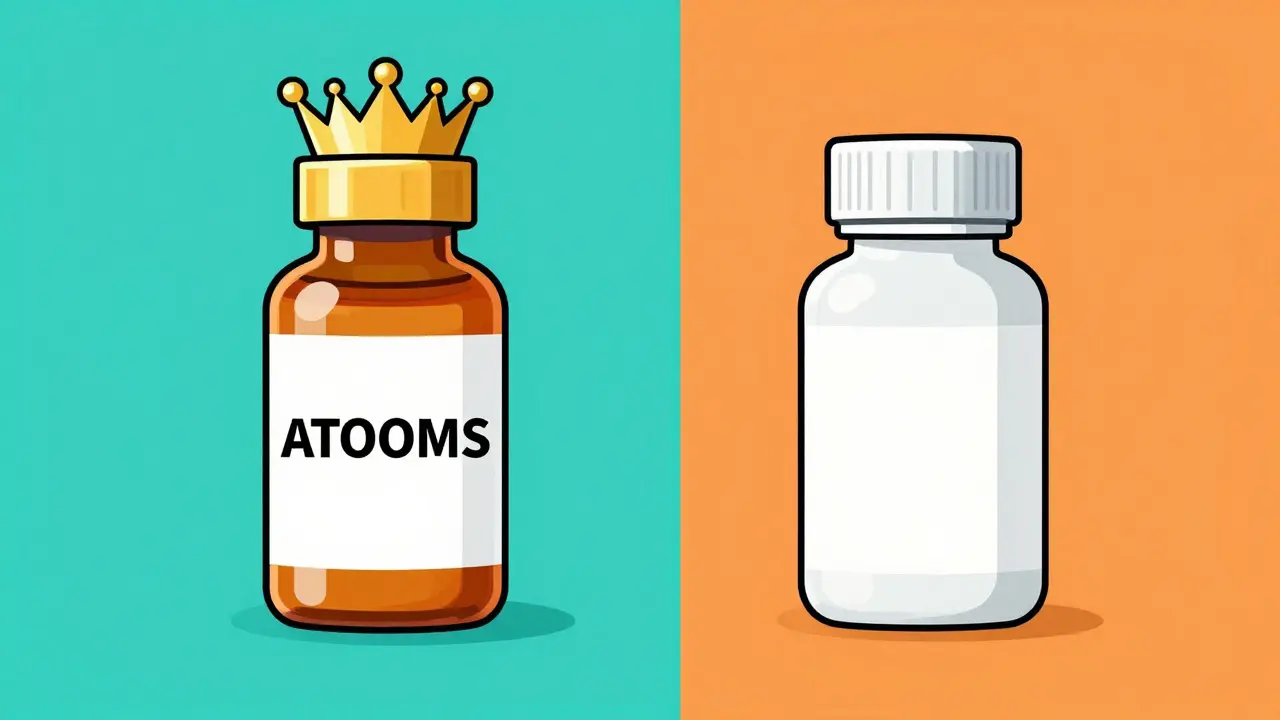
Imagine spending billions of dollars and a decade of your life developing a new medicine, only for a competitor to release a nearly identical version a few years later for a fraction of the cost. That is essentially how the U.S. pharmaceutical market works. It sounds unfair to the inventor, but it is the secret sauce that keeps healthcare affordable for millions. The process that makes this possible is the FDA generic drug approval pathway.
Unlike brand-name drugs that require massive clinical trials to prove they actually work, generic manufacturers don't have to reinvent the wheel. They just have to prove their version is a "twin" of the original. This streamlined approach saves years of time and millions of dollars, allowing generics to make up 90% of all prescriptions filled in the U.S. today.
Quick Summary: The ANDA Essentials
- The Pathway: Generics use the Abbreviated New Drug Application (ANDA) instead of a full New Drug Application (NDA).
- The Goal: Prove the generic is "bioequivalent" to the Reference Listed Drug (RLD).
- The Law: Governed by the Hatch-Waxman Act, balancing patent protection with competition.
- The Timeline: Typically takes 3-4 years to develop and 10 months for FDA review.
- The Cost: Usually ranges from $1 million to $5 million per application.
What Exactly is an ANDA?
To get a generic drug on the shelf, a company files an ANDA is an Abbreviated New Drug Application, a regulatory submission that allows a company to market a generic version of an already-approved drug. It is called "abbreviated" because the manufacturer can skip the preclinical and clinical trials that prove safety and efficacy-since the FDA already knows the drug works from the original brand-name version.
This system was born from the Hatch-Waxman Act, a 1984 law that created a middle ground. It gave brand-name companies a way to extend their patents while giving generic companies a clear, faster path to enter the market once those patents expire. Without this law, we would either have no generics or no incentive for companies to invent new drugs in the first place.
The Step-by-Step Approval Process
Getting a drug approved isn't as simple as copying a recipe. It is a rigorous technical marathon. Here is how it actually happens in the real world.
1. Identifying the Target (The RLD)
First, the company picks a Reference Listed Drug (or RLD), which is the brand-name drug they intend to copy. They use the Orange Book (the official FDA list of approved drug products) to check the RLD's therapeutic equivalence and, more importantly, its patent expiration date. If you file too early without a plan to challenge a patent, you're just wasting money.
2. Proving Pharmaceutical Equivalence
The generic must be a chemical mirror image. This means it must have the same active ingredient, the same strength, the same dosage form (like a tablet or a capsule), and the same route of administration (e.g., oral). While inactive ingredients (fillers or colors) can differ, they must be safe and not interfere with how the drug works.
3. The Bioequivalence Hurdle
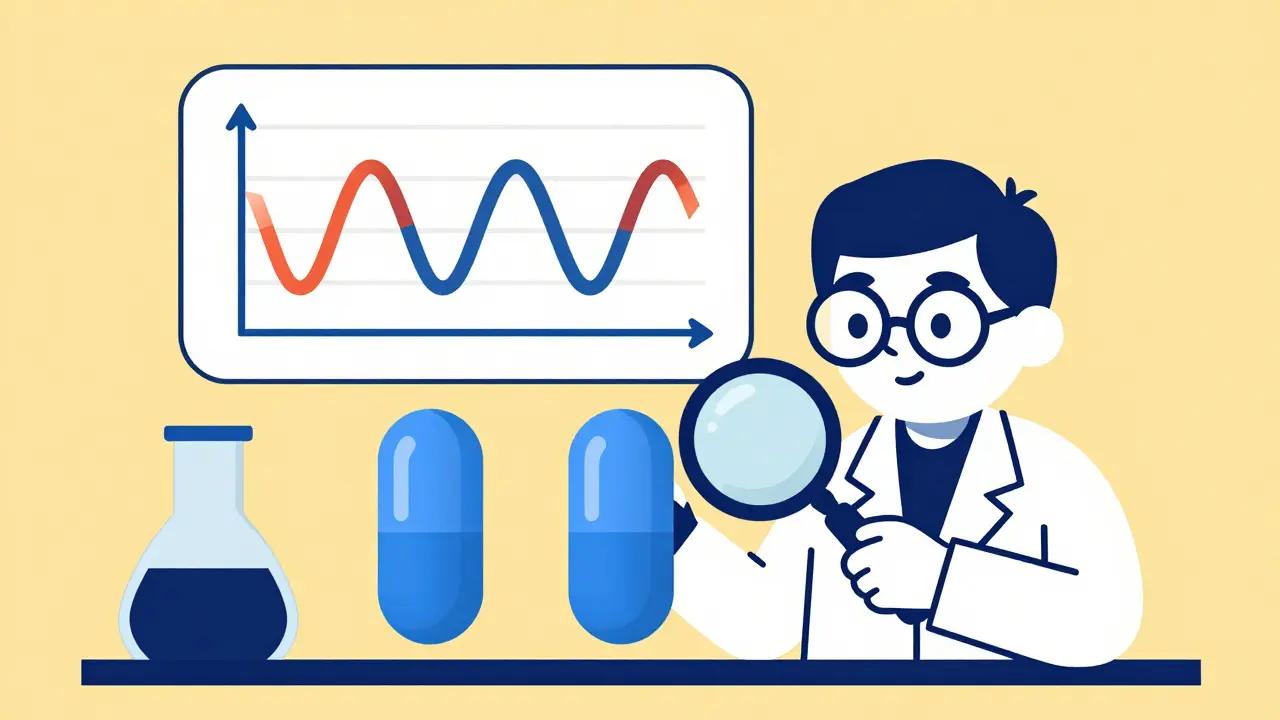
This is where most applications fail. The company must conduct Bioequivalence studies, which prove that the generic delivers the same amount of active ingredient into the bloodstream at the same rate as the brand-name drug. This usually involves testing 24 to 36 healthy volunteers. If the drug enters the blood too slowly or too quickly, the FDA will reject it, even if the chemistry is perfect.
4. CMC and Manufacturing Setup
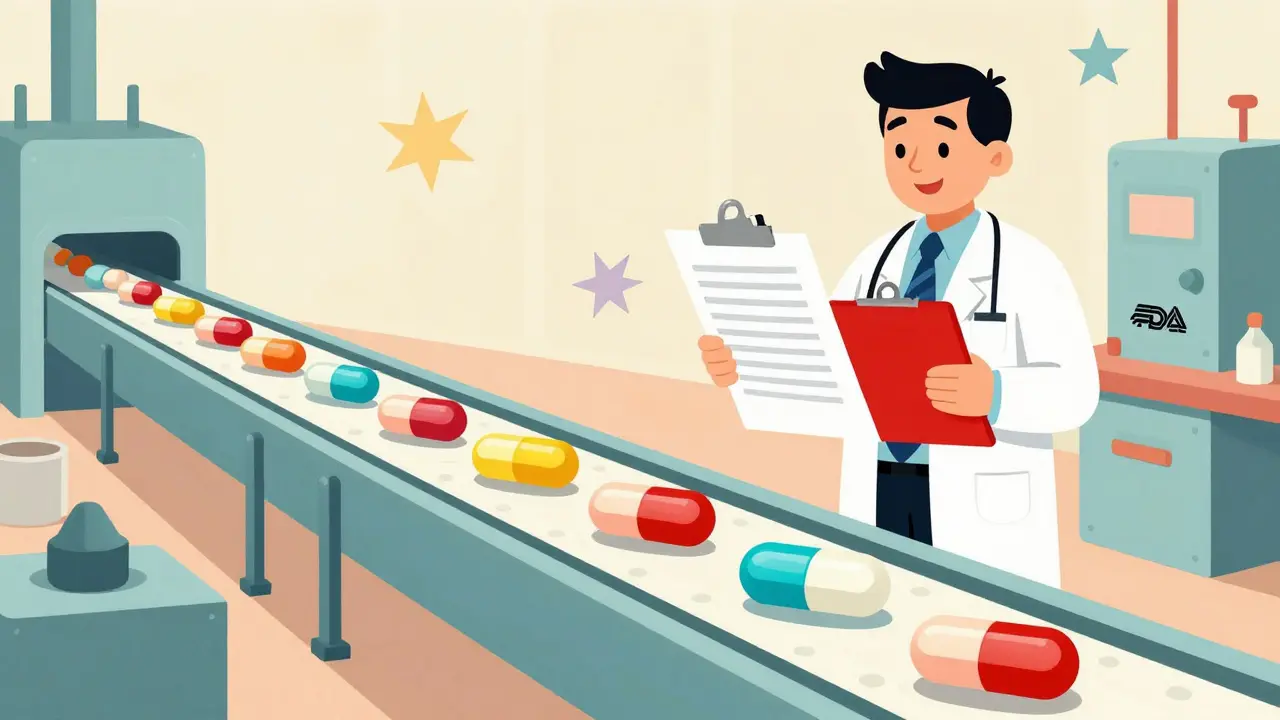
The FDA doesn't just care about the drug; they care about the factory. The company must provide Chemistry, Manufacturing, and Controls (CMC) data. This proves that every single pill coming off the assembly line is identical. The facility must follow cGMP (current Good Manufacturing Practices), and the FDA will often send inspectors to the plant to make sure it's clean and controlled.
5. Submission and Review
The application is submitted in an electronic Common Technical Document (eCTD) format. Once it hits the CDER (Center for Drug Evaluation and Research), the FDA spends about 60 days doing a "filing review" to see if the application is even complete. If it passes, it enters a full review cycle, which typically aims for a 10-month turnaround under the GDUFA guidelines.
| Feature | New Drug Application (NDA) | Abbreviated NDA (ANDA) |
|---|---|---|
| Development Time | 10-15 Years | 3-4 Years |
| Average Cost | ~$2.6 Billion | $1 - $5 Million |
| Clinical Trials | Required (Phases I, II, III) | Not Required (Bioequivalence only) |
| Primary Focus | Safety & Efficacy | Equivalence to RLD |
Common Pitfalls and Why Applications Fail
Not every ANDA gets a green light on the first try. About 25% of applications receive a Complete Response Letter (CRL), which is basically the FDA saying, "Not yet-here is what you need to fix."
The most common reasons for rejection include:
- CMC Deficiencies (32% of cases): This usually means the manufacturing data was sloppy or the process isn't consistent enough.
- Flawed Bioequivalence Protocols (28%): If the study design was poor or the data doesn't clearly show the drug behaves like the RLD, the FDA won't guess-they'll just reject it.
- Facility Issues (22%): A failed inspection at the plant can kill an application even if the drug itself is perfect.
- Labeling Errors (18%): The generic label must be nearly identical to the brand-name label. Even a small wording mistake can trigger a delay.
The "Complex Generic" Challenge
If you're making a simple tablet, the ANDA process is a well-oiled machine. But if you're making a nasal spray, an inhaler, or an ointment, things get messy. These are called "Complex Generics." Because these drugs rely on how they are delivered (the device) as much as the chemistry, the bioequivalence is much harder to prove.
For example, a quality assurance specialist recently shared that a complex nasal spray product faced three different CRLs over 28 months, costing their company over $2.3 million in extra testing. This is why the FDA has launched the Complex Generic Drug Products Initiative-to create clearer rules for these tricky products.
The Financial Stakes: Exclusivity and Competition
There is a massive incentive to be the first generic on the market. The first company to successfully challenge a brand-name patent can receive 180 days of marketing exclusivity. For 180 days, they are the only generic available, allowing them to capture a huge chunk of the market.
The impact is staggering. When generic competition hits, prices typically drop by 80-85% in the first year. This is why the pharmaceutical industry is such a battlefield of patents and legal filings. While big players like Teva and Sandoz dominate the space, smaller firms still jump in if they can find a niche or a way to beat the clock on a patent.
Does a generic drug have to be identical to the brand name?
Pharmaceutically, yes. It must have the same active ingredient, strength, and dosage form. However, it can have different inactive ingredients, such as binders, flavors, or colors, as long as those ingredients are safe and don't change how the drug works in the body.
How long does the FDA take to review an ANDA?
Under the GDUFA guidelines, the FDA aims for a standard 10-month review timeline for complete applications. However, if the FDA sends "Information Requests" (IRs) or a Complete Response Letter (CRL), the process can stretch much longer as the company works to fix the issues.
What is the difference between a generic and a biosimilar?
Generics are copies of simple, small-molecule drugs. Biosimilars are copies of complex biological products (made from living cells). Because biologics are much larger and more complex, they cannot be "identical" and instead follow a separate, more rigorous approval pathway found in the Purple Book rather than the Orange Book.
What happens if the FDA rejects an ANDA?
The FDA issues a Complete Response Letter (CRL). This isn't necessarily a permanent "no," but rather a "not yet." The letter explains the deficiencies-whether they are related to manufacturing (CMC), bioequivalence studies, or labeling-and the company must address these specific points and resubmit.
Why is the ANDA process so much cheaper than the NDA?
The ANDA process allows companies to "bridge" to the existing safety and efficacy data of the original drug. They don't have to spend years and billions of dollars on Phase I, II, and III clinical trials to prove the drug works; they only have to prove that their version is bioequivalent to the one that is already approved.
Next Steps for Manufacturers
If you are preparing an application, your first move should be a deep dive into the Orange Book to map out patent landscapes. Don't underestimate the CMC section; it's the most common point of failure. If you're dealing with a complex drug, look for the latest FDA draft guidance on that specific product type to avoid the cycle of CRLs.
For those new to the field, expect a steep learning curve. Most regulatory professionals need 18-24 months of hands-on experience before they can navigate an ANDA submission without major errors. Building a cross-functional team of formulation scientists and bioanalytical experts early in the process is the only way to ensure the data holds up under FDA scrutiny.
Popular Posts
How Pets Help People Recover from Illness
6 Oct 2025