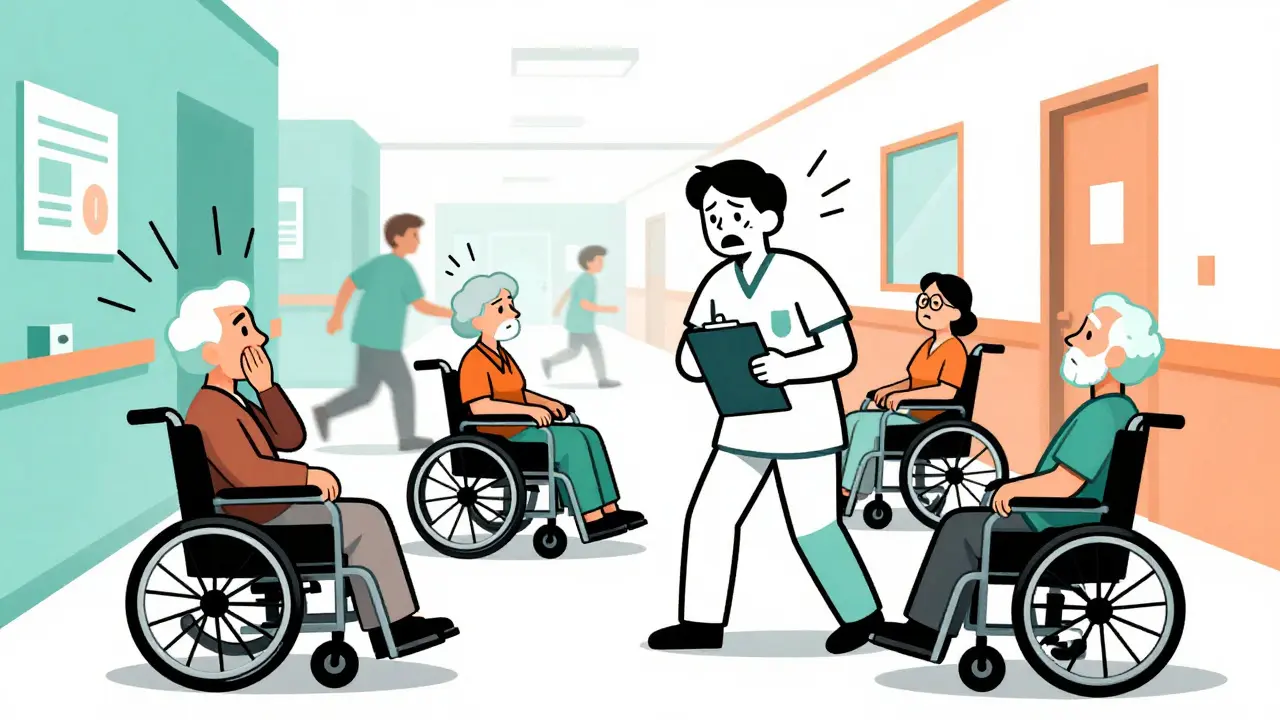
You know the feeling. One minute you are fine, and the next, your stomach is in knots, followed by waves of nausea that leave no room for argument. If this happens to just one person, it’s a bad day. If it happens to ten people in a nursing home or a school cafeteria within hours, it is an outbreak, and specifically, likely a norovirus outbreak. Norovirus is not just a "stomach bug." It is a highly contagious virus responsible for millions of illnesses annually, causing acute gastroenteritis characterized by inflammation of the stomach and intestines. The stakes are high, especially for vulnerable populations like the elderly or immunocompromised, where dehydration can turn a manageable illness into a life-threatening emergency. Understanding how to stop the spread and manage fluid loss is not just good hygiene; it is critical healthcare strategy.
The Reality of Norovirus Transmission
To control an outbreak, you first have to respect what you are fighting. Norovirus is notoriously resilient. It was first identified in 1968 after an outbreak in Norwalk, Ohio, but its nickname today should be "the perfect storm" of contagion. Why? Because the infectious dose is incredibly low. You need as few as 18 viral particles to get sick. In contrast, the virus sheds at massive levels-up to 10^12 viral particles per gram of stool during active illness. This imbalance makes transmission almost inevitable if precautions fail.
The virus spreads through multiple routes, making containment complex. According to CDC data, person-to-person contact accounts for 62% of outbreaks. Foodborne transmission follows at 23%, often involving ready-to-eat foods like leafy greens handled by infected workers. Contaminated surfaces contribute to 10% of cases, and waterborne sources make up the remaining 5%. The virus survives on dry surfaces for up to 12 days and withstands temperatures from -10°C to 60°C. Standard cleaning routines simply do not kill it. This environmental stability means that once norovirus enters a facility, it lingers, waiting for the next touch of a door handle or bed rail.
| Transmission Route | Percentage of Outbreaks | Key Risk Factor |
|---|---|---|
| Person-to-Person | 62% | Direct contact with infected individuals or their vomit/feces |
| Foodborne | 23% | Ready-to-eat foods (leafy greens) handled post-cooking |
| Contaminated Surfaces | 10% | High-touch areas (door handles, bed rails) cleaned with non-EPA agents |
| Waterborne | 5% | Recreational water or contaminated drinking supplies |
Immediate Outbreak Control Measures
When two or more associated patients show symptoms of gastroenteritis within 24-48 hours, declare an outbreak. Hesitation allows the virus to establish itself. The Centers for Disease Control and Prevention (CDC) updated its guidelines in November 2023, emphasizing a multi-pronged approach because no single intervention works alone. Here is how you execute effective control:
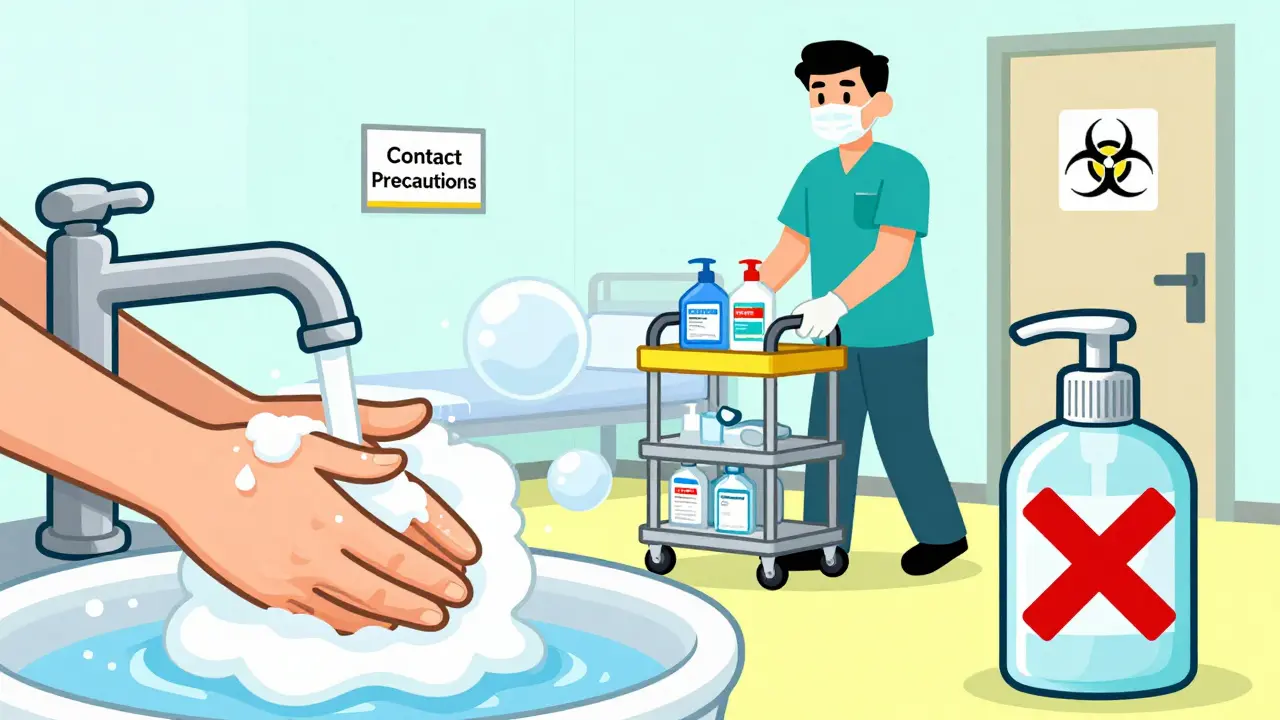
- Contact Precautions: Place symptomatic patients on Contact Precautions for at least 48 hours after symptom resolution. For complex medical patients-those with cardiovascular, autoimmune, or renal disorders-extend isolation due to prolonged viral shedding.
- Cohorting Strategies: Move symptomatic patients to single-occupancy rooms. If single rooms are unavailable, cohort them together in a designated area. Do not move asymptomatic exposed residents to unaffected units; they may already be incubating the virus.
- Hand Hygiene Protocol: This is the most critical step. Alcohol-based sanitizers are ineffective against norovirus. Staff and patients must wash hands with soap and water for at least 20 seconds after bathroom use, before eating, and after handling waste. The mechanical action of washing removes the virus; alcohol does not.
- Environmental Cleaning: Use EPA-registered disinfectants labeled for norovirus. For surface disinfection, prepare chlorine bleach solutions of 1,000-5,000 ppm (5-25 tablespoons of household bleach per gallon of water). Increase cleaning frequency for high-touch surfaces. Consider hydrogen peroxide vapor systems for terminal room disinfection, which has shown a 99.9% reduction in viral contamination.
- Staff and Visitor Management: Exclude food handlers from work for 48-72 hours after symptoms resolve. Restrict visitors to essential personnel only, and educate them on infection prevention. Document staff training within 24 hours of outbreak declaration.
Long-term care facilities face unique challenges. Sixty-eight percent of outbreaks occur between November and March, coinciding with staffing shortages. Compliance with hand hygiene drops by 25-30% during outbreaks due to workflow pressure. Mitigate this by placing additional handwashing stations outside affected units and monitoring compliance closely.
Hydration Management: Preventing Dehydration
Vomiting and diarrhea cause rapid fluid and electrolyte loss. Dehydration is the primary danger, especially for infants, the elderly, and those with chronic conditions. Effective hydration management requires assessing severity and acting quickly.
Oral Rehydration Therapy (ORT)
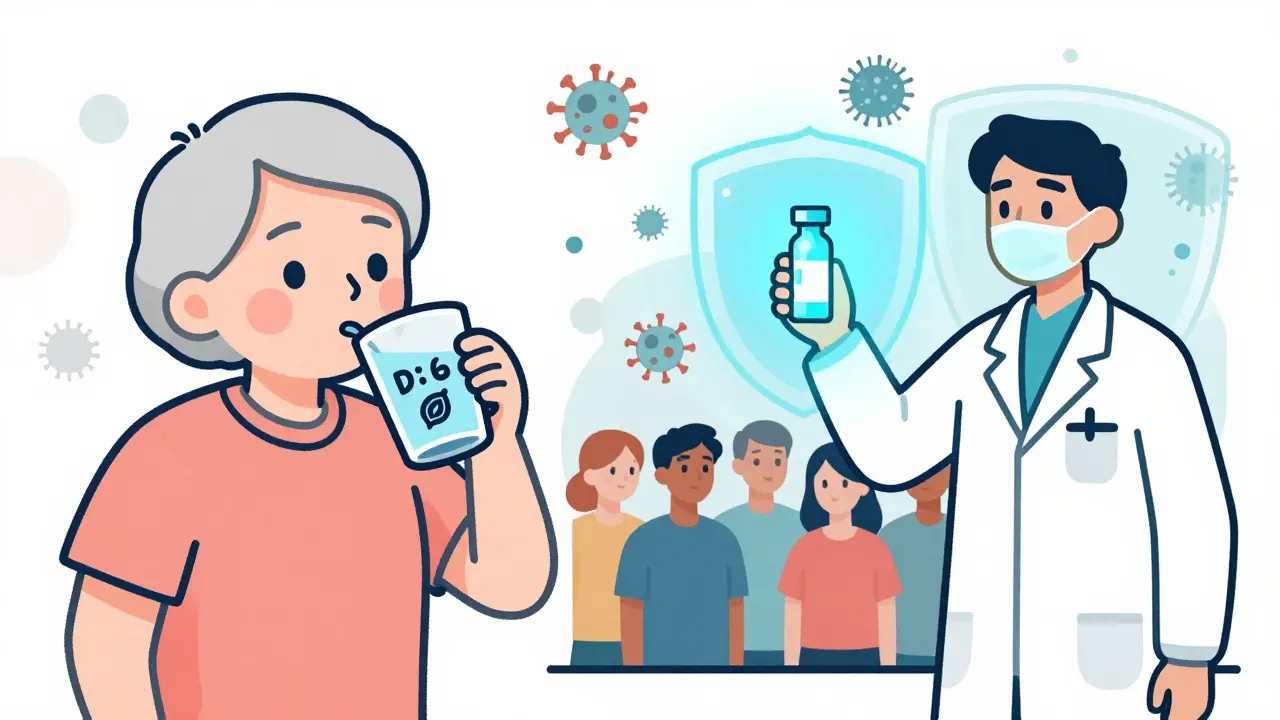
For mild to moderate dehydration, ORT is the first-line treatment. Use solutions containing specific electrolyte balances: 50-90 mmol/L sodium, 75-100 mmol/L glucose, and 20-25 mmol/L potassium, per WHO standards. These ratios optimize fluid absorption in the gut. Avoid plain water, sports drinks, or soda, which lack the correct electrolyte balance and can worsen diarrhea.
- Infants and Children: Administer 50-100 mL of ORT after each episode of vomiting or diarrhea. Small, frequent sips are better tolerated than large volumes.
- Elderly Patients: Monitor urine output and mental status closely. Older adults often have a reduced thirst sensation, masking early signs of dehydration. Assess every 4-6 hours.
- Immunocompromised Patients: These individuals may shed virus for weeks or months and experience prolonged illness. They require extended rehydration support and close monitoring for secondary infections.
Intravenous (IV) Rehydration
If a patient cannot tolerate oral fluids or shows signs of severe dehydration, switch to IV therapy immediately. Use isotonic crystalloid solutions like 0.9% normal saline or lactated Ringer's. Administer initial fluid boluses of 20 mL/kg over 15-30 minutes. Watch for signs of improvement: increased urine output, stable blood pressure, and improved mental alertness.
Signs of dehydration to monitor include dry mouth, decreased urine output, dizziness, lethargy, and sunken eyes. In long-term care settings, the Virginia Department of Health recommends assessing symptomatic residents every 4-6 hours for these indicators. Early intervention prevents hospitalization and reduces mortality risk.
Challenges in Implementation and Future Directions
Even with clear guidelines, implementation faces hurdles. Room limitations in long-term care facilities make cohorting difficult. Staff burnout leads to lapses in protocol adherence. However, real-time reporting systems, like the one implemented by the Wisconsin Department of Health Services in January 2023, have reduced outbreak investigation time from 72 hours to 24 hours, enabling faster response.
Looking ahead, vaccine development offers hope. Takeda’s candidate vaccine showed 46.7% efficacy against GI.1 strains in phase 2b trials (NEJM, 2022), with potential FDA approval targeted for 2025. While not yet available, this progress signals a shift toward proactive prevention. Until then, rigorous adherence to hygiene, isolation, and hydration protocols remains our best defense.
How long does norovirus stay active on surfaces?
Norovirus can survive on dry surfaces for up to 12 days. It is resistant to freezing and heating up to 60°C (140°F), making standard cleaning insufficient. Use EPA-registered disinfectants or chlorine bleach solutions (1,000-5,000 ppm) for effective decontamination.
Why don't alcohol-based hand sanitizers work against norovirus?
Alcohol-based sanitizers are ineffective because norovirus lacks an outer lipid envelope, which is what alcohol typically disrupts. The virus is protected by a protein capsid. Washing hands with soap and water physically removes the virus from the skin, which is why it is the recommended hygiene method.
What is the minimum number of viral particles needed to cause infection?
As few as 18 viral particles are sufficient to cause norovirus infection. This extremely low infectious dose contributes to the virus's high transmissibility, especially in closed environments like healthcare facilities or schools.
How long should someone be excluded from work after norovirus symptoms resolve?
General exclusion is for at least 48 hours after symptom resolution. However, food handlers in healthcare and long-term care settings should be excluded for 72 hours to prevent further transmission. Immunocompromised individuals may shed the virus for weeks or months and require individualized assessment.
What are the key signs of dehydration in elderly patients?
Signs include dry mouth, decreased urine output, dizziness, lethargy, and sunken eyes. Elderly patients often have a reduced thirst sensation, so regular monitoring (every 4-6 hours during outbreaks) is crucial to detect dehydration early before it becomes severe.
Is there a vaccine for norovirus available in 2026?
As of 2026, no widely approved norovirus vaccine is commercially available. Takeda’s candidate vaccine showed promise in phase 2b trials with 46.7% efficacy against GI.1 strains, but widespread availability depends on final regulatory approvals and manufacturing scale-up.
Popular Posts