
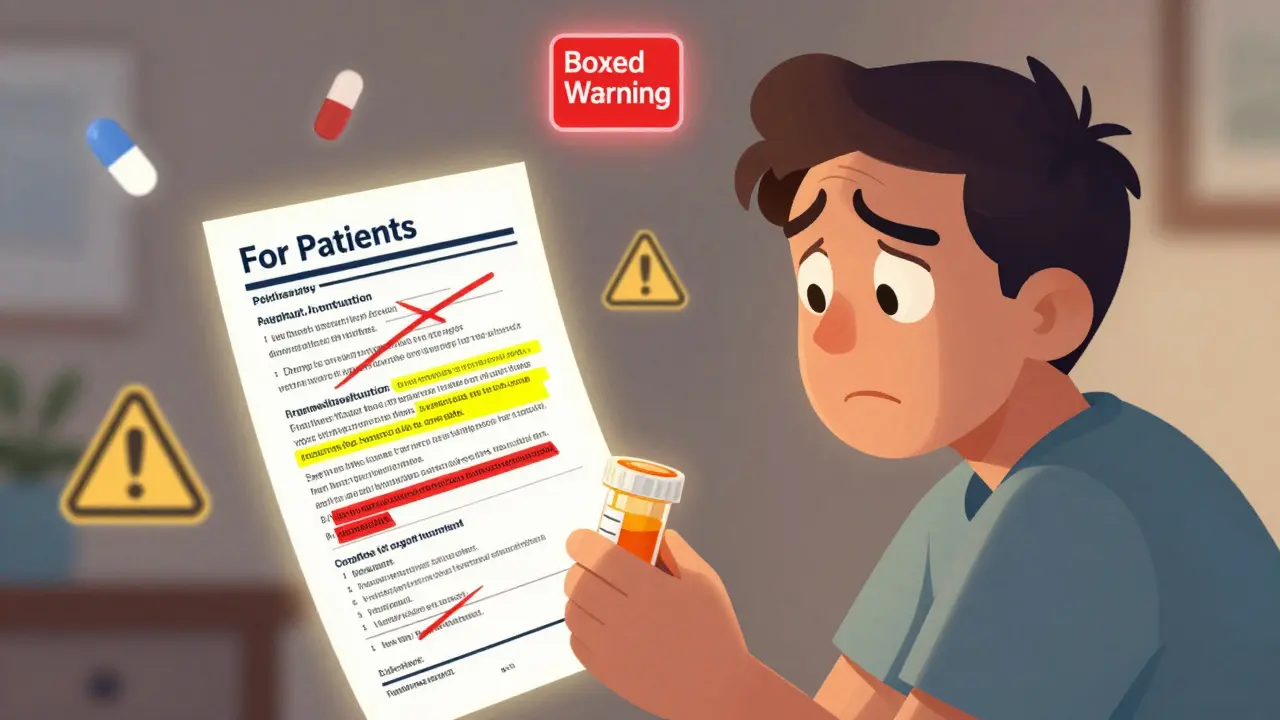
Every year, the FDA issues dozens of safety notices about medications you or someone you know might be taking. These aren’t ads. They aren’t rumors. They’re official updates from the U.S. Food and Drug Administration about new risks, changes in how to use a drug, or even warnings that a medicine might be more dangerous than originally thought. But if you’ve ever opened one of these documents, you probably felt lost. The language is dense. The sections are confusing. And you’re left wondering: What does this actually mean for me?
What Are FDA Safety Communications?
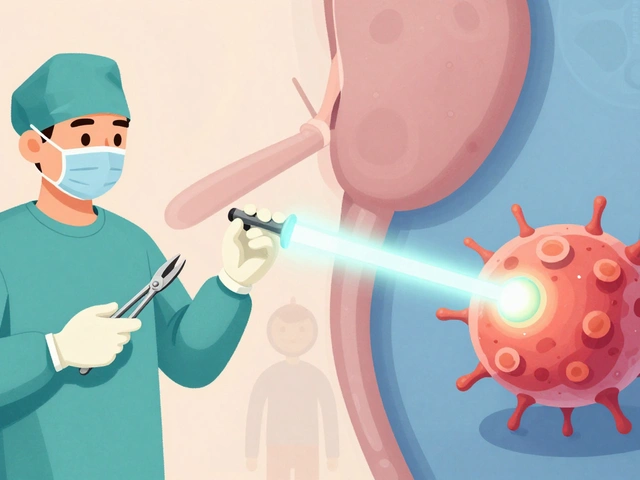
FDA Drug Safety Communications are official updates released after a medication has already been approved and is on the market. Think of them as the FDA’s way of saying, “We’ve seen something new - here’s what you need to know.” These aren’t warnings about faulty batches or recalls (though those happen too). They’re about safety patterns that only show up after thousands or even millions of people have used the drug.
Since 2007, the FDA has had stronger legal power to track these patterns. They now monitor real-world use through systems like the Sentinel Initiative, which analyzes health data from millions of patients. Each year, they issue 50 to 70 major safety communications. Some are urgent. Others are informational. But all of them matter.
The Structure: What You’ll See in Every Communication
Every FDA safety communication follows the same basic format. If you learn to spot these sections, you’ll cut through the noise.
- What Safety Concern Is FDA Announcing? - This is the headline. It tells you in plain terms what the issue is. For example: “FDA warns of serious liver injury with Copiktra.”
- For Health Care Professionals - This section is written for doctors and pharmacists. It includes details like which sections of the drug’s prescribing information were changed, what the old wording was, and what it’s been changed to. You’ll see bold text for additions and strikethrough for deletions. It might say something like: “Section 2.1 changed from ‘Administer 5 mg daily’ to ‘Administer 15 mg daily with food.’”
- For Patients - This is the part you care about. It’s written in simple language. It tells you what to do. For instance: “Do not stop taking this medicine without talking to your doctor.” or “Call your doctor right away if you notice yellowing of your skin or eyes.”
- Highlights of Prescribing Information - This section pulls out the most important changes, especially those in the Boxed Warning - the FDA’s strongest safety alert. If a drug has a Boxed Warning update, it means the risk is serious enough to be printed at the very top of the drug’s label.
- References - The FDA cites where the new information came from: new clinical trials, post-market reports, or studies of patient databases.
Don’t skip the “For Patients” section. It’s designed to be read by someone without medical training. But if you’re a caregiver or just want to understand the full picture, you’ll need to look at the other sections too.
How to Tell If It’s Urgent or Just Informational
Not all safety updates require immediate action. The FDA uses specific language to help you know the difference.
If you see phrases like:
- “STOP using this medication immediately”
- “Do not prescribe to patients with [condition]”
- “Risk of death or permanent injury”
- that’s an urgent alert. These usually come with a Boxed Warning update. You should contact your doctor the same day.
If you see phrases like:
- “Consider this information when prescribing”
- “Monitor for signs of…”
- “Update your records to reflect…”
- that’s an informational update. It’s important, but not an emergency. Still, you should discuss it with your provider at your next visit.
What the Boxed Warning Really Means
The Boxed Warning is the FDA’s highest-level alert. It’s called that because it’s printed in a box at the top of the drug’s prescribing information. If a safety communication updates a Boxed Warning, it means the risk is severe - and it’s now officially part of the drug’s official safety profile.
For example, in 2025, the FDA updated Boxed Warnings for all opioid pain medications to clarify that they should never be abruptly stopped in patients who’ve been taking them long-term. Sudden withdrawal can cause seizures, heart problems, or even death. That change didn’t come out of nowhere. It was based on years of patient reports and studies showing harm from rushed tapering.
If your medication has a Boxed Warning, don’t panic. But do make sure you understand it. Ask your doctor: “What does this warning mean for me? Are there safer alternatives?”
What to Do If You’re a Patient
You don’t need to read every FDA communication. But you should know how to respond when one affects your medication.
- Check your medication’s name. Look at the prescription bottle. Is the drug mentioned in the communication? If yes, read the “For Patients” section.
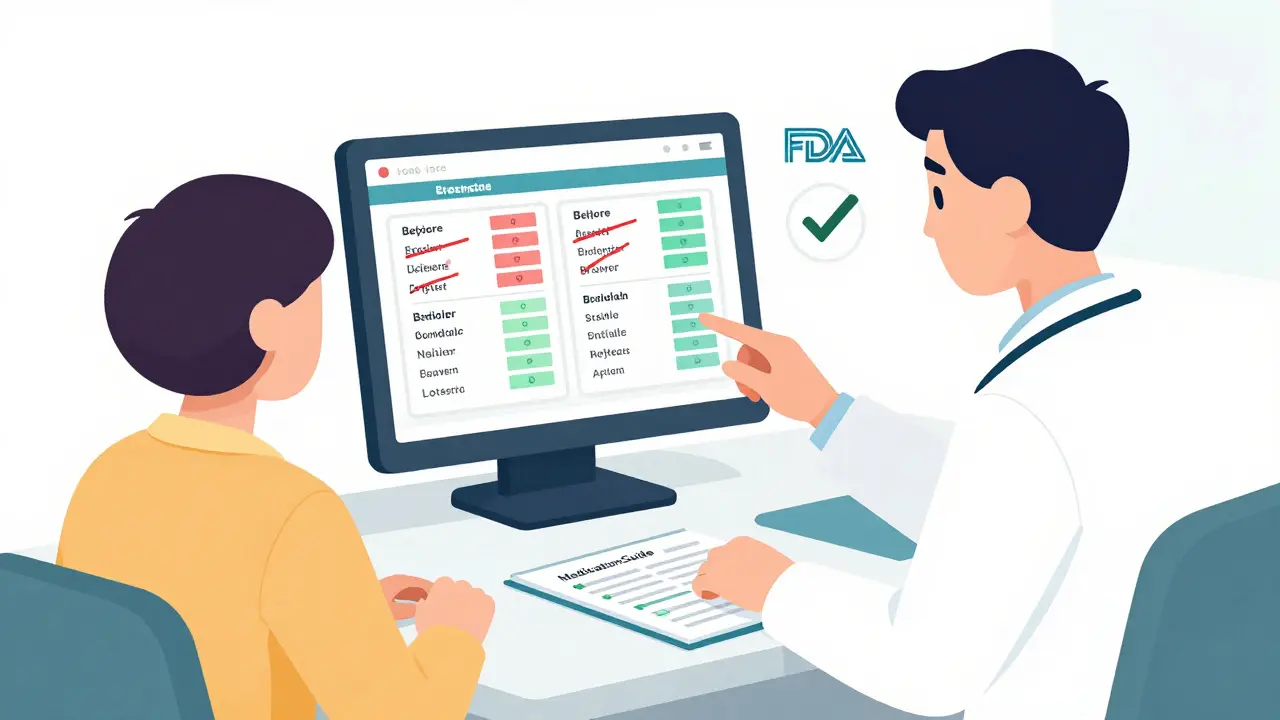
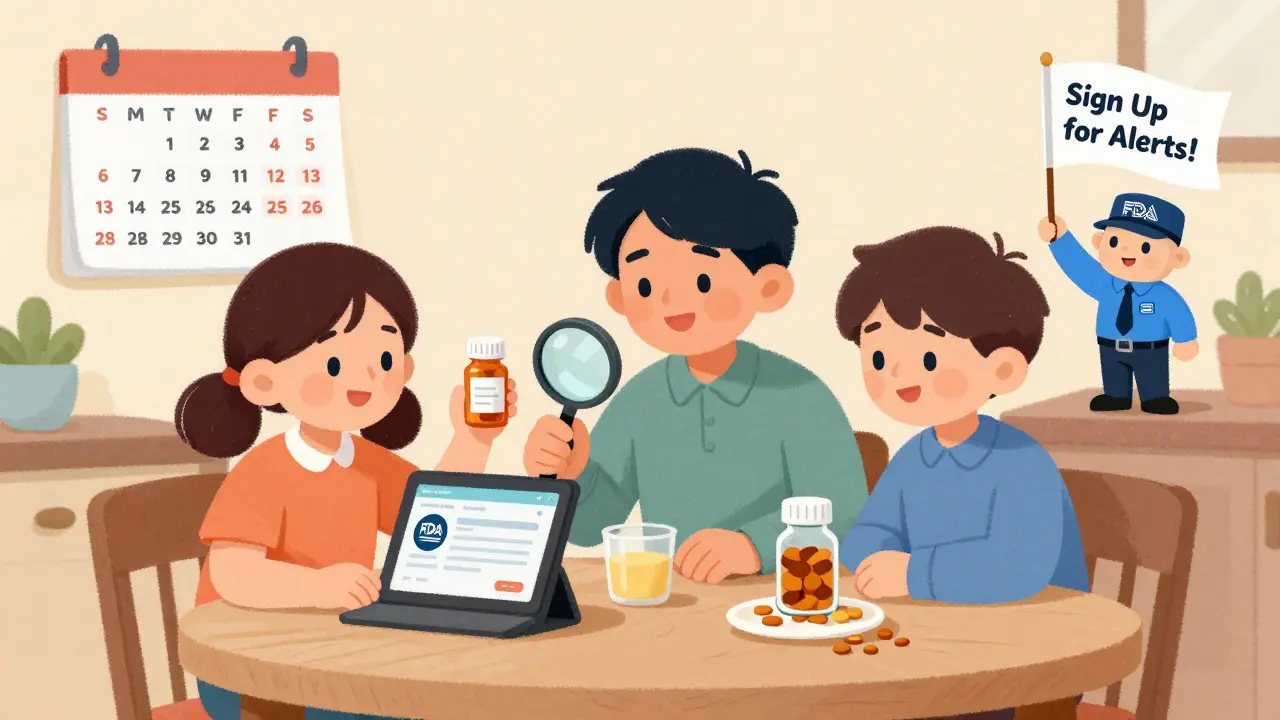
- Look for the Medication Guide. Every prescription drug comes with a Medication Guide. It’s a small paper insert that explains side effects, how to take it, and what to watch for. The FDA requires these to be written at an 8th-grade reading level. If you don’t have one, ask your pharmacist for a copy.
- Don’t stop taking your medicine. Unless the communication says “STOP,” keep taking it as prescribed. Suddenly stopping some drugs can be dangerous.
- Call your doctor. Say: “I read an FDA safety notice about my medication. Can we talk about what it means for me?”
- Sign up for email alerts. Go to fda.gov/drugs/drug-safety-and-availability and sign up for alerts for your specific drug or drug class. You’ll get an email when something new comes out.
What to Do If You’re a Healthcare Provider
If you prescribe or dispense medications, you have a responsibility to stay updated. But you’re busy. Here’s how to do it efficiently.
- Start with the Boxed Warning and Dosage sections. These are the most likely to affect your clinical decisions.
- Use the “before and after” labeling changes. The FDA now shows exactly what text was added or removed. This saves hours of searching through full prescribing information.
- Check your EHR. Only 32% of electronic health record systems currently pull in FDA alerts automatically. If yours doesn’t, ask your IT team to integrate them.
- Teach your staff. Make sure pharmacists and nurses know how to read these communications too. A team that understands safety updates prevents errors.
- Use the FDA’s training video. The FDA offers a free 12-minute video called “FDA’s Labeling Resources for Human Prescription Drugs” on YouTube. Watch it once - it’ll save you time every time you read a new communication.
Why This Matters - And Why It’s Not Perfect
FDA safety communications save lives. A 2021 study found that when doctors actually read these updates, patient outcomes improved. For example, after a safety alert on a diabetes drug caused a drop in its use, hospitalizations for low blood sugar fell by 30%.
But there are problems. Many patients don’t understand the language. Some confuse a Drug Alert (a short notice) with a full Drug Safety Communication. One survey found 63% of patients thought every alert was an emergency.
And delays still happen. On average, it takes over four years from when a safety signal first appears to when the FDA issues a major labeling change. That’s too long for some patients.
The FDA knows this. They’re now testing plain-language summaries and visual guides. By 2027, they aim to increase patient understanding from 54% to 75%.
Next Steps: Make It Part of Your Routine
Reading FDA safety communications isn’t optional if you’re taking prescription drugs. Here’s your simple plan:
- Keep your Medication Guides. Don’t throw them away.
- Sign up for FDA email alerts for your medications.
- When you get a new prescription, ask: “Has there been any recent safety update on this?”
- If you’re on long-term medication, review the FDA’s website once a year - even if you haven’t heard anything.
- Share this knowledge. If your parent, partner, or friend is on a high-risk medication, help them understand what to look for.
Medications are powerful tools. But they’re not risk-free. The FDA’s safety communications are your best tool to stay informed. You don’t need to be a doctor to understand them. You just need to know where to look - and what to ask.
Are FDA safety communications only for U.S. patients?
No, but they’re most relevant to patients in the United States. The FDA regulates drugs sold in the U.S. If you’re outside the U.S., your country’s health agency - like the EMA in Europe or Health Canada - issues similar alerts. However, many global drug manufacturers use FDA labeling changes as a reference, so even international patients may see updates based on FDA decisions. Always check your local health authority’s website for region-specific guidance.
Can I trust the FDA to catch all dangerous side effects?
The FDA doesn’t catch everything - no system does. Drugs are tested on tens of thousands of people before approval, but rare side effects - affecting 1 in 10,000 or fewer - often only show up after millions of people use the drug. That’s why post-market monitoring is so important. The FDA relies on reports from doctors, patients, and pharmacies to find these hidden risks. Your reports matter. If you experience a new or unusual side effect, report it to the FDA’s MedWatch program. It helps them see patterns faster.
What’s the difference between a Drug Alert and a Drug Safety Communication?
A Drug Alert is a short, urgent notice - usually one or two paragraphs - issued when there’s a time-sensitive risk, like a contaminated batch or a sudden spike in adverse events. A Drug Safety Communication is a full, detailed report that includes background, data, labeling changes, and guidance for both patients and providers. Drug Alerts are often followed by a full Safety Communication once more data is reviewed. Don’t ignore an alert - but don’t assume it’s the final word either.
Do I need to read every safety communication that comes out?
No. Only focus on communications about medications you or a loved one are currently taking. If you’re not on the drug, there’s no need to read it. The FDA issues 50-70 per year - you can’t keep up with all of them. Use email alerts to get notified only when something affects your specific medications. That’s the smartest way to stay informed without being overwhelmed.
What if my doctor says the FDA update doesn’t apply to me?
Ask for details. For example: “Why doesn’t this apply? Is it because of my age, other medications I’m on, or my medical history?” Some updates only affect certain groups - like older adults, people with kidney disease, or those taking multiple drugs. Your doctor should be able to explain why the update isn’t relevant to your case. If they can’t give a clear answer, consider getting a second opinion. You have the right to understand why a safety update does or doesn’t affect you.
14 Comments

matthew martin
January 27 2026
Man, this is the kind of post that makes me feel like I’m living in a sci-fi docu-drama where the government actually gives a damn.
Most folks think ‘FDA’ means ‘they checked it once and it’s good forever.’ But no - drugs are like puppies. They seem sweet at first, but then they start chewing your couch and peeing on your shoes. Only with drugs, the couch is your liver and the pee is a rare arrhythmia.
Big shoutout to the ‘For Patients’ section. It’s the only part of a government document that doesn’t sound like it was written by a robot who hates humans. And signing up for alerts? That’s like having a personal nurse who texts you when your meds start acting shady.
Also, if you’re on opioids? Don’t quit cold turkey. Your body will throw a tantrum worse than a toddler denied candy on Christmas. Slow taper. Ask your doc. It’s not weakness - it’s science.

Chris Urdilas
January 28 2026
Wow. Someone actually wrote a guide that doesn’t sound like it was drafted by a lawyer who just got fired from the DMV.
Who knew the FDA could be this… helpful? Like, I thought they were just the guys who approved that weird weight-loss tea that turned people into zombies. Turns out they’re also the ones who quietly fix things after the zombies start showing up.
Still, 50-70 alerts a year? That’s like getting 10 spam emails a day from your own body. At least this guide gives you a filter. No more FOMO on drug safety. Just the ones that matter to you.
Also, ‘don’t stop your meds unless it says STOP’ - that’s the only rule you need. Everything else is just noise.
PS: If your doctor says ‘this doesn’t apply to you,’ ask them why they didn’t read it themselves. Just saying.

Phil Davis
January 29 2026
Let’s be real - most people don’t care until they’re in the ER. And even then, they blame the doctor. Not the FDA. Not the pharma company. Always the doctor.
This guide is decent. But it’s still a Band-Aid on a hemorrhage. The system’s broken. Drugs get approved on 3-month trials. Side effects show up in year 5. By then, 200,000 people are already taking it.
And no one’s talking about how the FDA’s budget is a joke. They’re out here watching for liver damage with a flashlight while the industry throws a rave with the whole pharmacy shelf.
Still… better than nothing. I’ll take this over silence.

Irebami Soyinka
January 30 2026
USA still thinks it's the only country that knows how to keep people alive? 😂
Here in Nigeria, we don’t wait for FDA alerts - we wait for our cousins to die first. Then we Google the drug and ask the pharmacy if it’s ‘the one that makes people vomit black.’
But hey, at least you got a guide. We got WhatsApp groups with 47 people screaming ‘DON’T TAKE THIS!’ while the doctor charges $5 for a 2-minute consultation.
Still, your Boxed Warning thing? Genius. We need that here. Not just for drugs - for politicians too. 😤
PS: I just emailed my sister in Chicago to sign up for alerts. She’s on that antidepressant that makes you want to jump off bridges. She didn’t even know it had a warning. 😭

Mel MJPS
February 1 2026
This made me feel so much less alone. I’ve been Googling my meds every month since my dad had that reaction to his blood thinner. I was terrified I was missing something.
Thank you for explaining the ‘For Patients’ section - I never knew it was there. I thought all that text was just legal junk to scare us off.
Also, signing up for alerts? I just did it. For my blood pressure med. I’m gonna check it every few months now. Feels like finally taking back control.
You’re right - you don’t need to be a doctor. You just need to care enough to read. And that’s enough.
❤️

Katie Mccreary
February 1 2026
Why do people still take meds without reading the guide? I once saw a guy on the bus take a pill with a bottle that had a ‘DO NOT USE IF YOU HAVE LIVER DISEASE’ label. He had a liver transplant tattoo on his arm. I didn’t say anything. I just… stared. And left. Because I’m not a hero. I’m just someone who reads the fine print.
Also, the FDA doesn’t ‘catch’ side effects. They get notified after people die. That’s not safety. That’s damage control with a PowerPoint.

Kevin Kennett
February 3 2026
Let me tell you something: if you’re on long-term meds and you’ve never read the Medication Guide, you’re playing Russian roulette with your organs.
I used to think the FDA was just a bureaucracy that said ‘yes’ to everything. Turns out they’re the only thing standing between you and a 12-page warning label you’ll never read.
And yes - if your doctor says ‘this doesn’t apply to you,’ push back. Ask for the study. Ask for the data. If they can’t give it to you, get a new doctor. Your life isn’t a guessing game.
Also - this guide? Print it. Tape it to your fridge. Your future self will thank you.
And if you’re a caregiver? Share this. Don’t assume they know. They don’t. I’ve seen it too many times.

Jess Bevis
February 4 2026
Just a heads-up from Canada: we get FDA alerts too. Sometimes we get them before our own agency does. It’s weird. Like watching your neighbor fix your car better than your mechanic.
But yeah - the Boxed Warning thing? That’s universal. Even here, we call it ‘the red box of doom.’
Sign up for alerts. It’s free. It’s simple. It’s the only thing between you and a silent, slow-motion disaster.
Also - if your doctor says ‘it’s fine,’ ask them if they’ve read the latest communication. If they say ‘no,’ you’ve got your answer.

Rose Palmer
February 6 2026
It is imperative that patients and healthcare providers alike adopt a disciplined, systematic approach to the review of FDA Drug Safety Communications. The integrity of pharmacovigilance hinges upon the conscientious engagement with official documentation, as opposed to anecdotal or algorithmically curated information sources.
It is recommended that a standardized protocol be implemented at the point of care: (1) verification of drug nomenclature against the FDA database; (2) cross-referencing of prescribing information with the latest labeling amendments; and (3) documentation of patient education outcomes in the electronic health record.
Failure to adhere to these protocols constitutes a breach of the standard of care and may expose institutions to liability under the doctrine of respondeat superior.
For further guidance, please consult the FDA’s official guidance document: ‘Enhancing Patient Safety Through Structured Communication Review.’

Howard Esakov
February 7 2026
Oh wow. A guide that doesn’t make me feel like I need a PhD to understand my blood pressure pill. 🙄
Next thing you know, the FDA will start posting memes about drug interactions. ‘When your statin and grapefruit have a fight’ - trending now.
But seriously - this is the first time I’ve ever read an FDA document and thought, ‘Hey, maybe they’re not all corrupt.’
Still, if I see one more ‘Boxed Warning’ on a drug that costs $800 a month, I’m starting a petition to make pharma pay for the damn warnings.
PS: My doctor didn’t even know about the new alert on my thyroid med. I had to send it to him. 😒

Kathy Scaman
February 8 2026
Just read this while waiting for my prescription. I’m 72. Never knew any of this. I’ve been taking my pills for 15 years and never once opened the little paper insert. Now I’m going back to the pharmacy to get copies for all of them.
Thanks for making it feel human. I didn’t feel dumb reading this. I felt smart.
Also - I’m telling my book club. They all take like 12 pills a day. They need this.

Anna Lou Chen
February 10 2026
Ah, the FDA - the neoliberal epistemic guardian of pharmacological hegemony. Their communications are not merely informational artifacts but performative discursive acts embedded within the biopolitical apparatus of late-stage pharmaceutical capitalism.
By framing safety as an individual responsibility - ‘sign up for alerts!’ - they absolve structural accountability. The very mechanism of post-market surveillance is predicated on the commodification of bodily vulnerability.
And yet… the ‘For Patients’ section? It’s a beautiful rupture. A moment of epistemic disobedience. A whisper of care in a system that treats bodies as data points.
So yes - read it. But don’t trust it. Question the architecture. The warning box is a symptom, not a solution.
🪞
matthew martin
February 10 2026
Love this. The ‘For Patients’ section is basically the FDA saying, ‘Hey, we know you’re not a doctor. Here’s what you actually need to know.’
And honestly? That’s the most human thing they’ve done in decades.
Also - I just sent this to my mom. She’s on three meds and thinks ‘side effects’ mean ‘your hair falls out.’ Now she knows about yellow skin = liver warning. She’s gonna call her doctor tomorrow.
Small wins, right?


jonathan soba
January 27 2026
So the FDA finally admits they’re playing catch-up with drug safety? Took them long enough. I’ve been reading these since 2018 and half the time the ‘urgent’ alerts are just corporate damage control wrapped in legalese. They don’t warn you until the damage is done - and by then, your liver’s already singing opera.
Still, this breakdown is actually useful. Most people don’t know the ‘For Patients’ section exists. They just scroll past the wall of text and assume the drug’s fine. That’s how you get people dying from off-label use because they didn’t read the fine print.
Also, why is the Boxed Warning always buried under 17 paragraphs of ‘clinical context’? Just put it in bold, red, and screaming. People don’t read. They scan. Make it impossible to ignore.