
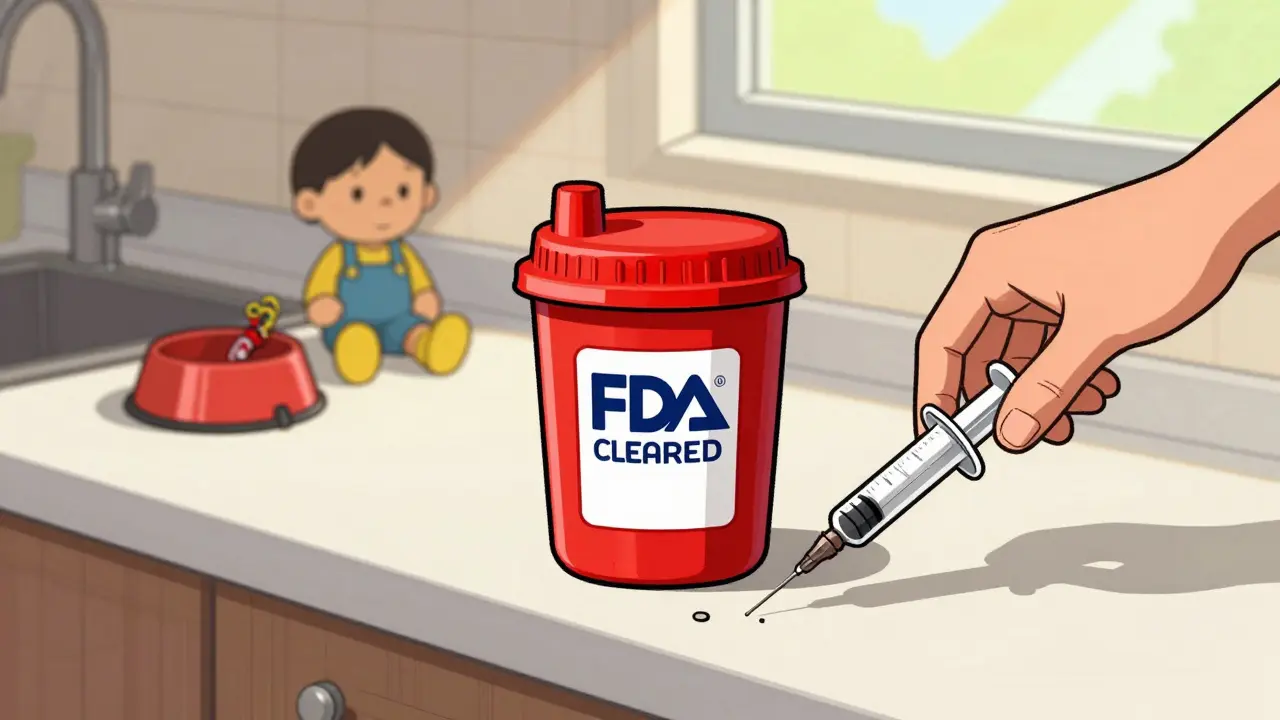
Every year, millions of people in the U.S. give themselves injections at home - insulin for diabetes, blood thinners, biologics for autoimmune conditions, or vaccines. But what happens after the needle is used? If you toss it in the trash, flush it down the toilet, or stick it in an old soda bottle, you’re not just being careless - you’re putting your family, trash workers, and even pets at risk. Needlestick injuries don’t just happen in hospitals. In fact, 68% of home sharps disposal incidents occur because people use improper containers or try to recap needles. The good news? Safe disposal is simple, legal, and often free. Here’s how to do it right.
What Counts as a Sharp?
Not every pointy object is a sharp, but many things you might not think of are. A sharp is any medical device that can cut or puncture skin and has been contaminated with blood or bodily fluids. This includes:- Needles (used with syringes)
- Syringes (with or without needles attached)
- Lancets (for finger pricks)
- Auto-injectors (like EpiPens or insulin pens after use)
- Dental wires or scalpel blades (if used at home)
- IV catheters or infusion sets (if they have sharp ends)
Even if the needle looks clean, it’s still considered contaminated because it touched your skin or medication. Never assume it’s safe to handle bare-handed.
Why Proper Disposal Matters
Improper disposal doesn’t just risk injury - it spreads disease. Needlestick injuries can transmit:- Hepatitis B (6-30% chance of infection per exposure)
- Hepatitis C (1.8% chance per exposure)
- HIV (0.3% chance per exposure)
The CDC estimates 385,000 needlestick injuries happen every year among healthcare workers - and many more go unreported at home. A single injury can cost over $3,267 in post-exposure treatment. That’s why the FDA and OSHA require sharps to go into specially designed containers. These aren’t just plastic boxes - they’re engineered to prevent accidents. FDA-cleared containers must:
- Be made of thick, puncture-resistant plastic (at least 0.04 inches thick)
- Have a tight, one-way lid that blocks hand insertion
- Stay upright even when bumped
- Not leak when turned upside down
- Display a clear biohazard symbol (1 inch tall, on a contrasting background)
Using a laundry detergent bottle, glass jar, or cardboard box? You’re not just breaking rules - you’re increasing your risk of injury by more than 78% compared to using the right container.
How to Use a Sharps Container
Once you have the right container, follow these steps every time:- Use the needle once - never recap it. Recapping is the leading cause of needlestick injuries.
- Immediately after use, drop the entire syringe or auto-injector into the container. Don’t bend, break, or twist the needle.
- Keep the container within arm’s reach while injecting. OSHA recommends it be no more than 6 feet away.
- Stop filling when the contents reach the 3/4 mark. Even if the container looks empty on top, if you can’t see the bottom, it’s too full.
- Close the lid tightly. Most containers lock or snap shut. Don’t force it - if it won’t close, the container is overfilled.
- Store the sealed container in a safe place, away from children and pets, until disposal day.
Never try to reuse a sharps container. Even if it’s labeled “reusable,” home users should never attempt to clean or refill one. These are single-use devices designed for one patient, one cycle.
Where to Dispose of Full Sharps Containers
You can’t throw a full sharps container in the regular trash - even if it’s sealed. Here’s what to do instead:1. Pharmacy Drop-Off Programs
Many pharmacies offer free or low-cost disposal. Walgreens, CVS, and Rite Aid have nationwide programs. You drop off your sealed container at the pharmacy counter - no appointment needed. Walgreens alone has over 9,000 locations participating. In 2023, their program handled over 1.2 million containers. Users report high satisfaction: 4.6 out of 5 stars on Yelp, with many saying they love dropping it off while picking up prescriptions.
2. Mail-Back Programs
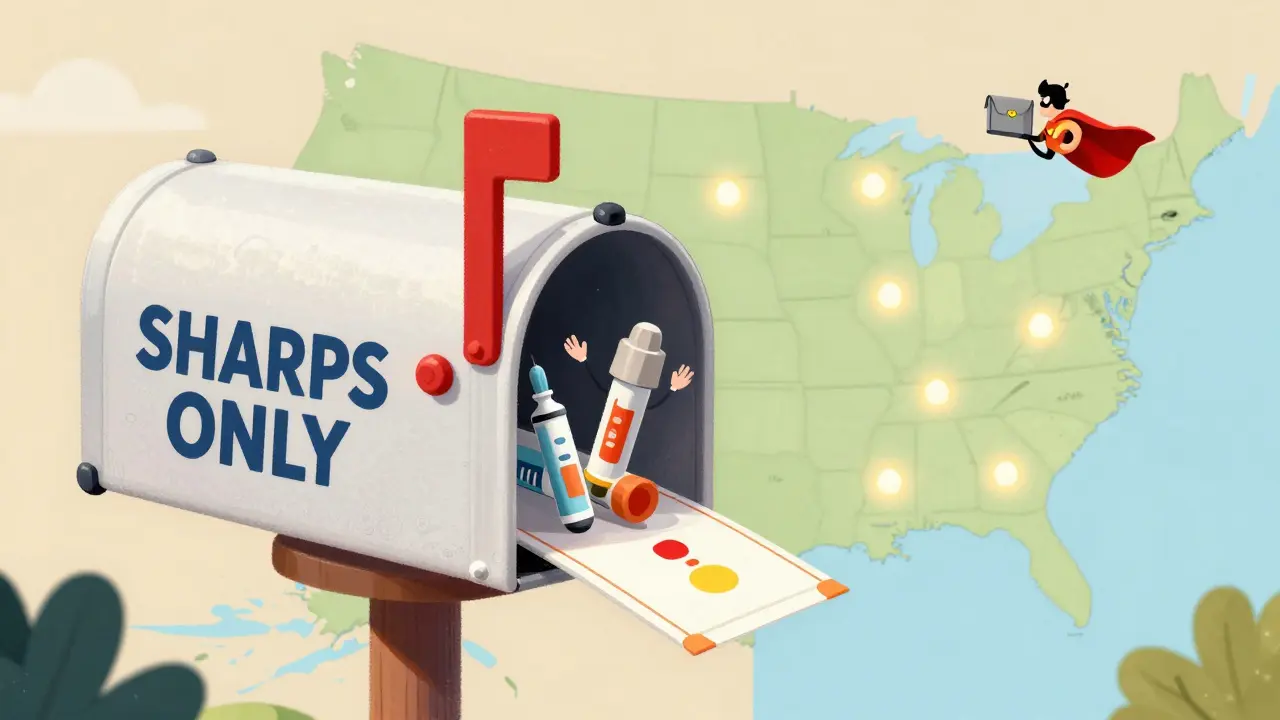
Companies like Sharps Compliance and BD offer prepaid mailers. You fill your container, seal it, and drop it in the mailbox. They pick it up and dispose of it safely. These cost between $15 and $30 per box - often cheaper than driving 45 minutes to a hospital drop-off site. Some insurance plans cover these mailers if you have a chronic condition requiring daily injections.
3. Local Health Departments or Hospitals
Most cities and counties have designated drop-off sites. These are often at public health offices, hospitals, or fire stations. Check your local government website or call 211 (the national helpline) to find the nearest site. Some offer free disposal; others charge $5-$10 per container.
4. Take-Back Events
Many communities host annual or quarterly sharps collection events. These are especially helpful in rural areas where drop-off sites are scarce. The EPA estimates that communities with regular take-back events reduce public exposure by 92%.
What NOT to Do
Here are the most common mistakes - and why they’re dangerous:- Don’t recap needles. It’s tempting to try to protect the tip, but it’s the #1 cause of injuries. Use the container - don’t handle the needle.
- Don’t use household containers. Soda bottles, jars, or plastic buckets can break, leak, or be pierced by trash compactors.
- Don’t flush needles. Sewage systems aren’t designed to handle sharps. They can damage pipes, injure sanitation workers, and contaminate water sources.
- Don’t wait until the container is full. If you can see the top of the sharps, it’s time to seal and dispose of it.
- Don’t assume your doctor gave you instructions. A 2023 FDA survey found only 41% of home users received disposal guidance from their provider. Ask for it.
Costs and Accessibility
Yes, sharps containers cost money - $8 to $15 for a small one. But here’s the truth: the cost of not using them is far higher. One needlestick injury can cost over $3,000 in treatment. Many states offer assistance:- California, New York, and Massachusetts require pharmacies to provide free disposal containers to patients.
- Medicare Part B covers sharps containers for beneficiaries with diabetes or other chronic conditions.
- Nonprofits like SafeNeedleDisposal.org offer free mailers to low-income users.
In rural areas, access is still a problem. Only 37% of rural counties have a drop-off site. If you’re in one of them, mail-back programs are your best bet. Some manufacturers even offer free shipping if you sign up for their patient support program.
What’s Changing in 2025-2026
New rules are coming. By December 2025, OSHA will require employers to provide take-home disposal kits to home healthcare workers. By January 2026, all sharps containers sold in the U.S. must carry the same standardized biohazard label nationwide - no more state-by-state differences. And by 2028, new containers may include smart sensors that alert you when they’re full. These changes are happening because of rising demand: insulin prescriptions alone have grown 22.3% since 2019.For now, stick to the basics: use the right container, seal it when it’s 3/4 full, and drop it off at a pharmacy or designated site. It’s not just about following rules - it’s about protecting your home, your community, and yourself.
Can I reuse a sharps container?
No. Even if a container says "reusable," it’s meant for healthcare facilities that sterilize equipment with medical-grade autoclaves. Home users should never attempt to clean or refill a sharps container. Always use a new, FDA-cleared container for each full load.
What if I don’t have a sharps container yet?
Use a hard plastic bottle with a screw-top lid - like a laundry detergent bottle or a bleach container. Make sure it’s thick, opaque, and won’t break easily. Label it clearly: "SHARPS - DO NOT RECYCLE." Keep it out of reach of children and pets. This is a temporary fix. Order a proper FDA-cleared container as soon as possible - it’s safer and legally required for final disposal.
Can I throw a sealed sharps container in the trash?
In most states, yes - but only if it’s in a properly sealed, FDA-cleared container. Never put sharps in recycling bins. Even sealed containers can puncture bags during collection. Always check your local rules. Some counties require you to drop them off at a hazardous waste site, even if they’re sealed.
Is it safe to carry a sharps container in my car or purse?
Yes, as long as it’s sealed and upright. Store it in a sturdy bag or box to prevent tipping. Avoid leaving it in hot cars - extreme heat can warp plastic. If you’re traveling, keep it in your carry-on luggage when flying - never in checked baggage. Airlines allow sharps containers in carry-ons if they’re properly sealed.
Do I need a prescription to buy a sharps container?
No. Sharps containers are available over the counter at pharmacies, medical supply stores, and online. You don’t need a prescription. However, if you have Medicare or private insurance, you may be able to get them covered if you have a chronic condition requiring daily injections. Ask your pharmacist or provider.
Next Steps
If you’re just starting out with injections:- Ask your doctor or pharmacist for a sharps container - many give them away for free.
- Write down your nearest drop-off location (pharmacy, hospital, health department) and keep it on your fridge.
- Set a calendar reminder to check your container every week - don’t wait until it’s overflowing.
- Download the EPA’s state-specific medical waste directory - it’s updated quarterly and free.
If you’ve been disposing of sharps wrong - don’t panic. Start today. Buy one container. Seal your last one. Drop it off. You’re not just following the rules - you’re helping keep your community safe.
9 Comments

Alexander Erb
March 11 2026
As a home health nurse for 12 years, I’ve seen everything. Used to find needles in recycling bins, kids’ toy boxes, even a cat’s bed. The mail-back programs? Total game-changer. My patients love them. No driving, no judgment, just drop and go. And yeah, emojis: 🏷️🩸🧳

Tom Bolt
March 13 2026
Let’s be real-this whole system is a scam. The FDA doesn’t care about you. They care about profit. That $15 container? It’s made in China with recycled plastic that cracks in heat. I’ve had mine split in my trunk. And the pharmacies? They take your container and throw it in the same landfill. You think they’re cleaning it? Nah. They’re just charging you to do what they’re legally required to do for free. Wake up.

Miranda Varn-Harper
March 13 2026
While I appreciate the intent behind this guide, I must point out that the assertion that 78% more injuries occur with household containers lacks a verifiable citation. The CDC does not track home sharps injuries with such granularity. Furthermore, the claim that mail-back programs are ‘cheaper than driving’ ignores rural residents who have no access to transportation whatsoever. This piece reads like a pharmaceutical marketing pamphlet disguised as public health advice.

Adam Kleinberg
March 15 2026
So let me get this straight-you’re telling me I can’t just throw my used insulin syringe in the trash because some bureaucrat says so? Who died and made the FDA king? I’ve been doing this for five years. No one’s gotten hurt. My dog’s fine. My kid’s fine. My trash guy? He’s got gloves. You’re all panicking over nothing. This isn’t a horror movie. It’s a syringe. It’s not a bomb. Chill.

Shourya Tanay
March 16 2026
As someone managing autoimmune disease with biologics, I’ve scrutinized every guideline. The FDA’s 0.04-inch puncture resistance threshold is rooted in ASTM F2378-04, which simulates compactor forces. The biohazard symbol requirements? Mandated under 29 CFR 1910.1030(g)(1)(i). But beyond compliance-what’s ethically non-negotiable is the upstream prevention of exposure. Every uncontained needle represents a potential vector for HCV, particularly in multi-generational households. We must treat this not as waste, but as biohazardous legacy. The container isn’t a box-it’s a shield.

Gene Forte
March 17 2026
There is dignity in responsibility. Every time we properly dispose of a sharp, we honor the trust placed in us by our own bodies and by our communities. It’s not about rules-it’s about care. A small act, done right, ripples outward. Protect your child. Protect the sanitation worker. Protect the future. Start today. One container at a time.

LiV Beau
March 18 2026
OMG YES THIS! I used to keep mine in a yogurt cup 🤦♀️ Then I dropped one in my toddler’s room. Now I use the mail-back kit-$20 but covered by my insurance! 🙌 Also, Walgreens lady gave me a sticker that says ‘I ❤️ Safe Disposal’ 🥹 Best. Day. Ever. Thank you for this guide!!

Denise Jordan
March 19 2026
Ugh. I’m not doing any of this. I just put them in a Ziploc and toss it. If someone gets hurt, fine. It’s not my problem. I’ve got enough stress without playing nurse cop. Also, why is this even a thing? Can’t we just… not inject stuff at home? 🤷♀️
Write a comment
Popular Posts
Donnie DeMarco
March 10 2026
Yo I just started insulin and was using an old laundry bottle till I read this. Holy crap I was a walking hazard. Got an FDA container today from CVS free as hell. Life changed. Don't be like me. Seal it. Drop it. Breathe.