You probably know that eating more fruits and vegetables is good for your heart. But if you take medication for high blood pressure, that advice comes with a catch. Potassium helps lower blood pressure naturally, but it also interacts dangerously with some of the most common prescriptions on the market. Getting this balance wrong can lead to hyperkalemia, a condition where too much potassium builds up in your blood, potentially causing irregular heartbeats or even cardiac arrest.
This isn't about avoiding healthy food entirely. It’s about understanding which medications hold onto potassium and how to eat safely while taking them. Let’s look at the specific drugs, the foods involved, and how to monitor your levels without fearlessly.
The Good News: How Potassium Helps Your Heart
Potassium is an electrolyte that does two main things for your cardiovascular system. First, it relaxes the walls of your blood vessels, making it easier for blood to flow. Second, it helps your kidneys flush out excess sodium. Since sodium raises blood pressure by holding water in your body, potassium acts as its natural counterweight.
Research backs this up. A major meta-analysis published in the British Medical Journal found that increasing potassium intake can reduce systolic blood pressure by about 5.3 mm Hg and diastolic pressure by 3.1 mm Hg in people with hypertension. The American Heart Association recommends between 3,500 and 5,000 mg of potassium daily for adults to manage blood pressure effectively.
For most people, getting this amount from whole foods is safe and beneficial. The problem arises when your body can’t get rid of the extra potassium because of the medication you’re taking.
Which Blood Pressure Meds Hold Onto Potassium?
Not all blood pressure medications affect potassium levels. In fact, many diuretics (water pills) actually cause you to lose potassium. However, three specific classes of drugs are known to increase potassium retention:
- ACE Inhibitors: Drugs ending in -pril, such as lisinopril, enalapril, and ramipril. They block the formation of angiotensin II, a substance that narrows blood vessels, but they also reduce aldosterone production, leading to potassium retention.
- ARBs (Angiotensin II Receptor Blockers): Drugs ending in -sartan, like losartan, valsartan, and candesartan. These work similarly to ACE inhibitors by blocking the action of angiotensin II rather than its formation.
- Potassium-Sparing Diuretics: Medications like spironolactone, eplerenone, and triamterene. Unlike standard diuretics that flush potassium, these specifically prevent its loss through urine.
If you are taking any of these medications, your kidneys are being signaled to keep potassium in your bloodstream. This is usually fine if your diet is normal. It becomes dangerous if you significantly increase your potassium intake through supplements or excessive amounts of high-potassium foods.
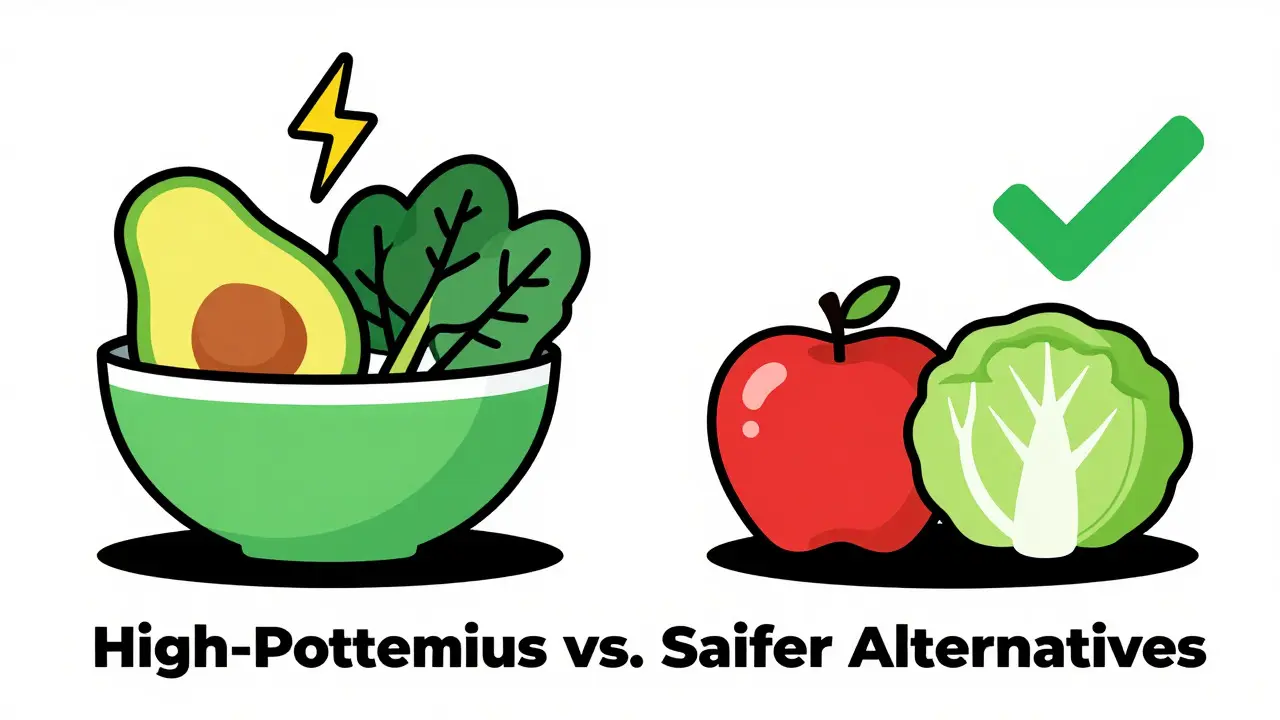
| Food Category | High Potassium Option (Avoid/limit if advised) | Potassium Content (Approx.) | Safer Alternative | Potassium Content (Approx.) |
|---|---|---|---|---|
| Fruits | Banana (medium) | 422 mg | Apple (medium) | 195 mg |
| Fruits | Avocado (1 cup) | 975 mg | Grapes (1 cup) | 288 mg |
| Vegetables | Spinach (1 cup cooked) | 839 mg | Cabbage (1 cup raw) | 174 mg |
| Vegetables | Sweet Potato (medium) | 542 mg | White Potato (boiled, no skin) | 337 mg |
| Beverages | Coconut Water (1 cup) | 600 mg | Orange Juice (low-potassium blend) | ~150-200 mg* |
| Protein | Salmon (3 oz) | 534 mg | Chicken Breast (3 oz) | 214 mg |
The Danger Zone: Hyperkalemia Symptoms and Risks
Hyperkalemia occurs when serum potassium levels rise above 5.0 mmol/L. Mild elevations might not show symptoms, but levels above 6.0 mmol/L are considered severe and can be life-threatening. The heart relies on precise electrical signals to beat, and potassium is a key conductor of those signals. Too much potassium disrupts the rhythm, potentially leading to arrhythmias or cardiac arrest.
You need to watch for these early warning signs:
- Muscle weakness or fatigue
- Numbness or tingling in the arms, legs, or face (paresthesia)
- Palpitations or a feeling that your heart is skipping beats
- Nausea
If you experience sudden muscle weakness or palpitations after changing your diet, seek medical attention immediately. Do not wait for your next scheduled appointment.
Who Is Most at Risk?
Not everyone on blood pressure medication needs to restrict potassium. The risk depends heavily on your kidney function. Healthy kidneys are excellent at filtering out excess potassium, even if you eat a banana every day. However, if your kidneys are compromised, they may struggle to clear the load.
You are at higher risk if you have:
- Chronic Kidney Disease (CKD): Specifically Stage 3 or higher, where estimated glomerular filtration rate (eGFR) is below 60 mL/min/1.73m². Studies show 28% of patients with impaired renal function develop hyperkalemia on RAAS inhibitors.
- Diabetes, which can damage kidney filters over time
- Advanced age, as kidney efficiency naturally declines
- Dehydration, which concentrates electrolytes in the blood
A study in the European Heart Journal highlighted that elderly patients on ACE inhibitors who consume high-potassium diets have an 11.3% incidence of hyperkalemia. If you fall into these categories, your doctor will likely order regular blood tests to monitor your levels.
The Supplement Trap: Why Whole Foods Are Safer
Here is a critical distinction: dietary potassium from whole foods is generally safer than potassium supplements. When you eat a sweet potato, the fiber slows down absorption, giving your kidneys time to process the potassium gradually. A potassium pill, however, dumps a concentrated dose into your system quickly.
Research published in Kidney International showed that chronic kidney disease patients taking potassium chloride supplements had an 11% incidence of hyperkalemia within just two weeks. In contrast, patients who increased potassium through diet alone maintained stable levels, provided their kidney function was not severely impaired.
Also, beware of salt substitutes. Many products labeled "No Salt" or "Low Sodium" replace sodium chloride with potassium chloride. One-quarter teaspoon of these substitutes can contain 250-700 mg of potassium. If you are sprinkling this liberally on your food while taking an ACE inhibitor, you could easily spike your levels without realizing it.
How to Manage Your Diet Safely
You don’t need to eliminate healthy foods unless your doctor explicitly tells you to. Instead, focus on moderation and monitoring. Here is a practical approach:
- Get Baseline Labs: Ask your doctor for a basic metabolic panel (BMP) to check your current potassium and kidney function (eGFR). Know your numbers.
- Read Labels: Check for "potassium chloride" in the ingredients list of processed foods and salt substitutes.
- Leach Vegetables (If Advised): For very high-potassium vegetables like potatoes, peeling them and soaking them in water for several hours before cooking can remove some potassium. Discard the soaking water.
- Stagger Timing: While less critical than with calcium, some experts suggest not taking your medication with a massive potassium-rich meal to avoid peak absorption spikes, though consistent timing is more important for drug efficacy.
- Track Intake: Use apps like Cronometer or the National Kidney Foundation’s tools to estimate your daily intake. Aim for the recommended 3,500-5,000 mg unless restricted.
When to See Your Doctor
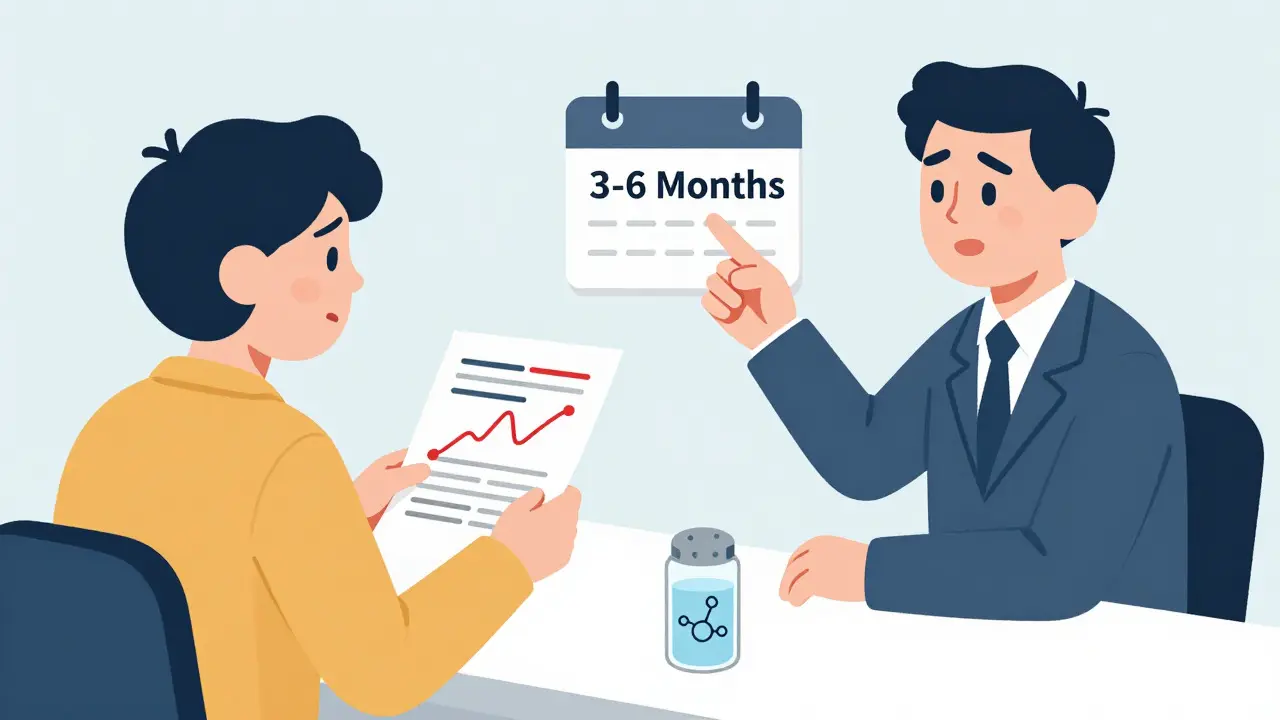
Regular monitoring is non-negotiable if you are on ACE inhibitors, ARBs, or potassium-sparing diuretics. The European Society of Cardiology recommends checking serum potassium every 3-6 months for stable patients. If you recently started a new medication or changed your diet significantly, ask for a test within 2 to 4 weeks.
Never stop taking your blood pressure medication because you are worried about potassium. Uncontrolled hypertension poses a far greater immediate risk than mild potassium fluctuations. Work with your healthcare provider to adjust your diet or switch medications if necessary. There are other classes of blood pressure drugs, such as calcium channel blockers (e.g., amlodipine), that do not affect potassium levels.
Can I eat bananas if I take Lisinopril?
Yes, for most people with healthy kidneys, one banana a day is safe while taking Lisinopril. Bananas contain about 422 mg of potassium. However, if you have chronic kidney disease or have been told your potassium levels are high, you should limit or avoid bananas and consult your doctor for specific dietary restrictions.
What are the symptoms of too much potassium?
Symptoms of hyperkalemia include muscle weakness, numbness or tingling sensations, nausea, and irregular heartbeats (palpitations). In severe cases, it can lead to cardiac arrest. If you feel sudden weakness or heart irregularities, seek emergency care.
Do all blood pressure medications raise potassium?
No. Only specific types do. ACE inhibitors (like Lisinopril), ARBs (like Losartan), and potassium-sparing diuretics (like Spironolactone) tend to raise potassium levels. Other medications, like thiazide diuretics (e.g., Hydrochlorothiazide) and calcium channel blockers (e.g., Amlodipine), typically do not raise potassium and may even lower it slightly.
Is coconut water safe for high blood pressure patients on medication?
Coconut water is very high in potassium, containing about 600 mg per cup. If you are on ACE inhibitors or ARBs and have normal kidney function, occasional consumption is likely fine. However, if you have kidney issues or are prone to hyperkalemia, you should avoid coconut water or drink it only under medical supervision.
Should I take potassium supplements with my blood pressure meds?
Generally, no. You should never take potassium supplements without explicit instruction from your doctor, especially if you are on ACE inhibitors, ARBs, or potassium-sparing diuretics. Supplements deliver a concentrated dose that can rapidly spike blood potassium levels, increasing the risk of dangerous heart rhythms.
How often should I get my potassium levels checked?
If you are stable on your medication, doctors typically recommend checking potassium levels every 3 to 6 months. If you have just started a new medication, changed your dose, or altered your diet significantly, you should be tested within 2 to 4 weeks to ensure safety.