
Supplement-Drug Interaction Checker
Check Your Supplement Safety
Enter your medications and supplements to see potential interactions. This tool highlights risks mentioned in medical research.
Potential Interactions Found
Based on medical research, these combinations may have significant risks:
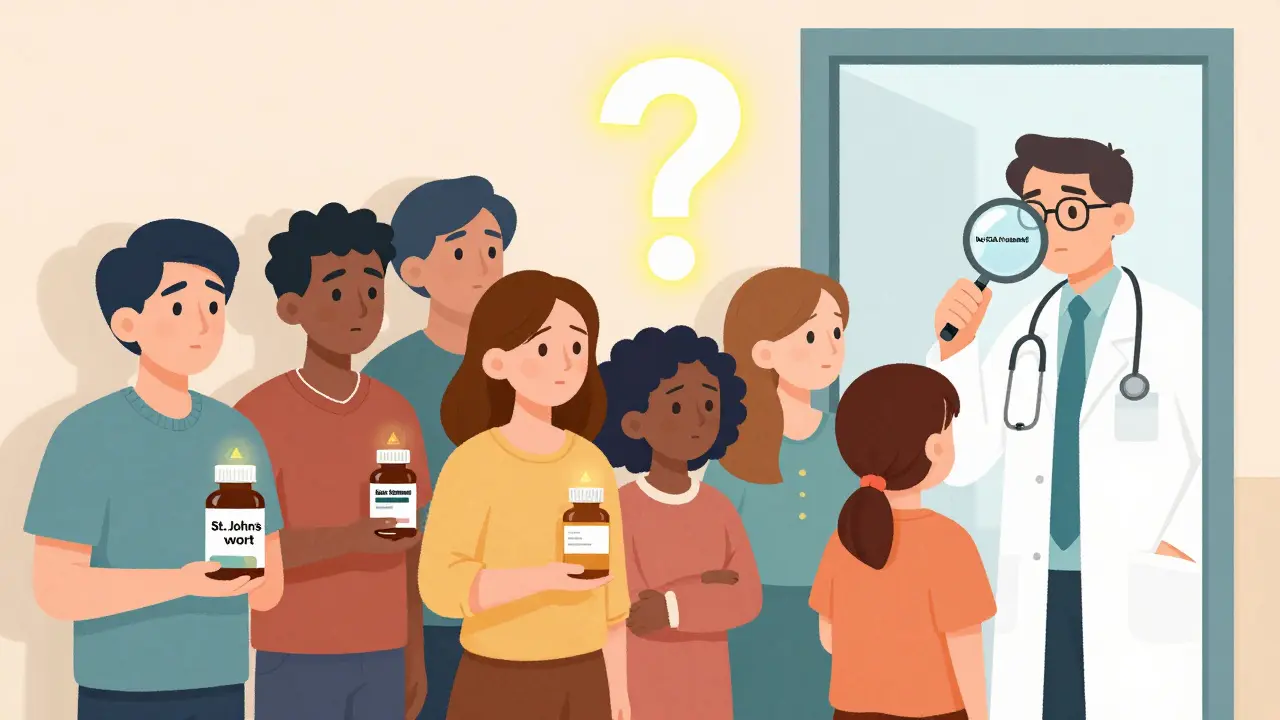
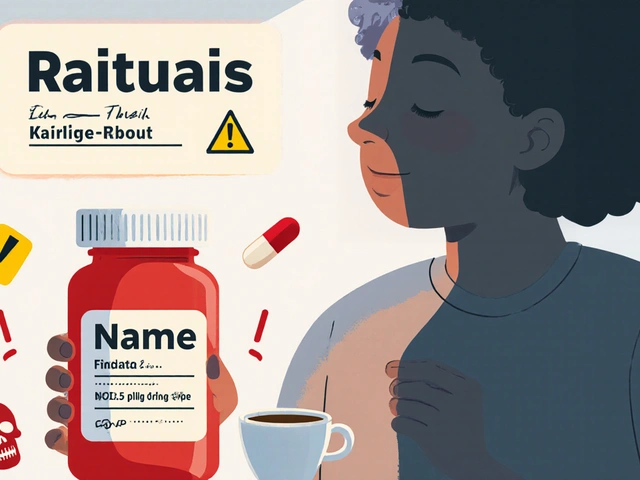
Every year, millions of people in the U.S. and UK take dietary supplements-vitamins, herbs, fish oil, probiotics, or plant-based extracts-thinking they’re harmless because they’re "natural." But here’s the truth: supplements aren’t safe just because they’re on a shelf at a grocery store. Many interact with prescription drugs, worsen chronic conditions, or cause unexpected side effects. And the biggest danger? You’re probably not telling your doctor about them.
Why Your Doctor Needs to Know What You’re Taking
If you’re taking St. John’s wort for low mood, garlic pills for heart health, or glucosamine for joint pain, you’re not alone. Nearly 8 in 10 American adults use some kind of supplement. But only about one in three tell their doctor. That’s not just an oversight-it’s a safety risk. Consider this: St. John’s wort, a popular herb for mild depression, can cut the effectiveness of birth control pills, blood thinners like warfarin, and even some antidepressants by up to 57%. A patient in a 2022 AMA Journal of Ethics case study had dangerous bleeding after combining ginkgo biloba with warfarin. She didn’t think her doctor needed to know about "natural" products. She was wrong. The problem isn’t just herbs. Even common vitamins can be risky. High-dose vitamin K can undo the effect of blood thinners. Calcium supplements can interfere with thyroid medication. Green tea extract has been linked to liver damage in rare cases. And since supplements aren’t tested for safety before they hit the market, you can’t assume they’re harmless.The Regulatory Gap: What’s Not Being Checked
Unlike prescription drugs, dietary supplements don’t need FDA approval before being sold. Under the Dietary Supplement Health and Education Act (DSHEA) from 1994, companies can sell products without proving they work-or even that they’re safe. The FDA can only step in after someone gets hurt. That’s why you’ll see labels saying: "This statement has not been evaluated by the Food and Drug Administration. This product is not intended to diagnose, treat, cure, or prevent any disease." That’s not marketing fluff-it’s the law. The FDA doesn’t test these products. The manufacturer does. And many don’t even follow basic quality rules. In 2022, the FDA inspected less than 1% of supplement factories. Meanwhile, over 85,000 different supplement products are available in the U.S. alone. That’s a lot of room for error. Some products contain hidden drugs, heavy metals, or far more active ingredient than listed. A 2023 study found that nearly 1 in 4 herbal supplements didn’t contain what they claimed.Who’s Most at Risk-and Why They Stay Silent
People with chronic conditions are at the highest risk. About half of supplement users have diabetes, high blood pressure, heart disease, or other long-term illnesses. These are the exact conditions where supplements can cause serious harm. But why don’t they tell their doctors? Many think their provider won’t care. Others fear being judged. Some believe supplements are "too natural" to matter. A 2019 study found that patients visiting conventional doctors disclosed supplement use just 33% of the time. That number jumps to 72% when doctors directly ask. It’s not just about honesty-it’s about how the question is asked. If a doctor says, "Do you take any supplements?" most people say no. But if they ask, "What vitamins, herbs, or natural products are you using to help with your health?"-that opens the door. One nurse practitioner in Texas changed her question and saw disclosure rates double.
The Most Common Supplements With Hidden Dangers
Not all supplements are equally risky. But some stand out because they’re popular and interact with common medications:- St. John’s wort: Reduces effectiveness of birth control, antidepressants, blood thinners, and HIV meds.
- Ginkgo biloba: Increases bleeding risk when taken with aspirin, warfarin, or NSAIDs like ibuprofen.
- Garlic supplements: Can thin blood and lower blood pressure too much when combined with antihypertensives.
- Green tea extract: Linked to liver injury in high doses, especially when taken on an empty stomach.
- Glucosamine/chondroitin: May affect blood sugar control in diabetics and interfere with blood thinners.
- Echinacea: Can overstimulate the immune system, risky for people with autoimmune diseases.
How to Talk to Your Care Team-Without Feeling Awkward
You don’t need to be an expert. You just need to be honest. Here’s how to make it easy:- Bring a list. Write down every supplement, herb, vitamin, or tea you take daily. Include the brand, dosage, and how often you take it. Don’t skip the "small" ones.
- Use the right language. Say "I take ashwagandha for stress" instead of "I just take this herbal thing." The more specific you are, the better your provider can help.
- Ask directly. Say: "Could this interact with my other medications?" or "Is this safe with my condition?"
- Use a supplement log. Many clinics now give patients printable or digital logs to track what they take. Keep it updated.
What Your Provider Should Be Doing
You shouldn’t have to push for this conversation. Doctors and nurses should be asking. The American Medical Association recommends that every provider screen for supplement use at every visit. The National Institutes of Health offers free training for clinicians on how to talk about supplements. And as of early 2023, 87% of U.S. hospitals now require supplement questions during patient intake. But many providers still lack training. Medical students get less than 3 hours of education on nutrition and supplements during all four years of school. That’s why some doctors still say, "It’s just a vitamin." That mindset is outdated-and dangerous. If your provider brushes off your supplement use, ask for a referral to a pharmacist or integrative health specialist. Pharmacists are trained to spot interactions and can review your entire list in minutes.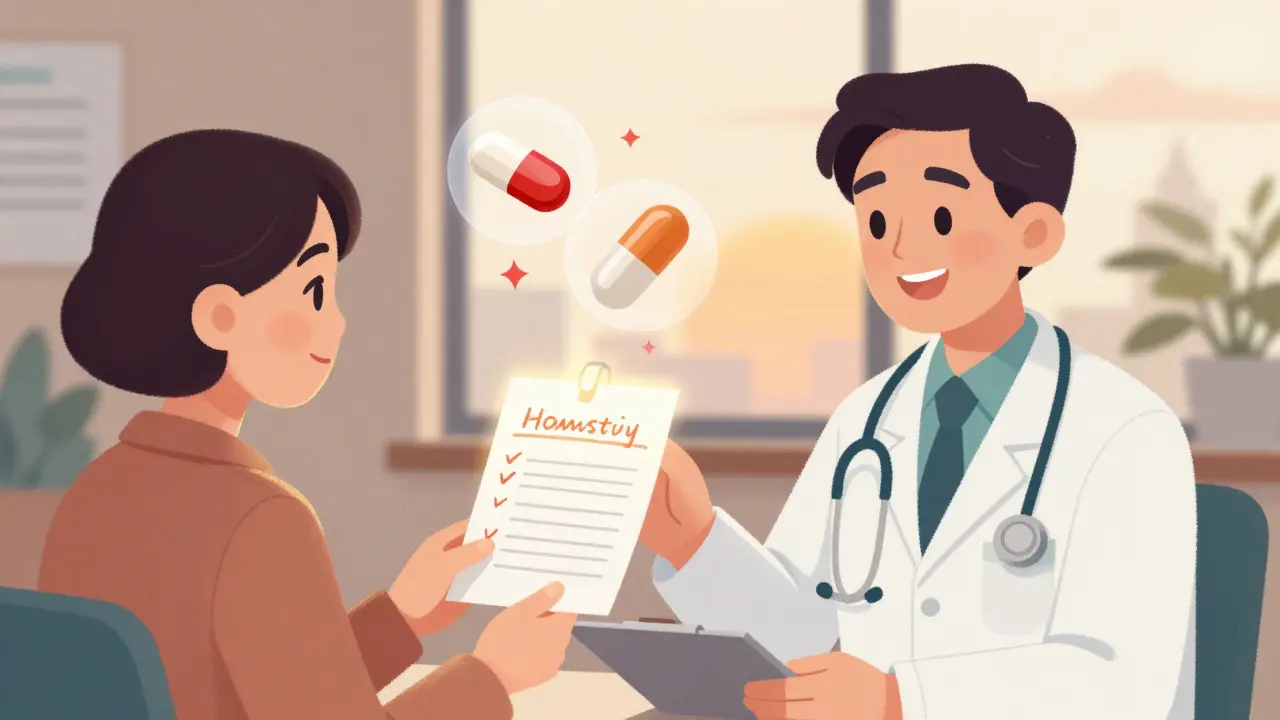
What’s Changing-and What’s Next
There’s hope. The FDA launched the Dietary Supplement Ingredient Database (DSID-5) in January 2023, giving providers verified data on what’s actually in popular supplements. Epic Systems, the biggest electronic health record company, is adding a dedicated supplement module in mid-2024 that will automatically flag dangerous interactions. The Supplement Safety Act, introduced in 2023, would require all supplements to be registered with the FDA before sale. Public support is strong-68% of Americans back it. But until those changes fully roll out, the responsibility falls on you. Your health isn’t just about what’s in your medicine cabinet. It’s also about what’s in your supplement drawer.Supplement Safety Checklist
Use this before your next appointment:- ✅ I have a written list of all supplements, herbs, and natural products I take.
- ✅ I include brand names, dosages, and how often I take them.
- ✅ I’ve asked my provider: "Could any of these interact with my medications?"
- ✅ I’ve checked for interactions using trusted resources like the Natural Medicine Database or NIH’s Office of Dietary Supplements.
- ✅ I update my list every time I start or stop something.
What If I’ve Already Had a Bad Reaction?
If you’ve felt dizzy, nauseous, had unusual bleeding, or noticed your medication stopped working after starting a supplement, tell your provider immediately. Also, report it to the FDA’s Adverse Event Reporting System (CAERS). Even if you’re not sure it was the supplement, your report helps protect others. You don’t need to prove it. You just need to share what happened. The FDA receives over 16,000 reports a year-but experts say less than 1% of actual reactions get reported. Your voice matters.Do natural supplements always mean safe?
No. "Natural" doesn’t mean safe. Many powerful drugs come from plants-like digitalis from foxglove or morphine from poppies. Supplements can be potent, interact with medications, or cause liver damage. Just because something is sold in a health food store doesn’t mean it’s harmless.
Should I stop taking supplements before surgery?
Yes, many should be stopped at least 1-2 weeks before surgery. Herbs like ginkgo, garlic, ginger, and high-dose vitamin E can increase bleeding risk. Always tell your surgeon and anesthesiologist about everything you take-even if you think it’s "just a tea."
Can I trust supplement labels?
Not always. Studies show up to 25% of herbal supplements don’t contain what’s listed on the label. Some contain fillers, contaminants, or hidden drugs. Look for third-party testing seals like USP, NSF, or ConsumerLab-but even those aren’t foolproof. Always discuss with your provider.
What if my doctor doesn’t know about supplements?
That’s common. Many doctors get little training on supplements. Bring printed info from trusted sources like the NIH Office of Dietary Supplements or the Natural Medicine Database. Ask if they can consult a pharmacist. You’re the expert on what you take-your job is to share that.
Are there any supplements that are generally safe?
Some, like low-dose vitamin D (if you’re deficient) or omega-3s from fish oil, have strong evidence for benefits and few risks when taken as directed. But even these can interact with medications. Always check with your provider before starting anything, even if it seems harmless.
15 Comments

Henry Ward
January 2 2026
Wow. Another ‘natural = dangerous’ fearmongering piece. You know what’s really dangerous? Prescription drugs that kill 250,000 people a year. But nobody’s writing articles about how you should disclose your statins to your barista. Hypocrites.

Aayush Khandelwal
January 3 2026
Bro, the entire supplement industry is a regulatory black hole. It’s like buying a Tesla from a guy on Craigslist who says, ‘It’s got a battery, bro.’ No QC, no standardization, no accountability. The FDA’s hands are tied by DSHEA - which is basically a lobbyist’s wet dream. We need a paradigm shift, not just a checklist.

Sandeep Mishra
January 5 2026
I’ve been a nurse for 22 years. I used to ask patients, ‘Do you take vitamins?’ They’d say no. Then I changed it to, ‘What herbal teas or powders do you swallow daily?’ Suddenly, people opened up like floodgates. One guy was taking 12 different ‘adaptogens’ and didn’t realize they were all affecting his blood pressure meds. It’s not about judgment - it’s about language. Be kind. Be specific.

kelly tracy
January 6 2026
So now we’re blaming patients for not telling doctors about supplements? What about the doctors who don’t know the difference between ashwagandha and a yoga mat? This is a systemic failure. And you want me to feel guilty for not being a walking pharmacology textbook?

srishti Jain
January 7 2026
St. John’s wort + birth control = baby. I learned that the hard way. Don’t be that girl.

Cheyenne Sims
January 9 2026
The article contains numerous grammatical errors and inconsistent punctuation. Furthermore, the use of emoticons and colloquialisms undermines its credibility as a medical communication. Proper discourse requires precision, not casualness.

henry mateo
January 9 2026
just wanted to say i started taking magnesium for sleep and my doc had no clue what it was. i printed out a page from the nihs site and showed him. he said ‘oh yeah, that’s actually pretty common’ and then we talked about it for 10 mins. so yeah. just bring a list. even if they seem clueless.

Kunal Karakoti
January 10 2026
Is ‘natural’ even a meaningful category? Everything we consume is made of atoms. Sugar is natural. Cyanide is natural. The distinction between ‘supplement’ and ‘drug’ is a legal fiction, not a biological one. We’re not arguing about safety - we’re arguing about who gets to define the boundaries of medicine.

Kelly Gerrard
January 12 2026
This is the most important health conversation we’re not having. Every single person reading this should print the checklist and bring it to their next appointment. Your life could depend on it. No exceptions. No excuses. Do it now.

Joseph Corry
January 12 2026
Let’s be honest - most people who take supplements are just trying to compensate for their poor lifestyle. You eat fast food, drink soda, and sleep 4 hours a night? Then you pop a probiotic and call it ‘self-care.’ This isn’t medicine. It’s spiritual capitalism.

Colin L
January 13 2026
My mum took ginkgo biloba for ‘brain health’ after her stroke. She didn’t tell anyone. Then she had a hemorrhagic stroke - same thing, just worse. The hospital found the bottle in her purse. The doctor said, ‘If you’d told us, we could’ve adjusted her meds.’ I’ve been screaming about this for years. Nobody listens. Not even the doctors. They just nod and say ‘interesting’ while checking their phone.

Hayley Ash
January 13 2026
Oh wow, so supplements are dangerous? Shocking. Next you’ll tell me that breathing air can be toxic if you do it wrong. I mean, sure, if you take 1000mg of vitamin C daily you might get kidney stones. But that’s like saying ‘drinking water can kill you’ - technically true, but who cares?

Shae Chapman
January 14 2026
I used to think my chamomile tea was harmless. Then my grandma had a bad reaction to it with her blood thinner. We cried for hours. Now I have a little notebook. I write everything down. I bring it. I ask. I don’t care if I look weird. My life is worth it. 🌿❤️

Nadia Spira
January 16 2026
Let’s not romanticize ‘natural’ products. They’re not ‘herbal remedies.’ They’re unregulated psychoactive compounds sold by influencers with yoga pants and a Shopify store. The fact that people believe in ‘detox teas’ while ignoring evidence-based nutrition is the real tragedy. This isn’t about disclosure - it’s about critical thinking.


Glendon Cone
December 31 2025
Been taking turmeric for my knees for years. My doc never asked, so I never brought it up. Then I started bleeding randomly after a minor cut. Turned out the turmeric was thinning my blood like crazy. I’m lucky I didn’t end up in the ER. Now I bring my supplement list to every visit. 🙌